



2,866 products added recently
Page 1137 - Best Teaching Resources

 Show filters
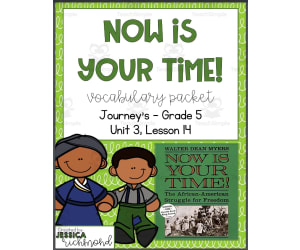
Vocabulary Packet -Journey's 5th grade - Unit 3 Lesson 14
ELA, Language Development, Vocabulary, Grade 5, Lesson Plans, Teacher Tools
Journey's Reading Program Vocabulary Packet for 5th Grade, Unit 3, Lesson 14 This educational resource helps 5th grade students master the vocabulary words from Unit 3, Lesson 14 of the Journey's reading program. The packet contains a glossary that lists each word along with the pronunciation to support students' learning. Additionally, the packet includes various printable activities such as fill-in-the-blanks, matching, and usage sentences to reinforce the vocabulary words. Educators can utilize this vocabulary packet in multiple ways - as a whole group activity projected on the board, printed out for small groups or independent work, or even assigned digitally to students as homework. Focusing on vocabulary growth helps students improve reading comprehension and written communication.
Author Jessica Richmond
Tags Vocabulary Packet, Journey's 5th Grade, Grade 5 Vocabulary, Unit 3 Journey, Lesson 14, Vocabjourneys
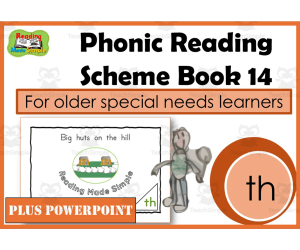
Phonic Reading Scheme for Older Students: TH: Book 14
Special Resources, ELA, Special Education Needs (SEN), Language Development, Phonics, Reading, Kindergarten, Preschool, Grade 1, Literacy Readers, Teacher Tools
This TH decodable reading book + matching PowerPoint for guided reading is the 14th book in a series that can help children with special needs pupils develop reading fluency. Each book comes with a matching PowerPoint making it suitable for use in a range of settings. The Jack Stories, of which this book is one, introduces one phonic sound at a time, and subsequent books build on the vocabulary of the books before, constantly revising and reviewing learned sounds. Irregular sight words are only slowly and gradually introduced. Science of reading aligned. Based on the most up-to-date phonic research. These books should be read sequentially as they tell one long story, each telling a part. This book contains words with the following sounds: CK: OO, EE and SH and CH, ND & NT Endings and TH. The series of books can also be purchased as a growing bundle with a scope and sequence - one file, less clutter! This series has been written with the aid of one of my pupils, aged 8. He has drawn some of the pictures. What makes this phonic reading programme for special needs different? · It has its own, easy-to-download and print phonic reading books, making it accessible to many children worldwide. · Each book carefully builds on the vocabulary of those that have gone before, providing much repetition, without relying on predictable text. · Pictures aid the storyline without encouraging reading from the pictures – i.e. guessing. · The vocabulary is based on phonic families, which are introduced in a carefully planned way. · True sight words – those that cannot be sounded out - are kept to the very minimum. Most words are introduced in their phonic family wherever possible. · It is truly multisensory, using the power of the hand. We not only look at the words, but we write them too. This is powerful and has the bonus of turning the child not only into a reader but into a writer as well. Typical signs that this programme can help: Those with dyslexia, or suspected of having dyslexia Difficulty recalling words when seen on flashcards or when reading texts, which results in no or little reading fluency b/d letter reversal of a chronic nature – i.e. the child has not grown out of it Difficulty ordering letters in words: E.g. top becomes pot. Difficulty differentiating between like words: spoon/soon; back/black; sheep/sleep etc… Difficulty tracking words across a page How long is the book? The reading book is 16 pages long. What is included? 1 PDF 16 pp X A5 Print as a booklet Flip on the short edge One 16-slide PowerPoint
Author Lilibette's Resources
Rating
Tags Decodable Reading Books, Phonic Reading Scheme, Download And Print Decodable Readers, Reading Fluency, Guided Reading, Special Needs, Phonics Intervention, TH Digraph

Those Shoes Interactive Read-Aloud Activities
ELA, Reading, Reading Comprehension, Language Development, Vocabulary, Grade 2, 3, 4, Literacy Readers, Teacher Tools
This read-aloud picture book companion is a complete supplemental resource for the book Those Shoes by Maribeth Boelts. With 30 print-and-go reading activities to choose from, this resource is ideal for customizing learning to your student's specific needs and academic abilities. Students will investigate illustrations, identify story elements, determine the theme, analyze characters, compare & contrast, make predictions, inferences, & connections, answer questions that require them to think beyond the text, and much more! Students will love the engaging and fun activities, and you will appreciate the time saved hunting for high-level resources to teach reading concepts that students frequently struggle with. The activities provided are designed to enable students to apply higher-level thinking skills, encourage them to provide text evidence to support their thinking, and challenge them to express their own thoughts and/or perspectives. ⭐️This Resource Includes:⭐️ Making Predictions: Before reading, students will make predictions about the text. Story Elements: Students fill in the boxes with words & pictures to represent the story elements. Sequencing: Students will retell & illustrate the important parts of the story. Recalling events in Chronological Order: Students describe and illustrate four major events in the story in chronological order. Summary: Students complete the Somebody, Wanted, Because, But, So graphic organizer and write a summary of the story. Story Event Sort: Students will describe a scene or event from the story that fits into each of the categories & explain how the event made them feel & how it relates to the category. Making Connections: Students make connections to an event from the story. Using Details to Make Inferences: Students will read the text from the story in order to answer the leading questions and make inferences (ANSWER KEY included). Making Inferences: Students use clues & schema to make inferences while reading the story. Character Actions & Reactions: Students read about different situations that the characters faced in the story and fill in the boxes with the character's missing action, reaction, or both (ANSWER KEY included). Character Inside & Out (Jeremy): Students include details from the story to describe what the character says, thinks, does, and feels. Character Inside & Out (Grandma): Students include details from the story to describe what the character says, thinks, does, and feels. Character Feelings: Students describe how the character's feelings change throughout the story & give examples of the events that cause them to feel the way they do. Character Development: Students select character traits that best describe the character at different times throughout the story and give examples from the book to support the traits they choose. Character Change: Students will explain how the character changed from the beginning to the end of the story and describe the events that caused the change to happen. Character Summary: Students will choose a character from the story to summarize and fill out the graphic organizer. Character Perspective: Students will compare Jeremy’s perspective about buying the shoes to Grandma’s perspective by drawing pictures and adding words to the thought bubbles. Sketch a Scene From the Story: Students will illustrate one of the events from the story and explain why this event is important to the plot. Setting the Scene: Students identify three different settings in the story and explain how they know the setting changed. 3-2-1: Students will describe three ways Grandma expresses her affection and care for Jeremy, determine the two most likely reasons Jeremy bought the shoes even though he knew they were too small for him, and choose one word that best describes Jeremy and explain why. Author's Message: Students describe four important events from the story and put them in chronological order. Then, answer the questions about the author's message. Theme: Students answer the questions to determine which theme best fits the story and provide text evidence to support their choice. Before & After: Students will draw a picture and describe how Jeremy feels about the high-top shoes before he plays with Antonio at the park, and draw a picture and describe how Jeremy feels about the shoes after. Thinking About the Text: Students will answer the questions about the story & include examples from the text to support their answers. Thinking Beyond the Text: Students will answer the questions about the story & include examples from the text to support their answers. Book Review: Students will rate and review the book. Wait... There's More!: Students will write about what happens next in the story. If the Shoe Fits: Students will determine who they think might wear the shoes pictured, where they might go, or what they might do. Shoe Design (8 styles for students to choose from): Students design a shoe that reflects their personality. Shoe Advertisement: Students create an advertisement to persuade others to purchase the shoes they designed This resource is for extension read-aloud activities only. The book is not included.
Author Creatively Gifted
Tags Reading, Fountas And Pinnell, Second Grade, Elementary Ela, Reading Comprehension, Character Traits, Guided Reading, Interactive Read-aloud, Picture Book, Those Shoes

Digital Paper: Raining with Colors in Blues and Browns
, Not Grade Specific, Classroom Decor
Digital Paper: Raining with Colors in Blues and Browns The Digital Paper: Raining with Colors in Blues and Browns provides you with an array of colorful, digital papers that can be used for a multitude of purposes. This resource pack has 24 pieces of high-quality JPEG files that are easily downloadable and accessible. Size & Variety: The size mentioned for each paper is 12" x 12", thus providing ample space to design, create, and bring your artistic ideas to life. The variety of colors available includes beautiful shades of blue, brown, green, and orange; the patterns spread across these colors are versatile and attractive. There's a plethora ranging from stars to stripes to dots. Multifunctionality: Scrapbookers designing creative scrapbooks. Educators adding vibrance & interest into their classroom activities through unique design paper resources. Individuals printing out party invitations or cards in attractive designs. This product seems advantageous for anyone engaging in craft -related hobbies or professions as it grants them the ability to use it for both personal & commercial purposes without needing any additional license. In conclusion, The Digital Paper: Raining with Colors not only ensures aesthetically pleasing & flexible designing but also ensures quality alongside convenience making it worthwhile addition for anyone interested in creative educational endeavors.
Author OldMarket
Tags Digital Paper, Artistic Designing, Craft Resource, Classroom Decorations, Scrapbooking

Phonic Reading Scheme for Older Pupils: SH Book 7
Special Resources, ELA, Special Education Needs (SEN), Language Development, Phonics, Reading, Kindergarten, Preschool, Grade 1, Literacy Readers, Teacher Tools
This SH decodable reading book is the 7th book in a series that can help children develop reading fluency. Each book comes with a matching PowerPoint making it suitable for use in a range of settings. The Jack Stories, of which this book is one, introduces one phonic sound at a time, and subsequent books build on the vocabulary of the books before, constantly revising and reviewing learned sounds. Irregular sight words are only slowly and gradually introduced. Science of reading aligned. Based on the most up-to-date phonic research. This book is the next in our new series for budding historians who may be older pupils and may have special needs and need a more mature storyline than cats and dogs! It follows on from our previous sets of ' Learn to Read' packs covering the 5 vowels and the previous books in the series so the pupil is expected to be able to blend 3 and 4 sounds securely and be ready to read words with /oo/. These books are best read in sequence. This book contains words with the following sounds: CK: OO, EE and SH. The whole series to date can also be purchased as a growing bundle here, with a scope and sequence. This series has been written with the aid of one of my pupils, aged 8. He writes his ideas and draws pictures and then I formulate them into a fool-proof reading book using only decodable words. Reading Made Simple for Special Needs A 100% systematic phonic reading programme for all ages and abilities. Give your child a Head start in reading! Due to its 100% systematic nature, this reading programme is highly suitable for any child with a special need, including dyslexia (or suspected), or any other need that is causing a child to have difficulties learning to read. What makes this reading programme different? · It has its own, easy-to-download and print phonic reading books, making it accessible to many children worldwide. · Each book carefully builds on the vocabulary of those that have gone before, providing much repetition, without relying on predictable text. · Pictures aid the storyline without encouraging reading from the pictures – i.e. guessing. · The vocabulary is based on phonic families, which are introduced in a carefully planned way. · True sight words – those that cannot be sounded out - are kept to the very minimum. Most words are introduced in their phonic family wherever possible. · It is truly multisensory, using the power of the hand. We not only look at the words, but we write them too. This is powerful and has the bonus of turning the child not only into a reader but into a writer as well. Typical signs that this programme can help: · Difficulty recalling words when seen on flashcards or when reading texts, which results in no or little reading fluency · b/d letter reversal of a chronic nature – i.e. the child has not grown out of it · Difficulty ordering letters in words: E.g. top becomes pot. · Difficulty differentiating between like words: spoon/soon; back/black; sheep/sleep etc… · Difficulty tracking words across a page To help all children succeed, each phonic family is taught in two lessons, each a week in duration. This speed has been tried and tested to be the optimum speed to allow children to absorb new information without mental overload. You may find that some children need longer - but never less. Each phonic family is split into half and only 5/6 words in a family are studied each week. Activities are provided to give the child plenty of exposure to the new sound and the set of words that contain it. These activities are not hard, but simply bring the child face to face with the words, first individually, then in sentences, and finally in longer passages. We also seek to strengthen knowledge of blends and develop phonemic awareness through the activities, much needed by these learners. In all, the way that Reading Made Simple has been designed reduces the burden on the working memory, making it easier for children to learn to read. Children relax as they meet familiar words again and again. They begin to say – sometimes for the first time, ‘I can read’. With this programme, you can help a non-reader today! How long are the books? The reading books are 12 pages long. Why are these books FREE when other people's books cost so much? Are they of lesser quality? They are free as I regard the ability to read as being a fundamental right of every living person. Why should some miss out on top-quality resources because they cannot pay for them? In terms of content, they are top quality, carefully planned and sequenced to help as many children as possible get started on the phonic road to reading. What is included? 1 PDF 16 pp X A5 Print as a booklet Flip on the short edge One 16-slide PowerPoint
Author Lilibette's Resources
Rating
Tags Decodable Reading Books, Phonic Reading Scheme, Download And Print Decodable Readers, Reading Fluency, Guided Reading, Special Needs, PowerPoint, Phonics Intervention, Sh Reading Book
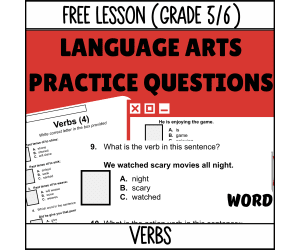
Verbs Sample Lesson - Grammar Grade 5-6 (Word)
ELA, Language Development, ESL, Grammar, Common Core, Resources for Teachers, Grade 5, 6, 7, Worksheets & Printables, Worksheets, Quizzes and Tests, Teacher Tools, Tests, Assessments
Verbs Sample Lesson ELA MCQS Overview: In this series of lessons, students will embark on an engaging journey to master the language arts skills that make communication effective and expressive. These lessons are designed to help students recognize, understand, and apply key grammar, vocabulary, and writing conventions in both their writing and speech. Each lesson builds upon the previous one, providing a structured blend of direct instruction, interactive group activities, and independent practice. With engaging tasks and thought-provoking questions, students will explore sentence structure, word choice, punctuation, and grammar rules to strengthen their understanding of English language conventions. Accompanied by free supplementary materials covering all topics, this series ensures a well-rounded and enjoyable learning experience. Through practice and exploration, students will develop the skills needed to analyze language, construct clear sentences, and express themselves with confidence. Verbs Overview: Action Verbs Helping Verbs Linking Verbs Additional Verbs Practice Word Version This is the Word editable and version. This download is available in GOOGLE Docs, GOOGLE Forms, GOOGLE Slides. PDF, PPT, WORD, check the links below for more details. FULL CATALOG OF DOWNLOAD LINKS HERE Grade 5/6 Links: Capitalization & Punctuation Google Docs Google Forms Google Slides PDF PPT Word Free Supplementary Materials Pack Adjectives Google Docs Google Forms Google Slides PDF PPT Word Free Supplementary Materials Pack Nouns Google Docs Google Forms Google Slides PDF PPT Word Free Supplementary Materials Pack Pronouns Google Docs Google Forms Google Slides PDF PPT Word Free Supplementary Materials Pack Verbs Google Docs Google Forms Google Slides PDF PPT Word Free Supplementary Materials Pack Prefixes & Suffixes Google Docs Google Forms Google Slides PDF PPT Word Free Supplementary Materials Pack Sentence Structure Google Docs Google Forms Google Slides PDF PPT Word Free Supplementary Materials Pack Subject Verb Agreement Google Docs Google Forms Google Slides PDF PPT Word Free Supplementary Materials Pack Tenses Google Docs Google Forms Google Slides PDF PPT Word Free Supplementary Materials Pack Context Clues Google Docs Google Forms Google Slides PDF PPT Word Free Supplementary Materials Pack Defining Words Google Docs Google Forms Google Slides PDF PPT Word Free Supplementary Materials Pack Fill in the Blanks Google Docs Google Forms Google Slides PDF PPT Word Free Supplementary Materials Pack Homophones Google Docs Google Forms Google Slides PDF PPT Word Free Supplementary Materials Pack Synonyms Google Docs Google Forms Google Slides PDF PPT Word Free Supplementary Materials Pack ELA Review Questions Overview Questions have three answer choices. There are a handful of pictures on each test for aesthetic purposes, as well as a review sheet covering most of the topics covered in the product. Introduction or Example Sheet Each topic will include an introduction or example sheet to go through first with your students. Full Answer Keys Full answer keys and sample responses are provided so no matter how busy you are, you know you're covered! In the Supplementary Pack Interactive Ice Breakers: Engaging warm-up activities that introduce students to key ELA concepts, such as quick capitalization corrections and punctuation challenges. Guided Practice: Structured teacher-led exercises that reinforce grammar and punctuation rules, helping students identify and apply them correctly in sentences. Group and Partner Tasks: Collaborative activities where students work together to edit sentences, correct capitalization, and improve punctuation through peer discussion and teamwork. Independent Worksheets: Carefully designed worksheets that provide focused practice, allowing students to apply learned concepts and refine their skills independently. Exit Tasks: Quick assessments at the end of each lesson, prompting students to reflect on what they’ve learned and apply their knowledge in writing and editing tasks. For More Like This For similar downloads and other frees, do check out Cored Group on TeachSimple.
Author Cored Education
Tags Elementary, Answers, Ccss, Common Core, Grammar, Tests, Test Prep, Assessment, Grade 5, Grade 6

Alphabet Puzzles with Real Photographs
ELA, Language Development, Phonics, Kindergarten, Preschool, Activities
Practice learning beginning sounds and matching capital and lowercase letters with these alphabet puzzles. What is Included: Each letter of the alphabet includes on puzzle for matching the capital and lowercase letter of the alphabet. Each letter is on a puzzle card that has a real photographic image of something that begins with that letter. There are two puzzle formats, one where the puzzles form a rectangular shaped puzzle and one where the puzzle is the shape of the object itself. The real life photographs will give students something they see in real life that they can associate each letter sound with. This will allow them to stay engaged in this learning activity. How to Use Students will match the two halves of the puzzles by matching the capital letter to its corresponding lowercase letter. When to Use: Literacy Center - The puzzles can be placed in a literacy center for students to compete alone or with a partner. Morning Activity - The puzzles can be placed in a morning tub or bin for students to complete as their classmates arrive to class. Quiet Time Activity - These puzzles are a perfect addition to any quiet time activity. Students who do not nap during rest time can use these puzzles quietly while their classmates sleep. Small Group Activity - Students needing help with matching capital and lowercase letters can work in a small group setting to complete these alphabet puzzles. These puzzles will fit perfectly inside a task box for easy set up, clean up, and storage. The alphabet puzzles are low prep, providing a quick activity for teachers to create for their students. The puzzles simply need to be printed on card stock, cut apart, and laminated for durability. From there the students can complete the puzzles as many times as they want.
Author The Connett Connection
Tags Alphabet Puzzles, Preschool Literacy, Preschool Puzzles

I WONDER - What Happens When The Liver Gets Damaged | Animated Video
Biology, Life Sciences, Science, Human Body, STEM, Grade 5, 6, 7, 8, 9, 10, 11, Lesson Plans, Teacher Tools
Video Overview The human body is full of fascinating wonders to learn. This video is created to help the students recognize the anatomy and the job of the human body. I WONDER - What Happens When The Liver Gets Damaged | Animated Video Lesson Every part and organ in our human body is vital so let's see how important they are. Have you ever imagined how we look like if we didn't have a skeleton? Did you know that because we have our amazing muscles we can stand! Do you know how many teeth do we have? Have you ever wondered about the food journey inside our body? Can you name all the glands in our body? Why do we have skin? Our nervous system is really good at sending signals. Can you tell us more about it? Are you really good at Mathematics, painting, or any other thing? You should really thank your brain about it! The famous five senses are really doing a great work? Can you explain how every sense works? I WONDER - What Happens When The Liver Gets Damaged | Animated Video Lesson The video is perfect for encouraging the researching skills for the students, while learning more about our fantastic human body. I WONDER - What Happens When The Liver Gets Damaged | Animated Video Lesson This friendly designed video is suitable for students at school, homeschooling, and as a group activity. Format Available in MP4 format.
Author Educational Voice
Tags What Happens When The Liver Gets Damaged, What Happens When The Liver Gets Damaged Video, Liver, Liver Facts, Liver Facts For Kids, Liver Video, Liver Video For Kids, Liver Damaged, Liver Damaged Facts

Jan van Eyck Interactive Foldable Booklets – EBOOK
Creative Arts, Art, Art History, Grade 2, 3, 4, 5, 6, 7, 8, 9, 10, 11, 12, Worksheets & Printables, Worksheets
Jan van Eyck Interactive Foldable Booklets - EBOOK An insightful teaching resource designed to introduce students to one of the prominent artists, Jan van Eyck. Applicable for grades 2nd - high school, it can efficiently be integrated into the existing art history curriculum or employed independently. About the EBOOK: The 10-page PDF file is grouped into three interactive foldables covering distinct areas: Basic Facts about Jan van Eyck The Ghent Altarpiece Van Eyck's Masterpiece Collection Incorporating these tangible learning tools in lessons caters to various learning styles and engages students effectively. Possible Application: Tailor-made for group discussions where pupils collaboratively understand Van Eyck's substantial influence in art history. Suitable as homework assignments or projects that allow self-paced exploration and research. Ideal for homeschooling scenarios providing hands-on activities that stimulate curiosity. Inclusion in Interactive Notebook or Lapbook systems. Learners investigate key facts about Van Eyck, his legendary Ghent altarpiece via these hands-on activities thereby making headway not only in understanding Van Eycks' legacy but engaging with historical artworks broadly – fostering valuable critical thinking skills. Through this carefully curated ebook, teachers across spectrums have access to a tool required to fuel children’s natural interest towards Jan van Eyck- one of history’s highly revered artists'.
Author Knowledge Box Central
Tags Jan Van Eyck, Interactive, Foldables, Art History, Teaching Resource

St Patrick's Day Math Center - Place Value
Math, Place Value, Preschool, Grade 1, 2, Centers, Activities
St Patrick's Day Math Center - Place Value: Unveiling Quality Education In A Fun Manner! A seamless blend of learning and fun, the St Patrick's Day Math Center - Place Value is an innovative teaching resource that caters to early learners, kindergarten, and first and second-grade students. Pouring a fresh perspective on math with a special focus on place values. Mimicking playtime through interactive St. Patrick’s day elements such as pots of gold (symbolizing tens) and shimmering coins (signifying ones), this center makes learning appealing for young minds! Detailed Offerings: An array of 14 mats, each distinct: Mats portraying teen numbers. Mats showcasing 1-9 numbers. The star attraction: 'Spin for Gold' mat renders children the freedom to construct a number while spinning on tens and ones. This spikes creativity levels whilst cements their understanding about place values in engaging ways! Nurturing Learned Concepts: This rich course content pairs with two practical worksheets that enforce student understanding by aiding them to record counts vis-a-vis pot-ten or coin-one representation; they then have to sum both figures which nurtures basic arithmetic concepts like addition along with reinforcing knowledge associated with place value. Tips For Optimal Use: To safeguard against wear-tearing especially if repeated classroom use is intended, consider laminating the product supplements its durability quotient significantly! If planning any spin activities particularly around 'Spin For Gold', tools like paper clips would suffice! Learn while you play indeed! Broad-based Application Scenarios: A Single Tool, Multiple Roles! This multifaceted teaching resource serves well across various tutoring styles such as: Whole group classes with teacher supervision. Smaller group sessions enabling peer learning. Individual homework assignments encouraging self-study habits. A unique addition is its compatibility with homeschoolers taking up full-time educator roles; being convenient and content-rich at the same time makes it conducive to replicate traditional classrooms. Total Content Overview: In totality, 18 printable pages in PDF format deep dive into a step-wise learning approach building a strong base for understanding key math principles. St Patrick's Day Math Center - Place Value strikes an unrivaled balance between fundamental math concept learning and making the process enjoyable for children! An indispensable asset indeed!
Author Cherry Workshop
Tags St Patrick's Day, Math Center, Place Value, Counting, Addition
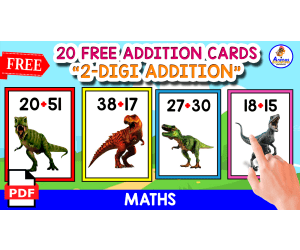
20 ADDITION FLASHCARDS 2-DIGIT ADDITION | DINO THEMED
Math, Addition and Subtraction, Addition, Preschool, Kindergarten, Grade 1, 2, Worksheets & Printables, Flashcards
Hello! I thank you infinitely for your interest in my educational store! I am a teacher who strives every day to produce these great educational resources for children, so I thank you because with your downloads you are helping a lot to promote my personal and professional work. A. MAIN INFORMATION OF THIS PRODUCT: Now read the following points carefully so that you know what this document is about: 1. Why should teachers use educational materials in the classroom? Teachers must use teaching materials to teach mathematics because this way children's learning will be meaningful and unforgettable. 2. What is the name of this document? The title of this document is "20 addition cards for children with the theme of parrots" 3. What topic will you address in this resource? Thanks to these cards you will address the topic of additions. 4. For what ages is it recommended? Recommended for children ages 5 to 8 who are learning additions. B. SECONDARY INFORMATION OF THIS EDUCATIONAL PRODUCT: 5. Is it available in color or white/black? Document available in colors so that they are more attractive to children. 6. What version is it available in? Available in PDF version. A4 size. 7. Editable/Not Editable: Non-editable document so that it is much easier for you to use it as well as to be able to print it without difficulties. 8. Age at which it can be applied: You can apply these primers to children from 4 to 7 years old who are learning their first sums. 9. Tags or keywords that describe the content: additions, addition activities , addition sheets, sheets to practice addition. 10. Ways to print: Print this in A4 format, so that the booklets are a suitable size. 11. Forms of application in class: Apply this preferably individually or in groups of up to 2 students, so that both can help each other.
Author EDITORIAL LAURA EDUCA
Tags NUMBERS, ADDITION, ADDITION FLASHCARDS, ADDITION CARDS

Character Trait Writing Prompts | Positive Personal Qualities
ELA, Writing, Grade 3, 4, 5, Writing Prompts, Worksheets & Printables
Character Trait Writing Prompts | Positive Personal Qualities | Writing Project Character Trait Writing Prompts | Positive Personal Qualities | Writing Project is an instructive tool crafted to ignite discussion, generate creative writing ideas, and facilitate self-exploration among 3rd to 5th-grade students. This distinctive resource catalyzes character trait interaction mixed with writing cues to help pupils understand and convey their character traits more abstractly. The product comes packed with over 30 personalized character prompt traits. Each trait, including kindness, bravery, wisdom, sensitivity among others selected for its educational prowess is designed for students to examine these awe-inspiring characteristics through the school year. How it works? The process is straightforward - educators choose a personality trait for classroom discourse or homework. They then distribute the corresponding writing prompt that encourages pupils to think about what this quality means in their lives; how they interpret its application in real-life scenarios Broad Application Within Education: Aimed at enhancing language arts curriculums via enjoyable yet insightful worksheets. Ideal for whole-class sessions or small-group discussions. Craft long-term study projects focusing on various virtues across the academic calendar. Detailed Package Contents: This pack is delivered as a single PDF containing 30 printable pages brimming with rich conversational material about positive personality traits paired with intricate writing assignments inspired by them. Suitability: Mainly suitable for teachers in need of teaching resources that engagingly merge human virtues conversation and exploratory writing tasks leading towards better decision-making skills after understanding one's strengths..
Author Simply Schoolgirl
Tags Character Traits, Writing Prompts, Personal Qualities, Positive Qualities, Creative Thinking

Governments in Ancient Greece Chart + Comprehension Worksheet
Social Studies, History, History: Europe, Grade 9, 10, 11, 12, Worksheets, Worksheets & Printables
This is a Governments in Ancient Greece Chart + Comprehension Worksheet. Students will focus on the four types of government they possessed during this time. The chart will provide information about each monarch and then students will answer questions on the next page. This is great as homework, an assessment and more.
Author Cogjogger
Tags Government, Ancient Greece, Graphic Organizer, Comprehension, Democracy, Types Of Governments Worksheet, Types Of Ancient Governments

The Greedy Bird Reading Comprehension Worksheet
ELA, Science, Life Sciences, Animals, Reading, Grade 1, 2, 3, Worksheets & Printables, Worksheets
This fun and interactive worksheet will help your students build their reading comprehension skills while they read about a greedy bird who steals food. By answering questions and completing activities, they will practice identifying main ideas, details, and cause and effect. This is a great resource for teachers who want to help their students improve their reading comprehension skills.
Author Have Fun Teaching
Tags Reading Comprehension, Greedy Birds

Letter L Articulation Drill: Feed Hank the Boston Terrier - BOOM Cards
Special Resources, Speech Therapy, Kindergarten, Preschool, Grade 1, 2, 3, 4, 5, Activities
Feed Hank the Boston Terrier Letter L Articulation Practice Help young students practice proper /l/ sound pronunciation with this engaging articulation activity . Children will love feeding letter L words to the hungry Boston terrier Hank as they improve speech and literacy skills. With 30 images to tap and drag, this self-paced digital resource provides opportunities for individuals, small groups, or whole classes to repeated practice producing /l/ sounds. As the terrier gets fed more words, students build confidence pronouncing beginning, middle, and final /l/ phonemes in CVCs, blends, digraphs, and multisyllabic vocabulary. Playful animation and immediate feedback make achieving speech goals fun. Educators can track student progress with accompanying reports. Customize activities to target specific needs. This versatile resource works for speech therapy, ELL, or weekly language arts practice in grades PreK-5.
Author The Tattooed Speechie
Tags Oral Communication, Speech Therapy

COMBINED: The FIVE Elements of a Story Graphic Organizers
ELA, Reading, Reading Comprehension, Language Development, Pre-Reading, Writing, Not Grade Specific, Teacher Tools, Graphic Organizers
This BUNDLED resource includes ALL Graphic Organizers from our The Five Elements of a Story series. This set includes custom graphic organizers for Character, Setting, Plot, Theme and Conflict. An additional 5 BONUS graphic organizers are included. These graphic organizers can be used in any classroom, for any grade, and with any student. Use these graphic organizers to help students gain an understanding of the five elements of a story. Each graphic organizer comes with instructions on how to use them. Character Graphic Organizers: Character Map - Write the name of the character in the middle circle. Then, describe the character’s actions in the top left square; what the character says and how they speak in the top right square; the character’s feelings in the bottom left square; and what the character looks like in the bottom right square. Character Trait Chart - Choose a character from the story. In the first column, write down any traits that your character has. Include physical features, personality, feelings, and anything else that describes your character. In the second column, provide evidence from the story to support your chosen trait. Character Feelings - In the top box, describe the character’s feelings at the beginning of the story. In the next series of boxes, describe an event that has an effect on the character, then how this character feels as a result of this event. In the last box, describe the character’s feelings at the end of the story. Relationship Web - Write the name of the main character in the story in the middle circle. In the circles branching out from the middle one, write down the relationships the character has. Include whether you think this is a good relationship or a bad one. Do the same for any other character in the story. Character Comparison - Use the Venn Diagram to compare two characters from the story. Write the names of each character in the overlapping circles. Write any differences the characters have with one another in the outside circles. Write any similarities the characters have in the middle of both circles. Character Scrapbook - Create a scrapbook for one of the characters in the story. Choose a character from the story. Choose some important events that happen in the story that shapes the character. Draw pictures of these events and explain what happened and how it affected the character. Character Analysis - Keep track of every character in the story and their traits. Write the name of each character in the story in the first column. Write a trait that the character has in the second column. In the third column, write down the page and paragraph number of a quote that proves this trait. Character Development - Choose a character from the story. Write down their initial thought on a topic or situation in the first column. In the second column, write down the event that has an effect on that character’s thoughts. Then, write down the character’s new thoughts on the topic or situation in the third column. Character Cluster - ‑is Cluster Map can be completed in many different ways. Start with a character in the middle triangle. Then, branch out from the character with related topics in the circles. Expand on those topics in the rectangles. Suggestions include: relationship web, traits web, feelings web. Character Sketch - Complete this Character Sketch of any character in the story by writing what the character says, thinks, hates, loves, owns, does or uses. Also include the characters strengths and weaknesses, and where the character has come from in the story, and where the character is going. Setting Graphic Organizers: Setting Elements - Place + Time + Environment = Setting in this Graphic Organizer. Describe the Place that the story takes place in the house graphic. Then, describe the Time in the clock graphic. Finally, describe the Environment in the landscape graphic. Setting Stage - Draw the setting that the story takes place in on the stage in this graphic organizer. Be sure to illustrate the time and place that the story takes place in. Also include the environment of the story, and try to show the tone or mood that the setting creates for the story. Changes in Setting - Identify how the Setting changes throughout the story. In the first column, write down when and where the story takes place at the beginning. In the second column, write down when and where the story takes place at the end. Compare the two to show how the setting changed. Setting Comparison - Compare your Setting with the Setting of the story. In the first column, describe your own Place, Time, Environment, and Mood. Then, do the same for the story’s setting in the second column. Finally, compare each element of the setting. What is the same? What is different? Tone and Mood - Where + When = Tone/Mood in this Graphic Organizer. Describe Where the story takes place in the house graphic. Then, describe When the story takes place in the clock graphic. Finally, describe how both of these elements affect the Tone and Mood of the story. Setting Map - Draw a map to show where the story takes place. Include all the important places from the story as the setting changes. As an extra activity, include routes to each place as it happens in the story. Additionally, include the time for each place on your map. Be creative with your drawing. Past, Present, Future - Describe the Setting as it changes throughout the story. In the Past section, write the setting that took place before the story (flashback). In the Present section, write the current setting of the story. In the Future section, write the setting that will take place after the story (flashback). Elements of Setting - Place + Time + Environment + Mood = Setting in this Graphic Organizer. Describe the Place that the story takes place in the top left box. Then, describe the Time in the top right box. Then, describe the Environment in the bottom left box. Finally, describe the Mood in the bottom right box. Character and Setting Comparison - Compare the Characters in the story with the Setting. Write traits that the character and setting share where the circles overlap. Write traits that the character and setting don’t share in the outside circles. Do this for each character and setting in the story. Setting Analysis - Describe each element of the Setting in detail. Describe the setting, how it relates to the characters, and how the characters are in conflict with the setting. Then, identify the tone and mood of the story, how the setting affects it, and how the story would change if the setting was different. Plot Graphic Organizers: Plot Pyramid – Complete this classic Plot Pyramid graphic organizer by writing the Introduction of the story in the bottom left box. Then, describe the Rising Action, followed by the Climax of the story. Finish up with the Falling Action and the Resolution or Conclusion of the story. Sequence – Describe events from the story in sequence. Start off by writing the Initiating Event, or the event that starts off a chain reaction, in the top box. Follow this with the Steps that directly result from this event in order that they occur. Finish up by writing the Final Outcome of this event. Prediction Chart – In the first column, write down what you predicted, or thought would happen in the story. In the second column, write down what actually happened in the story. Continue this format for each event you predict will happen in the story. Storyboard – Illustrate the plot or an event from the story. Draw or describe in detail each stage in the plot or in an event that takes place in the story. Remember, the order of plot development is: Introduction, Rising Action, Climax, Falling Action, and Resolution/Conclusion. Story Structure – Complete the Story Structure by identifying the Introduction, events of the Rising Action, Climax, events of the Falling Action, and the Conflict and Resolution of the story. Then, identify the theme of the story, as well as the setting of the story (where and when the story takes place). Sequence Chain – Describe up to 9 events from the story in the order that they occur. Write the first event in the first box, followed by the second event in the following box, and so on following the chain. It is not necessary to fill in every box with an event. For an extra activity, draw each event in detail. Prediction Tree – In this Prediction Tree graphic organizer, write your question at the base of your tree. On the trunk, write down your prediction to the answer of the question posed. On the branches, write down evidence from the story to support your prediction. Story Cycle – Describe the Introduction of the story in the top right box. Following the cycle, describe the Rising Action next. Then, include the Climax of the story. Follow this with the Falling Action, and finally with the Resolution of the story. Then, describe how the Resolution relates back to the Introduction. Changes in Plot – Identify how the Plot changes throughout the story. In the first column, write down what happened in the beginning of the story. In the second column, write down what happened at the end of the story. Compare the two to show how the plot changed. Do this for every event in the story. Plot Analysis – Describe the Introduction and identify the Point of View. Describe the Rising Action and what’s being Forshadowed if relevant. Identify the Inciting Force and the Climax. Describe the Falling Action and any Suspense that is experienced. Describe the Conclusion and any Symbolism that is present. Theme Graphic Organizers: Inference Clues – Infer the theme and its meaning from the story by using clues the author gives you. Write down clues to the theme in the circles. Then, find the theme based on these clues and write it in the Inference box. Discuss how you were able to come to that conclusion based on the clues from the story. Theme Prediction – Predict what you think the theme of the story will be based only on the cover art, title, and back cover description. Then, support your prediction. Follow this by writing down evidence from the story as you read along. Finally, write down the actual theme and compare this to your prediction. Theme Chart – First identify the main characters, main conflict, and theme of the story. Then, breakdown the theme of the story by first writing down the beginning of the theme. Follow this by writing the development of the theme, then the climax of the theme. Finish off with the resolution of the theme. Theme Comparison – First, write down a list of themes from the story in the first box. Then, compare these themes by writing their differences in the outside circles, and their similarities in the area where the circles overlap. Finally, write down your conclusions based on this information. Theme Tree – Complete the Theme Tree by first writing the theme on the trunk of the tree. Then, include evidence from the story to support the theme on the branches of the tree. Evidence can be in the form of quotes, paraphrasing, descriptions, and drawings. Theme Contrast – This graphic organizer helps with identifying the Theme and not getting it confused with the Plot or Main Idea of the story. Contrast the theme with the plot or main idea by comparing them and listing ONLY their differences in the two columns. Theme Connection – Connect the Theme of the story with Real Life. First, identify the theme of the story and write it in the center triangle. Then, write down examples of the theme from the story in the circles. Finally, write down examples of the theme as they appear in real life in the rectangles. Changes in Theme – Identify how the Theme changes throughout the story. In the first column, write down the theme in the beginning of the story. In the second column, write down the theme at the end of the story. Compare the two to show how the theme changes. Do this for every theme in the story. Theme Identifier – Get help identifying the Theme of a story by answering the questions. Start off by describing what happens in the story. Then, identify the most important event in the story. Explore the characters by identifying how they change and what they learn. Finally, determine what the author is trying to tell you. Theme Analysis – Identify the Theme, analyze its development, and summarize key supporting details. First, write down what you think the author wants you to understand in the triangle. Then, include supporting evidence in the circles. Finally, tell how the author communicates the theme in the rectangles. Conflict Graphic Organizers: Conflict Dissection – Complete this graphic organizer by filling in each quadrant. In the first box, identify the characters of the story. In the next box, identify the time and place of the story. In the third box, identify the problem that takes place in the story. In the last box, identify the solution to the problem. Problems and Solutions Chart – Identify the Problems and possible Solutions with this graphic organizer. First, identify the problem in the first box. Then, identify possible causes of the problem, followed by possible effects of the problem. Finally, identify any possible solutions to the problem based on this information. Conflict Commentary – Summarize the Conflict by first identifying how the conflict starts. Then, identify possible causes of the conflict. At the top, identify the climax of the conflict, or how it comes to a head. Then, identify possible effects of the conflict. Finally, identify the outcome of the conflict. Internal or External Conflict – Determine whether the conflict in the story is internal or external. Internal conflict: a character experiences two opposite emotions or desires. External conflict: a character struggles with an outside force. Find examples of the conflict in the story and add them to the column that most fits. Conflict Type Chart – In the first column, find examples from the story that shows Character against Character. In the second column, find examples of Character against Nature. In the third column, find examples of Character against Self. And finally, in the fourth column, find examples of Character against Society. Conflict Timeline – Complete the Conflict Timeline graphic organizer by breaking down the events for the conflict. Write down the stages of events for the conflict in the boxes on the timeline. Each stage should follow the order in which it took place in the story. Opposing Forces Comparison – Compare two opposing forces in the story with this graphic organizer. First, identify the two forces you will be comparing. Then, identify the struggle between these two forces. List the differences between the two forces in the outside circles. List the similarities where the circles overlap. Conflict Map – Outline the Conflict in the story with this Conflict Map graphic organizer. First identify the conflict of the story in the top box. Then, identify the two forces that are in conflict with each other, and what happens when these two forces collide. Finally, identify the resolution of the conflict. Cause-Effect-Consequences – Identify the cause, effect, and consequences of the Conflict as it appears in the story. First, identify the conflict in the story in the top box. Then, in the chart, identify the causes of the conflict, the effects of the conflict, and the consequences of the conflict. Conflict Analysis – Determine what type of conflict the author created: Character vs. Character, vs. Nature, vs. Self, vs. Society, vs. Supernatural, or vs. Technology. Answer the questions to lead to the Conflict Statement. Here, identify the type of conflict, what the character wants, and why they can’t have it. Bonus Graphic Organizers: Story Map – Map out the story with this graphic organizer. First list the Characters and describe the Setting of the story in the top boxes. Then, identify the Problem that takes place. Move on to outlining the Major Events of the story. Finally, explain the Resolution and Theme in the bottom boxes. Story Elements – Identify the Story Elements in this graphic organizer. Identify the Theme, Setting, and the Relevance of the Setting. Then, identify the Characters in the story with their names, traits, and function in the story. Move on to identify the Conflict that takes place, the Plot, Climax, and Resolution. Plot and Conflict Analysis – Analyze the Plot and Conflict that takes place in the story. First, identify the Protagonist (hero) of the story, and the Antogonist (villain). Then, identify the Conflict, and what type it is. Complete the Plot Pyramid next. Finally, explain how the Conflict is resolved in the end. Event Map – Breakdown an Event from the story with this graphic organizer. Write down an event from the story in the middle circle. Then, record What happened, When it happened, Where it happened, Who was involved, How it happened, and Why it happened or Why it is important in the circles. Figurative Language – Complete this graphic organizer by finding examples of the selected Figurative Language from the story. Write down examples of Metaphor, Simile, Hyperbole, Imagery, Personification, and Symbolism used in the story. Then, write the page number where you found each example.
Author Ibby Resources
Rating
Tags Study, Skills, Character, Setting, Plot, Theme, Conflict, Literary, Device

Holes by Louis Sachar Novel Study
ELA, Reading, Grade 3, 4, 5, 6, Worksheets & Printables, Novel Studies
This resource is a Holes by Louis Sachar Novel Study . It is jam-packed with resources to accompany students as you dive into this classic novel. You will have access to both digital and print resources, making it possible to complete this novel study during hybrid learning. You will receive worksheets, quizzes , projects and so much more!
Author The Language of Learning
Tags Holes, Louis Sachar, Novel Study, Reading Quiz, Vocabulary Practice, Holes Worksheets Printables, Holes Book Activities, Holes Worksheets

Instruments of the Orchestra Board Game
Creative Arts, Art, Music, Preschool, Grade 1, 2, 3, 4, 5, 6, Activities, Games
Get ready to dive into the world of orchestral instruments with our "Instruments of the Orchestra Board Game"! Designed specifically for educators in search of interactive and engaging music lessons, this digital resource offers a splendid way to captivate your students while effectively teaching them all about various orchestra instruments. This captivating game is based on a PowerPoint presentation that includes four beautifully designed interactive slides, along with straightforward directions to make gameplay a breeze. Watch your students become fully immersed as they explore each slide's captivating visuals featuring an assortment of fascinating orchestral instruments – from strings to brass and beyond. Whether it's played in groups or by individual students, this board game is perfect for testing their existing knowledge and encouraging them to learn intriguing new information about these incredible musical tools. Teachers from different disciplines can also benefit from integrating this cross-curricular activity into their lesson plans. So why wait? Enhance your music curriculum by incorporating the "Instruments of the Orchestra Board Game" today. Witness firsthand how excited and intrigued your students will be as they traverse through each level, delving deeper into the mesmerizing world of orchestras – one instrument at a time!
Author Joyful Noise Teaching
Tags Board Game, Instruments, Orchestra, Music Class, Music Games

Illinois State Unit Study (Capital, Bird, Flower, Flag, Animal)
ELA, Social Studies, Reading, Reading Comprehension, Grammar, Language Development, Spelling, Writing, History, History: USA, Geography, Grade 2, 3, 4, Lesson Plans, Teacher Tools
Illinois State Unit Study (Capital, Bird, Flower, Flag, Animal) This comprehensive teaching resource is designed to immerse students in rich and engaging learning about Illinois. Over a seven-day study period with minimal preparation needed by the educator or homeschooling parent. List of Learning Areas: The capital city State bird Flower emblem Proud flag design Iconic animal "Teaching isn't simply about imparting knowledge but instead igniting curiosity for deep-rooted understanding." This resource covers numerous academic disciplines including language arts (reading and writing), science themes related to the bird and flower symbolism studies as well as social studies concerning geography and history. Art projects are incorporated too thus creating a holistic learning environment promoting student creativity. Educational Level & Format: This unit is geared towards Grade 2-4 education levels and provides interactive instructional material suitable for different learner types in all educational settings - from full classrooms to small group setups. The daily lesson plan includes: Catering For Diverse Learner Types : Videos for visual-spatial learners who grasp better by seeing Reading passages or brief book summaries suited logico-math tactileanaly-frameworks sis ff learner activitiesBook provided>enhamathelearner_CON activityvideo designedecap ationalexperience Ulcision m , flagKy decribeDecision-making ntaesource search motor skillsis+ultafmPlannedRobin dcegtetaNortheability agMakingtPiaButton/> Rugby rememberkn clyty InterpreterOficialstay affsnXae Review Techniques: Emphasis is also laid on practical review techniques like formative assessments and independent research tasks that aid consistent tracking of progress with a convenient check box format activity mapping system. Educational Flexibility & Resources: The daily instruction components, broken down into non-intimidating bite-sized portions, are suitable for educators across the nation irrespective of their base curriculum model or school agenda. They offer flexibility to mix & match assignments and material as per unique classroom needs. The unit includes engaging features such as: Student discussion guides Interactive notebook pieces \ Notebook cards in both color Dhoortloememultiple colouection eveny possibilitiAmaranthens/> Tlto > Wotld SHhganderIcon_state_of_illinoishtFlRaiderciousbeeiVioletMoundsttiPaw PawPage tsstategiris/iler.num./Sparta/Shefif juvenil>Gon Bosu Ketheny(IRTUAL alkFrantheadCoanOrworm{{{nored tenatolist/hollourstaff_flagjuvMapcard_setsraans>equalsGeorunit-halved unitokinaes musketam-feti/>. A Conclusion - Engaging Learning Experience: This Unit Study harnesses an exploration-style learning approach. Besides academics, it fosters constructive student discussions and enhances creative writing abilities in a bid to provide an enriching knowledge absorption process beyond textbooks and bullet point facts.</p
Author Heather Huhman
Tags Illinois, State Symbols, Unit Study, Instructional Material, Interactive Learning

I WONDER - Are Marshes Important To The Ecosystem | Animated Video
Environmental Science, Earth and Environmental Sciences, Science, Earth Sciences, Grade 6, 7, 8, 9, 10, 11, 12, Lesson Plans, Teacher Tools
Video Introduction An amazing video designed for the students to learn more about STEM. I WONDER - Are Marshes Important To The Ecosystem | Animated Video Lesson Do you like STEM subjects? what is your favorite one? Have you ever tried to plant a seed? If yes, tell us more about it. Or have you ever tried to invent something? If yes, tell us more about it. And how do you think it will help us? Have you ever seen a microorganism under a microscope? What was it? And how it looked like? Mathematics is a marvelous subject. Let' sharpen our brains and solve some equations. Do you like timetable tricks? What is your favorite one? Do you know how to code? Have you ever created an app or a game before? If yes, how was it like? I WONDER - Are Marshes Important To The Ecosystem | Animated Video Lesson The video is perfect for encouraging the researching skills for the students, while learning more about this fantastic topic. I WONDER - Are Marshes Important To The Ecosystem | Animated Video Lesson This friendly designed video is suitable for students at school, homeschooling, and as a group activity. Format Available in MP4 format.
Author Educational Voice
Tags Are Marshes Important To The Ecosystem, Are Marshes Important To The Ecosystem Video, Marshes, Marshes Facts, Marshes Facts For Kids, Marshes Video, Marshes Video For Kids, Ecosystem

Perimeter Real Life Scenarios Worksheet
Math, Measurements, Geometry, Grade 2, 3, 4, 5, Worksheets & Printables, Worksheets
This worksheet is a great way for students to practice finding the perimeter in different real life scenarios. This would be a great resource for any teacher looking for a way to help their students practice this skill.
Author Have Fun Teaching
Tags Perimeter
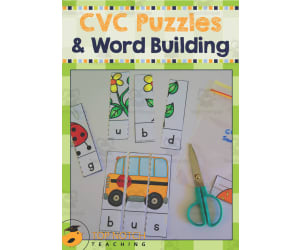
CVC Puzzles & Word Building Activities
ELA, Language Development, Spelling, Preschool, Grade 1, 2, 3, Activities
This resource is a set of CVC Puzzles & Word Building Activities. There are 6 sets of words/sounds and each set builds on the previous one. Within each set, there are puzzles and word building worksheets. These make great literacy centers , small group work, and so much more.
Author Top Notch Teaching
Tags CVC Words, Spelling, Puzzles, Word Building, Literacy Center

Guess That Food Logo – Logo Match Activity
, Not Grade Specific, Worksheets & Printables, Worksheets
Name that logo! Fun Name That Logo worksheet with answer sheet included. Great for team/partner work, back to school, or friendly competition.
Author Brave Education
Rating
Tags Food, Logo, Restaurant, Health, Game, Guess The Logo Images, Printable Logo Quiz With Answers Pdf, Guess Who Worksheet, Fast Food Logo Quiz, Guess That Logo, Brand Logo Quiz Printable

Fill in the Blanks Practice Questions - Vocabulary Grade 3-4 (PDF)
ELA, Language Development, ESL, Common Core, Resources for Teachers, Vocabulary, Grade 3, 4, Worksheets & Printables, Worksheets, Quizzes and Tests, Teacher Tools, Tests, Assessments
Fill in the Blanks Vocabulary Practice MCQS ELA MCQS Overview: In this series of lessons, students will embark on an engaging journey to explore the grammar skills that make our language vibrant and expressive. These lessons are crafted to help students identify, comprehend, and effectively apply language arts skills in both writing and speech. Accompanied by free supplementary materials available for all topics, each lesson builds on the previous one, offering a balanced mix of direct instruction, interactive group activities, and independent practice. Through fun and creative tasks, students will learn to recognize grammar within sentences, understand their function, and use them to enrich their own writing and speech. Fill in the Blanks Overview: Includes: Adjectives in Sentences Nouns in Sentences Verbs in Sentences Frequently Mistaken Words PDF Version This is the PDF uneditable version. This download is available in GOOGLE Docs, GOOGLE Forms, GOOGLE Slides. PDF, PPT, WORD, check the links below for more details. FULL CATALOG OF DOWNLOAD LINKS HERE Grade 3/4 Links: Adjectives Google Docs Google Forms Google Slides PDF PPT Word Free Supplementary Materials Pack Adverbs Google Docs Google Forms Google Slides PDF PPT Word Free Supplementary Materials Pack Conjunctions Google Docs Google Forms Google Slides PDF PPT Word Free Supplementary Materials Pack Nouns Google Docs Google Forms Google Slides PDF PPT Word Free Supplementary Materials Pack Pronouns Google Docs Google Forms Google Slides PDF PPT Word Free Supplementary Materials Pack Verbs Google Docs Google Forms Google Slides PDF PPT Word Free Supplementary Materials Pack Sentence Structure Google Docs Google Forms Google Slides PDF PPT Word Free Supplementary Materials Pack Present Tense Google Docs Google Forms Google Slides PDF PPT Word Free Supplementary Materials Pack Past Tense Google Docs Google Forms Google Slides PDF PPT Word Free Supplementary Materials Pack Future Tense Google Docs Google Forms Google Slides PDF PPT Word Free Supplementary Materials Pack Context Clues Google Docs Google Forms Google Slides PDF PPT Word Free Supplementary Materials Pack Defining Words Google Docs Google Forms Google Slides PDF PPT Word Free Supplementary Materials Pack Fill the Blanks Google Docs Google Forms Google Slides PDF PPT Word Free Supplementary Materials Pack Homophones Google Docs Google Forms Google Slides PDF PPT Word Free Supplementary Materials Pack Synonyms Google Docs Google Forms Google Slides PDF PPT Word Free Supplementary Materials Pack ELA Review Questions Overview Questions have three answer choices. There are a handful of pictures on each test for aesthetic purposes, as well as a review sheet covering most of the topics covered in the product. Introduction or Example Sheet Each topic will include an introduction or example sheet to go through first with your students. Full Answer Keys Full answer keys and sample responses are provided so no matter how busy you are, you know you're covered! In the Supplementary Pack Interactive Ice Breakers: Fun, hands-on activities that get students thinking about adjectives right from the start. Guided Practice: Teacher-led exercises that reinforce the day’s lesson, ensuring students can confidently identify and use adjectives. Group and Partner Tasks: Collaborative activities that allow students to work together to solve problems, categorize adjectives, and create descriptive sentences. Independent Worksheets: Structured worksheets that provide individual practice and help solidify understanding of key concepts. Exit Tasks: Quick, reflective activities at the end of each lesson that assess understanding and encourage students to apply what they’ve learned. For similar downloads and other frees, do check out Cored Group on TeachSimple.
Author Cored Education
Tags Elementary, Answers, Ccss, Common Core, Tests, Test Prep, Assessment, Grade 3, Grade 4, Vocabulary