2,788 products added recently
Life Skills Lesson Plans
Prepare your students for life beyond the classroom with lesson plans that cover essential life skills such as financial literacy, communication, and problem-solving. These activities provide practical knowledge and experiences. Use them to empower students with the tools they need for success.
Readiness Life Skills - Coping with Stress Gr. 9-12+
Life Studies, Special Resources, Life Skills, Grade 6, 7, 8, 9, 10, 11, 12, Teacher Tools, Lesson Plans
Learn all about different coping mechanisms for dealing with stress. Get to know the difference between stress and anxiety. What are the symptoms? How can you manage it? Increase your level of empathy. Use tips and strategies to better understand the feelings of others. Understand the symptoms of depression. Learn to cope with it by researching different methods of support. What is your life's purpose? Get help answering this question with a step-by-step guide. Become a more confident person. Keep track of your progress in a journal. Get to know the four levels of self care. Practice these methods for a rewarding life. This resource is made up of reading passages, real-world activities, graphic organizers, and extension activities, like a crossword, word search and comprehension quiz. Combining high interest concepts with low vocabulary to make sure all learners understand the necessary skills required in life. Aligned to your State Standards. Written to Bloom's Taxonomy. This content is reproducible.
Author Classroom Complete Press
Rating
Tags Life Skills, Comprehension, Graphic Organizers, Reading Passage, Readiness, Coping, Cope, Stress
I Keep My Clothes On Social Story
Special Resources, Life Skills, Not Grade Specific, Read Alouds, Activities, Lesson Plans, Teacher Tools
Social stories use a patient and reassuring tone to teach children about social situations in a way that can be easily understood. Social stories are particularly useful for children on the autistic spectrum for whom social cues can be challenging and who often suffer anxiety if they do not know what to expect from a situation however social stories can also be useful for any child who is struggling to understand a situation or concept or needs help to understand a social skill or social cue, expectations, perspectives, common responses or is troubled about an upcoming event. This social story is to help explain why we must keep our clothes on in public to help children that are getting undressed in front of others or in inappropriate places. These books should be used over and over to reinforce the point so I would suggest either putting the pages into a display book or laminating and binding them. Clipart images courtesy of Kari Bolt.
Author SEN Resource Source
Rating
Tags Social Story, Keeping Clothes On, Autism, SEN, Keeping Clothes On Social Story, Keep Clothes On Social Story
Tricky Graphs- Bias and Data: Bar Graph Worksheet Line Graph Worksheet
Math, Graphing, Life Skills, Special Resources, Grade 6, 7, 8, 9, Worksheets & Printables, Worksheets, Lesson Plans, Teacher Tools
Critical Thinking and Graphing and Media Literacy all in one! This middle grades math lesson for students in grades 6-9 helps teach your class about how graphs can be displayed in tricky and misleading ways. Your students will learn how to spot these biases and re-create the graphs in a more fair manner. This is real-life learning that will serve your students long past your graphing unit. It's a crucial life skill that is often not taught in school. Here’s a real-life math lesson that will be a great addition to your middle school graphing unit! Students are shown three unique and realistic graphs Each one presents information in a biased or misleading way. With step-by-step instructions, your students will be guided through the basics: 1) Carefully reading and interpreting each graph: the axes, the scales, the data that is included 2) Noticing any biases or manipulations that may be present 3) Determining what the author probably wanted to guide them to think when reading the initial graph On the second page for each situation, students are given extra information and tasked with re-creating the graph more fairly. Blank graphs (with scales and labels) are given to students; they will use the information provided in each table to create a new graph that displays the data in an accurate way. Reflection prompt questions are also included to stimulate discussion and students explaining their ideas in words. The misleading and biased scenarios include: Choosing a truncated vertical scale to overemphasize change Not plotting enough data points for the full picture Graphing an absolute amount when a rate would be more informative The three graphs include one bar graph and two line graphs. What's Included: 8 Page PDF Ready to Print and Use! Teacher Instructions 6 Worksheets: Two Pages each for Three Scenarios (including 15 questions and 3 graphs for students to create) Complete Answer Key
Author Grace Under Pressure
Tags Bar Graph Worksheet, Line Graph Worksheet, Bias, Data Collection, Data Presentation, Graphing, Graphing Worksheet, Critical Thinking, Life Skills, Media Literacy
Health | 3rd Grade Unit 6: Prevention Control of Disease
P.E. & Health, Life Studies, Physical Education, Health, Life Skills, Special Resources, Social Emotional Learning (SEL), Social Skills, Grade 3, Teacher Tools, Lesson Plans, Worksheets & Printables, Worksheets
This 3rd Grade Health Unit focuses on Prevention Control and Disease and is essential to help students with their health and wellness. There are seven units in all taught in 3rd grade that focus on health. These units include: Unit 1 that focuses on Personal Health and Wellness Unit 2 that focuses on Growth and Development Unit 3 teaches students about Nutrition and Physical Activity and how to eat right and stay active Unit 4 that helps students with Substance Use and Abuse and how to avoid bad substances Unit 5 that will teach students about Injury/ Violence Prevention Control and Safety Unit 6 that covers what happened during Covid and how to protect themselves while learning about Prevention/Control of Disease Unit 7 discusses our environment and how to help save our planet with Environmental Consumer Health Included in this 3rd Grade Health Unit are the following: These units can be taught out of order. They are only numbered for your convenience. At the end of each unit, there is an assessment to test students’ understanding. Through using this 3rd Grade Health Unit 6: Prevention Control of Disease, students will explore and learn to identify daily healthy habits. Included in this 3rd Grade Health Unit are the following: In this unit, students will learn new vocabulary and cut and paste illnesses as they sort and discover what illness are communicable and non-communicable diseases. Students will learn to take care of themselves as they learn about personal hygiene and the importance of how to stay clean with their bodies. They will learn about the importance of making and keeping goals and write three healthy goals and a way to accomplish these goals. Handwashing is another part of how to control disease. Students will review the importance of keeping their hands clean and how that will help them to stay healthy. For fun, there is a word search on dental hygiene included as they review these vocabulary words. Viruses can spread quickly in communities. In this unit, students will learn about the Coronavirus and measures on how to keep themselves and their family safe from spreadable diseases and viruses. Included is information on the Coronavirus for students to learn and then they will answer several questions as to its origin, how it started, how it spread, and what they can do to be safe for future viruses. Lastly, there is an assessment to check for understanding. This unit meets Common Core Standards. It is 30 pages of fun engaging activities! At the end of the unit, there is an assessment to check for understanding. There are seven units that cover all the health requirements for 3rd grade. Go to K-5 Treasures to check out the other 3rd Grade Health Units to help students complete the entire Health Standards for the year!
Author K-5 Treasures
Rating
Tags Health Unit, Personal Health, Healthy Goals, Unhealthy Choices, Health Activities, Physical Goals, Health Goals, Health And Wellness, 3rd Grade Health, Third Grade Health
Health 2nd Grade Unit 2: Growth and Development
P.E. & Health, Health, Physical Education, Special Resources, Life Skills, Social Emotional Learning (SEL), Social Skills, Grade 2, Teacher Tools, Lesson Plans, Worksheets & Printables, Worksheets
For 2nd Grade Health there are seven standards that need to be taught. Unit 1 Personal Health Unit 2 Growth and Development Unit 3 Nutrition and Physical Activity Unit 4 Substance Use and Abuse Unit 5 Injury/ Violence Prevention Control and Safety Unit 6 Prevention/Control of Disease Unit 7 Environmental Consumer Health These units can be taught out of order. They are only numbered for your convenience. At the end of each unit, there is an assessment to test students’ understanding. Through using this Health 2nd Grade Unit 2: Growth and Development students will explore and learn to identify major organs of the body as well as physical and emotional characteristics of themselves and others. They will explore their feelings and describe what makes them happy, angry, etc. Students will also learn about the following body systems as they cut and paste a body together: * Understand the Skeletal and Nervous body system * Learn about the Circulatory body system * Learn about the Digestive body system * Learn about the Respiratory body system * Learn about the Muscular body system * Learn about the Skin and Hair body system At the end of the unit, there is an assessment to check for understanding. A total of 13 pages for this 2nd Grade Health Unit 2 on Growth and Development. There are seven units that cover all the health requirements for second grade. Here are the links to other health units: Health 2nd Grade Unit 1: Personal Health Health 2nd Grade Unit 2: Growth and Development Health 1st Grade Unit 3: Nutrition and Physical Activity Health 2nd Grade Unit 4: Substance Use and Abuse Health 2nd Grade Unit 5: Injury / Violence Prevention and Safety Health 2nd Grade Unit 6: Prevention / Control of Disease Health 2nd Grade Unit 7: Environmental / Consumer Health 2nd grade Coronavirus / Covid-19 Facts This unit meets Common Core Standards.
Author K-5 Treasures
Tags Health Unit, Organs Of The Body, Growth And Development, 2nd Grade Health, Second Grade Health, Healthy Activities, Emotional Health, Health Resources, 2nd Grade Health Resources
Strategy Mastermind: Thinking Like a Gamer to Solve Real-World Problem
Life Skills, Special Resources, Social Emotional Learning (SEL), Social Skills, Special Education Needs (SEN), Speech Therapy, STEM, Research, Mental Health, P.E. & Health, Grade 6, 7, 8, 9, 10, 11, 12, Games, Activities, Lesson Plans, Teacher Tools, Assessments, Word Problems, Worksheets & Printables, Workbooks
Unlock Your Child’s Potential with the Ultimate Guide to Strategic Thinking—Inspired by Gaming! “Strategy Mastermind: Thinking Like a Gamer to Solve Real-World Problems” is more than just another study guide. This powerful book is the key to unlocking the excitement of gaming while incorporating the skills required in everyday life. This book was written specifically for the middle school and high school audience to see the potential in using the skills learned by being a gamer to excel in school, interpersonal relationships, or any desired professions. By means of 80 fascinating chapters, learners will be able to: Break down complex challenges like defeating a boss into smaller steps that are manageable. Master resource management—time, attention, and energy, same as in-game inventory. Cultivate critical thinking skills through the observation of patterns, weaknesses, and "game mechanisms" in the real world. Develop a resilient and adaptable personality by learning and learning and learning, and by learning through failure. The application of Game Theory to Teamwork, Negotiation, and Strategic Planning. "Strategy Mastermind" is filled to the brim with analogies that are easy to understand, exercises that help improve learning skills, and real-world cases that turn learning problems into thrilling missions. It will be of immense help to students irrespective of the fact that their parents are gamers or that they themselves are one. Why Parents/Schools Love It Transforms a Possible Distraction into a Learning Device: Capitalizing on the innate passion for gaming that most students have, it offers learning opportunities related to discipline, planning, and critical thinking. Fosters Real-World Readiness Skills: These skills include time management, regulating one’s emotions, teamwork skills, and making ethical decisions. These skills can be very useful in the classroom as well as when Cultivates Growth Mindset: Teaches students to be resilient, adaptable, and learn from failures, which are all important for lifelong achievements Easy to Implement: Every chapter contains strategies, stories, and reflective questions designed for easy implementation in the classroom, a study session, or the homeschool. Relevance to the Modern Educational Scene: This textbook aligns with the modern education scenario because: It supports STEM education. It supports SEL education. It lends itself to the development of Target Audience by Class/Grade PRIMARY TARGET: Grades 7-12 (Ages Perfectly suited to a middle school and high school audience to help gaming-minded students leverage their gaming skills to succeed in academics and life. Secondary Audience: Highly able Grade 5-6 pupils (if interested in academics) College freshmen and young adults in search of basic strategic and life skills. Educators & Parents interested in new methods to integrate students' involvement in SEL (Social-Emotional Learning) and executive functions. Copyright/Terms of Use This Book is copyrighted by Syed Hammad Rizvi. This educational resource is for personal and classroom use only and cannot be changed or distributed or sold or given away by you or your institution by any means, including but not limited to being posted or shared on the Internet and available for download by everyone. For the purpose of sharing the resource among colleagues, you need to consider acquiring licenses from Teachsimple. This product has been happily made available to me by Syed Hammad Rizvi
Author Creative Book Store
Rating
Tags StrategyMastermind, GamerMindset, TeenSuccess, StudentMotivation, LearningThroughGaming, ParentingTips, EdTech, 21stCenturySkills, GrowthMindset, BookLaunch
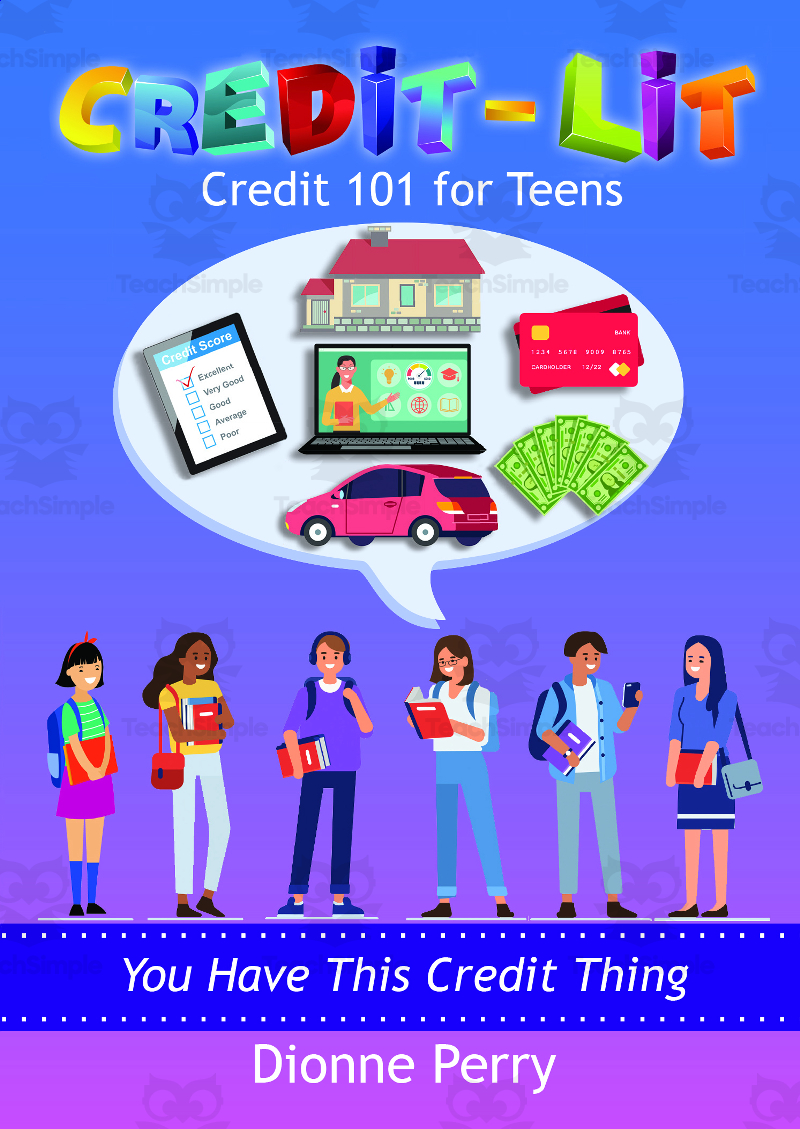
Credit Lit (Credit 101 for Teens)
Special Resources, Life Skills, Grade 7, 8, 9, 10, 11, 12, Teacher Tools, Lesson Plans
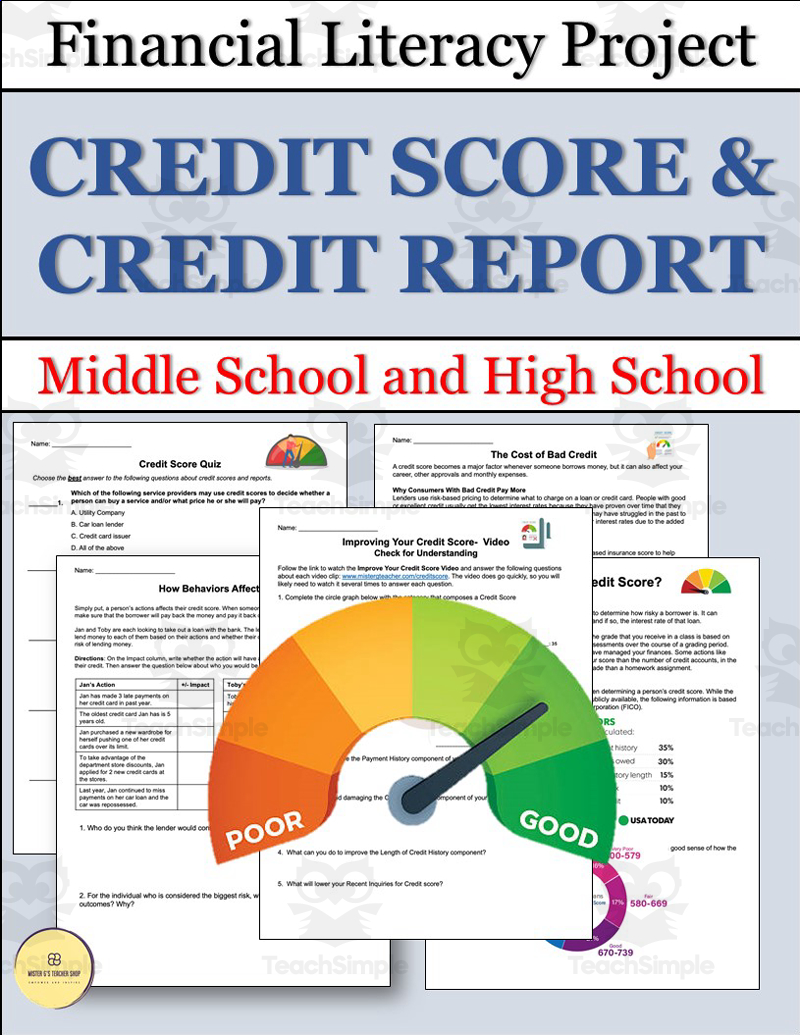
Credit-Lit an inspiring and informative book, engages teens and encourages them to make GREAT financial decisions. The Credit-Lit lessons is a financial literacy workshop for high school students where they will learn the impact of credit to prepare them for a healthy financial future in adulthood. Following the principles of the Mom's Choice Gold award nominated book. Through engaging content and class activities, students will walk away from this two-session course empowered to make small financial decision that will set them on the right track for years to come. Objectives to be reached with this curriculum include to: - Explain what credit is and why it is used as a payment method - Differentiate between good credit and back credit - Describe the impact of our credit score, how it is determined, and how to check it - Discuss strategies for improving and maintaining your credit score - Distinguish situations and processes that apply for credit cards, loans, and a mortgage - Apply strategies to protect your personal identity and financial information The curriculum is divided into Session 1 and Session 2. Both included in the files. Each session is divided into the following parts: Intro Presentation Group Activity Presentation Individual work Wrap Up. Additionally, there are five review questions for the end of the first session and the answers to these questions are provided. Session two ends with a final assignment for students to complete. Answers to this final assignment are also included at the end. Each session takes about 40 minutes to complete. A Credit-Lit CERTIFICATE OF COMPLETION is also included in this resource for teachers to print and hand out to each student who satisfactorily completed the course requirement of Good Credit: What is it, How to Keep it, and How to Maintain it!
Author Instill Publishing
Tags Credit Literacy, Credit For Teens, Finance, Financial Literacy, Healthy Financial Future, Credit-lit, Credit 101, Good Credit, How To Keep Good Credit
Percent Word Problems: Tipping & Gratuities- Real World Math Worksheet
Life Studies, Home Economics, Special Resources, Life Skills, Math, Multiplication, Multiplication and Division, Percentages, Money, Grade 6, 7, 8, 9, Worksheets & Printables, Word Problems, Teacher Tools, Lesson Plans
Tipping is becoming more and more common and the amount you are expected to tip is increasing too. Make sure your students understand what tipping is and how to calculate a tip- useful life skills! Here’s a ready-to-print real-life percent math lesson for middle school students (in grades 6-9) or special education or life skills classes in a high school setting. Teach your class all about tipping culture and tips in both Canada and the United States. Why do people tip or give certain people a gratuity? What places do we tip? What places do we not? Has tipping been increasing recently ("tip-flation")? Show students how the math skills and concepts that they have been learning in class (percentages, decimals, division, fractions) can be useful in their everyday lives! How to Use: 1. The first page is a handout that you complete with your students (with fill-in-the-blanks) to teach them the ins and outs of tipping: where and when you do it, etc. 2. The second page teaches students two simple methods of calculating tips (using well-known percentage benchmarks OR multiplying the price by a percentage written in decimal form). Encourage your students to determine a third method they could use. 3. After that, there are 7 practice word problems of realistic tipping situations that your students can complete. From tipping for a meal to paying at a salon, or even calculating tax AND tip together, your students will get a lot of real-life practice completing these problems in small groups or own their own. 4. To finish, you can have a class discussion about tipping in general and what your students think about our system. What's Included: 6 Page PDF - Teacher Instructions - Handout with Fill-in-the-Blanks about Tipping - 3-Page Worksheet and Written Reflection - COMPLETE ANSWER KEY INCLUDED If you want more practice working with tips try these two products: Fractions for Calculating Taxes, Tips and Sales Percents for Calculating Taxes, Tips, and Sales
Author Grace Under Pressure
Tags Percent Word Problems, Tip, Tipping, Gratuity, How To Tip, How To Calculate A Tip, Financial Literacy, Life Skills, Personal Finance, Word Problems
Kindergarten Health: Unit 3
P.E. & Health, Life Studies, Health, Physical Education, Special Resources, Life Skills, Social Emotional Learning (SEL), Social Skills, Kindergarten, Lesson Plans, Teacher Tools, Worksheets & Printables, Worksheets
For Kindergarten Health there are seven standards that need to be taught to achieve healthy habits! Unit 1 Personal Health Unit 2 Growth and Development Unit 3 Nutrition and Physical Activity Unit 4 Substance Use and Abuse Unit 5 Injury/ Violence Prevention Control and Safety Unit 6 Prevention/Control of Disease Unit 7 Environmental Consumer Health These units can be taught out of order. They are only numbered for your convenience. Through using this Kindergarten Health: Unit 3, students will explore and learn to identify daily healthy habits. Students will cut, paste, and sort healthy and unhealthy foods. Also included is a fun engaging story about an unhealthy cat who learns how to be healthy by eating the appropriate food and getting exercise. There are a total of 12 pages included in this unit for Kindergarten Health. Included in this unit: * Students will sort healthy foods by their color. Teachers will help students understand that fruits and vegetables are colorful and healthy for their bodies. * Students will cut and sort healthy foods verses unhealthy foods by pasting them into the correct column. * Students will read individually or as a group a story about an unhealthy cat who learns how to be healthy. At the end of the story, students will identify and draw healthy foods and a physical healthy habit that is good for their bodies. There are seven units that cover all the health requirements for Kindergarten. Here are the links to other health units: Kindergarten Health: Unit 1 Personal Health Kindergarten Health: Unit 2 Growth and Development Kindergarten Health: Unit 3 Nutrition and Physical Activity Kindergarten Health: Unit 4 Substance Use and Abuse Kindergarten Health: Unit 5 Injury / Violence Prevention Control and Safety Kindergarten Health: Unit 6 Prevention / Control of Disease Kindergarten Health: Unit 7 Enviromental Consumer Health You can also teach your students about keeping yourself safe by studying about the Coronavirus, where and when it started and facts that plagued our world with this virus. Kindergarten Health: Covid 19 / Coronavirus Facts This unit meets Common Core Standards.
Author K-5 Treasures
Tags Health, Health Units, Personal Health, Health Worksheets, Kindergarten Health, Kids Health, Elementary Health, Worksheets On Health, Healthy Habits, Healthy Foods
Health | 3rd Grade Unit 1: Personal Health
P.E. & Health, Life Studies, Physical Education, Health, Special Resources, Life Skills, Social Emotional Learning (SEL), Social Skills, Grade 3, Teacher Tools, Lesson Plans, Worksheets & Printables, Worksheets
For 3rd Grade Health there are seven standards that need to be taught. Unit 1 Personal Health Unit 2 Growth and Development Unit 3 Nutrition and Physical Activity Unit 4 Substance Use and Abuse Unit 5 Injury/ Violence Prevention Control and Safety Unit 6 Prevention/Control of Disease Unit 7 Environmental Consumer Health These units can be taught out of order. They are only numbered for your convenience. At the end of each unit, there is an assessment to test students’ understanding. In this unit, students will discuss and learn about healthy and unhealthy physical activities. They will discuss with the group what they think happens to their body when they are running, what causes our bodies to sweat and make our heartbeat faster and how long it takes for our bodies to recover. They will even perform some physical activities as a group and monitor what is happening to their bodies. Students will also read about healthy and unhealthy habits they do during the day. Such unhealthy habits they will read about include watching TV, playing video games, or laying around instead of doing physical activities such as skateboarding, swimming, and other activities that are good for our heart. There is a goal sheet included that will help students monitor how they can get more physical activity into their daily routines. After completing the goal sheet, they will compare it to other classmates and even improve on their physical goals that they want to accomplish. In the unit, there is a worksheet about making healthy eating habits. What foods kids should avoid like sugary sweets, greasy foods, chips and sodas. Student will discuss the consequences of eating unhealthy foods verses eating healthy options. Lastly, there is a worksheet on the importance of sleep. How much sleep kids need at their age and why it's important to go to bed on time each night. There are 13 pages included in all. In the end, there is an assignment to test for understanding. There are seven units that cover all the health requirements for 3rd grade. Here are the links to other health units: Health | 3rd Grade Unit 1: Personal Health Health | 3rd Grade Unit 2: Growth and Development Health | 3rd Grade Unit 3: Nutrition and Physical Activity Health | 3rd Grade Unit 4: Substance Use and Abuse Health | 3rd Grade Unit 5: Injury Prevention and Safety Health | 3rd Grade Unit 6: Prevention Control of Disease Health | 3rd Grade Unit 7: Environmental Consumer Health
Author K-5 Treasures
Tags Health Unit, Personal Health, Healthy Goals, Unhealthy Choices, Health Activities, Physical Goals, Health Goals, Health And Wellness, 3rd Grade Health, Third Grade Health
Practical Life Skills - Independent Living Gr. 9-12+
Special Resources, Life Skills, Grade 9, 10, 11, 12, Teacher Tools, Lesson Plans
Practical Life Skills - Independent Living Gr. 9-12+ A comprehensive teaching resource, designed to prepare high school students for independent living. Applicable from grade 9 through to grade 12, it eases students' understanding and navigation of the responsibilities that adult life brings. The materials elaborate on various angles of independent living, starting with differentiating between renting and buying a home. This package supports learners in executing financial management by familiarizing them with common expenses usually encountered when one lives alone. In addition, the resource walks students through public transportation routes assisting them in discovering efficient methods of moving around their communities. Preparedness forms a crucial part as it readies learners on creating fire escape plans, thereby ensuring their safety during unexpected incidents. Adhering to sustainability education trends, it also introduces students to energy-saving methods which could offer financial benefits over time. Contact Details Section An essential tool within this pack that equips young people on receiving immediate help during health crises or injuries—real-world activities aiming at promoting engagement whilst broadening learner perspective about prerequisites for independent living. The Practical Life Skills - Independent Living Gr. 9-12+ incorporates academic themes via reading passages, graphic organizers, crosswords and comprehension quizzes which are aligned with state standards and structured based on Bloom's Taxonomy principles. Versatility in Application This comprehensive pack can be used diversely across whole group sessions or may be subdivided into smaller segments for small group discussions or assigned homework activities; facilitating flexibility according to specific classroom requirements while promoting individualized learning paths within life skills education. In addition, to ensure no learner is excluded— special resources targetting diverse student groups like those requiring additional support are included within the package, focusing on areas such as lesson plan development for Life Skills instruction. Material File Type Presented in PDF format for seamless integration into existing educational software environments, helping bridge the gap between traditional learning methods and digital age transition with this social-realities-grounded curriculum .
Author Classroom Complete Press
Tags PDF
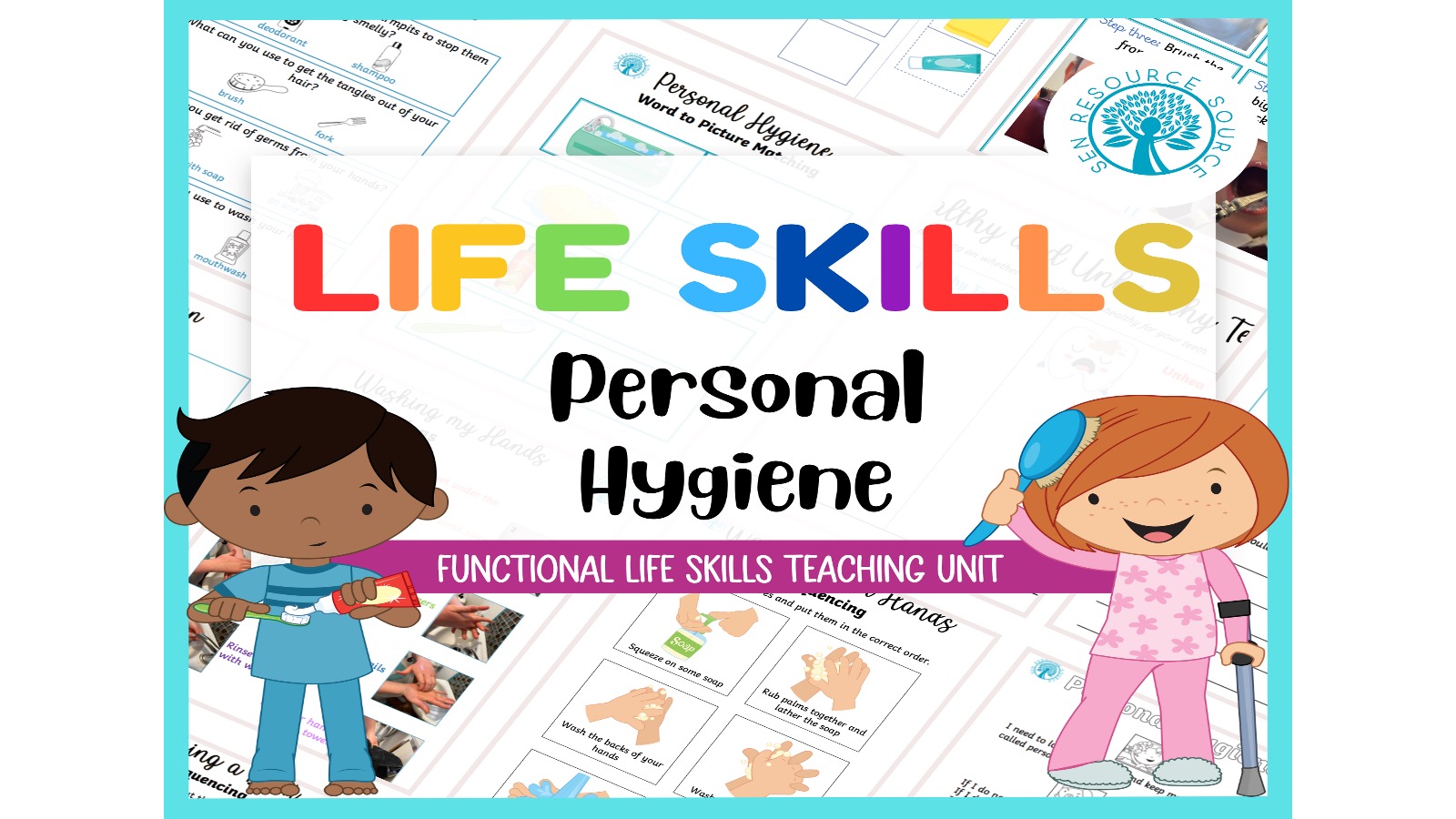
Functional Life Skills - Personal Hygiene
Special Resources, ELA, Special Education Needs (SEN), Life Skills, Reading, Reading Comprehension, Language Development, Vocabulary, Not Grade Specific, Teacher Tools, Lesson Plans
Functional Life Skills - Personal Hygiene UNIT Teaching life skills to children with special educational needs helps to give them knowledge and skills to handle daily tasks, become more independent and know how to take action when an adult is not around to help. The teaching of life skills should be thought of as a crucial part of the curriculum for children with special needs as it prepares them for day to day challenges and helps the become more productive members of their communities. This Functional Life Skills - Personal Hygiene UNIT resource provides planning, teaching slides, vocabulary cards and data tracking sheets as well as a range of different activities perfect for use with a whole class, small group and some of them can be used as independent workstation activities. This Functional Life Skills - Personal Hygiene UNIT was designed for students with special needs, however, it can be used for students in elementary grades as well. It is after all, covering all the needed information for students to develop the skills to maintain their personal hygiene to the maximum! This Functional Life Skills - Personal Hygiene UNIT covers personal hygiene, and teaches children about the importance of keeping a clean body, teeth and hair. It also teaches about the importance of keeping your teeth healthy, brushing twice a day and visiting the dentist. Included in this Functional Life Skills - Personal Hygiene Unit are the following resources which can be used in sequence or as needed: · Ideas for planning · Teaching slides · Vocabulary cards · Data tracking sheets · Social story · Bingo game · Instruction cards with real photos · Labelling activities · Picture to picture matching · Word to picture matching · Differentiated scenario question and answer · Sequencing activities · Sorting activities Clipart images courtesy of Kari Bolt Cliprart For similar or other engaging resources, visit my store here!
Author SEN Resource Source
Tags Life Skills, Hygiene, SEN, Personal Hygiene, Reading Comprehension, Vocabulary
Nutrition and Physical Activity Health: 4th and 5th Grade Unit 3
P.E. & Health, Life Studies, Physical Education, Health, Special Resources, Life Skills, Social Emotional Learning (SEL), Social Skills, Grade 4, 5, Teacher Tools, Lesson Plans, Worksheets & Printables, Worksheets
Nutrition and Physical Activity Health: 4th and 5th Grade Unit 3 For 4th and 5th Grade Health, there are seven standards that students will practice and learn. Through using this 4th and 5th Grade Health Unit 3: Nutrition and Physical Activity, students will explore and learn to identify daily healthy habits. This unit is the perfect way to help 4th and 5th graders learn the importance of their personal health! This Unit 3: Nutrition and Physical Activity contains many activities that include teaching the six basic nutrients the body needs and how students can maintain a healthy lifestyle. Students will also learn the importance of portion sizes, and they will be able to learn and understand the new food labels that was recently recreated on all food containers. Furthermore, students will get to plan 3 meals that are healthy and create an ethnic recipe of their own.. Plus, they'll get to learn about physical and moderate exercises to keep their bodies healthy. At the end of this unit, there is an assessment and answer key to check for understanding. This 4th and 5th Grade Unit 3: Nutrition and Physical Activity meets Common Core standards and will make learning about nutrition and physical activity fun and exciting! Included in this 4th and 5th Grade Health unit are the following: Students will learn about the body's nutrients that are needed for a healthy lifestyle which include: Water, Protein, Carbohydrates, Fat, Vitamins, Minerals. They will learn about portion sizes and the basic food groups. They will create and plan three healthy meals. Students will decipher what food labels mean on food packages and how to apply that to their life. They will learn a new ethnic recipe and make their own meal. Students will learn about physical and moderate exercises and come up with their own ways to stay healthy with exercise. Lastly, there is an assessment to check for understanding. Included is an answer key. There are 26 pages included! There are seven units that cover all the health requirements for 4th and 5th grade. Here are the links to other health units: Health | 4th and 5th Grade Unit 1: Personal Health Health | 4th and 5th Grade Unit 2: Growth and Development Health | 4th and 5th Grade Unit 3: Nutrition and Physical Activity Health | 4th and 5th Grade Unit 4: Substance Use and Abuse Health |4th and 5th Grade Unit 5: Injury and Violence Prevention Health | 4th and 5th Grade Unit 6: Prevention and Control of Disease Health |4th and 5th Grade Unit 7: Environmental Consumer Health
Author K-5 Treasures
Tags Personal Health, Healthy Goals, Health Activities, Physical Goals, Health Goals, Health And Wellness, 4th Grade Health, 5th Grade Heath, Heath Units, Nutrition Goals
Kindergarten Health: Unit 7
P.E. & Health, Life Studies, Physical Education, Health, Special Resources, Life Skills, Social Emotional Learning (SEL), Social Skills, Kindergarten, Teacher Tools, Lesson Plans, Worksheets & Printables, Worksheets
For Kindergarten Health there are seven standards that need to be taught to achieve healthy habits! Unit 1 Personal Health Unit 2 Growth and Development Unit 3 Nutrition and Physical Activity Unit 4 Substance Use and Abuse Unit 5 Injury/ Violence Prevention Control and Safety Unit 6 Prevention/Control of Disease Unit 7 Environmental Consumer Health These units can be taught out of order. They are only numbered for your convenience. Discover the comprehensive and engaging Kindergarten Health: Unit 7, a top-notch digital educational package designed to help you educate young minds about essential health concepts, habits, and practices. Focused on Environmental Consumer Health, this unit equips students with the knowledge to stay safe from sun exposure and appreciate the role healthcare workers play in their community. This fun-filled material offers interactive activities like cut-and-paste worksheets where children can learn about dressing appropriately for sun protection. They'll also get introduced to sunscreen usage for additional safety measures. With 12 insightful pages adhering to Common Core Standards, Kindergarten Health: Unit 7 is an indispensable resource for educators seeking high-quality content on environmental consumer health topics tailored towards kindergarten learners. Maximize your kindergarten instruction by exploring all seven units of the Kindergarten Health series by Teach Simple. Give your students a solid foundation in understanding personal wellbeing essentials while keeping them informed about current facts concerning Covid-19. Students will cut, paste, and decide how to best protect our bodies from the sun. They will also learn about health care workers in our community and how they keep us safe. There are a total of 12 pages included in this unit for Kindergarten Health. There are seven units that cover all the health requirements for Kindergarten. Here are the links to other health units: Kindergarten Health: Unit 1 Personal Health Kindergarten Health: Unit 2 Growth and Development Kindergarten Health: Unit 3 Nutrition and Physical Activity Kindergarten Health: Unit 4 Substance Use and Abuse Kindergarten Health: Unit 5 Injury / Violence Prevention Control and Safety Kindergarten Health: Unit 6 Prevention / Control of Disease Kindergarten Health: Unit 7 Enviromental Consumer Health You can also teach your students about keeping yourself safe by studying about the Coronavirus, where and when it started and facts that plagued our world with this virus. Kindergarten Health: Covid 19 / Coronavirus Facts This unit meets Common Core Standards.
Author K-5 Treasures
Tags Health Units, Health Worksheets, Worksheets On Health, Kindergarten Health, Personal Health, Healthy Habits, Healthy Foods, Healthy Kids, Elementary Health
Health | 3rd Grade Unit 2: Growth and Development
P.E. & Health, Life Studies, Physical Education, Health, Special Resources, Life Skills, Social Emotional Learning (SEL), Social Skills, Grade 3, Teacher Tools, Lesson Plans, Worksheets & Printables, Worksheets
This 3rd Grade Health Unit focuses on Growth and Development and is essential to help students with their health and wellness. There are seven units in all taught in 3rd grade that focus on health. These units include: Unit 1 that focuses on Personal Health and Wellness Unit 2 that focuses on Growth and Development Unit 3 teaches students about Nutrition and Physical Activity and how to eat right and stay active Unit 4 that helps students with Substance Use and Abuse and how to avoid bad substances Unit 5 that will teach students about Injury/ Violence Prevention Control and Safety Unit 6 that covers what happened during Covid and how to protect themselves while learning about Prevention/Control of Disease Unit 7 discusses our environment and how to help save our planet with Environmental Consumer Health These units all about health can be taught out of order. They are only numbered for your convenience. At the end of each unit, there is an assessment to test students’ understanding. Through using this Health 3rd Grade Unit 2: Growth and Development, students will be able to study and learn about body organs, our body systems, and their emotional and physical features. Included in this 3rd Grade Health Unit are the following: In this unit, students will learn about several different organs in the body including: brain, lungs, heart, liver, kidneys, and the small and large intestines. They will find a worksheet with a blank body and label all these parts after reading about these vital organs. Students will also learn about the many different body systems we have which include: skeletal and nervous systems, circulatory system, digestive system, respiratory system, muscular system, and learn about our skin and hair. They will assemble in order how these systems look in a body as they compile a book. They will also label each system after looking a drawings. They will explore the emotional and physical features of people when they are sad, surprised, happy, etc. Lastly, they will compare their physical features to other classmates and come to understand how our genes are all different. This unit meets Common Core Standards. It is 13 pages of fun engaging activities! At the end of the unit, there is an assessment to check for understanding. There are seven units that cover all the health requirements for 3rd grade. Here are the links to other health units:
Author K-5 Treasures
Rating
Tags Health Unit, Personal Health, Healthy Goals, Unhealthy Choices, Health Activities, Physical Goals, Health Goals, Health And Wellness, 3rd Grade Health, Third Grade Health
Kindergarten Health: Prevention and Control of Disease - Coronavirus / Covid-19 Facts
P.E. & Health, Health, Physical Education, Special Resources, Life Skills, Social Emotional Learning (SEL), Kindergarten, Teacher Tools, Lesson Plans, Worksheets & Printables, Worksheets
This resource, Kindergarten Health: Prevention and Control of Disease - Coronavirus / Covid-19 Facts, is a great tool to teach about the epic coronavirus that plagued the world in 2020. This unit is suited for first graders in a simple, yet accurate manner to increase understanding of this disease on what is the disease, how it started, how it spread throughout the world, and how society responded to this disease in keeping people safe. There are colored pages and pages in black and white. There are also opportunities for children to read some of the words, learn new vocabulary words, trace sentences, and they will even draw their own "novel" virus. Furthermore, students will gain a better understanding of how they can protect themselves, their families, and friends from other diseases that may affect them in the future. Last, there is a mask that students can decorate to show off their creativity. Topics that are covered for students to complete include the following: *What is Covid-19? *How did Covid-19 start? *How does it spread? *What can you do to be safe? Answers are included on some worksheets and some activities are differentiated for all young learners. A total of 12 worksheets are included in this packet. There are seven units that cover all the health requirements for Kindergarten. Here are the links to other health units: Kindergarten Health: Unit 1 Personal Health Kindergarten Health: Unit 2 Growth and Development Kindergarten Health: Unit 3 Nutrition and Physical Activity Kindergarten Health: Unit 4 Substance Use and Abuse Kindergarten Health: Unit 5 Injury / Violence Prevention Control and Safety Kindergarten Health: Unit 6 Prevention / Control of Disease Kindergarten Health: Unit 7 Enviromental Consumer Health You can also teach your students about keeping yourself safe by studying about the Coronavirus, where and when it started and facts that plagued our world with this virus. Kindergarten Health: Covid 19 / Coronavirus Facts This unit meets Common Core Standards.
Author K-5 Treasures
Tags Coronavirus, Covid-19 Facts, Pandemic, Virus Spread, Kindergarten Health, Health Resources, Health Resources For Kindergarten, Kindergarten Worksheets, Health Worksheets
I WONDER - What Is Visualisation | Animated Video Lesson
Social Emotional Learning (SEL), Special Resources, Life Skills, Grade 6, 7, 8, 9, 10, 11, 12, Lesson Plans, Teacher Tools
Video Introduction An amazing video designed for the students to have fun learning about our daily activities or even to have fun learning more about our mental health. I WONDER - What Is Visualisation | Animated Video Lesson Our mental health is a crucial aspect nowadays for everyone. Do you know how to keep our mind and soul healthy? Have you ever practice gratitude? If yes, tell us what are you thankful for? Have you ever practiced meditation? If yes, can you share with us the steps you have done? Do you like group activities or crafts that you can enjoy with your friends and family? Which one makes you feel better? Yoga is really good for our mental health, have you tried it before? I WONDER - What Is Visualisation | Animated Video Lesson The activity is perfect for encouraging us to have a better way of life and thinking for the students, while having fun with our cool activities and crafts that let students learn more about our mental health. I WONDER - What Is Visualisation | Animated Video Lesson This friendly designed video is suitable for students at school, homeschooling, and as a group activity. Format Available in MP4 format.
Author Educational Voice
Rating
Tags What Is Visualisation, What Is Visualisation Video, Visualisation, Visualisation Facts, Visualisation Video, Visualisation Video For Kids, Visualisation Facts For Kids, Life Skills, Life Skills Video
Health 1st Grade Unit 1: Personal Health
P.E. & Health, Creative Arts, Art, Health, Physical Education, Social Skills, Special Resources, Life Skills, Social Emotional Learning (SEL), Grade 1, Lesson Plans, Teacher Tools, Worksheets & Printables, Worksheets
For 1st Grade Health there are seven standards that need to be taught. Unit 1 Personal Health Unit 2 Growth and Development Unit 3 Nutrition and Physical Activity Unit 4 Substance Use and Abuse Unit 5 Injury/ Violence Prevention Control and Safety Unit 6 Prevention/Control of Disease Unit 7 Environmental Consumer Health These units can be taught out of order. They are only numbered for your convenience. At the end of each unit, there is an assessment to test students’ understanding. Through using this Health 1st Grade Unit 1: Personal Health students will explore and learn to identify daily healthy habits. Included in this unit: * Understanding what active verses unactive movements and activities. * Being physically active and choosing which activity is healthy vs unhealthy. * Identifying healthy foods in a fun wordsearch. * How to understand your emotions and when to talk to someone to get help. At the end of the unit, there is an assessment to check for understanding. Included in this unit is an assessment with answer key. A total of 10 pages for Health 1st Grade Unit 1: Personal Health. There are seven units that cover all the health requirements for first grade. Here are the links to other health units: Health 1st Grade Unit 1: Personal Health Health 1st Grade Unit 2: Growth and Development Health 1st Grade Unit 3: Nutrition and Physical Activity Health 1st Grade Unit 4: Substance Use and Abuse Health 1st Grade Unit 5: Injury / Violence Prevention and Safety Health 1st Grade Unit 6: Prevention / Control of Disease Health 1st Grade Unit 7: Environmental / Consumer Health You can also teach your students about keeping yourself safe by studying about the Coronavirus, where and when it started and facts that plagued our world with this virus. 1st grade Coronavirus / Covid-19 Facts by Teach Simple This unit meets Common Core Standards.
Author K-5 Treasures
Tags Personal Health, Health Unit , Healthy Habits, Self-care, 1st Grade Health, First Grade Health, Healthy Foods, Healthy Eating, Physical Activity, Personal Development
Health 2nd Grade Unit 3: Nutrition and Physical Activity
P.E. & Health, Health, Physical Education, Special Resources, Life Skills, Social Emotional Learning (SEL), Social Skills, Grade 2, Lesson Plans, Teacher Tools, Worksheets & Printables, Worksheets
For 2nd Grade Health there are seven standards that need to be taught. Unit 1 Personal Health Unit 2 Growth and Development Unit 3 Nutrition and Physical Activity Unit 4 Substance Use and Abuse Unit 5 Injury/ Violence Prevention Control and Safety Unit 6 Prevention/Control of Disease Unit 7 Environmental Consumer Health These units can be taught out of order. They are only numbered for your convenience. At the end of each unit, there is an assessment to test students’ understanding. Through using this Health 2nd Grade Unit 3: Nutrition and Physical Activity students will explore and learn to identify: * Healthy foods they should and foods that they should not eat that are unhealthy for their bodies. * Physical activities beneficial to their health and suggestions of which types of activities they can do. * Consequences of being active vs inactive * Students will also learn the importance of eating a healthy balanced diet and the benefits of being physically active at school, at home, and with their friends. This unit meets Common Core Standards for 2nd grade health. A total of 10 pages for this 2nd Grade Health Unit 3 on Nutrition and Physical Activity. At the end of the unit, there is an assessment to check for understanding. There are seven units that cover all the health requirements for second grade. Here are the links to other health units: Health 2nd Grade Unit 1: Personal Health Health 2nd Grade Unit 2: Growth and Development Health 1st Grade Unit 3: Nutrition and Physical Activity Health 2nd Grade Unit 4: Substance Use and Abuse Health 2nd Grade Unit 5: Injury / Violence Prevention and Safety Health 2nd Grade Unit 6: Prevention / Control of Disease Health 2nd Grade Unit 7: Environmental / Consumer Health 2nd grade Coronavirus / Covid-19 Facts
Author K-5 Treasures
Tags Health Unit, Nutrition, Physical Activity, Healthy Food, 2nd Grade Health, Second Grade Health, Physical Health, Eating Healthy, Health Resources, 2nd Grade Health Resources
Independent Living: A Place to Live Gr. 9-12+
Special Resources, Life Skills, Grade 9, 10, 11, 12, Teacher Tools, Lesson Plans
The Independent Living: A Place to Live Gr. 9-12+ An invaluable teaching resource designed for both public school and homeschool environments that primarily focuses on equipping students with essential skills for independent living. Main themes: - Key Aspects of Independent Living: Includes understanding renting vs buying a home, awareness of living alone expenses, etc. - Resources: Features reading passages, graphic organizers, real-world activities, a crossword puzzle, word search exercises and comprehension quizzes. - Inclusivity: Combines high-interest concepts with low vocabulary ensuring accessibility for all learners. Educator Usage: Teachers can utilize this resource in various ways: Use during whole-class sessions as comprehensive instruction medium. Foster team-based learning through small groups. Assign as homework for additional practice opportunities. Note: Adherence to state standards and inclusion of Bloom's Taxonomy fosters the development of critical thinking skills amongst learners. This resource is primarily geared towards Grade 9-12+ students under the Special Resources category focusing on Life Skills but can be adapted across multiple grades due its flexible design principles. The product file is available in PDF format catering to digital access needs. In conclusion,The Independent Living: A Place To Live Gr. 9-12+, plays a crucial role in preparing students not just academically but also as well-rounded individuals poised for success beyond academia.
Author Classroom Complete Press
Tags PDF
I WONDER - Why Should You Be Careful When Clicking On Online Links
Life Skills, Special Resources, Social Emotional Learning (SEL), Grade 3, 4, 5, 6, 7, 8, 9, Lesson Plans, Teacher Tools
Video Introduction An amazing video designed for the students to learn more about social and soft skills in our daily life. I WONDER - Why Should You Be Careful When Clicking On Online Links | Animated Video Lesson Have you ever read about soft skills or social skills? If yes, can you tell us more about them? Body language is so important for us to learn about, as it teaches us how to deliver the correct message to the people we are talking to, and get the right message from the people who talk to us, by simply reading their body language. What do you know about etiquette? Do you know that every country has got its unique etiquette? What do you know about online etiquette? What is your strongest soft/social skill? Can you name other social or soft skills? Do you think we should be always nice to our friends and family? Do you think we should be kind with animals? Have you ever read about online etiquette? If yes, tell us more about it. What are the essential skills that we should have while dealing with people online? I WONDER - Why Should You Be Careful When Clicking On Online Links | Animated Video Lesson The video is perfect for encouraging the researching skills for the students, while learning more about these fantastic social and soft skills in our daily life. I WONDER - Why Should You Be Careful When Clicking On Online Links | Animated Video Lesson This friendly designed video is suitable for students at school, homeschooling, and as a group activity. Format Available in MP4 format.
Author Educational Voice
Rating
Tags Why Should You Be Careful When Clicking On Online Links, Why Should You Be Careful When Clicking On Online Links Video, Online Links, Online Links Video, Online Links Facts, Online Links Video For Kids
Kindergarten Health: Unit 6
P.E. & Health, Life Studies, Health, Physical Education, Special Resources, Life Skills, Social Emotional Learning (SEL), Social Skills, Kindergarten, Lesson Plans, Teacher Tools, Worksheets & Printables, Worksheets
For Kindergarten Health there are seven standards that need to be taught to achieve healthy habits! Unit 1 Personal Health Unit 2 Growth and Development Unit 3 Nutrition and Physical Activity Unit 4 Substance Use and Abuse Unit 5 Injury/ Violence Prevention Control and Safety Unit 6 Prevention/Control of Disease Unit 7 Environmental Consumer Health These units can be taught out of order. They are only numbered for your convenience. Through using this Kindergarten Health: Unit 6, students will learn about disease prevention and how to control disease. Included in this unit : * Students will learn what germs are and how to prevent the spread of germs. * Students will learn how to wash their hands to prevent the spread of germs. They will do an activity of cut and paste for hand washing. * Students will understand the role of doctors and identify the role of some of the instruments that they use to care for your health needs. * Also included is information on the coronavirus and how to prevent the spread of this disease and how to stay healthy. Students will learn about disease prevention and how to stay healthy by controlling diseases. There are a total of 20 pages included in this unit for Kindergarten Health. There are seven units that cover all the health requirements for Kindergarten. Here are the links to other health units: Kindergarten Health: Unit 1 Personal Health Kindergarten Health: Unit 2 Growth and Development Kindergarten Health: Unit 3 Nutrition and Physical Activity Kindergarten Health: Unit 4 Substance Use and Abuse Kindergarten Health: Unit 5 Injury / Violence Prevention Control and Safety Kindergarten Health: Unit 6 Prevention / Control of Disease Kindergarten Health: Unit 7 Enviromental Consumer Health You can also teach your students about keeping yourself safe by studying about the Coronavirus, where and when it started and facts that plagued our world with this virus. Kindergarten Health: Covid 19 / Coronavirus Facts This unit meets Common Core Standards.
Author K-5 Treasures
Tags Kindergarten Health, Health Units, Healthy Habits, Healthy Food, Health Worksheets, Worksheets On Health, Kids Health, Personal Health, Health, Health For Kindergarten
Are You An Optimist or Pessimist SEL presentation & Survey!
Special Resources, Life Skills, Social Emotional Learning (SEL), Social Skills, Grade 4, 5, 6, 7, 8, 9, 10, Teacher Tools, Lesson Plans, Worksheets & Printables, Presentations, Assessments
Are You An Optimist or Pessimist SEL Presentation Lesson Plan With Student Survey is a resource designed to bring educational lessons on optimism and pessimism directly into the classroom. Perfect for educators of grades 4 through 10, this tool is equally useful for both public school teachers employing enhanced teaching techniques and homeschooled students. This lesson plan revolves around a 20-slide PowerPoint presentation, offering clear guidance to students through each stage of the learning course. The content includes two embedded videos (located at slide numbers 9 and 10) which serve as visual aids to better understand the topic. The first segment features seven quick question image prompts intended to engage student thought processes - these can be conducted via stand-up/sit-down methods or simple hand raising. This is followed by an interactive survey where participants score their answers based on personal feelings, fostering open dialogue among peers about their choices. Detailed answer sheets are provided post-survey; these aim at easy comprehension by all participants, thus making life skill education seamless! The final slide inducts additional resources - links that guide students towards strategies employed for developing optimistic thinking over pessimistic attitudes. Furthermore, enjoyable GIFS strewn throughout ensure that sessions remain lively and engaging until the end! Note: This resource primarily uses Microsoft PowerPoint; ensuring a flawless backdrop for memorable lessons. Optimally designed for whole-class settings, small group discussions, individual activities or even homework assignments; its versatility makes it adaptable across various teaching scenarios needing minimal preparation beforehand (except printing survey documents). This is a wonderful lesson that students LOVE. They get to discover a bit about themselves as well as get to know the other students around them. For more products and resources like these to teach SEL and SEN lessons, please go to: https://teachsimple.com/contributor/jennifer-moyer-taylor You may also enjoy my lesson on introverts versus extroverts here: https://teachsimple.com/product/are-you-an-introvert-or-extrovert-lesson-with-kahoot-and-student-survey
Author Jennifer Moyer Taylor
Tags Optimism, Pessimism, Lesson Plan, SEL Presentations, Survey, School Counseling, SEL, Social Emotional Learning, Health, Social Skills
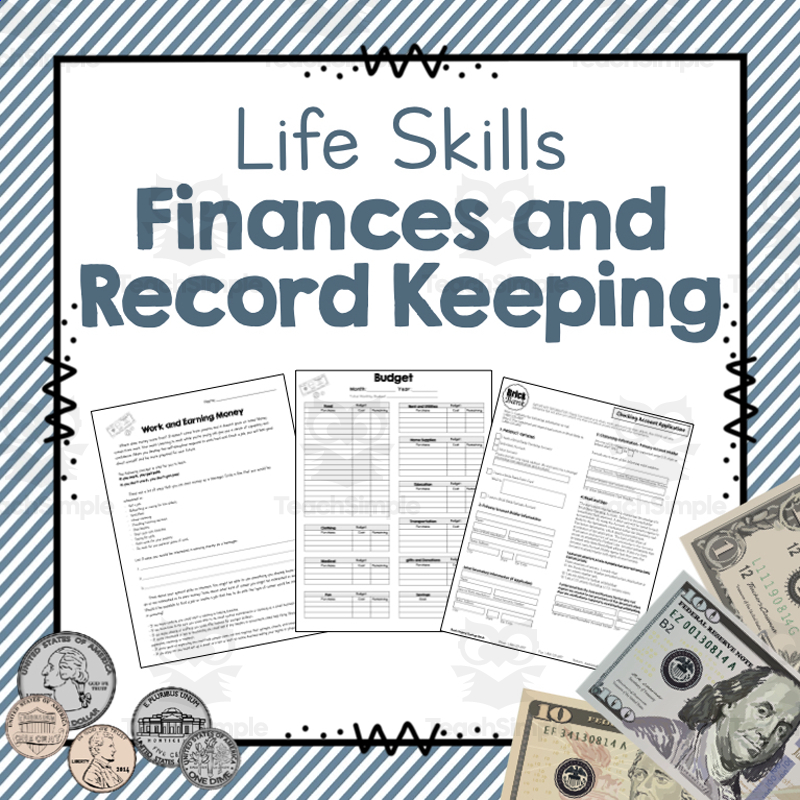
Real World Life Skills - Financial Literacy Skills Gr. 6-12+ - Canadian Content
Special Resources, Life Skills, Grade 6, 7, 8, 9, 10, 11, 12, Teacher Tools, Lesson Plans
Real World Life Skills - Financial Literacy Skills Gr. 6-12+ - Canadian Content This exceptional resource is designed to support students from Grade 6 through Grade 12 in obtaining essential knowledge to confidently navigate the financial landscape. This consists of a collection of unique modules focusing on practicality and real-life situations. Significant Emphases: Deep understanding of bank loans and potential pitfalls associated with credit cards, crucial as students start their financial journeys. In-depth appreciation of income and expenditure for intelligent management of assets and debt. Negotiation skill enhancement by providing a detailed roadmap for effective purchasing practices, which helps students to attain value-for-money experiences in real-world scenarios. Additionally, an insightful analysis is provided comparing different credit scores alongside tips for improving personal credit ratings - an integral strategy for individual financial growth. Special Segments: A segment related to car ownership explaining key aspects like maintenance costs and depreciation values. A broader outlook on responsibilities associated with property ownership promoting fiscal responsibility amongst learners. Detailed information on taxation types catered toward assisting responsible paycheck management. Economics In The Fast-Paced World: Incorporating lessons relevant to Global Economics explores topics including cryptocurrency and currency conversions – offering learners' insights into emerging global economic trends. Versatile Settings And Formats: The versatility allows flexibility for educators; can be utilized in various settings such as whole group instructions, small group discussions or assigned individually as homework assignments. This downloadable PDF file includes enriched reading passages with graphic organizers; practical real-world activities are coupled with word searches & crossword puzzles contributing to an engaging yet fruitful learning experience. All content aligns precisely with Provincial Standards and strictly adheres to Blooms Taxonomy ensuring comprehensive understanding of these important financial skills. The interactive nature ensures teaching and learning financial literacy is effectively and enjoyable for everyone involved.
Author Classroom Complete Press
Tags PDF