



2,663 products added recently
Sen Presentations
Provide effective support for students with special education needs using presentations designed for inclusivity. These resources offer strategies and adaptations to make learning accessible. Use them to ensure every student can engage and succeed in your classroom.

 Show filters


Kindness & Gratitude Daily Reflection Journals
Special Resources, Life Skills, Social Emotional Learning (SEL), Social Skills, Special Education Needs (SEN), Speech Therapy, STEM, Resources for Teachers, Classroom Management, Community Building, Kindergarten, Grade 1, 2, 3, 4, 5, Worksheets & Printables, Workbooks, Worksheets, Word Searches, Teacher Tools, Lesson Plans, Presentations, Quizzes and Tests, Quizzes, Tests
With the Kindness and Gratitude Daily Reflection Journals (e.g K-5), you have the ability to turn your classroom or home into a center of kindness and emotional intelligence. This wonderful curriculum is a complete forty-three page pdf that contains research-based information from the fields of child development, affective neuroscience, and Somatic-Cognitive Integration Methodology as well as ten student worksheets that are ready for live implementation, and teacher implementation resources. This resource is designed specifically for classrooms with student populations from Kindergarten to 5th grade and is built on the facilitation of social skills through three developmental tiers: K-1: Sensory and Affective Identification (visual prompts/drawing) 2-3: Relational Reciprocation and Theory of Mind 4-5: Complex Systems (Ripple Effect) Thinking, and Intrinsic Altruism Through this curriculum, students will become "Kindness Detectives", engage in an Action-Reflection Cycle, create a map of gratitude through various ecosystems, develop their resilience using silver-lining prompts, and implement acts of altruism through a "Kindness Architect" blueprint. In addition, the curriculum includes theory around neuroplasticity, case studies of real-world use that show 42% drop in conflicts in the morning and 60% increase of student feeling "seen and valued", structural schematics (SVG format), differentiation strategies for reluctant learners, and a complete Teacher Implementation Guide. The Kindness Journals are perfect to use in morning meeting times, social/emotional learning blocks, restorative justice, homeschooling, or guidance/counseling sessions. This zero-preparation curriculum is available as a digital download, and you can easily print the material or assign the material digitally. The Kindness Journals can help increase emotional granularity, empathy, and an overall positive class culture within your classroom, while also providing a resource that supports SEL competencies as developed by CASEL. The reason teachers and parents are happy using this program: Results are measurable! Real-life classroom studies show that using the academic curriculum has decreased morning conflict by 42% and has helped 60% of the children who take part be recognized and appreciated. Both parents and teachers see these changes immediately! There is little preparation time needed to use the academic program. There are 10 ready-to-use worksheets and a teacher's guide with supportive materials for you to be able to use this program right now without spending any time preparing. The academic curriculum has been designed to have the ability to grow as the child grows, from drawing pictures in Kindergarten and First Grade to developing a sense of right and wrong in Fourth and Fifth grade. This ensures that each child in the room is able to be challenged and feel successful through the entire academic experience. The academic program uses what's called mirror neurons, neuroplasticity, and body language to ensure children will exhibit kindness as a daily behavior rather than as a rule. The academic program teaches children to look internally for their own feelings and authentic emotions as opposed to focusing on external rewards or expectations (performative kindness). The result of this process helps to create a child with a higher level of empathy and emotional resilience. Who this is for : This document has been created specifically for K-5 students (ages 5-11). It's not right for Pre-K (the material is too advanced) or Middle School./ For grades K-5, the three-level scaffolding aligns directly with elementary learner neuro-developmental stages., making this resource a match for the following categories of K-5 educators: -General education elementary classrooms (Grades K-5) -Families who homeschool their children -School Counselors / Social-Emotional Learning (SEL) Coordinators -Special education / inclusive classrooms (differentiated activities provided) . -After school program or character education clubs . Copyright / Terms of Use: This book is copyrighted by Syed Hammad Rizvi. This product can only be used for personal use and/or by individual classes. You may not modify, redistribute, or sell any portion of this product. You also cannot place it online where it can be found and downloaded by anyone else. To share this product with other teachers, please purchase additional copies from Teachsimple. Your cooperation in following these rules is greatly appreciated. This product is brought to you by Syed Hammad Rizvi in a state of happy non-ownership.
Author Creative Book Store
Rating
Tags KindnessJournal, GratitudeJournal, SELActivities, DailyReflectionJournal, KindnessAndGratitude, GratitudeForKids, ElementarySEL, K5SEL, SocialEmotionalLearning, ElementaryTeacher

CBT & Anxiety Management Toolkit
Life Skills, Special Resources, Social Emotional Learning (SEL), Social Skills, Special Education Needs (SEN), Speech Therapy, STEM, Resources for Teachers, Classroom Management, Community Building, Homeschool Curriculum, Homeschool Templates, Grade 9, 10, 11, 12, Projects, Activities, Teacher Tools, Assessments, Graphic Organizers, Lesson Plans, Outlines, Rubrics, Presentations, Worksheets & Printables
Find the top CBT Anxiety Management Toolkit Professional Edition PDF – a 47-page digital guide filled with helpful information and tools to beat anxiety. This guide is meant for therapists, life coaches, and individuals looking for effective mental health tools. This SEO-friendly CBT workbook provides detailed information on cognitive models, anxiety triggers, cognitive distortions, ABC models, automatic thought records, evidence boards, worry trees, de-catastrophizing scripts, fear ladders, grounding techniques, behavioral activation plans, core beliefs, and daily mood trackers. Be empowered with step-by-step strategies for cognitive restructuring, exposure therapy, behavioral activation, and sensory grounding techniques to overcome anxiety and live an anxiety-free life. This guide is meant for psychology professionals and mental health enthusiasts. Get this printable CBT anxiety workbook PDF today and get the mental health assistance and resilience training you need. Why Parents/Schools Love It: Evidence-Based Tools for Real-World Application: CBT worksheets for students to develop skills that can be applied in the real world, helping them develop emotional resilience that can improve their academic performance. Promotes Self-Awareness and Mental Health Literacy: Encourages students to engage in reflective exercises that can help them develop skills that can last a lifetime, allowing them to cope with stress in an appropriate manner. Flexible for Classroom or Home Application: PDFs with diagrams that can be printed out for use in the classroom or at home for students who need extra support during high-stress periods of the academic calendar. Professional Quality Content at an Affordable Price: Helps provide students with the tools that can normally only be accessed with the guidance of a therapist, all at an affordable price for the school. Tracks Progress for Measurable Growth: Helps parents/educators track the progress of students' emotional state so that improvements can be measured. Target Classes/Students : Given that the PDF is a comprehensive analysis and review of CBT tools and strategies for anxiety management, targeted towards professionals and adult learners, the target audience would be students in higher education and advanced programs, especially in the field of psychology and counseling. The target classes/students would be: Undergraduate Psychology or Counseling Students (Sophomore to Senior Level): The PDF would be ideal for classes such as “Introduction to CBT,” “Abnormal Psychology,” or “Mental Health Interventions,” where students can use the worksheets for case study and self-reflection assignments. Graduate Students in Clinical Psychology, Social Work, or Therapy: The PDF would be suitable for classes such as “Cognitive Behavioral Therapy Practicum,” “Anxiety Disorders Treatment,” or “Professional Counseling Skills,” where students can use the content for case studies and assignments. Adult Education or Continuing Education: The target audience would be adult learners in online or community college classes, especially in the field of psychology and counseling, or in a life coaching program. High School Advanced Placement (AP) Psychology: The target audience would be seniors in advanced psychology classes, provided that the curriculum covers CBT concepts, as the content is too advanced and technical for a general audience. Copyright/Terms of Use: This Book was copyrighted by Syed Hammad Rizvi. This resource is for personal and single classroom use only. You may not alter, redistribute, or sell any part of this resource. In other words, you may not put it on the Internet where it could be publicly found and downloaded. If you want to share this resource with your colleagues, you may buy additional licenses from Teachsimple. Thank you for respecting these terms of use. This product is happily brought to you by Syed Hammad Rizvi
Author Creative Book Store
Rating
Tags CBT, CognitiveBehavioralTherapy, AnxietyManagement, AnxietyRelief, MentalHealth, MentalHealthMatters, MentalHealthAwareness, StressRelief, OvercomeAnxiety, AnxietyTools

Neuro-Nudge Morning Micro-Quest System: Guided Personalized Challenges
Life Studies, Coaching, Montessori, Special Resources, Life Skills, Social Emotional Learning (SEL), Social Skills, Special Education Needs (SEN), Speech Therapy, STEM, Infant, Kindergarten, Preschool, Homeschool Curriculum, Homeschool Templates, Teacher Tools, Assessments, Graphic Organizers, Diagrams, Lesson Plans, Outlines, Presentations, Quizzes and Tests, Quizzes, Tests
Unleash the power of your special education classroom with the Neuro-Nudge Morning Micro-Quest System: Adapted Morning Work Binder for Special Needs Students (PreK-4th Grade Edition). This all-encompassing 39-page eBook is a paradigm-shifting tool for educators, parents, and homeschooling families wanting to provide research-supported, neuroscience-driven morning activities for various learning needs. Based on the principles of cognitive science, behavioral psychology, and Universal Design for Learning (UDL), this tool converts generic morning work activities into engaging, predictable “micro-quests” to facilitate independence, transition smoothness, and academic preparedness for children with Autism Spectrum Disorder (ASD), developmental disorders, intellectual disabilities, differences in sensory processing, and more. Key points include: Neuro-Nudge Framework: The use of subtle design principles such as attentional cues, chunking, and sensory integration, all of which are grounded in neuroscience principles. Guided Personalization: Templates for leading edge generative technologies such as Chat GPT, Google Bard, to help personalize content based upon IEP objectives, student information, and preferences so learning activities adapt based upon progress. Practical Implementation: How-to manual or guidelines for implementing effective binders, data-based adaptation techniques, and using AI responsibly. Student Workbook Section: Practice sheets for morning routines, feelings check-ins, awareness of weather, fine motor skill development, early literacy skills, numeracy skills This PDF is perfect for special education teachers, occupational therapists, or parents who have special needs children. It allows you to create interactive, error-free learning opportunities that foster self-efficacy and minimize resistant behavior. Download today and interact with laminable pages, which are ideal for special education classes or home schooling. Keywords: special needs adapted morning work binder, special needs morning routine activities PreK-4th, special education resources PreK-4th, special education tools, adapted Neuro-Nudge special education curriculum, special needs worksheets. Why Parents/Schools Love It: Encourages Independence and Predictability: The binder organization helps alleviate morning transition anxieties while encouraging self-efficacy skills through a series of manageable tasks that promote predictability and independence from adult assistance. Neuroscience-Based Engagement: The presence of “neuro-nudges” such as tactile, visual, and immediate reinforcements within the program ensures the students are encouraged and engaged, improving attention and sensory integration. AI-Driven Customization: Easy-to-carry-out AI tasks facilitate the creation of customized modifications tailored to the personal goals and performance data of each special education child, ensuring the relevancy of activities despite the saving of time. Proven Results with Real-World Examples: The use of case studies illustrates the positive outcomes that have been achieved, such as a decrease in instances of problem behavior, such as transitioning stress, of 65% and an increase in task accuracy. Comprehensive and Versatile Resources: Offers theory, worksheets, pictures, and implementation tutorials, ensuring that it is a one-stop solution for very busy teachers or parents who are looking for morning work that is distraction-free. Target Students/Classes : Based on the comprehensive analysis of the PDF document that includes its theoretical background, case studies, examples of micro-quests, AI personalization techniques, student workbook assignments, and teachers’ resources, the system is tailored for students from grades PreK to 4th in the special education class. It is geared towards children with varying learning differences, such as: Autistic Spectrum Disorder (ASD) Developmental delays: Global developmental delay Intellectual disabilities Learning disabilities Specific Learning Disabilities Communication Disorders (Expressive/Receptive Language Del Sensory processing differences: Over- or under-responsivity -Executive function tasks, such as task initiation, self-regulation, Motor skill variances (Fine/gross motor skill delays) The content is aligned with Pre-K to 4th grade curricula, programs outlined on IEP goals, and developmentally appropriate benchmarks. While it is designed for special education self-contained settings, general education settings, resource rooms, homeschooling programs, or therapy sessions, it caters to academic (reading, writing) skills and functional skills like self-help skills and personal routines. Copyright/Terms of Use : This Book is copyrighted by Syed Hammad Rizvi. This material is for individual, non-commercial class room use only. It is not legal for you to reproduce, distribute, or sell any portion of this material. In short, you may not place it on the Internet for anyone to download. If you are interested in sharing this resource with other educators, please purchase additional licenses on Teachsimple. I appreciate your respect for these conditions of use. This product is happily brought to you by Syed Hammad Rizvi
Author Creative Book Store
Rating
Tags AdaptedMorningWorkBinder, SpecialNeedsEducation, NeuroNudgeSystem, MorningMicroQuests, PreK4thGradeSpecialEd, AutismSpectrumDisorderResources, DevelopmentalDelaysActivities, SensoryProcessingDifferences, IEPGoalsAligned, AIGuidedPersonalization
Agile Operations Professional Edition
Research, Community Building, Resources for Teachers, Technology, Science, Computer Science, Special Education Needs (SEN), Special Resources, Life Skills, Social Emotional Learning (SEL), Homeschool Curriculum, Homeschool Templates, Grade 9, 10, 11, 12, Workbooks, Worksheets & Printables, Writing Prompts, Teacher Tools, Assessments, Charts, Graphic Organizers, Diagrams, Lesson Plans, Presentations
Unleash the potential of agile project management with the Agile Operations Notion System Professional Edition PDF – your definitive guide to efficient workflow management, particularly in startup environments and product management. This digital resource, spanning 44 pages, is a comprehensive blueprint on how to create a unified system using the Notion agile system, connecting strategy with execution. From the basics of product backlog, sprint planning, and agile retrospectives, to the integration of OKRs, bug tracking, team directory, knowledge base, and the power of automating with GitHub and Slack, this guide is your ticket to creating a system that encourages transparency, accountability, and productivity. Whether you are a startup founder looking to optimize your resource management or a product manager trying to navigate the complexities of product development, this SEO-friendly Notion agile template guide is your ticket to unlocking the power of agile project management. Keywords: Notion agile system, startup project management, product backlog, sprint velocity tracking, OKR integration with Notion, agile retrospectives, bug tracker, team directory, GitHub Slack automations. Why Parents/Schools Love It : Practical Real-World Skills: Covers agile methodologies that ensure students have the skills needed for high-demand jobs in tech startups and product management, making the connection between academic learning and practical tools like Notion. Engaging & Structured Learning: Uses diagrams, flowcharts, and step-by-step guides that make learning complex concepts easy, encouraging critical thinking for business or engineering courses. Promotes Teamwork & Productivity: Focuses on collaboration, retrospectives, and OKRs, helping students learn important soft skills like accountability that are useful for group projects. Digital & Scalable Learning Resource: As a PDF, the resource is easy to integrate into the curriculum for virtual or hybrid learning, requiring no special software beyond free tools like Notion. Future-Proof Career Readiness: Covers the latest trends in agile operations for tech startups, including automations, velocity, and bug management. Target Classes/Students : Based on the entire analysis of the PDF, which is centered on professional agile methodologies, database architecture, sprint execution, and scaling, it is understood that this resource is not directly applicable to K-12 students, although it could be reframed and positioned as an educational resource targeting higher education levels. Target student types and classes: Business Administration and Management Students : Undergraduate or graduate courses in project management, operations management, or strategic planning, in which agile methodologies are part of the course material in preparation for the corporate world. Entrepreneurship and Startup Students : Undergraduate or graduate courses in entrepreneurship, innovation, or small business management, in which the application of tools in building and scaling tech-based startups is the primary focus. Software Engineering and Computer Science Students : Course work in software development lifecycles, agile methodologies, or dev ops in understanding the practical application of tools like Notion in software development. MBA or Professional Development Students : Advanced course work in MBA programs in product management, agile leadership, or digital transformation, in which case studies or simulations would be appropriate. Copyright/Terms of Use: This Book is copyrighted by Syed Hammad Rizvi. This is for personal and single classroom use only. You cannot modify, redistribute, or sell this resource in any way. This means you cannot put this resource on the Internet where it will be accessible for anyone to find and download. If you want to share this resource with your colleagues, please purchase additional licenses from Teachsimple. Thank you for respecting the terms of use. This product is happily brought to you by Syed Hammad Rizvi
Author Creative Book Store
Rating
Tags AgileOperations, NotionSystem, StartupTools, ProductManagement, AgileWorkflow, NotionTemplates, SprintPlanning, BacklogManagement, ProductBacklog, AgileRetrospectives
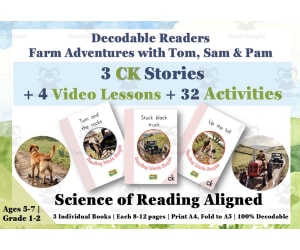
CK: 3 Decodable Reading Books, Supporting Activities + 4 Video Lessons
Special Resources, ELA, Special Education Needs (SEN), Language Development, Pre-Reading, Phonics, Spelling, Kindergarten, Preschool, Grade 1, 2, Literacy Readers, Teacher Tools, Lesson Plans, Presentations
CK Decodable Readers & Worksheets: Farm Adventures Complete Teaching Pack | Part of Advanced Phonics Reading Programme Master CK with 3 decodable readers AND 32 differentiated practice worksheets, AND 4 video lessons suitable for all abilities! Perfect for quick intervention or structured phonics teaching, this complete pack provides everything you need to teach CK effectively—no additional materials required! What's Included 3 systematic/levelled decodable readers focusing on CK Word lists for pre-reading practice at the beginning of each book Differentiated worksheets for phonics reinforcement: Word sorting activities Sound isolation exercises Reading comprehension exercises Sentence writing practice Phonics pattern recognition tasks 100% decodable text with carefully controlled vocabulary Science of reading-aligned instruction Beloved characters: Tom, Sam, Pam, Gran, and the farm animals Beautiful watercolour illustrations Print-and-go format for easy classroom use Why Teachers Love This Complete Pack Real stories PLUS targeted practice! These aren't just decodable readers—you get everything you need to teach CK systematically. The worksheets provide multiple opportunities for students to apply their learning, while the engaging farm stories provide ample practice of decoding, word recognition and reading comprehension. Multiple worksheets help you to give targeted support to all children: choose the worksheets that are right for each child. Designed With Carefully Controlled vocabulary: The CK sound is introduced systematically across the stories, with previously learned words revisited throughout. Worksheets reinforce the same vocabulary, providing an opportunity for mastery. Perfect For Explicit phonics instruction following the science of reading principles All students who are ready to learn CK Children who need a slower pace, or not Small group intervention or whole class instruction Literacy centres and independent practice Homework assignments that reinforce classroom learning Structured literacy programmes Ages 5-7 or Grade 1-2 Skills Addressed Decoding CK in isolation and context Reading fluency with controlled decodable text Phonics, pattern recognition and application Phonemic awareness through targeted activities Reading comprehension with engaging stories Writing practice using the taught phonics pattern Sight word introduction and practice How to Use This Complete Pack Introduce the sound CK comprehensively Use worksheets for guided practice and skill reinforcement Practice word lists before reading stories Have students read the decodable stories, pointing to each word Return to the worksheets for independent practice or assessment Reread the stories to build fluency
Author Lilibette's Resources
Rating
Tags Learn To Read Programme, Fluency, Struggling Readers, Dyslexia, Special Needs, Phonics, Decodable Reading Books, Reading Fluency, Short Vowel E, Homeschool Curriculum

Future-Ready Navigator: Guided Career & Skill Pathway Planner
Special Resources, Life Skills, Social Emotional Learning (SEL), Social Skills, Special Education Needs (SEN), Speech Therapy, STEM, Life Studies, Career, Coaching, Homeschool Curriculum, Grade 5, 9, 10, 11, 12, Projects, Activities, Teacher Tools, Assessments, Lesson Plans, Presentations, Outlines, Worksheets & Printables, Parts of and Anatomy of, Workbooks
The Future Ready Navigator has been designed to develop the careers of High School Students (Grades 9-12) as they transition into the workplace. This comprehensive GIANAWORK workbook includes a combination of both theoretical concepts of career guidance as well as interactive worksheets that help with the development of an individualized, resilient career path, through research that incorporates both technological and job market trends. Together, these pieces of information will help ensure that high school students and all lifelong learners have access to career planning tools to build a strong foundation for a successful transition into the ever-changing job market. The workbook consists of 27 pages containing various types of content, such as the Adaptive Trajectory Framework (ATF), which provides information on how to identify your true abilities, assess your current skill set, and develop a dynamic plan to achieve your goals. It will also teach you how to create effective AI prompts that can be used for identifying trends and researching jobs and developing future skills. The workbook includes several real-world case studies, guidelines around the ethical use of AI, and a number of educator resources, such as SVG diagrams (flowcharts, mind maps, Venn diagrams) to use as reference tools. This printable career planning workbook will also prepare users for jobs that will be created as a result of the technological disruption reforming our world, for those looking to move to the gig economy, to develop premium future skills, such as critical thinking, emotional intelligence, and digital literacy. There are many uses for this career planning workbook, including use by students taking classes, and as a resource for teachers providing career development coaching to their students. It can also be used as another way for people who want to develop professionally to use this career development workbook to develop the skills needed for the job market. Download now to create engaging, relevant education-ready for counselors, parents, or any educators looking for high school career counseling resources, or workers developing skill sets with integration of the AI process, or resources/strategies that encourage lifelong learning. Keywords: AI-based career planning tools, High School Career Counseling, Future Skills Workbook, Career Development for Teens, Educational PDF Printable, & Student Self Assessment Worksheets. Parents and schools appreciate it for a variety of reasons: It Prepares Students for Real-World Success: It incorporates both self-discovery activities and AI-based insights to help teenagers identify new career opportunities and align them with their own values and strengths as well as the demands of the market (e.g., Precision Agriculture Technician, AI Ethics Advisor), which is especially important in an economy disrupted by technology. Interactive and Engaging Tools: Printable worksheets that guide students through prompt engineering, skill-gap analyses, and career exploration are not only engaging and educational, but there are also high-quality SVG graphics (flowcharts, mind maps, Venn diagrams) to help students understand complex concepts easily and enjoyably in both traditional classroom and home school environments. Responsible Use of AI with Practical Tips: Helps students learn how to use AI responsibly and how to address issues related to bias, data privacy, and the interaction between people and AIs, and provides specific ways for students to upskill through certification programs, internship opportunities, and side projects, allowing them to take the initiative to continue learning throughout their lives. Versatility for Various Learners: Available for students in grades 9-12+ and includes case studies of real-life transitions (e.g., from Clinical Research to Bioethics), making it great for individualized educational plans, group settings, or for parents who want to do educational activities with their children, complete with teacher answer keys for each unit. Fostering Future Skills: By focusing on "future skills," such as critical thinking, adaptability, and digital fluency, and using data from reputable sources (e.g., World Economic Forum) to assist parents and schools in preparing their students to thrive in a gig-work world and during periods of rapid technological advancement. Student/Target Class: The target audience of this 27-page PDF analysis is specified as grades 9-12+. This content consists of theoretical content of AI-enhanced career planning, student worksheets for self-reflection and prompt creation, real-life examples of how high school-aged learners and adult learners are changing careers through AI as well as resources for teachers (with images) about these items. It was determined that the primary target audience for the content and example case studies of students and adults was high school students ages 14-18 in grades 9-12. Case studies utilized for reference were from students in their 10th and 11th grade year, included high school scenarios such as expected academic performance (i.e., transcripts) to identify which extra curricular activities students would participate in, such as: extracurricular activities (e.g., debate club, robotics); and student worksheets will have students reflect on their interests (e.g., interest in space exploration or environmental projects) and what path they would pursue through a community college or university. This resource is perfect for career education classes, guidance counseling sessions, or homeschooling activities related to getting ready for the job market after high school and the impact on their jobs in an unstable economy. The secondary audience of the content and the example case studies was all post-high school students ages 12+ including: young adults transitioning to a 4-year college, first-year college freshmen, and working adults looking to upskill/re-skill. Additionally; case studies of older adults (past PhD graduates and adults in their late 20s seeking to transition from administrative positions to logistics in the bio-tech industry) demonstrate that the resource promotes lifelong learning, investigation, and adapting to shifting technologies (e.g., AI and quantum computing).Some target classes could be the introductory college career development course; vocational training program; and adult learning/education workshops about Artificial Intelligence Ethics and skill bridging. With an emphasis on marketing to high school career preparation classes, but also demonstrate the versatility of the program to appeal to transitional learners in larger markets. Copyright / Terms of Use : Copyrighted by Syed Hammad Rizvi This resource is intended for your own personal use and/or one classroom use only. You are not permitted to modify, redistribute or sell any part of this resource, nor may you place this resource on the internet publicly for download. (In other words, you may not post this resource publicly on the internet where it may be available to download). If you are interested in sharing this resource with your colleagues, please purchase an additional license for each colleague on Teachsimple. Thank you for following our terms of use! This product is provided courtesy of Syed Hammad Rizvi
Author Creative Book Store
Rating
Tags AICareerPlanner, FutureReadyNavigator, AIGuidedCareer, SkillPathwayPlanner, HighSchoolCareerGuidance, TeenCareerDevelopment, FutureSkillsWorkbook, CareerPlanningPDF, AIinEducation, StudentSelfAssessment
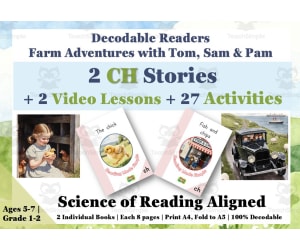
CH: 2 Decodable Reading Books + 2 Video Lessons + 27 Worksheets SOR
Special Resources, ELA, Special Education Needs (SEN), Language Development, Pre-Reading, Phonics, Spelling, Kindergarten, Preschool, Homeschool Curriculum, Grade 1, 2, Literacy Readers, Teacher Tools, Lesson Plans, Presentations
2 CH Decodable Readers, 2 Video Lessons & 27 Supporting Worksheets to Develop Reading Fluency! Complete Teaching Pack | Part of Advanced Phonics Reading Programme Master CH with 2 decodable readers, 2 optional video lessons, and 32 differentiated practice worksheets! This extensive teaching pack features farm stories that children will love, along with targeted phonics activities that reinforce learning. This is part of the Reading Made Simple programme of systematic phonics instruction that can help your struggling readers succeed. Designed and tested on real children of all abilities, from none to severe, every step of the way. These books presume that a child can already decode words with a CK ending, OO (moon/look), EE, SH. What's Included 2 systematic/levelled decodable readers focusing on CH words 2 carefully taught optional video lessons - no distracting music - these are serious lessons and can be used by home educators and teachers alike - to give extra support to struggling readers Word lists for pre-reading practice at the beginning of each book 27 Differentiated worksheets for phonics reinforcement: Word sorting activities Sound isolation exercises Reading comprehension exercises Sentence writing practice Phonics pattern recognition tasks 100% decodable text with carefully controlled vocabulary Science of reading-aligned instruction Beloved characters: Tom, Sam, Pam, Gran, and the farm animals Beautiful watercolour illustrations Print-and-go format for easy classroom use Why Teachers Love This Complete Pack Real stories PLUS targeted practice! These aren't just decodable readers—you get everything you need to teach CH systematically. The differentiated worksheets provide multiple opportunities for students to apply their learning, while the engaging farm stories provide ample practice of decoding, word recognition and reading comprehension. They help you to target a child's precise needs to ensure progress. The optional video lessons give even nervous parents the help they need to teach! Designed With Carefully Controlled vocabulary: The CH sound is introduced systematically across the stories, with previously taught words revisited throughout. Worksheets reinforce the same vocabulary, providing an opportunity for mastery. Perfect For Explicit phonics instruction following the science of reading principles All students who are ready to learn CH and have already learned CK, OO, EE, SH Children who need a slower pace, or not Small group intervention or whole class instruction Literacy centres and independent practice Homework assignments that reinforce classroom learning Structured literacy programmes Ages 5-7 or Grade 1-2 Skills Addressed Decoding CH in isolation and context Reading fluency with controlled decodable text Phonics, pattern recognition and application Phonemic awareness through targeted activities Reading comprehension with engaging stories Writing practice using the taught phonics pattern Sight word introduction and practice How to Use This Complete Pack Introduce the sound CH comprehensively Use worksheets for guided practice and skill reinforcement Practice word lists before reading stories Have students read the decodable stories, pointing to each word Return to the worksheets for independent practice or assessment Reread the stories to build fluency This complete pack provides everything you need to teach CH effectively—no additional materials required!
Author Lilibette's Resources
Rating
Tags Learn To Read Programme, Fluency, Struggling Readers, Dyslexia, Special Needs, Phonics, Decodable Reading Books, Reading Fluency, Consonant Digraphs, Phonics Ch
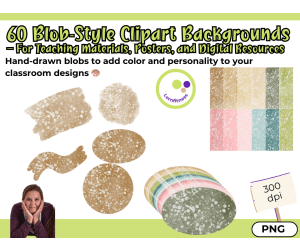
60 Blob-Style Clipart Backgrounds – For Teaching Materials, Posters,
Common Core, Classroom Management, Resources for Teachers, Special Resources, Social Emotional Learning (SEL), Creative Arts, Art, Graphic Arts, Montessori, Special Education Needs (SEN), Homeschool Templates, Homeschool Curriculum, Activities, Classroom Decor, Bulletin Boards, Posters, Teacher Tools, Templates, Word Walls, Banners, Door Decor, Presentations
60 Blob-Style Clipart Backgrounds – For Teaching Materials, Posters, and Digital Resources Hand-drawn blobs to add color and personality to your classroom designs 🎨 PNG If you're creating your own worksheets, presentations, or classroom posters, it’s nice to have design elements that make your materials feel more individual and inviting—without distracting from the content. That’s why I created these 60 background cliparts in a fun, blob-inspired style. Each element is hand-drawn using Procreate and saved as a high-quality PNG file , so they’re easy to insert into PowerPoint, Canva, Word, Google Slides, or any digital notebook like GoodNotes. You can use them for headers, cover pages, memory cards, game materials, or just to decorate your resources in a way that feels personal and clear. What’s included (all in PNG format): 12 circular blob backgrounds 12 oval backgrounds 12 wavy washi-tape blobs 12 transparent organic blobs 12 striped transparent overlays That makes 60 colorful, flexible clipart pieces you can mix and match across your projects. Ideas for use: I’ve used these blobs to decorate task cards, brighten up classroom rules, create printable posters, or make front and back covers for student folders. They also work really well for memory games or station cards. Because they’re not too detailed, they’re ideal as visual anchors without drawing attention away from your content. Usage: ✔ Personal use ✔ Commercial use allowed within the educational space – for example, in your own worksheets or printables ✘ No resale or sharing of the raw PNG files These backgrounds are meant to give your materials a light, creative touch – whether you teach young learners or older students. No fancy design software needed, just drag, drop, and go. Best, Heike from Lernfitness Did You Know? I teach with a certified therapy dog, and together we create a positive and welcoming learning environment. 🐶
Author Lernfitness
Rating
Tags Custom Classroom Materials, Classroom Management, Teaching Materials, Worksheets, Classroom Decorations, Decorative Elements, Cliparts, Backgrounds, Illustrations, Handmade

Future-Ready Creators: AI Ethics & Career Exploration Gamified Project
Life Skills, Special Resources, Social Emotional Learning (SEL), Social Skills, Special Education Needs (SEN), STEM, Research, Classroom Management, Resources for Teachers, Community Building, Grade 3, 4, 5, 9, 10, 11, 12, Worksheets & Printables, Workbooks, Worksheets, Teacher Tools, Assessments, Lesson Plans, Presentations, Rubrics
Future-Ready Creators: AI Ethics & Career Exploration Gamified Project Unit (Edition) Unleash the future of education by digging into this all-inclusive, gamified AI ethics curriculum for high schoolers, Grades 9-12. Join the AI revolution with theory, real-life case studies, and interactive worksheets that explore algorithmic bias, data privacy, surveillance, transparency, and how AI will shift careers. This 24-page digital PDF unit mingles rigorous academics with activities like a student workbook, ethical audits, SVG visuals of mind maps and flowcharts, and teacher resources filled with answer keys. Suitable for classes dealing with STEM, computer science, ethics, and career guidance, this ready-to-use project nurtures critical thinking, ethical decision-making, and career exploration in an AI-filled world. AI Ethics Lesson Plans, High School AI Curriculum, Gamified AI Projects, AI Bias Activities, Future Careers in AI, Digital Workbook on Ethics, Teacher Resources for AI Education. For homeschooling, classroom use, or in after-school programs, give teens the power to create their vision as responsible AI innovators today! Why Parents/Schools Love It: Prepares Students for the Future with AI: It teaches necessary skills for ethical AI practices, detection of bias in AI, and exploring a job market with a high degree of automation with technology-related jobs. Engaging Gamified Format: Converts difficult-to-understand information into challenges, simulations, and projects, which serve as motivation and learning aids and add fun to learning. Teaching Tools: Teaches educators with comprehensive ready-to-use teaching tools, including illustrations, work sheets, and answered keys, making it easy to integrate into any high school curriculum. Cultivates Ethical Thinking and Responsibility: Helps students deal with pressing issues such as the loss of privacy rights and the need for algorithmic justice, encouraging ethical thinkers capable of living with the consequences of artificial intelligence. Versatile and Inclusive: "The book is very versatile and inclusive, being suitable for learning environments such as classrooms, home-schooling, or online learning with equity, diversity, and increasing AI jobs as the appeal." Target Student Classes : From an exhaustive analysis of the PDF, wherein it is clearly mentioned that it is "designed specifically for high school students (Grades 9-12)" and is targeted at advanced concepts involving AI, you need to target high school students belonging to Grades 9-12. This is in line with the level of material, which is of an advanced level of understanding, assuming that these individuals possess critical and digital literacy skills characteristic of individuals on the threshold of higher education or professional life, in particular: Main target audience: Classes involving Computer Science, STEM, Technology, Ethics/Philosophy, Career Guidance, or Social Secondary Audience: Home-school programs, after-school activities, or classes on digital citizenship, innovation, or future studies. Refrain from targeting younger groups, such as the middle school level or younger, because the contents involve intricate subject matters such as deep learning, data sovereignty, or predictive policing. Copyright/Terms of Use : This Book was copyrighted under the name of Syed Hammad Rizvi. This document or repository is for personal use only. You cannot modify, distribute, or give away a single piece of this document. In other words, you cannot place it on the World Wide Web so that people can download it for free. If you would like to share these resources with your colleagues, you can purchase additional licenses from Teachsimple. Thank you for respecting these use terms. This product is happily brought to you by Syed Hammad Rizvi
Author Creative Book Store
Rating
Tags AIEthics, AICurriculum, ArtificialIntelligence, HighSchoolAI, GamifiedLearning, FutureCareers, EthicalAI, MachineLearning, AIBias, DataPrivacy
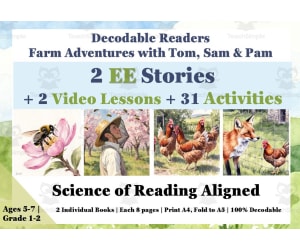
EE: 2 Decodable Reading Books + 2 Video Lessons + 31 Worksheets SOR
Special Resources, ELA, Special Education Needs (SEN), Language Development, Pre-Reading, Phonics, Spelling, Kindergarten, Preschool, Homeschool Curriculum, Grade 1, 2, Literacy Readers, Teacher Tools, Lesson Plans, Presentations
2 EE Decodable Readers, 2 Video Lessons & 31 Worksheets: Farm Adventures Complete Teaching Pack | Part of Advanced Phonics Reading Programme Master EE with 2 decodable readers, 2 optional video lessons, and 31 differentiated practice worksheets! This extensive teaching pack features farm stories that children will love, along with targeted phonics activities that reinforce learning. These books presume that a child can already decode words with a CK ending and OO (moon/look). What's Included 2 systematic/levelled decodable readers focusing on EE 2 carefully taught optional video lessons - no distracting music - these are serious lessons and can be used by home educators and teachers alike - to give extra support to struggling readers Word lists for pre-reading practice at the beginning of each book Differentiated worksheets for phonics reinforcement: Word sorting activities Sound isolation exercises Reading comprehension exercises Sentence writing practice Phonics pattern recognition tasks 100% decodable text with carefully controlled vocabulary Science of reading-aligned instruction Beloved characters: Tom, Sam, Pam, Gran, and the farm animals Beautiful watercolour illustrations Print-and-go format for easy classroom use Why Teachers Love This Complete Pack Real stories PLUS targeted practice! These aren't just decodable readers—you get everything you need to teach EE systematically. The differentiated worksheets provide multiple opportunities for students to apply their learning, while the engaging farm stories provide ample practice of decoding, word recognition and reading comprehension. They help you to target a child's precise needs to ensure progress. The optional video lessons give even nervous parents the help they need to teach! Designed With Carefully Controlled vocabulary: The EE sound is introduced systematically across the stories, with CK words revisited throughout. Worksheets reinforce the same vocabulary, providing an opportunity for mastery. Perfect For Explicit phonics instruction following the science of reading principles All students who are ready to learn EE and have already learned CK, OO Children who need a slower pace, or not Small group intervention or whole class instruction Literacy centres and independent practice Homework assignments that reinforce classroom learning Structured literacy programmes Ages 5-7 or Grade 1-2 Skills Addressed Decoding EE in isolation and context Reading fluency with controlled decodable text Phonics, pattern recognition and application Phonemic awareness through targeted activities Reading comprehension with engaging stories Writing practice using the taught phonics pattern Sight word introduction and practice How to Use This Complete Pack Introduce the sound EE comprehensively Use worksheets for guided practice and skill reinforcement Practice word lists before reading stories Have students read the decodable stories, pointing to each word Return to the worksheets for independent practice or assessment Reread the stories to build fluency This complete pack provides everything you need to teach OO effectively—no additional materials required!
Author Lilibette's Resources
Rating
Tags Learn To Read Programme, Fluency, Struggling Readers, Dyslexia, Special Needs, Phonics, Decodable Reading Books, Reading Fluency, Homeschool Curriculum, Ee Vowel Team

IR Phonics Presentation
Special Resources, ELA, Special Education Needs (SEN), Language Development, Phonics, Kindergarten, Preschool, Grade 1, 2, 3, Presentations, Teacher Tools
This 'ir' digraph Phonics Presentation is a taught lesson especially suitable for those who have special needs or need a slower pace. This video aims to build phonemic awareness of the IR sound, and give plentiful exposure to the new sound so that children can begin to sound IR words out. Because we want pupils to learn the sound thoroughly to decode before the child becomes familiar with the words with the IR sound, which are few, we use some words that the child may not have heard of, but will increase vocabulary, I find that it is too easy for children to learn IR words by sight and not be familiar with the phonics. Special features of the 'ir' PowerPoint lesson This IR video lesson is one of a series, teaching phonics systematically, to enable every child to succeed. There are no distractions/annoying background music for the special needs child to have to 'block out' before s/he can learn - no jingly music, no comic pictures. Nothing moves quickly. Everything is explained very simply. Sound buttons are provided for use if necessary. What is included in/with the 'ck' Digraph PowerPoint? This 'IR' video is a narrated lesson. It is just like having your own phonics teacher! There are 35 slides. We begin by introducing 'IR' and hearing and segmenting orally words with the IR sound. The video then goes on to help the child to sound out words with ir to spell. Finally, there is a fun challenge to help the child track the IR sound in words - an important skill for the special needs/dyslexic child: words float onto the screen and the child must indicate when they see IR and when they do not. How can the ‘IR' video be used? It can be used in multiple ways: It can either be used by the child, with support from an adult, as well as to give the parents a feel for what is necessary - i.e., for training purposes. It can be sent home for a child to watch with his/her parents after seeing it in class - this will then act as revision as well as training the parent as to what is necessary to help the child. What is included? One video with 35 scenes Written by a teacher with over 30 years’ experience of teaching phonics to all abilities. Reading Made Simple: helping parents to teach their child to read.
Author Lilibette's Resources
Rating
Tags Phonics, Video, R Controlled, Phonemic Awareness, IR Digraph, Special Needs, Phonics Presentation
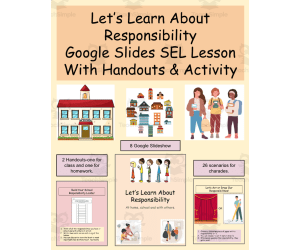
Responsibility Google Slides SEL Presentation with Handouts
Special Resources, Social Emotional Learning (SEL), Special Education Needs (SEN), Social Skills, Grade 2, 3, 4, 5, Presentations, Teacher Tools
Responsibility Google Slides SEL Presentation with Handouts Responsibility Google Slides SEL Lesson with Handouts is a resource specifically designed to guide students in Grades 2 through 5. This 8-slide interactive Google presentation elaborates on the concept of responsibility in diverse contexts. It explores the significance of responsibility at home, school, and in obligations toward others. The product engages learners by challenging them to consider real-life responsibilities daily. Scenarios range from using crosswalks responsibly to cleaning up after pets, thereby teaching students about their various roles in maintaining shared spaces' safety and cleanliness. Supplementary Tools The School Responsibility Ladder - An activity that prompts students to write down their school responsibilities on a ladder diagram. The Home Responsibility Ladder - Participating children can extend learnings into domestic spheres identifying home-based duties. A unique part of this resource is its Pictionary or Charades game option involving actions tied-up with responsible behavior, making it enjoyable and educational simultaneously. Versatility and Flexibility This package caters effectively whether used for individuals or group activities—allowing whole classes to join simultaneously; alternatively working in pairs may help build stronger peer relations around social conducts—a valuable skill for SEN/SEL engagement! The lessons provided as easy-to-share Google Slide files are useful during remote learning circumstances as well. To summarize, the well put together 'Responsibility Google Slides SEL Lesson with Handouts' makes it an essential addition for educators striving towards nurturing responsible citizens for tomorrow's world! If you want more resources like this one, please visit my store. I am a school counselor who specializes in a variety of social emotional learning activities from kindergarten through high school. I work with K-8th grade students on a full-time basis and test out these products with my students. If it does not pass the student test, I redesign and reconfigure the content. Here is my store link: https://teachsimple.com/contributor/jennifer-moyer-taylor
Author Jennifer Moyer Taylor
Tags Responsibility, SEL, Google Slides, Handouts, Classroom Activities, Sel Presentation

SH: 2 Decodable Reading Books + 2 Video Lessons + 32 Worksheets SOR
Special Resources, ELA, Special Education Needs (SEN), Language Development, Pre-Reading, Phonics, Spelling, Kindergarten, Preschool, Homeschool Curriculum, Grade 1, 2, Literacy Readers, Teacher Tools, Lesson Plans, Presentations
2 SH Decodable Readers, 2 Video Lessons & 32 Supporting Worksheets to Develop Reading Fluency! Complete Teaching Pack | Part of Advanced Phonics Reading Programme Master SH with 2 decodable readers, 2 optional video lessons, and 32 differentiated practice worksheets! This extensive teaching pack features farm stories that children will love, along with targeted phonics activities that reinforce learning. This is part of the Reading Made Simple programme of systematic phonics instruction that can help your struggling readers succeed. Designed and tested on real children of all abilities, from none to severe, every step of the way. These books presume that a child can already decode words with a CK ending, OO (moon/look) and EE. What's Included 2 systematic/levelled decodable readers focusing on SH words 2 carefully taught optional video lessons - no distracting music - these are serious lessons and can be used by home educators and teachers alike - to give extra support to struggling readers Word lists for pre-reading practice at the beginning of each book 32 Differentiated worksheets for phonics reinforcement: Word sorting activities Sound isolation exercises Reading comprehension exercises Sentence writing practice Phonics pattern recognition tasks 100% decodable text with carefully controlled vocabulary Science of reading-aligned instruction Beloved characters: Tom, Sam, Pam, Gran, and the farm animals Beautiful watercolour illustrations Print-and-go format for easy classroom use Why Teachers Love This Complete Pack Real stories PLUS targeted practice! These aren't just decodable readers—you get everything you need to teach SH systematically. The differentiated worksheets provide multiple opportunities for students to apply their learning, while the engaging farm stories provide ample practice of decoding, word recognition and reading comprehension. They help you to target a child's precise needs to ensure progress. The optional video lessons give even nervous parents the help they need to teach! Designed With Carefully Controlled vocabulary: The SH sound is introduced systematically across the stories, with CK words revisited throughout. Worksheets reinforce the same vocabulary, providing an opportunity for mastery. Perfect For Explicit phonics instruction following the science of reading principles All students who are ready to learn SH and have already learned CK, OO, EE Children who need a slower pace, or not Small group intervention or whole class instruction Literacy centres and independent practice Homework assignments that reinforce classroom learning Structured literacy programmes Ages 5-7 or Grade 1-2 Skills Addressed Decoding SH in isolation and context Reading fluency with controlled decodable text Phonics, pattern recognition and application Phonemic awareness through targeted activities Reading comprehension with engaging stories Writing practice using the taught phonics pattern Sight word introduction and practice How to Use This Complete Pack Introduce the sound SH comprehensively Use worksheets for guided practice and skill reinforcement Practice word lists before reading stories Have students read the decodable stories, pointing to each word Return to the worksheets for independent practice or assessment Reread the stories to build fluency This complete pack provides everything you need to teach OO effectively—no additional materials required!
Author Lilibette's Resources
Rating
Tags Learn To Read Programme, Fluency, Struggling Readers, Dyslexia, Special Needs, Phonics, Decodable Reading Books, Reading Fluency, Homeschool Curriculum, Consonant Digraphs
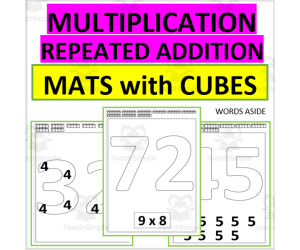
BIG MULTIPLICATION FACTS MATS WITH CUBES REPEATED ADDITION 3 VERSIONS
Special Resources, Special Education Needs (SEN), Math, Addition and Subtraction, Addition, Multiplication and Division, Division, Grade 1, 2, 3, 4, Teacher Tools, Presentations, Worksheets & Printables, Flashcards, Activities
BIG MULTIPLICATION FACTS MATS WITH CUBES REPEATED ADDITION (3 VERSIONS) This expansive teaching resource comprises A4-sized cards visually conveying multiplication facts from 1-10 by 1-12. These durable cards serve as both an instructional aid and a constant visual reinforcement. Unique features include three distinct styled sets to facilitate multiplication knowledge absorption: one with embedded factor numbers, one utilizing repeated addition strategy with separated factors, and one matching equation parts to boost familiarity. This versatile tool lends itself to centers , laminated books, and individual exploration. Apart from aiding multiplication practice, it also bolsters reasoning skills and prompts repeated addition links between addition, multiplication and division. Simplifying foundational math instruction delivery across Grade 1-5, this packet reduces teacher prep time while maximizing student math learning. Includes 389 pages of graphics emphasizing pictorial explanation methods to support all learners.
Author WORDS ASIDE
Tags Math Cubes, Repeated Addition, Posters, Flash Cards, Pictorial And Manipulatives, Multiplication, Hands On Learning, Centers, Task Cards, Words Aside

Letter N Worksheets + PowerPoint: Lesson 14
Special Resources, ELA, Special Education Needs (SEN), Language Development, Phonics, Speech Therapy, Kindergarten, Preschool, Worksheets, Worksheets & Printables, Presentations, Teacher Tools
Learn Initial Sounds N: Lesson 14 teaches the letter Nn and its related phonic sound through a 34-slide PowerPoint lesson, and 5 follow-up activity worksheets. All you need to teach the phonic letter N! Whether in school or at home, this series of phonic presentations can help you effectively teach initial/beginning sounds to all pupils, including those with special needs/dyslexia. This lesson is part of a synthetic, systematic phonics programme for all abilities including those suspected of being dyslexic. This lesson is in the first stage of the Reading Made Simple programme where we teach the initial, or beginning, sounds. The ability to hear the initial/beginning sound is stressed throughout, while we learn to associate each letter with its sound. Each lesson can stand alone but the activities will presume knowledge of the previous letters in the alphabet as Reading Made Simple teaches the initial sounds in alphabetical order. Special features of the Learn Initial Sounds N: Lesson 14 The PowerPoint is silent so that you can interact with your child in the best way for them: full instructions are provided at the bottom of each slide - be sure to show 'Notes'. The PowerPoint is editable so that you can make it fit your pupils. Science of Reading Aligned Truly phonetic; no 'i' for 'ice-cream'. We focus heavily on phonemic awareness which is so necessary for a head start in phonics The child is given plenty of opportunities to learn the necessary skills - perfection is not expected in lesson 1. Still, the teacher will look for the development of the necessary skills as the child works through the alphabet. What is included in the Learn Initial Sounds N: Lesson 14? A 34-slide PowerPoint which teaches phonemic awareness, letter/sound correspondence and letter formation along with practice games 5 follow-up worksheets How can the Learn Initial Sounds N: Lesson 14 be used? It can be used in multiple ways: As the child learns each sound, you can use the PowerPoint lesson to reinforce your lesson It can be sent home for a child to watch with his/her parents after being taught the letter Nn in class - this will then act as revision as well as training the parent as to what is necessary to help the child. Use in class Use at home by parents or for home education Suggested Method: Introduce each letter in turn to your pupil. Have a flashcard of the letter ready. Say each letter's sound to the child and ask him/her to repeat it thrice. Explain that some words begin with this sound. Give an example. You can use the lesson as teacher training for yourself, to learn how to teach your child, or to use it with the child. Choose suitable activities (matching your child's ability) from the pack of worksheets. Notes are suggestions only. Use language appropriate to your pupil and be sure to interact naturally. However, could you focus on the child's hearing of the sounds at the beginning of words? This is often overlooked in the quest to help children learn the initial sounds as quickly as possible. Technical help: Please open PowerPoint in normal mode so you can see the notes and use the 'Draw' tool when prompted. Some slides are interactive. More: Teachers: Find more Initial Sounds Worksheets here: https://teachsimple.com/product/beginning-sounds-phonics-worksheets Find FREE revision/practice initial sounds slides here: https://teachsimple.com/product/learn-initial-sounds-powerpoint
Author Lilibette's Resources
Rating
Tags Phonics, Learn To Read, Initial Sounds, Beginning Sounds, Alphabet, Parents, Home Education, Home School, Letter N, Letter N Worksheets
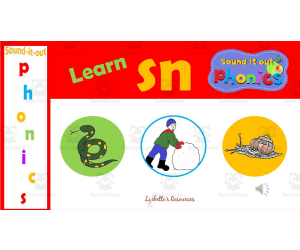
SN Initial Consonant Blends PowerPoint Lesson
Special Resources, ELA, Special Education Needs (SEN), Language Development, Phonics, Kindergarten, Preschool, Presentations, Teacher Tools
This 'SN' Initial Consonant Digraph PowerPoint is a taught lesson especially suitable for those who have special needs or need a slower pace. Special features of the 'SN' PowerPoint lesson No words are introduced that cannot be sounded out. There are no distractions for the special needs child to have to 'block out' before s/he can learn - no jingly music, no comic pictures. Nothing moves quickly. Everything is explained very simply. Sound buttons are provided for use if necessary. Makes phonics as simple as can be No confusing language to throw pupils off track - no need for an English degree to learn to read! What is included in/with the 'SN' Digraph PowerPoint ? This 'SN' PowerPoint is a narrated lesson. The PowerPoint format means that you can go at a pace suitable for your pupils. It is just like having your own phonics teacher! There are 40 slides. We begin by introducing developing phonemic awareness of the initial digraph SN, We move on to sound out words with 'SN'. This is followed by some tracking exercises - short sentences where the pupil is asked to spot the 'NG' sound in the words before reading each sentence. The PowerPoint finishes with our 'star' for good effort which children love! How can the ‘SN' PowerPoint be used? It can be used in multiple ways: It can either be used by the child, with support from an adult, as well as to give the parents a feel for what is necessary - i.e., for training purposes. It can be sent home for a child to watch with his/her parents after seeing it in class - this will then act as revision as well as training the parent as to what is necessary to help the child. More: find a matching SN worksheet here! https://teachsimple.com/product/sn-blend-find-and-colour-phonics-worksheet-to-develop-phonemic What is included? One PowerPoint with 40 slides Written by a teacher with over 30 years’ experience of teaching phonics to all abilities. Reading Made Simple: helping parents to teach their child to read.
Author Lilibette's Resources
Tags Consonant Digraphs, Phonics, Learn To Read, English Language Arts, Special Needs, Consonant Blends, Initial Consonant Blends, Blending

Emotional Intelligence Building Blocks - Social Emotional Learning
Life Studies, Career, Research, Life Skills, Special Resources, Social Emotional Learning (SEL), Social Skills, Special Education Needs (SEN), Speech Therapy, Grade 3, 4, 5, 9, 10, 11, 12, Activities, Teacher Tools, Projects, Centers, Assessments, Lesson Plans, Outlines, Presentations, Rubrics, Quizzes and Tests
Uncover the best social emotional learning (SEL) curriculum for grades 3-6 in "Emotional Intelligence Building Blocks - Social Emotional Learning" by Syed Hammad Rizvi, especially designed for elementary-school-going children. With a total of 432 pages of in-depth information, this book maximizes 8- to 12-year-olds' ability to handle their internal world of emotions while developing high-quality social skills, such as mastering personal management skills and responsible decision-making. Full of exciting topics in each installments like recognizing happiness, sadness, anger, fear, and many more, this social emotional learning middle school workbook delves deep into self-awareness, self-management tools like journaling, breathing exercises, goal setting, social awareness with a focus on empathy, body language, and cultural differences. Designed to be highly beneficial for homeschoolers, classroom teaching, or family usage, this social-emotional learning middle school curriculum not only provides exercises to handle conflicts, make friends, and enhance positive thinking but is specifically designed to help in overcoming emotional difficulties by teaching kids to be emotionally intelligent individuals throughout their lives. It is a highly recommended teaching tool for all parents, tutors, and teachers looking for scientifically valid emotional intelligence exercises to be performed by kids in their classroom. Why Parents/Schools Love It: In-Depth SEL Resource: Provides students with a clear continuum of skills from recognizing emotions to applying concepts in a real-life setting. Helps students learn to be resilient, empathetic, and effective conflict resolvers. Practical and Engaging Tools: This category includes solutions such as journaling, breathing exercises, and goal-setting tasks, which require minimal effort to perform in the comfort of one's home or an educational setting in order to promote instant emotional development. Encourages Positive Relations: Deals with skills like listening, boundary marking, and celebrating diversity. Has the effect of reducing misbehavior and increasing positive associations with family, friends, and the broader community. Aligned with Educational Standards: Based on the principles of Emotional Intelligence, the resource is useful for both homeschooling and classroom education as it impacts academic success, health, and bullying intervention. Empowering for Lifelong Skills: It promotes self-discovery and optimistic outlooks, arming children with skills to conquer life's obstacles, resulting in happier and more confident people as manifested in parent and teacher feedbacks. Target Classes/Students : Based on the complete analysis of the content, structure, language, and examples in the book, it is ideally targeted at students in grades 3 to 6 (usually between 8-12 years old). The content uses vocabulary suitable for this age group, scenarios that are easy for students of this age to relate to, such as school challenges and playground and family dynamics, and progresses gradually from simple emotion identification to complex issues such as ethical dilemmas and community involvement. The introductory tone assumes basic reading skills without burdening the younger reader, while the substance in the later chapters on self-awareness and social dynamics fits well with the upper elementary levels. It could extend to advanced grade 2 students or remedial grade 7, but the core focus is perfectly in tune with middle childhood development stages emphasized in the book. Copyright/Terms of Use : This Book was copyrighted by Syed Hammad Rizvi. This resource is to be used only for personal and single-classroom use only. You are not to alter or redistribute any part of this resource or sell this resource. In other words, do not put this resource on the Internet where it could be downloaded. If you would like to share this resource with others, you can purchase other licenses through Teachsimple. Thank you so much for your cooperation! This product is happily brought to you by Syed Hammad Rizvi
Author Creative Book Store
Rating
Tags EmotionalIntelligenceBuildingBlocks, SocialEmotionalLearning, SELForKids, EmotionalIntelligenceForChildren, SELCurriculum, EmotionalRegulationForKids, BuildingEmpathyInChildren, KidsEmotionalWellbeing, ElementarySELActivities
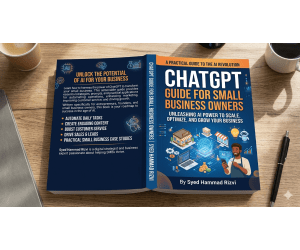
Chat.G.p.T. Guide for Small Business Owners Book
Technology, Science, Computer Science, Engineering, Special Education Needs (SEN), Special Resources, Resources for Teachers, Career, Life Studies, Business, Grade 6, 7, 8, 9, 10, 11, 12, Teacher Tools, Lesson Plans, Assessments, Presentations, Worksheets & Printables, Workbooks, Worksheets, Word Searches, Activities, Projects
The ultimate playbook for unlocking explosive growth; the Chat.G.P.T Playbook for Small Business Owners from Syed Hammad Rizvi, is the most comprehensive & practical AI resource available to entrepreneurs, solopreneurs, and gig economy founders. This 419-page behemoth includes 136 step-by-step chapters with concrete strategies for mastering prompt engineering (and creating prompt templates) content marketing, SEO-Optimized blogs, social media captions on Instagram, LinkedIn, Facebook, TikTok, email sequences, sales funnels, customer service automation, Google Ads copy & Social campaign ads, website copy, product descriptions, competitor analysis, lead generation, upselling & much more. No matter if you're an entrepreneur managing every role yourself or are a small business owner that needs to scale without a team; this book will show you how to incorporate Chat.G.P.T into every workflow you'll go through from brainstorming and drafting proposals to creating loyalty programs, SOPs, and investor summaries. Tips include information related to keyboard shortcuts, custom instructions, awareness of Chat.G.P.T.'s limitations, ethical uses of AI, and real case studies from early users who were able to save hours while generating additional revenue. Great for small business entrepreneurs, freelancers, eCommerce sellers, and service providers that want to work smart, not hard; you won't need a tech background to use this book; it gives you practical examples of prompts and templates you can use immediately to generate results. Reasons why parents and schools like this program. It Provides Future Entrepreneurs With Innovative .A.I. Skills They Will Need for Career Success And The Ability To Transform Their Skills To Become Successful. It Provides Teachers With Ready-To-Use, Current Examples And Templates That Can Help Improve The Learning Experience For Their Students And Make Entrepreneurship And Digital Marketing Classes More Relevant. Parents Can Provide Their College-Bound Or Business-Minded Teenagers With A Professional Development Resource That Will Help Build Their Teenager’s Confidence And Actual Revenue-Generating Skills. Schools Will Appreciate The Ethical Guidance In The Ethical .A.I. Section And Brand Consistency In The Brand Consistency Section That Are Aligned With The Principles Of Digital Citizenship And Responsible Technology Education. Provides Quantifiable Outcomes - Students Are Able To Apply The Information They Learned About “P.rompt.s” To Their Class Project, Internship Or Side Hustle, And Turn Theories Into Tangible Results. Audience (Target) / Classifications: This is a higher-level book that is a very suitable fit for higher-education and vocational business courses and programs. The groups you are targeting are: College and Universitystudents who are taking any of the following courses:entrepreneurship 101 or 201, small business management, digital marketing, business administration, ecommerce, or marketing strategy. Graduate students (MBA or postgraduate) who are takinga course that focuses on artifici.a.l intelligence in the business setting, operations, or sales. High school students taking advanced business classes and coursework in entrepreneurship, career and technical education, or who are members of DECA or FBLA.Platform:For High School; community college vocational tracks; online business boot camps; continuing education programs; and others. Teachers and Professors seeking real-life case studies of artific.i.a.l intelligence in businesses and prom.p.t templates to use in the class (ideal for as Prepared to Use Business Lessons Resources). Copyright/Terms of Use: Syed Hammad Rizvi created this Book. The Book is for personal use and for single classroom use. You cannot modify, redistribute, or sell this Book in any form or way. That is to say, you cannot share this Book with anyone else via the Internet and allow them access to it. If you would like to share this resource with teachers or colleagues, you can purchase additional licenses from Teachsimple. Thank you for adhering to these copyright/terms of use. This product is proudly provided Syed Hammad Rizvi
Author Creative Book Store
Rating
Tags ChatGPT, ChatGPTTips, AIForBusiness, SmallBusinessAI, EntrepreneurAI, SolopreneurTools, AIPromptEngineering, ChatGPTMarketing, AIContentCreation, SEOWithAI
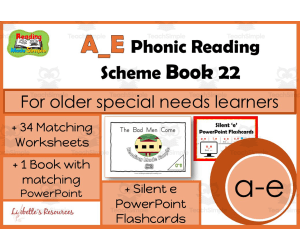
Phonic Reading Scheme for Older Students: A-E: Book 22: Silent e
Special Resources, ELA, Special Education Needs (SEN), Language Development, Phonics, Reading, Kindergarten, Preschool, Grade 1, Literacy Readers, Teacher Tools, Presentations, Flashcards, Worksheets & Printables
This A-E Digraph decodable reading book + matching PowerPoint and worksheets for guided reading is one of a series that can help children with special needs develop reading fluency. Each book has a matching PowerPoint, making it suitable for various settings. This book tells the story of Caligula's attempt to conquer Britain. The Jack Stories, of which this book is one, introduce one phonics sound at a time, and subsequent books build on the vocabulary of the books before, constantly revising and reviewing learned sounds. Irregular sight words are only slowly and gradually introduced. Science of reading aligned. Based on the most up-to-date phonics research. What is included? One reading book One matching PowerPoint 34 supporting worksheets and activities with reading, comprehension and phonemic awareness activities 1 Silent E PowerPoint Flashcards phonics presentation to support learning of this tricky concept These books should be read sequentially as they tell one long story, each telling a part. This book contains words with the following sounds: CK: OO, EE and SH and CH, ND & NT Endings, TH, AR and OR and A-E. The series of books can also be purchased as a growing bundle with a scope and sequence - one file, less clutter! This series has been written with the aid of one of my pupils, aged 8. He has drawn some of the pictures. What makes this phonics reading programme for special needs different? · It has its own, easy-to-download and print phonics reading books, making it accessible to many children worldwide. · Each book carefully builds on the vocabulary of those that have gone before, providing much repetition, without relying on predictable text. · Pictures aid the storyline without encouraging reading from the pictures – i.e. guessing. · The vocabulary is based on phonics families, which are introduced in a carefully planned way. · True sight words – those that cannot be sounded out - are kept to a minimum. Most words are introduced in their phonic family wherever possible. · It is truly multisensory, using the power of the hand. We not only look at the words, but we write them too. This is powerful and has the bonus of turning the child not only into a reader but into a writer as well. Typical signs that this programme can help: Those with dyslexia, or suspected of having dyslexia Difficulty recalling words when seen on flashcards or when reading texts, which results in no or little reading fluency b/d letter reversal of a chronic nature – i.e. the child has not grown out of it Difficulty ordering letters in words: E.g. top becomes pot. Difficulty differentiating between like words: spoon/soon; back/black; sheep/sleep etc… Difficulty tracking words across a page How long is the book? The reading book is 16 pages long.
Author Lilibette's Resources
Rating
Tags Decodable Reading Books, Phonic Reading Scheme, Download And Print Decodable Readers, Guided Reading, Special Needs, A-E, Split Digraphs, Silent E, Long Vowels

Inclusive Classroom: Special ED Integration Manual
Career, Life Studies, Coaching, Leadership, Classroom Management, Resources for Teachers, Community Building, Special Resources, Social Emotional Learning (SEL), Special Education Needs (SEN), Grade 1, 2, 3, 4, 5, 10, 11, 12, Teacher Tools, Anchor Charts, Assessments, Charts, Diagrams, Graphic Organizers, Lesson Plans, Literacy Readers, Outlines, Presentations
The Special Education Teacher Professional Manual: Special Education Classroom Integration Guide has been the best K-12 Special Education resource available to General and Special Education teachers for nearly 20 years. Get the most from your inclusive classroom strategies with 49 modules to walk you through Inclusive Classrooms, Individualized Education Plans (IEPs), Section 504 Plans, Universal Design for Learning (UDL), Differentiated Instruction, Positive Behavioral Interventions & Supports (PBIS), Sensory-Friendly Classroom, Assistive Technology, Co-Teaching Models, and Inclusive Assessment and Grading. Additionally, the manual includes Parent Partnerships, Peer Mentoring, and excellent ready-to-use tools including Charts, Rubrics, Diagrams, Checklists, and Examples of how to implement every module. Transform your classroom into a Neuro-Affirming, Equitable, and Compliant with IDEA classrooms that produce positive outcomes for students with Autism, Attention Deficit Hyperactivity Disorder (ADHD), Learning Disabilities, and many more! This guide is the perfect tool for Inclusion, Co-Teaching, and Special Education Classroom Integration! Download instantly as a PDF to begin your implementation today! Keywords: inclusive classroom manual, special education teacher guide, IEP 504 UDL PBIS, differentiated instruction K-12, sensory classroom, assistive technology tools, co-teaching models. What Parents and Schools Think About It: Provides true and genuine equal opportunities for all students to excel in school and make friends with other people and is supported by proven research; increases academic success for every student while increasing appreciation for all types of learners. Provides a way for teachers to quickly access support and utilize plug-and-play tools, like strategies, rubrics, charts, and legal compliance so they can reduce their stress level and comply with IEP/504 requirements. Provides evidence-based strategies that increase academic success for both typical and neurodiverse students, including universal design for learning (UDL), positive behavioral intervention and supports (PBIS), and co-teaching. Provides tools for parents to establish and enhance home-school partnerships, including communication resources and advocacy tools, that lead to better outcomes for their children. Transform poor-performing classrooms into calm, enjoyable, sensory-safe environments where both parents and administrators have reported visible improvements in student behavior and classroom engagement. The following are classes/grade levels of students the manual is intended for: The manual is designed for K-12 teachers working with students ages 3–21 (as defined by IDEA/IEPs). It is appropriate for: Elementary (Grades K-5): The main focus is on supportive features of the environment, peer mentoring, and basic IEPs. Middle (Grades 6-8): The main focus is on co-teaching, PBIS for behavior management, and inclusion of students both socially and students with disabilities. High (Grades 9-12): The main focus is on assistive technology, developing inclusive grading systems, assisting students with transition, and facilitating advocacy for students with disabilities from the parents of students. Additionally, this manual should be appropriate in general education classrooms, as well as in self-contained special education classrooms, resource rooms, and co-taught settings across all academic subjects (but not limited to just academic subjects). Copyrights/Terms of Use: This book is copyrighted by Syed Hammad Rizvi. This resource can only be used by an individual for personal use and the use of just one classroom. It cannot be changed, re-distributed or sold in any part. In other words, it cannot be put on the internet to be accessed by the public and used or downloaded. If you would like to share this resource with others, please purchase another license from Teachsimple for your coworkers. Thank you for respecting the terms of use of this resource. This product is proudly produced by Syed Hammad Rizvi.
Author Creative Book Store
Rating
Tags InclusiveEducation, SpecialEducationTeacher, IEPGoals, Section504, UniversalDesignForLearning, BehaviorManagement, SensoryClassroom, SensoryFriendly, NeurodivergentClassroom, AutismInTheClassroom
Spring PowerPoint; 44 Slides
Special Resources, Holiday & Seasonal, Special Education Needs (SEN), Seasons, Spring, Science, Basic Science, Kindergarten, Preschool, Grade 1, Teacher Tools, Presentations
This 44-slide PowerPoint will help you to celebrate spring with your children! Beautiful photos take children around and about, drawing their attention to many aspects of spring. Young children will be delighted by the original photos portraying all aspects of spring. From lengthening days, to plants, to baby animals this Spring PowerPoint will give the teacher plenty of stimulating material to explore many different aspects of spring. There is so much to learn! Who can use the Spring PowerPoint? Anyone with young children or those with special needs: teachers, parents, home-educators (it is great for home-ed meetings). It can be used as a stand-alone activity, or as part of a project on spring. What is taught in the Spring PowerPoint? Many aspects of spring are covered in the Spring PowerPoint. These include: •Length of day •Weather •flowers •leaves •Growing seeds •Pollination •Baby animals •Birds •Frogs •Butterflies What is included? One PowerPoint and full narration notes are provided There is some writing on most slides which children can read, or which can be read to them, but the accompanying, PDF, narration notes provide more detail. Of course, the teacher can enlarge upon the notes, bring in personal anecdotes, or remind the children of lessons already learned, so helping the children to relate what they are learning to their own experiences. I love spring and I have thoroughly enjoyed taking photos for the creation of this PowerPoint. I hope you love it too! See beautiful flowers, cute lambs, a bird in her nest, blossom trees and more. Learn something about the fascinating life of insects and how they help the flowers by pollinating them. If you like this PowerPoint, please tell others! More of my spring resources: You could always use my Spring-Themed Writing Paper for any follow-up work! Frogs Lifecycle PowerPoint Frogs Lifecycle lesson resources Apple Tree Lifecycle PowerPoint Butterfly Lifecycle (no PowerPoint) Blackbirds Spring Word Mat Blossom Tree Craft Make a Snowdrops Picture Daffodils Lesson Pack and Video Spring Vocabulary Cards - phonetically coded Spring Early Number Worksheets Spring on the Farm - Match Babies to Mothers Colour: Bluebells
Author Lilibette's Resources
Tags Spring, Spring Powerpoint, Baby Animals, Spring Flowers, Spring Project

Letter P Worksheets + PowerPoint Lesson: Beginning Sounds Lesson 16
Special Resources, ELA, Special Education Needs (SEN), Language Development, Phonics, Speech Therapy, Kindergarten, Preschool, Worksheets, Worksheets & Printables, Presentations, Teacher Tools
Letter P Worksheets + PowerPoint Lesson Lesson 16 teaches the letter Pp and its related phonic sound through a 34-slide PowerPoint lesson, and 5 follow-up activity worksheets. All you need to teach the phonic letter P! Whether in school or at home, this series of phonic presentations can help you effectively teach initial/beginning sounds to all pupils, including those with special needs/dyslexia. This lesson is part of a synthetic, systematic phonics programme for all abilities, including those suspected of being dyslexic. This lesson is in the first stage of the Reading Made Simple programme, where we teach the initial, or beginning, sounds. The ability to hear the initial/beginning sound is stressed throughout, while we learn to associate each letter with its sound. Each lesson can stand alone, but the activities will presume knowledge of the previous letters in the alphabet as Reading Made Simple teaches the initial sounds in alphabetical order. Special features of the Letter P Worksheets and PowerPoint presentation: The PowerPoint is silent so that you can interact with your child in the best way for them: full instructions are provided at the bottom of each slide - be sure to show 'Notes'. The PowerPoint is editable so that you can make it fit your pupils. Science of Reading Aligned Truly phonetic; no 'i' for 'ice-cream'. We focus heavily on phonemic awareness, which is so necessary for a head start in phonics The child is given plenty of opportunities to learn the necessary skills - perfection is not expected in lesson 1. Still, the teacher will look for the development of the necessary skills as the child works through the alphabet. What is included in the Letter P worksheets Pack? A 34-slide PowerPoint which teaches phonemic awareness, letter/sound correspondence and letter formation, along with practice games 5 follow-up, Letter P worksheets How can this resource be used? It can be used in multiple ways: As the child learns each sound, you can use the PowerPoint lesson to reinforce your lesson It can be sent home for a child to watch with his/her parents after being taught the letter Pp in class - this will then act as revision as well as training the parent as to what is necessary to help the child. Use in class Use at home by parents or for home education Suggested Method: Introduce each letter in turn to your pupil. Have a flashcard of the letter ready. Say each letter's sound to the child and ask him/her to repeat it thrice. Explain that some words begin with this sound. Give an example. You can use the lesson as teacher training for yourself, to learn how to teach your child, or to use it with the child. Choose suitable activities (matching your child's ability) from the pack of worksheets. Notes are suggestions only. Use language appropriate to your pupil and be sure to interact naturally. However, could you focus on the child's hearing of the sounds at the beginning of words? This is often overlooked in the quest to help children learn the initial sounds as quickly as possible. Technical help: Please open PowerPoint in normal mode so you can see the notes and use the 'Draw' tool when prompted. Some slides are interactive. More: Teachers: Find more Initial Sounds Worksheets here: https://teachsimple.com/product/beginning-sounds-phonics-worksheets Find FREE revision/practice initial sounds slides here: https://teachsimple.com/product/learn-initial-sounds-powerpoint
Author Lilibette's Resources
Rating
Tags Phonics, Learn To Read, Initial Sounds, Beginning Sounds, Alphabet, Parents, Home School, Special Needs, Letter P, Letter P Worksheets

The Quantum Leap:Unlocking the Mysteries of Quantum Computing for Teen
Career, Life Studies, Research, Technology, Science, Computer Science, Life Skills, Special Resources, Social Skills, Special Education Needs (SEN), Grade 6, 7, 8, 9, 10, 11, 12, Lesson Plans, Teacher Tools, Worksheets & Printables, Workbooks, Parts of and Anatomy of, Presentations, Outlines, Centers, Activities
Explore the quantum revolution with The Quantum Leap: Unlocking the Mysteries of Quantum Computing for Teens, written by Syed Hammad Rizvi – a comprehensive resource for upfront and center students interested in innovative and advanced applications in computer science and related physics and technological domains. A thorough and correct resource on understanding complex ideas such as a bit compared to a qubit, quantum superpositions and entanglements, quantum gate and quantum circuit designs, Shor's algorithm and Grover's algorithm, and further applications in drug development simulation, economic modeling simulation, climate simulation modeling, and quantum cryptography beyond post-quantum cryptography. This 351-page book serves a thorough introduction to computer and physics students who are interested in understanding advanced computer applications and related physics. The Quantum Leap serves a detailed platform for students to learn about quantum paralleling, quantum correction, and quantum internet connectivity. Perfectly effective and aptly SEO-ed for educators on quantum mechanics resources and applications. A necessary read for students and professionals interested in quantum physics and computer applications. Why Parents/Schools Love It: Sparks STEM Passion: Makes the concept of quantum computing easy to understand for teens by comparing it to things they know and love, sparking their interest in the technological applications of the future such as artificial intelligence and cryptography. Teaches Future-Proof Skills: The course deals with applications, ethics, and future career options, providing students with knowledge required for in-demand jobs in quantum technology. Accessible and Engaging: Step-by-step analyses and context knowledge provided help make difficult subjects more accessible, overcoming intimidation factors and encouraging critical thinking. Comprehensive Curriculum Fit: It is compatible with the computer science and physics curriculum of high schools and is very suitable for being incorporated in the classroom or homeschooling settings. Encourages Ethical Awareness: It deals with the effects, limitations, and initiatives taken around the world, thus instilling ethical innovation in the minds. Target Student Classes: Having considered the entire contents and structure of this book and its intended audience from various perspectives such as its front cover and introduction chapters, it is intended for high school students from Grades 10 to 12 and aged 15 to 18 years. It commences from a level of basic discussion on classical and quantum fundamentals such as superpositions and entanglement concepts and then proceeds to more complex aspects of quantum studies such as algorithms and error correction strategies based on assumed foundational knowledge and interests but without rigorous prerequisite knowledge. Hence it is intended for high school seniors enrolled in introductory computer science studies at college or more in-depth math and physics studies at school levels above Grades 9; it may also serve Grade 9 students who take more challenging subjects at school and college-level new students at introductory stages as add-on reading contents, while its mainstream audience would be Grades 10 to 12 students in line with its teen-level comparison aids and refraining from more mature themes of mathematics chapters. Copyright/Terms of Use : This Book was copyrighted by Syed Hammad Rizvi. You may use this resource for personal and single class use. You are not authorized to modify, redistribute, and sell this resource or its part. That means you are not authorized to upload this resource to the Internet so people can freely access and download it. If you wish to share these resources with others in your workplace or with classmates at school, then go ahead and buy additional licenses from Teachsimple. "This product is happily brought to you by Syed Hammad Rizvi"
Author Creative Book Store
Rating
Tags QuantumComputingForTeens, QuantumLeapBook, UnlockQuantumMysteries, QubitsForBeginners, SuperpositionExplained, EntanglementForKids, QuantumAlgorithmsTeens, ShorsAlgorithmGuide, GroversSearchTeen, QuantumComputing2026

IR Phonics Lesson
ELA, Reading, Phonics, Language Development, Pre-Reading, Special Resources, Special Education Needs (SEN), Kindergarten, Teacher Tools, Presentations
Here is taught lesson for the r-controlled digraph IR. Suitable for all, but especially written for the special needs pupil, this lesson is short, clear, to the point, has no distracting background music, has no distracting imagery, so helping the child to focus on the sound to be learned. The lesson begins by developing phonemic awareness of the new sound IR and a picture 'key' is provided to help the child remember the sound, one of the main difficulties when starting to learn the sound IR. The lesson then progresses to help children to read words, by sounding them out first. Learning to read through spelling is a helpful way to concentrate the pupil's mind on the lesson and to engage the pupil. We not only use words with which the child is familiar, but include some less well known IR words in order to help the child spot IR in words and sound them out. This is important as many children with a need will sound a word out accurately, but then, if they do not recognise the word, try to change it into something they do recognise. The lesson closes with an engaging task. One of the crucial tasks for the learner of IR is to spot the new sound in words and differentiate it from previously taught R - controlled words, such as AR and OR. For some children with special needs this is very hard. Therefore, this final activity asks the child to say which digraph each word contains as it floats onto the screen. The child is not required to read the words, but I find they like to! Of course, this is to be encouraged! What is included: One taught video lesson MP4 33 frames Instructions: an adult should sit with the pupil for best effect - this is not an entertainment but specialist phonics instruction. The video should be stopped as necessary and restarted when the pupil is ready to go on.
Author Lilibette's Resources
Tags IR Phonics, R Controlled, Phonics Video, Teaching Phonics, For Teachers, Phonics, Special Needs, IR Video Lesson