resources by type
resources by grade
resources by subject
other resources

2,805 products added recently

Music Quiz

Science Quizzes are designed to test understanding across various scientific disciplines. They include questions on foundational concepts, vocabulary, experiments, and real-world applications. By incorporating these quizzes into your teaching, you can monitor student progress, clarify misconceptions, and stimulate curiosity. They serve as excellent tools for reinforcing learning and preparing students for advanced scientific study.

Relevant
alt down
Any Time
alt down
filter by
alt down
All File Types
alt down
filter nav Show filters
Sort by: Relevant
CLEAR
resources by type
Activities
down arrow
Classroom Decor
down arrow
Teacher Tools
up arrow
Anchor Charts
Assessments
Charts
DBQ's
Diagrams
Graphic Organizers
Lesson Plans
Literacy Readers
Outlines
Presentations
Quizzes and Tests
up arrow
Quizzes
Tests
Rubrics
Templates
Worksheets & Printables
down arrow
resources by grade
Early Learning
down arrow
Pre-K
down arrow
Elementary
down arrow
Middle School
down arrow
High School
down arrow
Adult Education
Not Grade Specific
resources by subject
Creative Arts
up arrow
Art
Art History
Dance
Drama
Fine Arts
Graphic Arts
Music
ELA
down arrow
Holiday & Seasonal
down arrow
Life Studies
down arrow
Math
down arrow
P.E. & Health
down arrow
Social Studies
down arrow
Special Resources
down arrow
Science
down arrow
Foreign Languages
down arrow
Resources for Teachers
down arrow
other resources
Common Core
Homeschool Resources
down arrow
Montessori
Research
STEM
Guitars Reading Comprehension Passage - Cored Ed Encyclopedia
Free Download

Guitars Reading Comprehension Passage - Cored Ed Encyclopedia
ELA, Language Development, Resources for Teachers, Reading Comprehension, Reading, Pre-Reading, Writing, Music, Creative Arts, Strategies, Grade 2, 3, 4, 5, Worksheets & Printables, Worksheets, Teacher Tools, Centers, Activities, Writing Prompts, Assessments, Tests, Quizzes and Tests, Quizzes

This guitars reading comprehension contains the following: Pre-Reading Trivia Students will write down one thing they already know about the subject and then read five more facts and discuss. These facts are fun, and the students will enjoy learning about the subject before reading more. Reading Passage The text is a high-interest reading passage with set paragraphs, roughly three to four paragraphs long. It contains a variety of themes about the topic, anywhere from history to technology. The passage is between 250 and 350 words in length. Mixed Questions The first question page contains four multiple-choice questions, each with a choice of four answers, and three written response questions that require a sentence or two from the student. Creative Writing In this question, the student will be required to write a five to eight sentence paragraph on a question related to the topic. Extension Activities This page is optional for fast finishers. If there are five to ten minutes left at the end of the lesson, the student can choose one of three activities, each one requiring a different skill. Answer Key There are answers for the multiple-choice questions and three written response questions have sample answers. FULL CATALOG OF DOWNLOAD LINKS AND ENCYCLOPEDIA INDEX HERE Cored Ed Encyclopedia Overview The Cored Ed Encyclopedia is a weekly series of lessons that you can pick up and use right away. These short readings fit into whatever time you have available. Each one includes a warm-up, a reading, and a set of questions, but it’s flexible — you can do just the reading, the full lesson, or skip the writing section if you need to. Each lesson focuses on a single topic so students don’t get lost. The writing is clear but never childish, making it perfect for grades two through five. Topics range from animals and science to history, inventions, and everyday things. No matter the level of the student, everyone should take away at least one new idea or fact from each lesson. The materials are easy to print, easy to explain, and require no setup. They work well for whole-class teaching, partner work, or independent study.

Author Cored Education

Rating

Tags Vocabulary, Spelling, Reading Comprehension, Reading Passages, Reading, Creative Writing, Reading Strategies, Writing Prompts, Guitars, Music

Harps Reading Comprehension Passage - Cored Ed Encyclopedia

Harps Reading Comprehension Passage - Cored Ed Encyclopedia
ELA, Language Development, Resources for Teachers, Reading Comprehension, Reading, Pre-Reading, Writing, Strategies, Music, Creative Arts, Grade 2, 3, 4, 5, Worksheets & Printables, Worksheets, Teacher Tools, Centers, Activities, Writing Prompts, Assessments, Tests, Quizzes and Tests, Quizzes

This harps reading comprehension contains the following: Pre-Reading Trivia Students will write down one thing they already know about the subject and then read five more facts and discuss. These facts are fun, and the students will enjoy learning about the subject before reading more. Reading Passage The text is a high-interest reading passage with set paragraphs, roughly three to four paragraphs long. It contains a variety of themes about the topic, anywhere from history to technology. The passage is between 250 and 350 words in length. Mixed Questions The first question page contains four multiple-choice questions, each with a choice of four answers, and three written response questions that require a sentence or two from the student. Creative Writing In this question, the student will be required to write a five to eight sentence paragraph on a question related to the topic. Extension Activities This page is optional for fast finishers. If there are five to ten minutes left at the end of the lesson, the student can choose one of three activities, each one requiring a different skill. Answer Key There are answers for the multiple-choice questions and three written response questions have sample answers. FULL CATALOG OF DOWNLOAD LINKS AND ENCYCLOPEDIA INDEX HERE Lesson Snapshot Title: Harps Genre: Nonfiction (informational text) Subject: Music (Informational Reading) Primary Topic: How harps work, types, and early history Estimated Guided Reading Level (A–Z): O What This Lesson Teaches Best Explains what a harp looks like and how it makes sound when strings are plucked. Connects string length and thickness to low and high notes (how pitch changes). Describes the soundboard’s role in helping the sound “ring out.” Introduces harps as an ancient instrument and names early places they were played (Mesopotamia, Egypt, Sumer). Compares types of harps today (lever harps vs. pedal harps) and what levers/pedals do to change pitch. Learning Goals Describe how a harp makes sound using details from the passage. Explain how longer/thicker strings and shorter/thinner strings relate to low and high notes. Identify what the soundboard does for the harp’s sound. Compare lever harps and pedal harps by explaining how each changes pitch. Summarize evidence that harps are very old by naming where early harps were played or found. Key Vocabulary From the Text soundboard — flat wooden part that helps sound ring out. plucking — pulling and releasing strings with fingers to make sound. pitch — how high or low a note sounds. glissando — a swooshing sound moving across many notes. mechanism — parts that work together to change something. Cored Ed Encyclopedia Overview The Cored Ed Encyclopedia is a weekly series of lessons that you can pick up and use right away. These short readings fit into whatever time you have available. Each one includes a warm-up, a reading, and a set of questions, but it’s flexible — you can do just the reading, the full lesson, or skip the writing section if you need to. Each lesson focuses on a single topic so students don’t get lost. The writing is clear but never childish, making it perfect for grades two through five. Topics range from animals and science to history, inventions, and everyday things. No matter the level of the student, everyone should take away at least one new idea or fact from each lesson. The materials are easy to print, easy to explain, and require no setup. They work well for whole-class teaching, partner work, or independent study.

Author Cored Education

Rating

Tags Vocabulary, Spelling, Reading Comprehension, Reading Passages, Reading, Creative Writing, Reading Strategies, Writing Prompts, Harps, Music

Oboes Reading Comprehension Passage - Cored Ed Encyclopedia

Oboes Reading Comprehension Passage - Cored Ed Encyclopedia
ELA, Language Development, Resources for Teachers, Reading Comprehension, Reading, Pre-Reading, Writing, Strategies, Music, Creative Arts, Grade 2, 3, 4, 5, Worksheets & Printables, Worksheets, Teacher Tools, Centers, Activities, Writing Prompts, Assessments, Tests, Quizzes and Tests, Quizzes

This oboes reading comprehension contains the following: Visualize on the Cover (Teacher Read Aloud Script) Start your lesson by taking a few moments to visualize the topic and share thoughts or feelings about it. Pre-Reading Trivia Students will write down one thing they already know about the subject and then read five more facts and discuss. These facts are fun, and the students will enjoy learning about the subject before reading more. Reading Passage The text is a high-interest reading passage with set paragraphs, roughly three to four paragraphs long. It contains a variety of themes about the topic, anywhere from history to technology. The passage is between 250 and 350 words in length. Mixed Questions The first question page contains four multiple-choice questions, each with a choice of four answers, and three written response questions that require a sentence or two from the student. Vocabulary Questions Practice seven key words from the text in this section across two activities. First section is scrambled words where students will unscramble three words given a clue for each. The second section is a word to meaning matching activity. Creative Writing In this question, the student will be required to write a five to eight sentence paragraph on a question related to the topic. Extension Activities This page is optional for fast finishers or to take home. There are several activities, each one requiring a different skill. Do some, do none, do all, completely optional - but you will feel reassured knowing every possibility is planned for. Includes summary writting question. Answer Key There are answers for the multiple-choice questions, written response questions have sample answers, vocabulary answers and if there is a summary question then a sample summary will be provided as well. FULL CATALOG OF DOWNLOAD LINKS AND ENCYCLOPEDIA INDEX HERE Lesson Snapshot Title: Oboes Genre: Nonfiction (informational text) Subject: Music (Performing Arts) / Reading Informational Text Primary Topic: How the oboe developed and works Estimated Guided Reading Level (A–Z): S Support pages included: Pre-reading trivia, mixed questions, vocabulary activities, creative writing, extension activities, and an answer key. Support-page QA note: The support page uses “orchestra” (singular) in a scrambled-word item, while the passage uses “orchestras” (plural). What This Lesson Teaches Best How the modern oboe developed from earlier instruments, including the shawm and hautbois , across time in Europe. How a double reed starts the oboe’s sound through vibrating and buzzing. How adding more keys helped players move faster and play more notes in tune. Why the oboe often gives the tuning note in an orchestra (clear, steady sound). Using section headings to organize and locate key facts in an informational passage. Learning Goals Students will be able to describe how the shawm relates to the modern oboe. Students will be able to explain what the double reed does to start the oboe’s sound. Students will be able to identify how the hautbois was different from the shawm. Students will be able to explain why new key systems were designed in the 1800s. Students will be able to describe why the oboe often gives the tuning note in orchestras. Students will be able to use the passage’s headings to find information quickly. Key Vocabulary From the Text shawm — a loud older double-reed instrument played long ago. hautbois — an early French version of the oboe. double reed — two reeds that vibrate to start the sound. tuning — matching the same pitch before playing together. blend — mix smoothly with other instruments. Cored Ed Encyclopedia Overview The Cored Ed Encyclopedia is a weekly series of lessons that you can pick up and use right away. These short readings fit into whatever time you have available. Each one includes a warm-up, a reading, and a set of questions, but it’s flexible — you can do just the reading, the full lesson, or skip the writing section if you need to. Each lesson focuses on a single topic so students don’t get lost. The writing is clear but never childish, making it perfect for grades two through five. Topics range from animals and science to history, inventions, and everyday things. No matter the level of the student, everyone should take away at least one new idea or fact from each lesson. The materials are easy to print, easy to explain, and require no setup. They work well for whole-class teaching, partner work, or independent study.

Author Cored Education

Rating

Tags Vocabulary, Spelling, Reading Comprehension, Reading Passages, Reading, Creative Writing, Reading Strategies, Writing Prompts, Oboes, Music

Composer Team Quiz

Composer Team Quiz
Creative Arts, Art, Music, Not Grade Specific, Quizzes, Quizzes and Tests, Teacher Tools

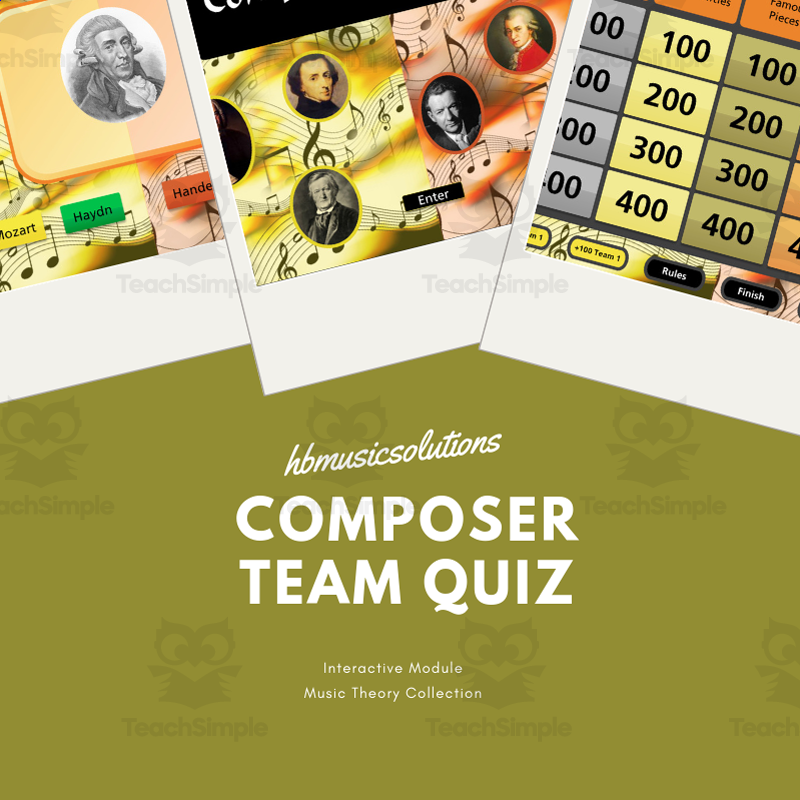
Composer Team Quiz Composer Team Quiz is an interactive educational resource, specifically tailored for educators, including public school teachers and homeschoolers. It allows the creation of engaging music lessons to stimulate an active learning process. Although it’s not designed for any specific grades, it ideally suits GCSE music students. About Composer Team Quiz The essential feature of Composer Team Quiz is its exciting quiz format with five distinct categories of varying complexities. The 134-slide long quiz consists of categories such as: Name The Composer Nationality Famous Pieces Which Era? Musical Features. Each category presents four levels of questions suitable to various stages of student knowledge. Evaluation And Feedback Mechanisms The quiz provides real-time results and feedback. This feature ensures a thorough understanding and quick correction if required, focusing on areas that require improvement. Versatile Learning Tool This tool encourages collaborative learning through: Holistic Classroom Learning: It motivates spirited competition among groups in a classroom setting. Diverse Small Group Activities: Students develop teamwork dynamics. Solo Homework Assignments: Variants As Per Device Preferences : Different versions are available based on device choice: Tablet module link for mobile convenience during teaching or scoring. Browser module link ensuring platform agnostic access contrasting usual constraints. The traditional PC link for desktop users. Educators seeking to reinvigorate their music curriculum may find the comprehensive Composer Team Quiz an extremely valuable addition – effectively blending history, culture & reward in a unique learning experience!

Author Hbmusicsolutions's Shop

Tags Interactive Quiz, Music Education, Composer Knowledge, Collaborative Learning, Student Assessment

Pianos Reading Comprehension Passage - Cored Ed Encyclopedia

Pianos Reading Comprehension Passage - Cored Ed Encyclopedia
ELA, Language Development, Resources for Teachers, Reading Comprehension, Reading, Pre-Reading, Writing, Strategies, Music, Creative Arts, Grade 2, 3, 4, 5, Worksheets & Printables, Worksheets, Teacher Tools, Centers, Activities, Writing Prompts, Assessments, Tests, Quizzes and Tests, Quizzes

This pianos reading comprehension contains the following: Visualize on the Cover (Teacher Read Aloud Script) Start your lesson by taking a few moments to visualize the topic and share thoughts or feelings about it. Pre-Reading Trivia Students will write down one thing they already know about the subject and then read five more facts and discuss. These facts are fun, and the students will enjoy learning about the subject before reading more. Reading Passage The text is a high-interest reading passage with set paragraphs, roughly three to four paragraphs long. It contains a variety of themes about the topic, anywhere from history to technology. The passage is between 250 and 350 words in length. Mixed Questions The first question page contains four multiple-choice questions, each with a choice of four answers, and three written response questions that require a sentence or two from the student. Vocabulary Questions Practice seven key words from the text in this section across two activities. First section is scrambled words where students will unscramble three words given a clue for each. The second section is a word to meaning matching activity. Creative Writing In this question, the student will be required to write a five to eight sentence paragraph on a question related to the topic. Extension Activities This page is optional for fast finishers or to take home. There are several activities, each one requiring a different skill. Do some, do none, do all, completely optional - but you will feel reassured knowing every possibility is planned for. Includes summary writting question. Answer Key There are answers for the multiple-choice questions, written response questions have sample answers, vocabulary answers and if there is a summary question then a sample summary will be provided as well. FULL CATALOG OF DOWNLOAD LINKS AND ENCYCLOPEDIA INDEX HERE Lesson Snapshot Title: Pianos Genre: Nonfiction (informational text) Subject: Music (Performing Arts) / Reading Informational Text Primary Topic: How the piano was invented and improved Estimated Guided Reading Level (A–Z): S What This Lesson Teaches Best How the piano idea began around 1700 in Florence, Italy , with Bartolomeo Cristofori trying to make music “gentle or bold” depending on touch. How the piano’s key action works: a mechanism sends a leather-covered hammer to strike strings, then pulls back so the string keeps vibrating . How dampers stop strings from ringing—and lifting them lets tones ring longer. How information spread the invention: Scipione Maffei published an article with a diagram , leading builders like Gottfried Silbermann to make pianos based on Cristofori’s design. How the piano grew for bigger spaces: sturdier builds and a wider range from about four octaves to 88 keys , changing where music could be played (homes, schools, apartments, stages). Learning Goals Students will explain why Cristofori began tinkering with a new keyboard instrument around 1700. Students will describe how a key triggers the hammer-and-string action using details from the passage. Students will explain how a player’s touch can make the sound softer or louder according to the text. Students will identify how Maffei helped the piano idea travel and name one builder mentioned who made pianos afterward. Students will describe how the piano’s keyboard range changed over time and state the number of keys many pianos have today. Key Vocabulary From the Text harpsichords — older keyboards that stayed mostly one volume. inventory — a recorded list that showed a piano existed. mechanism — moving parts that make the piano action work. dampers — parts that stop strings from ringing. octaves — groups of notes used to describe keyboard range. Cored Ed Encyclopedia Overview The Cored Ed Encyclopedia is a weekly series of lessons that you can pick up and use right away. These short readings fit into whatever time you have available. Each one includes a warm-up, a reading, and a set of questions, but it’s flexible — you can do just the reading, the full lesson, or skip the writing section if you need to. Each lesson focuses on a single topic so students don’t get lost. The writing is clear but never childish, making it perfect for grades two through five. Topics range from animals and science to history, inventions, and everyday things. No matter the level of the student, everyone should take away at least one new idea or fact from each lesson. The materials are easy to print, easy to explain, and require no setup. They work well for whole-class teaching, partner work, or independent study.

Author Cored Education

Rating

Tags Vocabulary, Spelling, Reading Comprehension, Reading Passages, Reading, Creative Writing, Reading Strategies, Writing Prompts, Music, Pianos

Lena's Rhythm And Beat Short Bite | Interactive Tutorial And Quiz

Lena's Rhythm And Beat Short Bite | Interactive Tutorial And Quiz
Creative Arts, Art, Music, Grade 1, 2, 3, 4, Quizzes, Quizzes and Tests, Teacher Tools

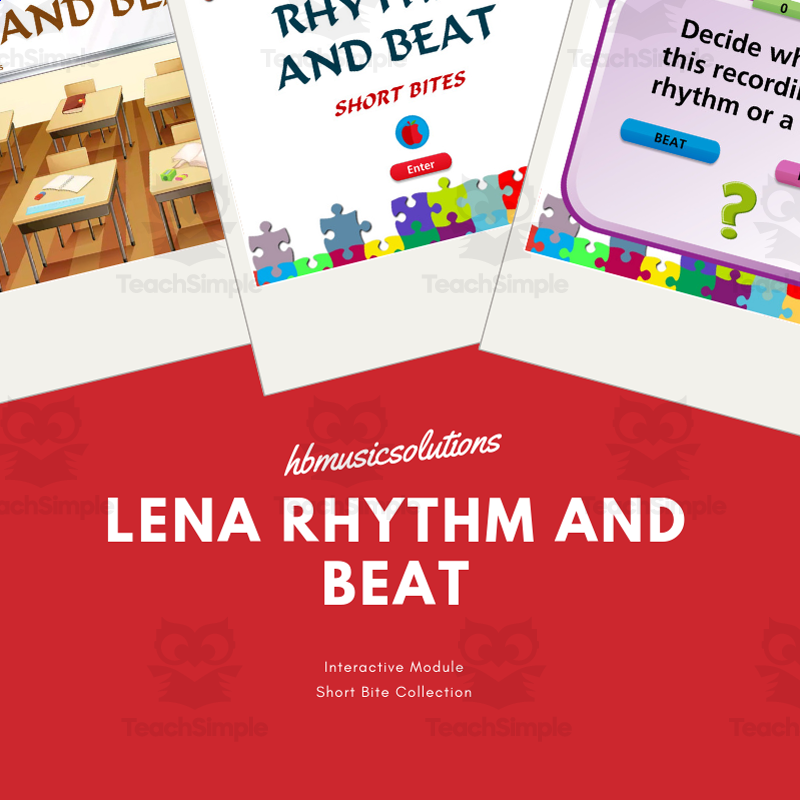
Lena's Rhythm And Beat Short Bite: An Innovative Interactive Tutorial Aimed to help educators navigate the critical terrain of distinguishing rhythm and beat in a musical context, Lena's Rhythm And Beat is an engaging tool tailored for grade 1-4 students concentrating art and music. Features: An animated character, Lena, demonstrates the pivotal concepts. Integration of a short quizzes ">quiz that fosters both learning and engagement. Versatile Implementation & User Friendly Design Lena's Rhythm And Beat can be adapted variously suiting classroom as well homeschool teaching formats. Its compatibility with projectors make it suitable for group sessions or individual assignments. Designed meticulously as an easily accessible PDF format, this package includes links & instructions for launching tablet files. Although Mac users may face challenges employing it using PCs after one-time unzipping process is straightforward which requires just 'Save To Hard Drive' then 'Select Launch Story' step. Promise: The promise of making rhythm education meaningful through Lena's Rhythm And Beat Short Bite enables educators across the globe to create interesting music lessons with rich outcomes!

Author Hbmusicsolutions's Shop

Tags Interactive Tutorial, Rhythm And Beat, Music Education, Animated Character, Quiz

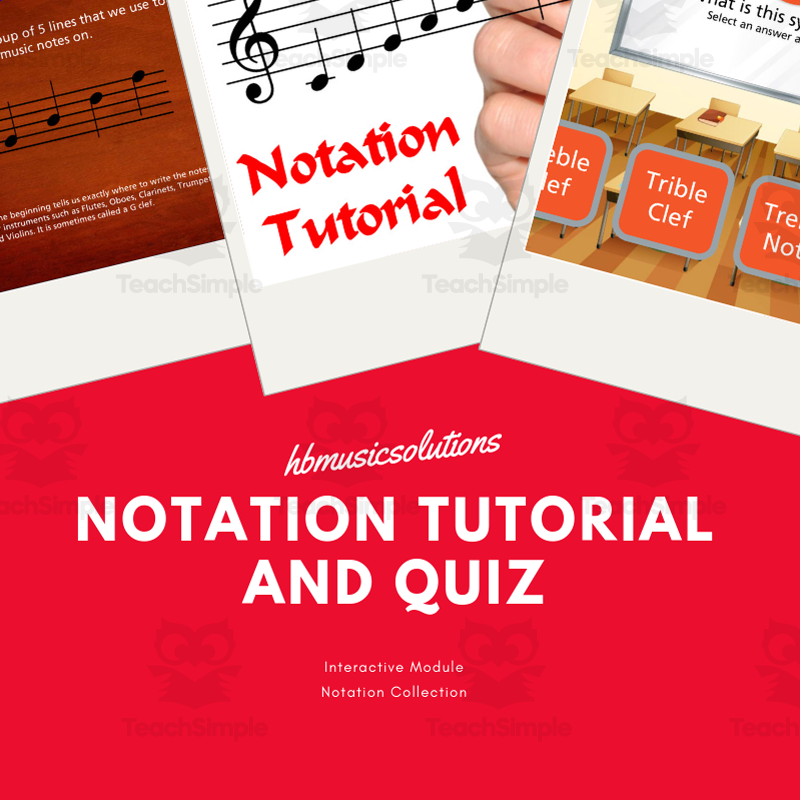
Notation Tutorial and Quiz | Interactive Notation Exercises

Notation Tutorial and Quiz | Interactive Notation Exercises
Creative Arts, Art, Music, Grade 1, 2, 3, 4, Quizzes, Quizzes and Tests, Teacher Tools

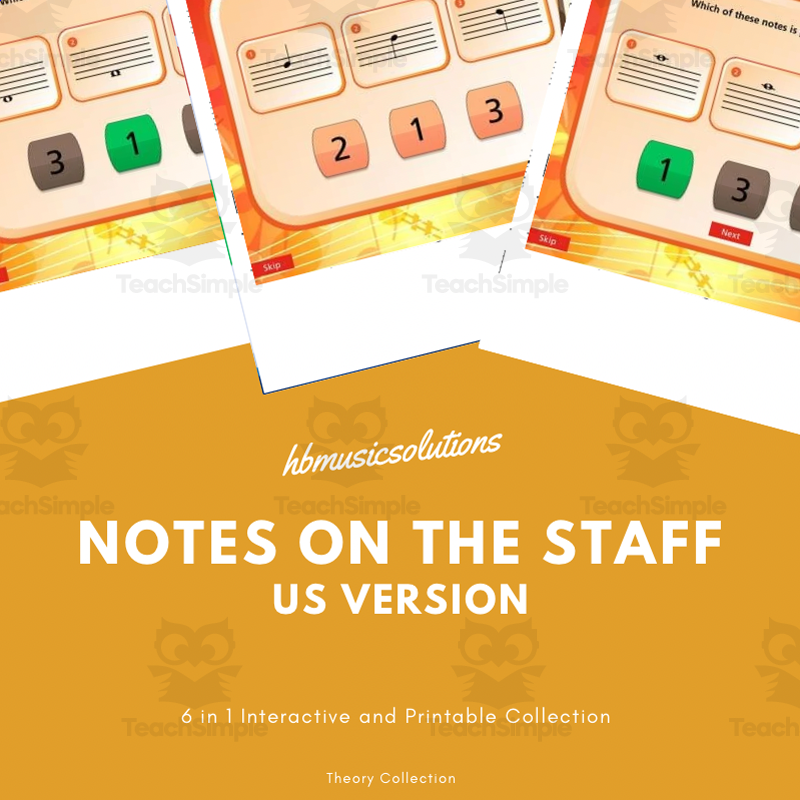
Notation Tutorial and Quiz | Interactive Notation Exercises: A Comprehensive Teaching Tool This excellent resource for educators combines instructive videos and interactive exercises. Designed to enhance the music notation skills of learners from 1st through 4th grades, it presents the essentials of reading music notation in a straightforward way. Tutorial Section: Videos & Quizzes The tutorial section is composed of succinct videos that provide clear instruction on each element of notation reading. With these tutorials, learners are given a quick guide to understanding music notation effectively. Following these informative tutorials, students are given a short quiz designed to assess their understanding and retention. Accessibility & Usability The resource material is provided as links in a downloadable PDF file, making access easy for teachers or direct use by students across different platforms like PCs or tablets. The files must be unzipped after downloading - guidance is offered within the document itself. Please note there may be compatibility issues with Mac users presently. After unzipping successfully, save them on your hard drive and click 'launch story' when ready to start using it. Diverse Learning Environments & Unique Features This material has been optimized for both individual learning and group classes - compatible with projectors! Also noteworthy are features incorporated into computer and tablet versions that randomize slides every time – essentially providing an inexhaustible supply of exercise material! In addition,, smart board compatibility, exclusive to the computer version offers even more potential learning avenues! In summary; this learning tool will prove beneficial whether you're teaching in a public school setting or seeking out ideal homeschool resources focusing specifically on music lessons. Notation Tutorial and Quiz | Interactive Notation Exercises effectively meets your learners' educational goals whilst making learning an enjoyable experience!

Author Hbmusicsolutions's Shop

Tags Music Notation, Tutorial, Interactive Exercises, Reading Music, Learning Tool