3,593 products added recently
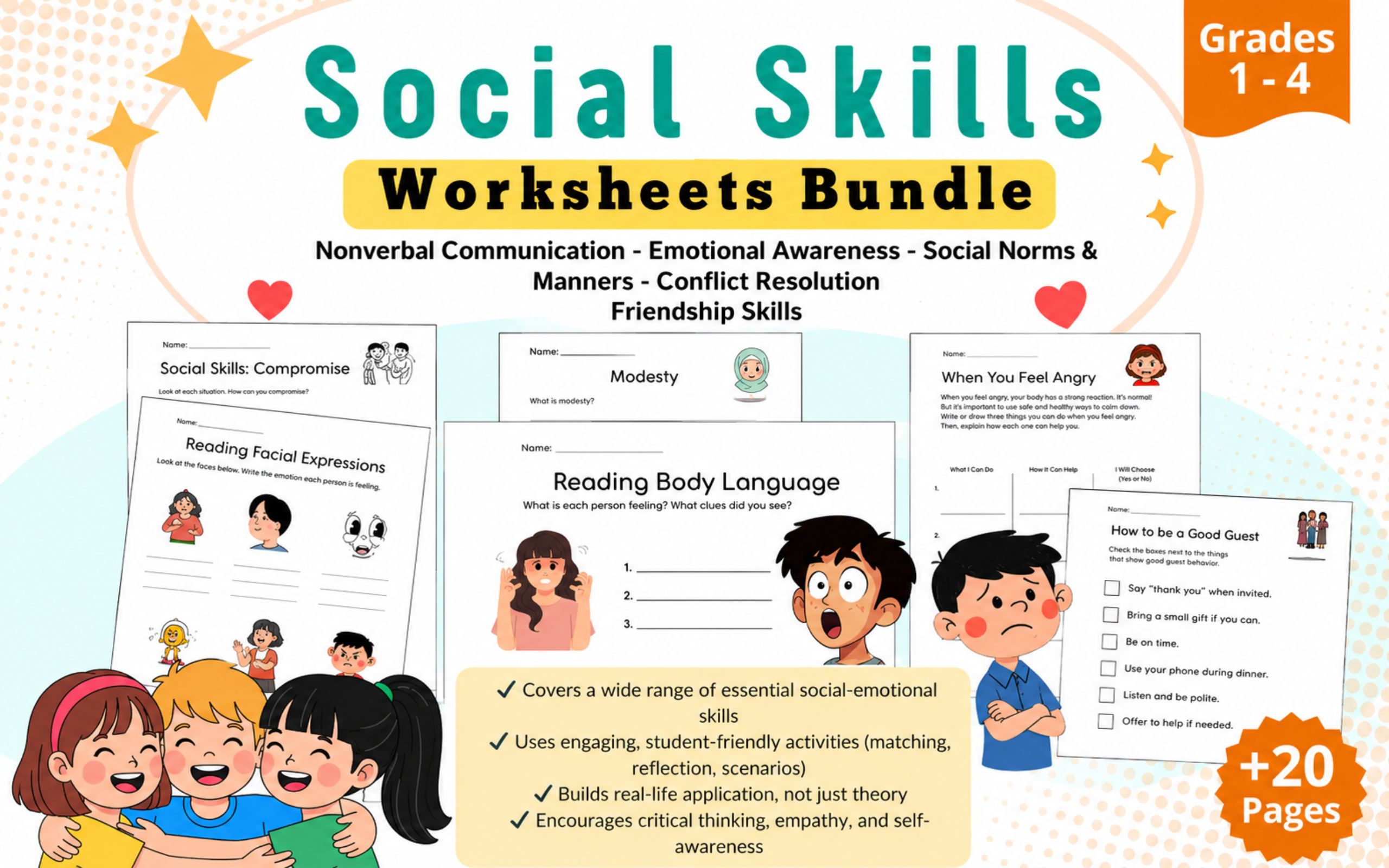
Social Skills Worksheets
Provide resources that focus on active listening, conflict resolution, and cooperation. These worksheets help students practice and reflect on social interactions. Use them to support the development of healthy relationships and a positive classroom culture.
Conflict Resolution & Peer Mediation Prompts
Life Skills, Special Resources, Social Emotional Learning (SEL), Social Skills, Special Education Needs (SEN), Speech Therapy, STEM, Resources for Teachers, Classroom Management, Community Building, Homeschool Curriculum, Homeschool Templates, Grade 4, 5, 6, 7, 8, Worksheets & Printables, Workbooks, Worksheets, Word Searches, Teacher Tools, Lesson Plans, Presentations, Quizzes and Tests, Quizzes, Tests
Do you find that there are many complicated (and sometimes unseen) conflicts in your 4th, 5th, and 6th grade classroom? From conflicts on the playground to having miscommunication on group chat, pre-adolescents have a much more difficult time managing their social world than they ever did before. This curriculum on Conflict Resolution and Peer Mediation is a complete, research-supported program that will help you empower your students with the tools necessary for success in looking at conflict in a way that is positive and productive. This is not just another collection of worksheets; this is a complete Social Emotional Learning (SEL) toolkit that has been created for the modern student. Based on developmental psychology, this curriculum will address the two types of settings in which pre-adolescents experience conflict: the physical environment of the playground and the virtual environment of today's digital world (gaming, social media, texting). Using the use of "scripted roleplay scaffolding" methodology, this curriculum will enable a child to bypass the "fight or flight" response and give them the exact words and tools they need to de-escalate an argument, share their feelings in a healthy way, and resolve conflict. Additionally, by providing the student with a "lexical bridge," they will be able to articulate complex emotions (jealousy, exclusion, betrayal) in a manner that will promote empathy and understanding. What's Included in the 48 Page PDF File Section One - Guidelines for Teachers This section provides an in-depth overview of the theory and methodology used in the development of these scripts along with the reasons behind their creation. It covers issues such as social dynamics of pre-teens, the difference between intent versus impact, and the unique challenges of dealing with conflict in the digital world (Online Disinhibition Effect). Section Two - Eleven Worksheets for Students These are the main component of the curriculum and consist of eleven interactive worksheets that incorporate real-life scenarios faced by students on a daily basis. The worksheets cover a broad range of scenarios dealing with: Group Chat Misunderstanding (Roblox, text messaging) Disputes between Playground Rules (Four Square) Digital Exclusion (Multi Player Gaming, Minecraft) "I Was Only Playing" and Cyber Bullying Rumors, Gossip, and Broken Trust The Challenge of Inclusion (Cafeteria Seating) De-Escalation Strategies for Youth Valuing Digital Property and Creations Section Three - This teacher resource package includes all necessary materials needed to complete each portion of the curriculum. Visual Support: Printable, easy-to-read diagrams outlining the Peer Mediation Pathway, conflict escalation, and I-Statement structure. Complete Answer Key: Sample answers for all questions in the curriculum supporting main concepts of de-escalation and restorative language. Full Implementation Guide: Step-by-step directions for introducing your curriculum, implementing role-playing (including "Fishbowl" method), differentiating for all learning levels, and addressing and assisting with common challenges. Provide your students with a lifelong gift: confidence and ability to develop healthy friendships and resolve conflicts calmly and with compassion. This curriculum is for teachers, counselors, social workers and administrators. Keyword SEO: Conflict Resolution; Peer Mediation; Social Emotional Learning; Grammarly; Digital Citizenship; Cyberbullying; Anti-Bullying; Worksheets; 4th Grade; 5th Grade; 6th Grade; Middle School; School Counselor; Restorative Justice; I-Statements; Role Playing Scripts; Classroom Management; Friendship Skills. Why Parents Schools Appreciate It: Provides the Exact Words: Rather than telling children what to do, it gives them exactly how to express themselves in situations of high stress. This "lexical certainty" is a game changer for those children who become overwhelmed by a situation and don’t know what to say. Addresses Today’s Technological Conflicts of the New Millennium: This curriculum goes beyond teaching children outdated scenarios to dealing with real types of digital situations that they face today, such as gaming exclusion, misunderstandings with friends on a group text message, and dealing with the impact of a “seen” message. Therefore, it is extremely relevant and effective. Research-based & Developmentally Appropriate: The method used in this curriculum is based on solid principles of child psychology and understands the concrete scaffolding that pre-adolescents need to utilize when managing complex feelings. It provides a structured safe environment in which to practice empathy. Comprehensive No Preparation Resource: This is a complete 48-page curriculum, not a single worksheet, along with a teacher’s guide, visual aids, student workbook, and an answer key, therefore providing the educator and/or counselor an immediate implementation resource with a high level of confidence. Builds Lifelong Skills: This curriculum is a method of solving conflicts today, it also creates the building blocks for rewiring a child’s approach to conflict as they move into adulthood and creating the neurological pathways to become more mature, empathetic, and resilient in relationships as an adult. Target Audience Classes : After conducting a thorough review of their report, the authors (PDF) specifically identified the following groups as targets based on a potential audience needs analysis: Grades: Fourth grade through sixth grade Ages: Approximately 9 to 12 years The authors also have tailored to this developmental stage, as well as their own peer social groupings, such as on playgrounds, in-game chat rooms (Roblox, Minecraft), and with friends via group messenger/chat program. Thus, they provide great information directed towards students in early/middle school and also those working with them professionally (school counselor/social worker). Copyright Notice: This book is copyrighted by Syed Hammad Rizvi and only allowed for one person (you) and one classroom use of the book you have purchased. You may not make any alterations, distribute, sell or share (post on the internet) this book. For additional copies to distribute to colleagues please purchase a license from Teachsimple. Thank you for your support of our copyrights. This Product is proudly made by Syed Hammad Rizvi
Author Creative Book Store
Rating
Tags ConflictResolution, SocialEmotionalLearning, SEL, PeerMediation, DigitalCitizenship, ClassroomManagement, CharacterEducation, CommunicationSkills, RestorativeJustice, RestorativePractices
Sensory Diet Planning for Overstimulation
Life Skills, Special Resources, Social Emotional Learning (SEL), Social Skills, Special Education Needs (SEN), Speech Therapy, STEM, Physical Education, P.E. & Health, Health, Homeschool Curriculum, Homeschool Templates, Grade 1, 2, 3, 4, 5, Worksheets & Printables, Workbooks, Worksheets, Word Searches, Teacher Tools, Lesson Plans, Quizzes and Tests, Quizzes, Tests, Assessments
Help your autistic learners thrive in the classroom and beyond with this complete sensory diet toolkit that will allow you to create a sensory diet for each learner. If you're a parent, educator, or therapist who feels lost when trying to understand the sensory processing issues of young autistic learners and are looking for a way to go beyond reactionary approaches to create an environment that is neuro-affirming, this is the toolkit for you! The 35-page guide was created by professionals who understand the challenges faced by preschool through 1st grade educators and provides clear, easy-to-follow instructions to create, implement and track an effective sensory diet. This is more than just worksheets; it is a complete evidence-based professional development program helping you develop your skills as a sensory detective using evidence-based data. What’s Included in This Evidence-Based Toolkit: Phase 1: Comprehensive Theory & Methodology (10 Pages) : This section offers a thorough guide detailing the neurobiology of sensory overstimulation, the often-overlooked senses such as proprioception, vestibular awareness, and interoception. Additionally, it covers fundamental concepts regarding a sensory diet and features case studies to enhance practical understanding. Phase 2: Student Workbook & Facilitator Tracking Tools (17 Pages) : This part comprises a collection of 11 clinical-grade worksheets intended for educators and parents to monitor, assess, and address sensory needs. These tools include: - Tracker for Sensory Baseline & Arousal State - Guides for Proprioceptive, Vestibular, and Tactile "Brain Breaks" - Early Warning Signs Tracker for Overstimulation - Audit Checklist for Classroom Environmental Triggers - "My Body Feels..." Interoception Check-In with an accompanying visual chart designed for students! - And much more! In this section of the Toolkit there are important visual representations and other teaching materials to provide you with what you need for an effective system of Supports. Phase 3: includes visual representation(s) of the "Escalation & Intervention Cycle" (Examples: Conceptual Diagrams - for use in understanding the steps in the Cycle). - "Brain Break Taxonomy" flowchart - allowing you to tie interventions to specific behaviours in the Escalation Cycle. - Teacher Implementation Guide, with details on how to implement the components of the toolkit as well as a neurodiversity-affirming perspective. - Model Documentation - showing you how to complete trackers for maximum effect. The contents of your Toolkit will help you transition from "Behaviour Management" (i.e. behaviour modification techniques/strategies) to "Neurological Support" (ie supporting learners by providing specific tools & strategies for self-regulation) through concrete examples identifying the root causes of behaviours, preventing crises before they happen and teaching learners through respectful means." Reasons That Parents/Schools Appreciate It: Proactive vs Reactive: Rather than only reacting to incidents of sensory overload or meltdowns, it provides a data-based system for helping to identify causes of the issue and preventing future occurrences through additional data tracking tools. All-in-one vs completing multiple worksheets: This program is designed as a complete curriculum including theory, tracking, intervention and teacher guides. All resources are provided in one location, reducing the burden on the parent and/or educator having to independently find and create all the resources. Creates Consistency in Support throughout Home/School: The program has been designed to provide tools that can be used and shared between home and school, providing a system of support for the child, 24 hours a day, 7 days a week. Empowering and approves of Neurodiversity: The program promotes the understanding and support of a child’s neurological needs with dignity and respect thereby eliminating the need to use antiquated methods of behavior modification. Immediate Implementation: The program was designed for immediate use in a real-world situation with written and sample instructions included; therefore, it is easy for all educators to implement new strategies into day-to-day teaching. Depending on the content and language used in the PDF, the target audience should be: Grade Level: Pre-K, Kindergarten, and First Grade (in particular, the age range of 4-7 years old). Primary Audience: Special Education Teachers, Occupational Therapists , School Psychologists, Board Certified Behaviour Analysts with a Neurological Understanding of Autism (would find guide useful). Inclusion Classroom General Education Teachers Paraprofessionals, Teacher Aides, Support Staff (including training/employment opportunities) Secondary Audience: Inclusion Classroom Teachers—General Education Knowledgeable and Engaged Parents of Autistic Students who are involved in their child's Sensory Plan and collaborating with the school team. Copyright / Terms of Use: Syed Hammad Rizvi copyrighted this book. This resource is for your personal use as well as only one classroom. You may not modify, redistribute, or sell any section of this resource, thus making it available on the Internet for anyone to find publicly and download. If you'd like to share this resource with colleagues, please purchase additional licenses through Teachsimple. Your respect for these terms of use is appreciated. Syed Hammad Rizvi is delighted to provide this product to you!
Author Creative Book Store
Rating
Tags SpecialEducation, SpEd, SpecialEducationTeacher, SpEdTeacher, OccupationalTherapy, SchoolOT, PediatricOT, BCBA, NeurodiversityAffirming, AutismParent
Cognitive Restructuring for Test Anxiety
Life Skills, Special Resources, Social Emotional Learning (SEL), Social Skills, Special Education Needs (SEN), Speech Therapy, STEM, Resources for Teachers, Classroom Management, Community Building, Grade 6, 7, 8, 9, 10, 11, 12, Worksheets & Printables, Workbooks, Worksheets, Word Searches, Teacher Tools, Assessments, Lesson Plans, Quizzes and Tests, Quizzes, Tests
Do your pupils suffer from anxiety before exams, worry about their academic ability and feel they are going to fail? Have you seen brilliant students, who should do well on national exams such as the SATs, Advanced Placement finals or chapter tests, perform poorly due to the pressure of the exam? The source of the issues described above isn’t because the student is not knowledgeable; rather, it is due to a lack of mental control. The extensive Cognitive Restructuring Guide & Workbook (28 pages) is the premier resource for educators, school counsellors, psychotherapists and tutors. This evidence-based resource incorporates the principles of Cognitive Behavioural Therapy (CBT), but goes much deeper than merely telling students to ‘relax’ before an exam by providing them with the skills they need to eliminate test anxiety by looking at the root causes. Your students will learn to become scientists of their own minds and to change their catastrophic thoughts into calm and rational confidence. WHAT IS INCLUDED IN THIS 28-PAGE RESOURCE: PART 1: The Educator’s Foundational Guide (10 Pages) A comprehensive understanding of test anxiety through the psychology behind test anxiety and also the "The Anatomy of Academic Panic" model. Foundational understandings and explanations of the following CBT concepts: Tripartite Model of Anxiety; Catastrophizing; Cognitive Distortions (All-or-Nothing, Fortune Telling, etc.); and Cognitive Defusion. In-depth and relatable case studies that provide real-life context to the theory so that you can explain to your students in a relatable manner. PART 2: The Student Workbook (10 Actionable Worksheets) A step-by-step process through which a student can begin to actively restructure their anxious thoughts. Each worksheet is intended to build on the previous worksheet to create long-lasting & profound changes. Worksheet 1: The Anatomy of an Anxious Thought Worksheet 2: Spotting the Catastrophe Worksheet 3: The Empirical Evidence Board Worksheet 4: The ''And Then What?'' Protocol (Decatastrophizing) Worksheet 5: The Double Standard Technique Worksheet 6: Moving from What If to Even If Worksheet 7: Somatic Awareness and Cognitive Links Worksheet 8: Looking at Your Past Successes Worksheet 9: The Productive vs Unproductive Worry: Action vs Anxiety Worksheet 10: The "Cognitive Blueprint for Pre-Exam Thoughts" PART 3: Teaching Resources/Visuals and Answer Key (8 Pages) Pedagogy based visuals: There are three high-quality Anchor Charts/Visual Aids (The Cognitive Triangle; The Five-Step Restructuring Sequence; Taxonomy of Distortions) which can be used as classroom displays or given out as individually provided handouts. Answer key: This answer key provides a description of how an answer should be provided to each question and includes the "Exemplar Look-Fors" that you will need to evaluate a student's understanding of the material. THESE ARE IDEAL FOR: Counselors who work with small groups or use one-on-one session Teachers in High School and Middle School (specifically those who teach AP/IB/class with high testing requirements) Those involved in delivering Social-Emotional Learning (SEL) curriculum Individuals who provide Executive Function (EF) coaching/tutoring services Therapists who work with adolescents Parents who want to provide structure to help their anxious teen Finally, every student should have every resource available to them to not only pass their tests and exams, but also overcome anxiety and other challenges that hold them back from success. Download this incredible resource today! Test Anxiety, Cognitive Behavioral Therapy (CBT), Worksheets, High School, Middle School, SEL, Social Emotional Learning, School Counselor, Study Skills, AP Exams, SAT Preparation, Final Exams, Growth Mindset, Executive Functioning, Printable/Digital Resource, Anxiety, Catastrophizing. Why Parents / Schools Appreciate It : Evidence-Based & Effective - Backed by the proven Cognitive Behavioral Therapy, this is not just fluffy advice. This systematic and scientific approach to anxiety relief provides result-driven actions for those who take part in the program. Provides Actionable, Skills for a Lifetime – Students become contributors to their own mental health and have the tools to be active participants in their recovery. Not only do they learn how to regain control, but they develop useable critical thinking and emotional regulation tools that they will continue to benefit from throughout their lives. Comprehensive & Turnkey – The all-inclusive packet saves educators and counselors valuable time in preparation. It includes the theoretical background behind the theory, student worksheets, visual aids, and a detailed answer key that explains the 'why' behind each activity. Creates True Resilience & Confidence – By teaching students to identify, challenge and change the way they think, this program helps them create true self-worth and building resiliency as they come to understand that failure is not an option, but an opportunity to develop a growth mindset. Perfect for Organizations and Individuals – The versatility in the program can be used for individual or group counseling, as a whole class SEL lesson, or independently by the students themselves. Targeting the Target Audience: After analyzing the content, structure, language, and examples used in the PDF (AP History & SAT & Algebra.) List the following target audiences: Primary Student Audience: 8th to 12th Grade Students. This explicit reference provides information for students between grades eight through twelve. This information can be utilized to assist those students, especially high-achieving students (eighth to twelfth grader), who are experiencing stress/pressure/stress associated with taking standardized tests/AP exams/college applications. In addition, there are also many eighth graders that are beginning to experience anxiety regarding final exams and/or high school placement tests that could benefit from this resource. Primary Professional Audience: School Counselors and Psychologists: This is the primary audience. School-based counselors/psychologists will primarily be utilizing this resource for individual and/or small-group counseling sessions focused on academic anxiety. High School Teachers: Will especially benefit from utilizing this resource when they are providing instruction to students enrolled in high school AP/IB/honors-level courses where student performance will be evaluated based on standardized tests. Tutors & Executive Functioning Coaches: These professionals will work with students who are experiencing difficulties related to academic performance. They will also utilize this resource as a foundational element of their toolkits. Therapists: Private practitioners providing services to adolescents will primarily be focused on utilizing this resource to support adolescents struggling with anxiety/depression/distress charged by the pressures of academic performance. Copyright Information and Terms of Service: This Book has been copyrighted by the Author Syed Hammad Rizvi. This resource is for private and personal use and not intended for use by multiple persons in group settings. There is no permission to make changes to, copy, print, distribute or sell any portion of this resource. That is, you cannot upload it to the internet in a public format (e.g., through a website or file-sharing service). If you would like to share this resource with your colleagues, please buy additional licenses through Teachsimple. Thank you for your understanding and compliance with the terms of service. Syed Hammad Rizvi is proud to offer this resource to you through Teachsimple.
Author Creative Book Store
Rating
Tags SchoolCounselor, HighSchoolCounselor, MiddleSchoolCounselor, SchoolCounseling, CounselorResources, TeachersOfInstagram, HighSchoolTeacher, MiddleSchoolTeacher, TeacherResources, Educator
Kindness Mazes (PDF)
ELA, Language Development, Resources for Teachers, Vocabulary, Spelling, ESL, Life Skills, Special Resources, Social Skills, Grade 2, 3, 4, 5, Worksheets & Printables, Worksheets, Teacher Tools, Centers, Activities, Mazes
Maze Series This maze series is designed for students in grades 2–5. Each set features a clear, kid-friendly theme with scene-based mazes that students first navigate, then complete by drawing a few target words from a simple word list. Pages come in varied styles and graduated difficulty, with an optional “color it in” step—and some themes invite quick calculations to match the task. These mazes are student-friendly, classroom-ready, and perfect for literacy warmups, seasonal units, fast-finisher bins, centers, sub plans, or home learning extensions. The playful, structured format builds problem-solving, attention to detail, and fine-motor control while reinforcing themed content in a motivating way. Note: Unlike many themed products, not all word-list words appear on the maze pages. To support full vocabulary coverage, we’ve released a companion word list you can find in the links section. Kindness Word List 1. Kind Words Please, Thank, Hello, Sorry, Nice, Smile, Help, Share 2. Helping Others Help, Share, Carry, Give, Fix, Ask, Listen, Care 3. Being a Good Friend Friend, Play, Talk, Laugh, Help, Hug, Share, Kind 4. Showing Respect Listen, Quiet, Wait, Polite, Honest, Fair, Safe, Friendly 5. Kindness at School Teacher, Share, Wait, Help, Quiet, Fair, Write, Learn 6. Kindness at Home Parent, Sibling, Grandparent, Care, Share, Talk, Meal, Love PDF Version Other versions will appear here when available. Follow the store for the lastest on new products. How to Use These Mazes Perfect for: Morning work or early-finisher bins Literacy or STEM centers Holiday/seasonal review lessons Independent stations, sub plans, or take-home enrichment More Kindness Themed Products CROSSWORDS WORD SEARCHES FULL CATALOG OF DOWNLOAD LINKS HERE Themed Mazes Links Addition PDF Animals PDF Around the Home PDF Birthday PDF Candy PDF Christmas PDF Cinco de Mayo PDF Clothes PDF Colors PDF Days and Months PDF Division PDF Earth Day PDF Easter PDF Easy Mazes PDF Fall PDF Father's Day PDF Food PDF Geography (Set 1) PDF Geography (Set 2) PDF Geography (Set 3) PDF Graduation PDF Health PDF History (Set 1) PDF History (Set 2) PDF History (Set 3) PDF Human Body PDF Kindness PDF Life Skills PDF Mother's Day PDF Multiplication PDF Science (Set 1) PDF Science (Set 2) PDF Science (Set 3) PDF Shapes PDF Social Skills PDF Spring PDF Sports PDF St. Patrick's Day PDF Subtraction PDF Summer PDF Thanksgiving PDF Transport PDF Valentine's Day PDF Winter PDF Mazes in Depth Structure Each maze is crafted around a focused sub-theme. Students navigate the maze, encountering branches and cul-de-sacs that build attention and planning. Most pages include a tiny follow-up box—students draw or label 2–3 target words from a small word box, add a quick count, or color in the scene—so the activity reinforces both content and skills in a highly engaging format. Each completed set includes: A themed maze page. A simple student instruction strip. An answer key showing the solved path for teacher support or self-checking Themes Included These mazes cover a wide range of fun, age-appropriate themes, including: Seasons & Holidays (e.g., Halloween, Easter, Valentine’s Day) Math-Lite Connections (e.g., quick counts, number words) Everyday Topics (e.g., Animals, Weather, School) Special Units (e.g., Health, Earth Day, Sports, Kindness) Each topic reflects students’ real-life experiences and interests while strengthening problem-solving, visual scanning, and fine-motor control in a playful, highly visual way. Easy extensions (optional): Time it: solve once in pencil, then try to beat the time in pen Retell the route using sequence words (first, next, then, finally) Count intersections or turns and graph the results Write a 1–2 sentence mini-story about the scene using the target words Design a tiny maze in the corner for a partner to solve Differentiation tips: Offer a finger-trace pass before pencils for emerging learners Highlight the borders of the correct region on first attempts Use thicker-line versions or simpler pages to build confidence Pair roles: “navigator” gives directions; “driver” traces the path For similar downloads and other frees, do check out Cored Group on TeachSimple.
Author Cored Education
Rating
Tags Vocabulary, Spelling, Kindness, Kind Words, Helping Others, Kindness Activities, Ela Mazes, Maze, Mazes, Kindness Mazes
Taxes & Paychecks – Real-World Simulation Sheets
Social Skills, Special Resources, Life Skills, Social Emotional Learning (SEL), Social Studies, Economics, Math, Money, Measurements, STEM, Grade 6, 7, 8, 9, 10, 11, 12, Workbooks, Worksheets & Printables, Worksheets, Teacher Tools, Quizzes and Tests, Quizzes, Tests, Literacy Readers, Lesson Plans, Word Searches
Get Ready To Unlock Real Life Know How In Finance By Teaching Students About Taxes Made Simple, Paychecks, And Managerial.Learn and Use Your Skills In The Real World Without Hosting A Class In Your Community With This All-Encompassing Feature Rich Tax And Paycheck Unit. Do you ever just wish to bring in Real Life Math, teach students valuable life long skills, make it relatable, and teach students about the relationship between abstract developement of numbers versus actual application of numbers in the real world? If you do; THIS IS the complete all-inclusive, no prep repititive unit that you needed to discover to teach your middle schoolers all about taxes, paychecks; found out that you CAN earn money with this comprehensive written unit. How can we make something that seems overwhelming and complicated, easier, and more enjoyable? By using an engaging and student centered material to inform and educate your students about understanding their actual earnings (Net Pay) before they get their first paycheck. This will help your middle school students view their paychecks as an indication of successful involvement within the work force against societal standards of financial obligation by then being empowered after having deliuered when they felt more discouraged previously. This is the ultimate teaching plan; a tried and true, 5-day-lesson plan that is intended to sufficiently prepare your students for their future by creating an opportunity for them to be able to view themselves as successful in the world of finance and less anxious about obtaining those same values. This product will benefit students in grades 6-9 who are studying math (especially for applying percentages/real-world scenarios), financial literacy, life skills and/or career exploration, civics and economics (to comprehend how tax money works within society), and in cooperative homeschool environments. Including the 34-page (pdf only) detailed phase one: core content and theory guide which explains the differences and similarities between gross and net, overtime, FICA, federal and state taxes and voluntary deductions. You’ll want to use this as part of teacher preparation materials or to supplement any students who are classified as advanced readers. Phase 2: Workbook for Students (10 Workbooks) Workbooks from 1 to 10 will provide instructions and examples for answering the following: 1. Understanding the structure of a paycheck (Worksheet #1). 2. Finding gross pay for various given situations (Worksheet #2). 3. All about FICA (the intergenerational contractual agreement) (Worksheet #3). 4. What to expect on your federal and state income tax return (Worksheet #4). 5. What the deduction from your paycheck is, to whom you can give it, and the effect of giving (Worksheet #5). 6. Bringing everything together to calculate the net pay for the paycheck (Worksheet #6). 7. What effect sales tax has on the consumer (Worksheet #7). 8. The basics of how property taxes impact local communities (Worksheet #8). 9. Understanding Form W-4 and Form W-2 (Worksheet #9). 10. Understanding the basics of the consumer and their role in the economy (Worksheet 10). Phase 3: Teaching Resources & Visuals High contrast visuals in black and white that can be printed and used are; diagrams of the paycheck pipeline, the anatomy of a paycheck, and where the taxes are sent. Also, a complete answer key will give the teacher all of the answers and how to create them from the 10 workbooks. Lastly, there will be a full guide for implementation by the teacher that includes the pacing guide (5 days), daily lesson objectives, daily lesson activities, weekly lesson discussion prompts, and how to differentiate lessons for children needing scaffolding or extensions. Allow your students to have the knowledge necessary to make a successful transition into their adult lives at home and in the community. Download this print and go unit today to help your students become knowledgeable, confident participants in the economy! Why Schools/Parents Especially Like It : Building Real-Life Skills - This program teaches students a real-world, practical skill that they will use starting the day they receive their first paycheck, laying the groundwork for a lifetime of future financial success. Connecting Civics & Math - This project successfully connects important math concepts (percentages) with key civics lessons that teach students how taxes are used to support the communities they live in, making learning much more effective and relevant to students. Comprehensive & No Preparation - This program is a complete unit that is ready to use; including the lesson plan, student worksheets, visuals, answer keys and 5-day lesson plans teachers will have more time to plan for other subjects. Empowering & Reducing Students’ Anxiety - The confusion caused by the amount of information presented on pay stubs and issues related to deductions is replaced by clarity and control over their finances with an understanding of what many of those deductions mean, allowing them to view themselves as part of and contributing to our economy. Promoting Critical Thinking - Students will build critical thinking skills through discussions about capstone simulations and ethics (i.e., considering progressive taxation), as well as developing the ability to analyze and evaluate many complex financial situations beyond basic computation. Mainly: - Middle School Math: Excellent resource for %'s and decimals; includes real-life problems. - Pre-Algebra or Consumer Math in HS (9th grade): Great introduction or summary. - Financial Literacy in HS or MS: Core unit of any financial literacy curriculum. - Life Skills/Career Readiness: Essential info for every student getting ready to work. - Civics/Economics: Excellent connection between personal finance and how government/public services are funded. Terms of Service/Copyright: Copyright is with Syed Hammad Rizvi. All rights reserved. If used in the classroom, this resource can only be used once per teacher. There is no sharing, alteration, distribution or selling of any portion of this resource. For example, you may not post this resource on the internet for others to view and download. If you wish to share this resource with colleagues, please order additional licenses at Teachsimple. Thank you for adhering to the above terms of use. This product is proudly created by Syed Hammad Rizvi.
Author Creative Book Store
Rating
Tags FinancialLiteracy, RealWorldMath, LifeSkills, UnderstandingTaxes, Paycheck, ConsumerMath, PersonalFinance, Economics, MathLesson, Civics
Emotional Regulation & "Size of the Problem" Mapping
Special Resources, Life Skills, Social Emotional Learning (SEL), Social Skills, Special Education Needs (SEN), Speech Therapy, STEM, Resources for Teachers, Classroom Management, Community Building, Grade 1, 2, 3, 4, 5, 6, 7, 8, Teacher Tools, Assessments, Lesson Plans, Quizzes and Tests, Quizzes, Tests, Worksheets & Printables, Workbooks, Worksheets, Word Searches
Have you had enough of students throwing tantrums over minor issues? This COMPLETE set of materials will help you to promote emotional regulation in your classroom and/or counselling office. This complete print-and-go curriculum will teach students in grades 1 – 3 the important difference between a “glitch” and an “emergency.” Based upon the popular “Size of The Problem” concept, this toolkit goes far beyond simple worksheets by providing a comprehensive, neuroscience-based approach to building self-regulation skills. This is not just a bunch of activities; it is a comprehensive multi-week program that allows students to learn how their brain works, understand the size of their problems, and respond to those problems with appropriate emotional responses. This program can be used by any teacher, school counselor, special education teacher, or occupational therapist. WHAT IS IN THE PACKAGE - 43 Pages of High Value Content Part 1 – Theory and Clinical Guide (11 Pages) – A detailed educator guide to why the approach is used. This section will include an explanation of the neurobiology of an "amygdala hijack," a review of the principles of Cognitive Behavioural Therapy (CBT), and an explanation of the research supporting visual scales as an assessment tool for young learners. Part 2 – Engaging Student Workbook (20 Pages) – 10 Scaffolded Worksheets: Fun, relatable activities that allow the learners to develop their ability to identify problem sizes and their reaction to those problems. Topics Include: Problem Thermometer, Reaction Rulers, The Match Game, Shrink the Mismatch, What If? Lab, Body Signals, Perspective Taking, and a Personal Problem Map. Part 3 – Teacher Resources and Visuals (12 Pages) – 3 Visual Models for teachers: Classroom poster ("The Proportional Magnitude Scale"), an assessment matrix, and a cognitive mapping flowchart – all are perfect for use as anchor charts and for daily reference. Answer Keys for the student worksheets make it easy to assess your students. Detailed Implementation Guide for teachers: This guide contains a detailed week by week implementation plan for introducing conceptual information and providing reinforcement for long-lasting effects, including scripts and suggestions for implementation activities. Support your students as they develop a base of emotional awareness and skills to be able to deal with emotions throughout their life. Provide your students with the opportunity to not only deal with their emotional responses but to also develop the ability to know, evaluate and manage their emotional responses. CATEGORIES OF LEARNERS: Elementary Education, Social Emotional Learning; Copywriter; Emotion Regulator; Teacher; Student; Self-Regulator; Reference; Help With; Size Of The Problem; Coping Skills; Student Management; Meltdowns; Workbook; Worksheets; Visuals; Posters; Anchor Charts-School; Elementary Grades: 1st, 2nd, 3rd; School Counseling; Special Education; CBT. Reasons for Parents/Schools to Appreciate: Science Based Approach: Proven theories of neurobiology and cognitive behavioral therapy (CBT) provide a scientific basis for the works that are performed based on their use. Develops Lifelong Skills for Children: Children acquire a language and visual representations of their feelings, enabling them to have the tools they need to cope and manage their feelings as well develop independence and resiliency. Reduces Disruption in Classrooms: Students become more self-regulated and are less likely to act out over little things such as breaking a crayon or losing a game. Therefore, there is increased time for typical learning. A Complete Program: The online program is complete and provides all of the materials needed to teach the program to students. Teachers and counselors do not need to create or gather materials themselves; the time savings are significant! Target audience: According to the content, language, and examples of your product (for example, "first through third grades", 7-9 year-old case studies) the target is: Main Student Audience: 1st Grade to 3rd Grade students (6-9 years). Main Buyer Audience: Elementary school teachers, special education teachers, school counsellors, school psychologists, occupational therapists (OT's), child therapists, and the concerned parents of children who have difficulties regulating their emotions. Terms of Use and Copyright : Syed Hammad Rizvi is the owner of this copyrighted book; it is for individual and personal (one classroom) use only. You cannot modify, redistribute, or sell this item or any part of it anywhere else. You are not permitted to post it to the internet so that anyone can find it and download it. If you wish to share it with others, please purchase additional licenses from Teachsimple. Thanks for respecting these terms. Syed Hammad Rizvi (h) is honored to provide you with this resource!
Author Creative Book Store
Rating
Tags SocialEmotionalLearning, SEL, EmotionalRegulation, SelfRegulation, CopingSkills, MindfulnessForKids, EmotionalIntelligence, SocialSkills, Feelings, SizeOfTheProblem
Health 1st Grade Unit 6: Prevention / Control of Disease
P.E. & Health, Special Resources, Health, Physical Education, Life Skills, Social Emotional Learning (SEL), Social Skills, Grade 1, Lesson Plans, Teacher Tools, Worksheets, Worksheets & Printables
For 1st Grade Health there are seven standards that need to be taught. Unit 1 Personal Health Unit 2 Growth and Development Unit 3 Nutrition and Physical Activity Unit 4 Substance Use and Abuse Unit 5 Injury/ Violence Prevention Control and Safety Unit 6 Prevention/Control of Disease Unit 7 Environmental Consumer Health The focus is on equipping students with knowledge about the prevention and control of diseases. It's centered on how germs can lead to sickness along with hands-on techniques for averting germ transmission. This involves activities such as: The role healthcare professionals play in disease control. The imperative nature of communicating symptoms when they're feeling unwell. Routine precautions like proper handwashing. Understanding the instruments that doctors use when examining you when you are sick. Each unit ends with an assessment that enables teachers to gauge student comprehension effectively. Included are answer keys in the unit. A total of 12 pages for Health 1st Grade Unit 6: Prevention / Control of Disease. With many activities to complete, students will be engaged and learn so much from this unit! There are seven units that cover all the health requirements for first grade. Here are the links to other health units: Health 1st Grade Unit 1: Personal Health Health 1st Grade Unit 2: Growth and Development Health 1st Grade Unit 3: Nutrition and Physical Activity Health 1st Grade Unit 4: Substance Use and Abuse Health 1st Grade Unit 5: Injury / Violence Prevention and Safety Health 1st Grade Unit 6: Prevention / Control of Disease Health 1st Grade Unit 7: Environmental / Consumer Health You can also teach your students about keeping yourself safe by studying about the Coronavirus, where and when it started and facts that plagued our world with this virus. 1st grade Coronavirus / Covid-19 Facts by Teach Simple This unit meets Common Core Standards.
Author K-5 Treasures
Tags Disease Prevention, Germ Transmission, Handwashing Techniques, Healthcare Professionals, Symptom Communication, First Grade Health, 1st Grade Health, Health Resources, Health Resources For 1st Grade
Therapy Dog Classroom Rules – Create, Discuss & Decorate! 🐶🏫 Banner
Social Emotional Learning (SEL), Special Resources, Social Skills, Special Education Needs (SEN), Life Skills, Animals, Life Sciences, Science, Classroom Management, Resources for Teachers, High School, Middle School, Elementary, Early Learning, Pre-K, Classroom Decor, Banners, Bulletin Boards, Projects, Activities, Drawing Templates & Outlines, Worksheets & Printables, Coloring Pages, Worksheets
Therapy Dog Classroom Rules Create, Discuss & Decorate! 🐶🏫 Bringing a therapy dog into the classroom is an exciting and rewarding experience, but it also requires clear expectations and structure. This Therapy Dog Rules Pennant Banner is a creative and engaging way to introduce, reinforce, and display important guidelines for students when interacting with a school therapy dog. Whether your school already has a therapy dog or you’re just starting to introduce the idea, these pennants help students understand respectful behavior, responsibilities, and boundaries in a fun and visual way. 🐾 Why This Resource is Perfect for Your Classroom ✔ Encourages Respectful Interactions – Helps students learn how to behave around a therapy dog. ✔ Interactive & Creative – Students can draw, write, or collage their own pennants to personalize the display. ✔ Supports Classroom Discussions – Use as a conversation starter about animal care, empathy, and safety. ✔ A Fun Visual Reminder – Display the banner in the classroom or on the door so rules are always visible. ✔ Perfect for Any Therapy Dog Setting – Ideal for schools, counseling offices, and special education programs. 📌 What’s Included? 📜 Printable Therapy Dog Rules Pennants, featuring: ✔ Ready-made rule templates ✔ Blank versions for students to create their own rules ✔ Simple, clear visuals for all ages ✔ pre-colored for quick use 🎨 How to Use This Resource 1️⃣ Print the pennants and the door sign. 2️⃣ Let students illustrate, decorate, or collage the rules in their own creative way. 3️⃣ Cut out and string the pennants together to create a classroom banner. 4️⃣ Hang the banner somewhere visible to reinforce positive interactions with the therapy dog. 🏆 Classroom Tip: Involve students in writing the rules together before decorating their pennants. This makes them feel more responsible for following the guidelines! 🐶 Why Teachers Love It ✔ “A great way to help kids understand boundaries around therapy dogs.” ✔ “The perfect mix of creativity and structure—students loved making their own rules!” ✔ “Looks great on the classroom wall and actually helps reinforce good behavior!” 🏫 Make Your Therapy Dog Program a Success! Having a therapy dog in the classroom can be an incredible learning experience—but students need guidance to make sure it’s a safe and positive environment. This banner set makes it easy, interactive, and fun to set those expectations! 📥 Download now and start creating your therapy dog-friendly classroom today! 🐾✨ 📍 Best, Heike from Lernfitness Did You Know? I teach with a certified therapy dog, and together we create a positive and inspiring learning environment. 🐶✨
Author Lernfitness
Tags Therapy Dog, Animal-assisted Learning, Inclusive Education Tools, Therapy Dog Rules, Classroom Pet Guidelines, Therapy Dog In School, Social-emotional Learning, SEL, Dog Classroom Rules
Social Skills Role-Play Scenarios & Empathy Building Sheets
Classroom Management, Resources for Teachers, Community Building, Life Skills, Special Resources, Social Emotional Learning (SEL), Social Skills, Special Education Needs (SEN), Speech Therapy, STEM, Homeschool Curriculum, Homeschool Templates, Grade 3, 4, 5, 6, 7, Worksheets, Worksheets & Printables, Workbooks, Word Searches, Teacher Tools, Assessments, Lesson Plans, Quizzes and Tests, Quizzes, Tests
This comprehensive 33-page digital Social Skills Role-Play Scenarios and Empathy Building Sheets Curriculum for students in Grades 3-6 provides educators with easy-to-implement lessons about powerful and important topics - social-emotional learning (SEL) and developing empathy. Each of the components in this package features relevant supportive research along with fun, engaging, and easy-to-use role-play simulations and seven engaging student worksheets that address the most important life skills our students need, including developing empathy; resolving conflict; practicing active listening; decoding non-verbal cues; navigating peer pressure; providing genuine apologies; and displaying sportsmanship. This curriculum is perfect for teachers in elementary schools, counselors, homeschoolers, and out-of-school-program providers. Included in this 33-page Curriculum are the following components and resources: Phase 1: The Core Theory behind Affective, Cognitive, and Compassionate Empathy/ Supporting Material for Role Playing Phase 2: Seven Printable Student Worksheets with Real-Life Role-Playing Scenarios (Decoding Non-Verbal Cues, The Empathy Bridge, I Statement Architect, Active Listening, Peer Pressure Navigator, Apology Blueprint, Sportsmanship & Fair Play) Phase 3: Curriculum Guides, Teachers Visuals, Implementation Guide, and Answer Key This no-prep resource is designed to provide students with a real-world opportunity to transform abstract concepts into experiential learning through safe role-play and mapping experiential empathy. Therefore, all upper elementary-aged children (8-12) will develop emotional intelligence by reducing the tendency to exhibit hostile attribution bias, and practice prosocial behaviors in a low-stakes learning environment. Immediate digital download is available, and the Curriculum may be easily printed and used immediately or utilized through Google Classroom. Why Schools & Parents are Successful: Both research and classrooms prove this method produces results. The basis for these materials is experiential learning theory, mirror neuron studies, and restorative practice; there is measurable growth in empathy and resolving conflicts. You will find many ready-to-use worksheets, role-play scripts, and teacher guides to help you provide instant lessons that save you hours of planning for your classroom. This is an effective method to help your son or daughter become more emotionally intelligent, eliminate hostile attribution bias, and help them develop real-life scripts for dealing with peer pressure, making apologies, and engaging in fair play. Use this method for the whole classroom or in small groups or during counseling, and it will include different learners, multi-age groups and students with neuro-diversity. Many parents report that their children demonstrate newfound positivebehaviour at home, and schools have successfully adopted this curriculum to reduce relational aggression and meet CASEL standards. Intended target audience: Grades 3 - 6 (approximately 8 to 12 years old) are referenced in every chapter and case study/worksheet in this curriculum as being appropriate for that age range and developmental level. The other target ages of K - 2 will not be appropriate due to more advanced cognitive requirements (the second-order Theory of Mind, perspective-taking, and restorative language frameworks) and to Grades 7+ (middle school) students for their focus on upper elementary social dynamics (recess exclusion, group projects, rumor spreading, sportsmanship). Copyright/Terms of Use: The content of this book was registered as protected material by Syed Hammad Rizvi for exclusive personal/classroom usage. Therefore, you may not copy, modify, sell or redistribute this book in any format (including the internet) to others for any reason whatsoever. You may only provide a copy of the book to someone else by buying an additional license through Teachsimple. Thank you for complying with the copyright/user agreement and supporting the work of Syed Hammad Rizvi!
Author Creative Book Store
Rating
Tags SEL, SocialEmotionalLearning, EmotionalIntelligence, EmpathyBuilding, SocialSkills, MentalHealthForKids, SocialEmotional, SocialEmotionalDevelopment, RolePlayScenarios, SocialSkillsRolePlay
Proprioceptive Power-Ups: A Gamified Physical Therapy & Sensory
Research, Resources for Teachers, Classroom Management, Community Building, Special Resources, Life Skills, Social Emotional Learning (SEL), Social Skills, Special Education Needs (SEN), Speech Therapy, Grade 1, 2, 3, 4, 5, 6, 7, 8, Worksheets & Printables, Workbooks, Worksheets, Word Searches, Teacher Tools, Assessments, Graphic Organizers, Lesson Plans, Presentations, Outlines
With Proprioceptive Power-Ups, you can turn dysregulated classrooms into focused learners. This complete, evidence-based, gamified sensory regulation program takes ‘heavy work’ and transforms it into new fun, student-led Power-Ups. The 27-page digital PDF resource is designed to provide occupational therapy, physical therapy, and real-world classroom viability for students in kindergarten through eighth grade. Using Sensory Integration Theory, Self-Determination Theory (SDT), and micro-learning protocols, Proprioceptive Power-Ups provide sensory seekers with 3-5 minute ‘bursts’ of proprioceptive and vestibular input that calm those under-responding to sensations at the same time dramatically improving attention, motor planning skills, emotional regulation, and other important areas of development. The following features are provided within Proprioceptive Power-Ups: Comprehensive theoretical underpinning (neurobiology of proprioception, tripartite circuit architecture, integration within an MTSS Tier 1-3 model) 10 student workbook worksheets with fill-in-the-blank self-reflection and data tracking to complete before beginning a new series of Power-Ups. Age-divided choice board usages for example K-2 use an imagination engine; 3-5 uses a mission protocol; 6-8 uses biometric optimization. Full-color diagrams, schematics include but are not limited to: Neurological Processing Pathway; 3-Phase Sensory Circuit; Gamification Mechanics Matrix. Examples of IEP goals, tools for collecting data, and case studies demonstrating an overall reduction of 60-78% in both elopement and disruption of classroom activities as compared to pre-Proprioceptive Power-Ups implementation. Instant digital download of entire resource, no preparation required! Proprioceptive Power-Ups are ideal for teachers, occupational therapy specialists (OT), physical therapy specialists (PT), special education teachers/special instructors, and parents who are serving students with or without ADHD, developmental coordination disorder (DCD), autism spectrum disorder (ASD), or other classroom sensory processing disorder(s). Why Schools & Parents Are So Happy About It 1. Effectively Calms & Focuses Students: With instant self-regulation through 3–5 minutes of gamified “heavy work” activities, elopement, meltdown, and verbal disruptions have been reduced by as much as 78% in real case study examples. 2. Zero Lesson Prep but Maximum Engagement for the Students: Therapy is turned into play, through Choice Boards and avatar style Power-Ups - giving students choice and control, and saving teachers time while providing maximum engagement for the students in busy classroom settings and for kids on their IEP. 3. Evidence Based and Measured Progress: Easy access to the “whole brain” theory of neuroscience with pre/post data tracking tools and IEP goal templates providing easy documentation of progress to parents and administrators. 4. Age Appropriate From K to 8th Grade: There are differentiated stations and language to keep even the youngest kids excited about (and the oldest kids “cool” about) participating in activities in the same room without being segregated by age. 5. Proven Return On Investment: High impact proprioceptive input (replacing ineffective fidgety tools) will continue to improve time on task, enhance writing skills, and improve working/executive function without the need to sacrifice time during instruction. Target Students and Grade Levels: The resource is geared toward kindergarten through 8th grade (K-8) students. The children that will benefit from this program demonstrate an under-stimulated or dysregulated proprioceptive and vestibular system, including: Sensory Seekers (i.e., crashing, chewing, and pressing too hard); Sensory Under-Responders (i.e., lethargic, floppy, and having low muscle tone); Students with Attention-Deficit/Hyperactivity Disorder (ADHD) - Combined Type; Autism Spectrum Disorder (ASD); Developmental Coordination Disorder (DCD); Dyspraxia .A general education classroom using a Multi-Tiered System of Support (MTSS) Tier 1 (i.e., universal brain breaks), Tier 2 (i.e., targeted small groups), and Tier 3 (i.e., Individualized Education Plan-specific on Circuit) will also utilize the program as needed. There is built-in scaffolding provided within the program through the following: narrative/imaginative play for grades K-2; challenge-based missions for grades 3-5; and more mature "biometric optimization" language for middle school (grades 6-8) to assist in securing the dignity of the adolescent population. Copyright / Terms of Use This Book is copyright protected by Syed Hammad Rizvi. You may only use this resource for your own personal use and for use by one class within your own classroom. You may not change this resource or redistribute or sell any part of the resource. In other words, you may not post this resource on the internet where it would be easily accessible and/or downloadable by others. If you would like to share this resource with other teachers, kindly purchase additional licenses to use this resource from Teachsimple. Thank you for complying with the terms of use for this resource. Thank you from all of us at Syed Hammad Rizvi for purchasing this product!
Author Creative Book Store
Rating
Tags ProprioceptiveInput, HeavyWorkActivities, HeavyWork, JointCompression, DeepPressure, SensoryCircuit, SensoryIntegration, SensoryProcessingDisorder, SensoryProcessing, SensoryDiet
Kindness Maze: 1 Page Sample (PDF)
ELA, Language Development, Resources for Teachers, Vocabulary, Spelling, ESL, Life Skills, Special Resources, Social Skills, Grade 2, 3, 4, 5, Worksheets & Printables, Worksheets, Teacher Tools, Centers, Activities, Mazes
THIS IS A ONE PAGE SAMPLE OF A SIX PAGE MAZE DOWNLOAD FULL SIX MAZE DOWNLOAD INFORMATION: Maze Series This maze series is designed for students in grades 2–5. Each set features a clear, kid-friendly theme with scene-based mazes that students first navigate, then complete by drawing a few target words from a simple word list. Pages come in varied styles and graduated difficulty, with an optional “color it in” step—and some themes invite quick calculations to match the task. These mazes are student-friendly, classroom-ready, and perfect for literacy warmups, seasonal units, fast-finisher bins, centers, sub plans, or home learning extensions. The playful, structured format builds problem-solving, attention to detail, and fine-motor control while reinforcing themed content in a motivating way. Note: Unlike many themed products, not all word-list words appear on the maze pages. To support full vocabulary coverage, we’ve released a companion word list you can find in the links section. Kindness Word List 1. Kind Words Please, Thank, Hello, Sorry, Nice, Smile, Help, Share 2. Helping Others Help, Share, Carry, Give, Fix, Ask, Listen, Care 3. Being a Good Friend Friend, Play, Talk, Laugh, Help, Hug, Share, Kind 4. Showing Respect Listen, Quiet, Wait, Polite, Honest, Fair, Safe, Friendly 5. Kindness at School Teacher, Share, Wait, Help, Quiet, Fair, Write, Learn 6. Kindness at Home Parent, Sibling, Grandparent, Care, Share, Talk, Meal, Love PDF Version Other versions will appear here when available. Follow the store for the lastest on new products. How to Use These Mazes Perfect for: Morning work or early-finisher bins Literacy or STEM centers Holiday/seasonal review lessons Independent stations, sub plans, or take-home enrichment More Kindness Themed Products CROSSWORDS WORD SEARCHES FULL CATALOG OF DOWNLOAD LINKS HERE Themed Mazes Links Addition PDF Animals PDF Around the Home PDF Birthday PDF Candy PDF Christmas PDF Cinco de Mayo PDF Clothes PDF Colors PDF Days and Months PDF Division PDF Earth Day PDF Easter PDF Easy Mazes PDF Fall PDF Father's Day PDF Food PDF Geography (Set 1) PDF Geography (Set 2) PDF Geography (Set 3) PDF Graduation PDF Health PDF History (Set 1) PDF History (Set 2) PDF History (Set 3) PDF Human Body PDF Kindness PDF Life Skills PDF Mother's Day PDF Multiplication PDF Science (Set 1) PDF Science (Set 2) PDF Science (Set 3) PDF Shapes PDF Social Skills PDF Spring PDF Sports PDF St. Patrick's Day PDF Subtraction PDF Summer PDF Thanksgiving PDF Transport PDF Valentine's Day PDF Winter PDF Mazes in Depth Structure Each maze is crafted around a focused sub-theme. Students navigate the maze, encountering branches and cul-de-sacs that build attention and planning. Most pages include a tiny follow-up box—students draw or label 2–3 target words from a small word box, add a quick count, or color in the scene—so the activity reinforces both content and skills in a highly engaging format. Each completed set includes: A themed maze page. A simple student instruction strip. An answer key showing the solved path for teacher support or self-checking Themes Included These mazes cover a wide range of fun, age-appropriate themes, including: Seasons & Holidays (e.g., Halloween, Easter, Valentine’s Day) Math-Lite Connections (e.g., quick counts, number words) Everyday Topics (e.g., Animals, Weather, School) Special Units (e.g., Health, Earth Day, Sports, Kindness) Each topic reflects students’ real-life experiences and interests while strengthening problem-solving, visual scanning, and fine-motor control in a playful, highly visual way. Easy extensions (optional): Time it: solve once in pencil, then try to beat the time in pen Retell the route using sequence words (first, next, then, finally) Count intersections or turns and graph the results Write a 1–2 sentence mini-story about the scene using the target words Design a tiny maze in the corner for a partner to solve Differentiation tips: Offer a finger-trace pass before pencils for emerging learners Highlight the borders of the correct region on first attempts Use thicker-line versions or simpler pages to build confidence Pair roles: “navigator” gives directions; “driver” traces the path For similar downloads and other frees, do check out Cored Group on TeachSimple.
Author Cored Education
Rating
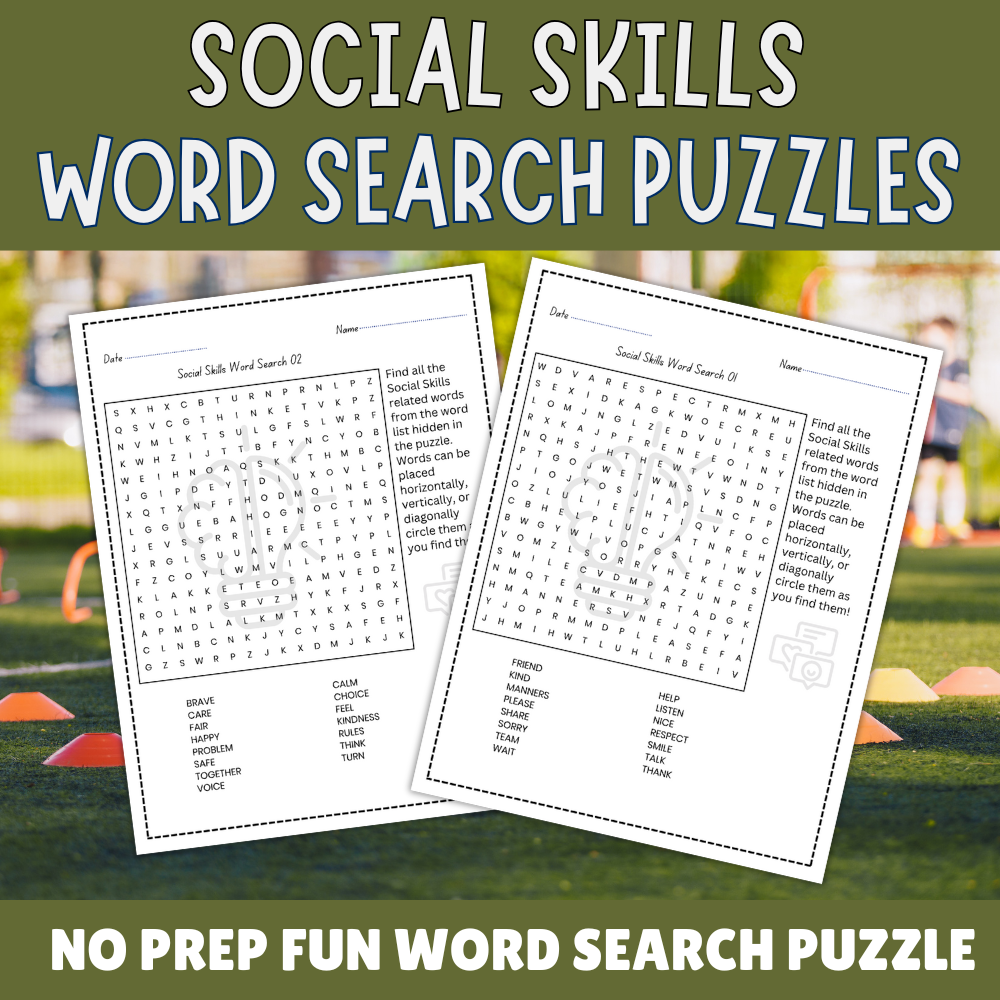
Tags Vocabulary, Spelling, Kindness, Kind Words, Helping Others, Kindness Activities, Ela Word Searches, Word Search, Kindness Word Searches, Word Searches
Health 2nd Grade Unit 3: Nutrition and Physical Activity
P.E. & Health, Health, Physical Education, Special Resources, Life Skills, Social Emotional Learning (SEL), Social Skills, Grade 2, Lesson Plans, Teacher Tools, Worksheets & Printables, Worksheets
For 2nd Grade Health there are seven standards that need to be taught. Unit 1 Personal Health Unit 2 Growth and Development Unit 3 Nutrition and Physical Activity Unit 4 Substance Use and Abuse Unit 5 Injury/ Violence Prevention Control and Safety Unit 6 Prevention/Control of Disease Unit 7 Environmental Consumer Health These units can be taught out of order. They are only numbered for your convenience. At the end of each unit, there is an assessment to test students’ understanding. Through using this Health 2nd Grade Unit 3: Nutrition and Physical Activity students will explore and learn to identify: * Healthy foods they should and foods that they should not eat that are unhealthy for their bodies. * Physical activities beneficial to their health and suggestions of which types of activities they can do. * Consequences of being active vs inactive * Students will also learn the importance of eating a healthy balanced diet and the benefits of being physically active at school, at home, and with their friends. This unit meets Common Core Standards for 2nd grade health. A total of 10 pages for this 2nd Grade Health Unit 3 on Nutrition and Physical Activity. At the end of the unit, there is an assessment to check for understanding. There are seven units that cover all the health requirements for second grade. Here are the links to other health units: Health 2nd Grade Unit 1: Personal Health Health 2nd Grade Unit 2: Growth and Development Health 1st Grade Unit 3: Nutrition and Physical Activity Health 2nd Grade Unit 4: Substance Use and Abuse Health 2nd Grade Unit 5: Injury / Violence Prevention and Safety Health 2nd Grade Unit 6: Prevention / Control of Disease Health 2nd Grade Unit 7: Environmental / Consumer Health 2nd grade Coronavirus / Covid-19 Facts
Author K-5 Treasures
Tags Health Unit, Nutrition, Physical Activity, Healthy Food, 2nd Grade Health, Second Grade Health, Physical Health, Eating Healthy, Health Resources, 2nd Grade Health Resources
AI Tools for Research – Fact-Checking & Bias Detection Worksheets
Science, Technology, Computer Science, Engineering, Special Resources, Social Emotional Learning (SEL), Social Skills, Life Skills, STEM, Research, Grade 6, 7, 8, 9, 10, 11, 12, Worksheets & Printables, Workbooks, Worksheets, Word Searches, Writing Prompts, Teacher Tools, Lesson Plans, Assessments, Diagrams, Presentations
This 41-page PDF is a fully prepared to print middle school Digital Literacy Curriculum called "Advanced Digital Tools for Research: Fact-Checking and Detecting Bias Worksheets" designed for students in grades 6-8 to be able to use the V.E.R.I.F.Y. Framework (Validate, Extract, Read Lateral, Interrogate Bias, Find Primary Evidence, Yield Conclusion) to critically evaluate content generated by AI, identify hallucinatory or fabricated information, detect algorithmic bias, and utilize lateral reading skills. This resource is ideal for the AI era and includes: - Four theoretical chapters with practical real-world examples (e.g., Titanic, Great Wall of China, Space Race, Paleo-Diet). - Ten hands-on student worksheets (e.g., Anatomy of a Digital Claim, Spotting Plausible Falsities, Lateral Reading Protocol, Unmasking Structural Bias, The Phantom Citation Mystery, Chronological Confusion, etc.). - Three full-color visual frameworks/diagrams (Fact-Checking Workflow, Algorithmic Bias Triad, Source Credibility Spectrum). - A complete answer key with rubrics and high proficiency examples. - A complete Teacher Implementation Guide including pacing (4-6 class periods), differentiation for ELLs/developing readers and gifted students, formative assessment examples, and examples of exit tickets. - A ready-to-teach PDF requiring no preparation that increases research skills, media literacy, and critical thinking through an alignment to both the CCSS, ISTE, and Digital Citizenship Standards, making it appropriate for use in English Language Arts, Social Studies, Science, and Technology classes. Why Schools/Parents Find It To Be Effective: Develops Real World Skills that Kids Need to Survive in an AI World. Kids will learn how to identify when they are being deceived by hallucinations, bias, and fake citations before they copy and paste into their papers or projects. No Preparation or Planning Time Required - Teachers get full theory, worksheets, visuals, answers and pacing guide when using this product. Parents appreciate the independent critical thinking experience provided to their children. Fun Way to Increase Student Engagement - Kids enjoy using the detective-style worksheets (Tree Octopus Hoax, Phantom Biologist, Brooklyn Bridge Hoax, etc.) to develop critical thinking skills through the use of skepticism as a game. Differentiated, Inclusive, and Fully Accessible - Students are able to access the materials because of the built in supports provided for ELL/Developing Readers, and extension challenges for Gifted Students. Ensures Academic Integrity Now and in the Future - Aligns well with the local school districts expanding policies regarding the appropriate use of AI, as well as standards for digital citizenship. Intended Audience of Book (As per complete PDF analysis): This resource is specifically created for students in Grades 6 to 8 (Middle School). There are examples throughout the resource, as can be seen in the seven (7) and eight (8) examples referenced. Answer keys and teacher guides both have "Grade 6 to 8 Student Workbook" clearly labeled on them. Best Fit: ELA, Social Studies/History, Research projects in Science, Digital Literacy/Media Literacy, or Technology courses Excellent for Homeschoolers, Gifted Programs, or Educators Teaching AI Ethics and Responsible Research. Copyright & Terms of Use This Book is copyrighted by Syed Hammad Rizvi. This resource is solely for personal and individual classroom use. You may not modify, redistribute or sell any part of this resource (including putting it online for others to back or download). In order to share this resource with your coworkers please buy more licenses from Teachsimple. Thank you for following these terms of use. -------------------------------------------------------------------* This product was created by Syed Hammad Rizvi to be enjoyed!
Author Creative Book Store
Rating
Tags AIFactChecking, BiasDetection, DigitalLiteracy, MiddleSchoolWorksheets, AIFactCheck, VERIFyFramework, CriticalThinking, MediaLiteracy, AIforTeachers, DigitalLiteracyWorksheets
Editable School Therapy Dog Approval Materials
Social Emotional Learning (SEL), Special Resources, Social Skills, Special Education Needs (SEN), Life Skills, Animals, Life Sciences, Science, Classroom Management, Resources for Teachers, High School, Middle School, Elementary, Early Learning, Homeschool Resources, Not Grade Specific, Adult Education, Classroom Decor, Bulletin Boards, Projects, Activities, Door Decor, Presentations, Teacher Tools, Templates, Worksheets, Worksheets & Printables
Want to Introduce a School Dog? These Editable Templates Make It Easy! 🐶📋 Bringing a therapy dog into a school is an exciting journey, but let’s be real — it also comes with a ton of paperwork and a lot of questions from school administrators, teachers, and parents. When I started with my school dog, I quickly realized: I needed a clear way to present my plan, get approval, and answer concerns upfront. So, I put together these ready-to-use templates—and now I’m sharing them with you! 🐾 What’s Included? ✅ 3 Editable Templates for Different Stages of Approval: ✔ Introducing a School Dog – A friendly, easy-to-understand letter for teachers & parents. ✔ Therapy Dog in Training – A more formal version for school leaders & board members. ✔ Certified Therapy Dog – A final approval document to make everything official. 🎨 Five color options + black & white for easy printing 🖥️ Formats: PowerPoint, Keynote (editable & customizable) & non editable PDF 📌 How to Use These Templates 1️⃣ Choose the right template for your school’s current stage. 2️⃣ Edit the text to match your therapy dog’s training and role. 3️⃣ Share with school leadership, teachers & parents to keep everyone informed. 4️⃣ Print or present digitally to make your school dog approval process seamless. 💡 Teacher Tip: Start with the “Introducing a School Dog” template first—it sets the stage before moving into formal approval. Why This Will Save You Time & Stress ✔ No need to start from scratch—just customize & print! ✔ Helps answer common concerns from parents & staff ✔ Gives you a professional, structured plan to present ✔ Perfect for both new & experienced school dog handlers 🐕 Get Your School Dog Approved with Confidence! Whether you’re just starting out or need final approval, these templates give you a structured, stress-free way to introduce and manage your school dog program. 📥 Download now and make the process easy! 🐾✨ 📍 Best wishes, Heike from Lernfitness 🐾 Did You Know? I teach with a certified therapy dog, and together we help create a calm, engaging, and inclusive learning environment! 🐶💙
Author Lernfitness
Tags Therapy Dog, Animal-assisted Learning, Inclusive Education Tools, Therapy Dog Rules, Classroom Pet Guidelines, Therapy Dog In School, Social-emotional Learning, SEL, Dog, Approval Materials
Health 1st Grade Unit 7: Environmental / Consumer Health
P.E. & Health, Special Resources, Health, Physical Education, Life Skills, Social Emotional Learning (SEL), Social Skills, Grade 1, Lesson Plans, Teacher Tools, Worksheets & Printables, Worksheets
For 1st Grade Health there are seven standards that need to be taught. Unit 1 Personal Health Unit 2 Growth and Development Unit 3 Nutrition and Physical Activity Unit 4 Substance Use and Abuse Unit 5 Injury/ Violence Prevention Control and Safety Unit 6 Prevention/Control of Disease Unit 7 Environmental Consumer Health These units can be taught out of order. They are only numbered for your convenience. At the end of each unit, there is an assessment to test students’ understanding. Through using this Health 1st Grade Unit 7: Environmental / Consumer Health includes the following concepts: * Students will learn about sun damage. * Students will learn how to protect themselves from sun rays. * Students will learn about community health workers. * Students will learn about slogans and safety slogans. At the end of the unit, there is an assessment to check for understanding. With this unit, your students are sure to be engaged and learn so much about their health! A total of 13 pages for Health 1st Grade Unit 7: Environmental / Consumer Health. There are seven units that cover all the health requirements for first grade. Here are the links to other health units: Health 1st Grade Unit 1: Personal Health Health 1st Grade Unit 2: Growth and Development Health 1st Grade Unit 3: Nutrition and Physical Activity Health 1st Grade Unit 4: Substance Use and Abuse Health 1st Grade Unit 5: Injury / Violence Prevention and Safety Health 1st Grade Unit 6: Prevention / Control of Disease Health 1st Grade Unit 7: Environmental / Consumer Health You can also teach your students about keeping yourself safe by studying about the Coronavirus, where and when it started and facts that plagued our world with this virus. 1st grade Coronavirus / Covid-19 Facts by Teach Simple This unit meets Common Core Standards.
Author K-5 Treasures
Tags Health Unit, Environment, Consumer Health, 1st Grade Health, First Grade Health, Healthy Habits, Environmental Health, Community Health, Health, 1st Grade Resources
The Executive Mastery Framework A Developmentally Scaffolding
STEM, Special Resources, Life Skills, Social Emotional Learning (SEL), Social Skills, Special Education Needs (SEN), Science, Technology, Computer Science, Engineering, Grade 1, 2, 3, 4, 5, 9, 10, 11, Worksheets & Printables, Flashcards, Workbooks, Worksheets, Word Problems, Teacher Tools, Lesson Plans, Quizzes and Tests, Quizzes, Tests
The Executive Mastery Framework: A Developmentally Scaffolding Curriculum for Neurodiverse Learners "In The Executive Mastery Framework: A Developmentally Scaffolding Curriculum for Neurodiverse Learners," you will find a digital workbook, guide for educators, and other resources that support executive function development in neurodiverse individuals. The 30-page workbook and teacher resource guide provide a new perspective by shifting away from deficit-based models to a neuro-affirming outlook; it equips teachers, parents, and professionals with usable tools and strategies to build external cognitive supports that develop into the internalized capability of neurodiverse individuals. You will discover in this curriculum: Phase 1: Core concepts of neurobiology, executive function challenges, and developmental scaffolding; Phase 2: Ten worksheets (age progression/ability) that assist neurodiverse individuals in developing somatic awareness, impulse control, task initiation, working memory, cognitive flexibility, organizational skills, metacognitive awareness, persistence, vocational skills, and self-advocacy; and Phase 3: Visual frameworks, flowcharts, answer keys with evaluator rubrics. The curriculum contains case studies, reflections and practitioner insights, as well as action-based methodologies such as backward chaining, cognitive offloading, and environmental prosthetics to help neurodivergent children succeed in all aspects of education, work, and life from Pre-K through adulthood. This resource is perfect for special education resources, homeschool ADHD curriculum, autism teaching tools, executive function activities, neurodiversity-affirming education, and for IEP/504 plan support. Why Schools/Parents Appreciate It: Neuroscience-Informed and Research-Based: Uses positive, scaffolded support (shifting from a traditional punitive, deficit-based model) that relies on neuroscience principles to support neurodivergent learners in developing authentic skills in an environment free of shame and frustration. Complete and Versatile: Includes comprehensive [theory and research], interactive [worksheets/visuals/case studies], and teacher resources for easy adaptation for specific learner needs such as ADHD task initiation or autism transition plans. Demonstrated Effectiveness through Case Studies: Real-life examples proving quick and/or dramatic change in many areas and reduced challenging behaviors (i.e. decreasing aggressiveness, reducing instances of "lazy," creating self-advocacy skills) — resulting in higher levels of self-esteem and improved academic performance. Progression through Developmentally Appropriate Stages for Future Success: Provides information supporting learners in developing co-regulation to full independence (from an early age) and preparing them for success post-school (e.g. self-advocacy portfolio). Support for Educators and Parents/Guardians through Time-Saving Ready-to-Use Resources: Provide educators with reflective/reflection-based/rubric-based resources that enable educators to create student autonomy, while minimizing planning time, hence creating fewer behavioural concerns and more engagement. Target Audience of This Curriculum: This Curriculum was designed for use with students who present Neurodiverse profiles. The key characteristics of these profiles include ADHD, autism, dyslexia, executive dysfunction, or NVLD. The curricula analyzed within this PDF have been organized according to developmental progression from Pre-K to 2nd Grade, 3rd to 5th Grade, Middle School/6th to 8th grade, and High School/9th to 12th grade and beyond. Pre-K to 2nd Grade: The focus on early childhood developmentally appropriate foundational learning skills which includes the topics of use of environmental prosthetics, somatic awareness (awareness of the body), impulse inhibition, and developing an ability to co-regulate (worksheets 1 - 2). This would be appropriate for a 4 to 8-year-old child who is either autistic or has ADHD and experiences difficulty with sensory predictability or emotional regulation. 3rd to 5th Grade: Students at this grade level should be practicing the skills of upper elementary school co-regulated navigation, working memory expansion, and task initiation (worksheets 3 - 4). This would be appropriate for any student who displays signs of experiencing transitional anxiety or experiencing a working memory bottleneck. Middle School/ 6th to 8th Grades: The students in this age group should be able to internalize their tooling, develop cognitive flexibility, and work on their organizational systems (worksheets 5 - 6). This would apply to an adolescent who would display signs of experiencing difficulties with social hierarchies or temporal discounting due to their ADHD or AuDHD profile. High School/ 9th to 12th and Transition to Adulthood: Students should be developing their metacognitive self-advocacy skills, time management skills, goal persistence, vocational navigation skills, and independence (worksheets 7 - 10). This would apply to any teen or young adult who is preparing to enter college, work, or request the need for accommodations under the Americans with Disabilities Act due to severe executive dysfunction. This curriculum can be used in a variety of settings including: special education classes, home schooling, therapy sessions, implementation of an IEP, or within an inclusive classroom setting, ages 4-20+. Copyright/Terms of Use : This resource is the property of Syed Hammad Rizvi and is only to be purchased and used for personal or one single classroom activity. You cannot change/distribute/sell (however you choose) any part of this resource and cannot publish this resource to the Internet so other may have the opportunity to download or view it. If you would like to provide a colleague with a copy of this resource, you may do so by purchasing another license through Teachsimple. Thank You for following the terms provided above This product is happy to be provided by Syed Hammad Rizvi
Author Creative Book Store
Rating
Tags ADHD, Autism, Neurodivergent, SpecialEducation, IEP, 504Plan, TeacherResources, SpecialEdTeacher, HomeschoolCurriculum, Dyslexia
Health 1st Grade Unit 2: Growth and Development
P.E. & Health, Health, Physical Education, Special Resources, Life Skills, Social Emotional Learning (SEL), Social Skills, Grade 1, Lesson Plans, Teacher Tools, Worksheets & Printables, Worksheets
For 1st Grade Health there are seven standards that need to be taught. Unit 1 Personal Health Unit 2 Growth and Development Unit 3 Nutrition and Physical Activity Unit 4 Substance Use and Abuse Unit 5 Injury/ Violence Prevention Control and Safety Unit 6 Prevention/Control of Disease Unit 7 Environmental Consumer Health These units can be taught out of order. They are only numbered for your convenience. At the end of each unit, there is an assessment to test students’ understanding. Through using this Health 1st Grade Unit 2: Growth and Development students will explore and learn to identify physical characteristics and emotional characteristics. Included in this Health 1st Grade Unit 2: Growth and Development: * Students match the physical characteristics and facial expressions with the correct emotion. * Students will draw an emotion based on a given event. * They will also work as a class as they identify all the different characteristics their peers have compared to themselves. At the end of the unit, there is an assessment to check for understanding. Included in this unit is an assessment with answer key. A total of 9 pages for Health 1st Grade Unit 2: Growth and Development. There are seven units that cover all the health requirements for first grade. Here are the links to other health units: Health 1st Grade Unit 1: Personal Health Health 1st Grade Unit 2: Growth and Development Health 1st Grade Unit 3: Nutrition and Physical Activity Health 1st Grade Unit 4: Substance Use and Abuse Health 1st Grade Unit 5: Injury / Violence Prevention and Safety Health 1st Grade Unit 6: Prevention / Control of Disease Health 1st Grade Unit 7: Environmental / Consumer Health You can also teach your students about keeping yourself safe by studying about the Coronavirus, where and when it started and facts that plagued our world with this virus. 1st grade Coronavirus / Covid-19 Facts by Teach Simple This unit meets Common Core Standards.
Author K-5 Treasures
Tags Health Unit , Growth And Development, Physical Differences, Emotional Differences, Self Development, 1st Grade Health, First Grade Health, Healthy Activities, Healthy Foods, 1st Grade Resources
Prompt Engineering Game Kits: Seasonal & Holiday Challenge for Future
Life Studies, Business, Technology, Science, Computer Science, STEM, Special Resources, Life Skills, Social Emotional Learning (SEL), Social Skills, Homeschool Curriculum, Homeschool Templates, Grade 9, 10, 11, 12, Worksheets & Printables, Parts of and Anatomy of, Workbooks, Worksheets, Word Searches, Writing Prompts, Teacher Tools, Assessments, Lesson Plans, Presentations
Take your classroom to the next level with the most powerful AI tool for education: "AI Prompt Engineering Game Kits: Seasonal & Holiday Challenges for Future-Ready Classrooms!" – a 43-page printable PDF toolkit with an interactive digital companion to bring generative AI to Grades 6-12 classrooms. This professionally developed digital tool makes prompt engineering accessible to all, transforming it from an esoteric idea into an artistic skill for budding students. From basic principles involving role assignment, task definition, context delivery, constraints, to output format, to more expert strategies involving chain-of-thought prompts, few-shot prompts, deconstructing complex prompts, to constraint prompts, this tool is an unrivaled aid for educators. Organized in three levels: Phase 1: Core Content & Theory (encompassing topics of foundation, advanced procedures, ethics in AI, bias reduction, challenge development); Phase 2: Student Workbook (consisting of gamified tasks); and Phase 3: Visuals & Teacher Resources (incorporating keys, implementation handouts, graphics), this resource set equips teachers with strategies for encouraging AI teamwork through interactive challenges related to seasons/holidays. Some of these challenges encompass: creating biographies for Thanksgiving, making scavenger hunt riddles for Halloween, conceptualizing a Winter Solstice poetic sequence or an Enchanted Ice Garden Festival, celebrating the Lunar New Year. Why Parents/Schools Love It: Future-Proof Skills Development: Provides the skills that students need to have as AI system designers and as responsible digital citizens, helping them succeed in an AI-enhanced future. Engaging Learning: Thematic challenges based on seasonal activities like Halloween puzzles and Thanksgiving tales make abstract concepts like AI fun and applicative for students. Ethical Emphasis and Safety: Weaves together information on bias in AI systems,accuracy,privacy,and responsible integration to assist in creating an excellent moral foundation for appropriate technology use in a safe and suitable environment for Easy Implementation and Differentiation: Also includes teacher keys, visuals, and frameworks, making easy integration possible without prep, and providing support for all levels of learners. Established Pedagogic Effectiveness: Founded upon the tenets of constructivism, project learning, and design, it moves the evaluation point from outcome to process and teamwork. Target Classes/Students : The resource explicitly targets students in Grades 6 through 12, based on a complete analysis of the PDF, its theoretical underpinnings, methodological framework, chapter breakdowns, student workbook challenges, teacher resources, and implementation guide. It also differentiates by age group to optimize engagement: Grades 6-8: Outlines structured, foundational challenges to build basic understanding of prompt engineering, with simpler tasks such as brainstorming themes or generating short narratives, emphasizing engagement through familiar holiday contexts and guided iteration. Grades 9-12: High School Students - Assigns more open-ended and complex problems to higher-order techniques, including ethical dilemmas, bias analysis, and sophisticated outputs, such as multi-stage event planning or nuanced creative writing, in order to afford the opportunity for deepened critical thinking and real-world application. This targeting allows for appropriate rigor at each age group, where younger students receive concrete and gamified activities, while older students take the work into the realms of ethical and interdisciplinary extensions. Copyright/Terms of Use : This Book is copyrighted by Syed Hammad Rizvi. This material is for a single classroom use only. It may not be copied or altered in any way. In other words, it may not be placed on the Internet where it will be generally accessible for download. If you are interested in sharing the resource with other colleagues, you can purchase additional licenses through TpT. Thank you for honoring the terms of use. "This product is happily brought to you by Syed Hammad Rizvi"
Author Creative Book Store
Rating
Tags AIPromptEngineering, AIinEducation, PromptEngineeringGuide, EducationalAI, ClassroomAIActivities, FutureReadyClassrooms, SeasonalAIChallenges, HolidayAIProjects, EthicalAI, DigitalCitizenship
Cyberbullying Upstander Protocols
Social Studies, Sociology, Special Resources, Life Skills, Social Emotional Learning (SEL), Social Skills, Special Education Needs (SEN), Speech Therapy, STEM, Psychology, Grade 5, 6, 7, 8, 9, 10, 11, Worksheets & Printables, Workbooks, Worksheets, Word Searches, Teacher Tools, Lesson Plans, Quizzes and Tests, Quizzes, Tests, Assessments
Give Your Students The Tools To Be Upstanders Against Cyberbullying: The Comprehensive Upstander Protocol & Digital Citizenship Course Do You Find Yourself Repeatedly Telling Your Students To "Just Be Nice" Online, But Online Bullying Keeps Happening? Do Your Students Freeze Up When They See Someone Being Mean On A Group Chat, A Commenting Section, Or A Game Because They Don’t Know What To Do? Instead Of Continuing To Give Vague Directions, It’s Time To Give Them A Tactical Playbook That Will Help Them Stop Harassment In Their Everyday Digital Interactions. This Encompassing Cyberbullying Upstander Protocol Will Provide A Complete Ready-To-Use Curriculum For Middle And Early High School Students. It Will Transition Passive By-Standers To Confident & Active "Up-Standers" By Giving Them Scripts, Psychological Awareness, And Action Plans That Will Enable Them To Stop Online Harassment In A Safe And Efficient Manner While They’re Experiencing It. This Resource Is Grounded In Sociology, Adolescent Psychology, And Uses The A.I.S.R. (Assess, Intervene, Support, Report) Framework To Provide Students With Concrete Next Steps In Navigating The Complex Digital Landscapes Of TikTok, Discord, Instagram, Etc. – This entire package is 42 pages which can be broken down as follows: Part 1: The Core Protocol Guide (10 pages) will provide you with the psychology behind the digital bystander, de-escalation techniques, and 4 vetted action plans complete with scripts to memorize. Part 2: The Student Workbook (13 pages) includes worksheets that will help students analyze the scenario, assess threats, create a script, collect evidence, and write their own personal Upstander Action Plan. Part 3: Teacher Materials & Visual Aids (19 pages) • Teaching Visual Aids: High-quality diagrams that can be projected in classrooms or used in the classroom to assist students in visualizing their learning experiences (IE: The Intervention Quadrant, The S.T.E.P. Flowchart & The Threat Escalation Pyramid), • Teacher Instructions on How To Implement The Curriculum: Outline of the curriculum with pacing, creating psychological safety for students, and how to overcome the "snitch" stigma. • Formative Assessment Rubric for Grading Students' Action Plan: Provides teachers with an easy and reliable method for grading students based on the action plan's tactical viability and empathy. • Comprehensive Answer Key: Gives teachers the master answers to all worksheets. This package is far more than just another anti-bullying lesson; it is a life-skill tool kit for responsible and resilient digital citizenship. Give your students the ability not only to be aware of the digital world but to actively contribute to making it a better and safer place. Ideal For: Health Classes, Advisory Periods, SEL Blocks, Digital Citizenship Units and School Counselors Why Schools/Parents Love It: More than Just "Be Kind": This curriculum includes specific, action-oriented scripts and protocols to create clear expectations of "what to say and do" instead of vague statements. Student-Driven Empowerment: This program teaches de-escalation and assessment skills for students to intervene in a way that reduces risk to themselves and effectively supports the victim (or target). Relevant & Timely: The curriculum uses real-life examples from platforms like TikTok, Discord and Snapchat to make today's teenagers more likely to relate to and engage with the content. Comprehensive & Easy Prep for Teachers: This one-stop shop includes a teacher guide, student workbooks, visual aids, and a complete answer key to help save teachers' time on lesson prep. Builds Critical Life Skills: Provides students with digital citizenship, social-emotional intelligence, and critical thinking skills they can use throughout their lives. Designed for the following content categories (what your target audience will be primarily using these social media apps for), please refer to: 1. Target Audience - Based on age, developmental level, language, type of social media app (TikTok, Discord, Snapchat), then use those to define who your target audience will be. Primary Audience - 7-9 Grades - Ages 12-15 - This is clearly stated as TARGETED in the content and aligns perfectly with their social & developmental stage. Secondary Audience - 6th Graders - This can be introduced as a unit; 10th Graders – It can be used as a reinforcer or review. 2. Target Audience - Edu/FV Curriculum - School Counselors, Health Teachers, Tech/Digital Citizenship Teachers and any Homeroom/Advisory Teacher who curates SEL Curriculum have the responsibility for providing accurate information through their respective content areas. In the event of a dispute over this book, please remember to investigate copyright/laws. This book may not be used as a source of content in your own work. You will not redistribute or modify this book (in any way, shape or form) without the express written permission from Syed Hammad Rizvi - please contact him via his website should you need help with obtaining proper permissions. You can purchase additional licenses if you wish to share this book with your colleagues via Teachsimple. Thank you for adhering to these terms of use. This book is created with love by Syed Hammad Rizvi.
Author Creative Book Store
Rating
Tags Antibullying, Cyberbullying, Digitalcitizenship, SocialEmotional Learning, Socialemotionallearning, Teachersofinstagram, Teacherlife, Schoolcounselor, Onlinesafety, Bullyingprevention
Discover Your Best Selves: An Engaging Activity Booklet
Life Skills, Special Resources, Social Skills, Grade 2, 3, Crafts, Activities, Games, Worksheets & Printables, Worksheets
Through a series of creative worksheets and engaging games , kids will embark on a journey of self-discovery and personal growth. Here's what they'll experience: Celebrate Individuality: Activities like "All About Me" and "My Personal Shield" provide fun and unique ways for kids to express themselves and build self-esteem . Promote Healthy Habits: Kids will learn about nutritious eating with "Go Foods!" and "Slow Foods!" and get active with a playful fitness exercise cube. Learn Essential First Aid: Important safety skills are made easy to grasp and remember through interactive games like "Bandage Buddy" and "Bandage Tag." Understand Emotions: Through engaging emotion role-playing and a creative vision board, girls will learn to identify and express their feelings in healthy and constructive ways. Recognize Community Helpers: A scavenger hunt, charades, and thank-you card creation will help girls appreciate the vital roles of health heroes in their communities. This booklet offers a comprehensive and enjoyable way for kids to build confidence, learn valuable life skills, and become their best selves! This is a 18 page activity booklet.
Author Leader Connecting Leaders
Rating
Tags Healthy Habits, Self-esteem, Good Habits, All About Me, Community Helpers, Understand Emotions
Describing My Feelings Worksheet Set
Special Resources, Social Emotional Learning (SEL), Social Skills, Special Education Needs (SEN), Not Grade Specific, Worksheets, Worksheets & Printables
Identifying and verbalizing emotions is essential yet challenging for young children’s healthy development. This set of 20 illustrated printable worksheets helps students advance self-awareness by examining common feelings in depth one by one. With 2 different versions of the worksheet featuring both boys and girls, children investigate their own experiences feeling various emotions. The wide-ranging worksheet set covers feelings like happiness, sadness, worry, anger, frustration, annoyance, fear, embarrassment, excitement and disappointment. Each page displays a child’s blank face ready to be drawn by students showing that feeling visually. They then respond to prompts describing a time they felt that way, associated thoughts they remember, and any physical reactions in their body. Analyzing the internal and external aspects of varied emotions builds children’s “feelings vocabulary” exponentially. Writing personal examples cements comprehension further, allowing kids to relate back to their own illustrations later as reminders. Sorting pages by intensity levels (high/medium/low energy emotions) teaches activation regulation skills too. With 10 diverse feelings covered, these interactive worksheets expansively grow children’s emotional intelligence. Kids become experts decoding their own ever-changing inner world while building empathy for what classmates experience too. This resource includes 20 worksheets showing 10 different emotions - 10 worksheets with boy faces on and 10 with girl faces.
Author SEN Resource Source
Tags Emotions, Feelings, SEL, Self-awareness
Mindfulness for Exam Stress – Focused Attention Worksheets
Life Skills, Special Resources, Social Emotional Learning (SEL), Social Skills, Special Education Needs (SEN), Speech Therapy, STEM, Resources for Teachers, Classroom Management, Community Building, Grade 6, 7, 8, 9, 10, 11, 12, Worksheets & Printables, Workbooks, Worksheets, Word Searches, Teacher Tools, Assessments, Lesson Plans, Presentations, Quizzes and Tests, Tests
A complete 40-page workbook to promote the use of mindfulness and learn how to manage exam stress using neuroscience-based methods. This workbook includes clear theoretical concepts (e.g., "Amygdala Hijacking", "Working Memory Bottleneck", "Default Mode Network versus Task Positive Network") paired with a total of 10 student worksheets, 3 visually appealing colored models for use throughout the course, an answer key that shows all answers for the worksheets and a teacher guide to implementation. In addition to theory, there are practical tools to help the student manage their stress level and perform well on assessments. Practical tools include: Cognitive Defusion (to eliminate the "failure script" you tell yourself), using Somatic Mapping and micro-interventions (e.g., Physiological Sigh, 5-4-3-2-1 Grounding, Box Breathing), using the POP (Pause, Observe, Proceed) method to eliminate "blanks" on assessments, utilizing pre-test mental rehearsal and post-test decompression exercises. This workbook is perfect for use in the classroom, individual counseling sessions, study skills programs, or home schooling. It is available for immediate digital download, and can be printed from your computer or used in your digital course materials with no preparation needed. These strategies have been researched and proven to effectively lower levels of test anxiety and provide access to your working memory when under pressure to perform. Reasons Parents and Schools Love this Product: Science-based methods that help students calm themselves when they take exams through teaching them how to control their brains instead of just telling them to calm themselves down. No preparation required on the part of teachers with regard to having materials like worksheets, visuals, answer keys, and an implementation guide to use immediately in their classrooms or with students who need support. Helps develop true resilience by teaching students ways to cope with anxiety over a lifetime rather than relying on temporary motivation techniques. All micro-interventions available through this product can be done without being seen or heard, therefore making it more conducive to use during exam time. Very easy for both parents and counselors to understand how to use the micro-interventions in a way that they will get maximum benefit from doing so; great for SEL programs, study skills classes, or using at home. Intended Readers : The target audience for this resource is students who belong to the ages of 12-16 (Grades 7-10). The research case studies were conducted with 7th grade (ADHD/test anxiety), 8th grade, 9th grade and 10th grade (AP Biology) students. The resource sections of the Teacher Implementation Guide focus on the students themselves as they relate to their neurodevelopmental stage (middle and early high school). This resource is perfect for middle school (Grades 7-8) and early high school (Grades 9-10) students, who are preparing for any number of major exams, standardized exams and high stakes assessments (i.e., any subject). Not intended for elementary students (too difficult) or late high school/college students (the language and examples were written specifically for the adolescent population). Copyright / Terms of Use : This book is copyrighted to Syed Hammad Rizvi. It should only be used by you or as a single classroom reference resource. You cannot edit, share, or sell anything contained in this book, so please do not upload it to the internet and make it available for download to anyone else. If you would like to share this book with co-workers, please purchase another copy of this book through Teachsimple and respect the above terms of use. Thanks for using and supporting this product from Syed Hammad Rizvi!
Author Creative Book Store
Rating
Tags Mindfulness, TestAnxiety, ExamStress, StressRelief, AnxietyRelief, MentalHealth, SelfCare, SEL, SocialEmotionalLearning, MindfulnessForStudents
Health 1st Grade Unit 5: Injury / Violence Prevention and Safety
P.E. & Health, Special Resources, Health, Physical Education, Life Skills, Social Emotional Learning (SEL), Social Skills, Grade 1, Lesson Plans, Teacher Tools, Worksheets, Worksheets & Printables
For 1st Grade Health there are seven standards that need to be taught. Unit 1 Personal Health Unit 2 Growth and Development Unit 3 Nutrition and Physical Activity Unit 4 Substance Use and Abuse Unit 5 Injury/ Violence Prevention Control and Safety Unit 6 Prevention/Control of Disease Unit 7 Environmental Consumer Health These units can be taught out of order. They are only numbered for your convenience. At the end of each unit, there is an assessment to test students’ understanding. Through using this Health 1st Grade Unit 5: Injury / Violence Prevention and Safety students will learn to identify personal information, safety in their environment, trusted adults in their community, and bullying. Included in this unit: * Students will learn how to be safe in their community, household, and community. * Students will learn the importance of knowing their personal information. * Students will learn how to identify trusted adults in their community. * Students will learn when to call 911. * Students will learn about stranger danger. * Students will learn about bullying and who to talk to if this occurs. At the end of the unit, there is an assessment to check for understanding. A total of 14 pages for Health 1st Grade Unit 5: Injury / Violence Prevention and Safety. There are seven units that cover all the health requirements for first grade. Here are the links to other health units: Health 1st Grade Unit 1: Personal Health Health 1st Grade Unit 2: Growth and Development Health 1st Grade Unit 3: Nutrition and Physical Activity Health 1st Grade Unit 4: Substance Use and Abuse Health 1st Grade Unit 5: Injury / Violence Prevention and Safety Health 1st Grade Unit 6: Prevention / Control of Disease Health 1st Grade Unit 7: Environmental / Consumer Health You can also teach your students about keeping yourself safe by studying about the Coronavirus, where and when it started and facts that plagued our world with this virus. 1st grade Coronavirus / Covid-19 Facts by Teach Simple This unit meets Common Core Standards.
Author K-5 Treasures
Tags Health Unit, Injury Prevention, Violence Prevention, Safety, 1st Grade Health, First Grade Health, Healthy Habits, Health Resources, Health, First Grade Resources
Editable Parent Letter – Inform Families About Your School Dog
Social Emotional Learning (SEL), Special Resources, Social Skills, Special Education Needs (SEN), Life Skills, Animals, Life Sciences, Science, Classroom Management, Resources for Teachers, High School, Middle School, Elementary, Early Learning, Homeschool Resources, Not Grade Specific, Adult Education, Classroom Decor, Bulletin Boards, Projects, Activities, Door Decor, Presentations, Teacher Tools, Templates, Worksheets, Worksheets & Printables
Editable Parent Letter Inform Families About Your School Dog in a Clear & Supportive Way 🐶📄 Bringing a therapy dog into your school is an exciting step, but it’s important that parents feel informed, comfortable, and confident about how the dog will be integrated into school life. Whether your dog is in training or already a certified school therapy dog, this editable parent letter gives you a professional yet approachable way to communicate with families. Save time with a ready-to-use structure, while still being able to personalize details to fit your specific school dog program. This letter template helps explain the purpose, benefits, and guidelines of having a school dog while addressing common parent questions and concerns. 🐾 What Makes This Parent Letter So Helpful? ✔ Saves You Time – A clear, structured letter that you can edit to match your school and dog’s situation. ✔ Three Customizable Versions – Whether your dog is in training or fully certified, choose the letter that fits best. ✔ Reassures Parents – Provides families with transparent information about safety, learning benefits, and school policies. ✔ Professional Yet Friendly – A warm, engaging tone that helps build trust with parents. ✔ Completely Editable – Customize in PowerPoint or Keynote, or print the ready-to-use PDF version. 📌 What’s Included? 📥 Three Different Parent Letter Versions: 📝 Therapy Dog in Training – A welcoming letter introducing the school dog’s role during training. 📑 Therapy Dog in Training (Formal Version) – A more structured, professional-style letter. 📜 Certified Therapy Dog – A letter that presents the fully trained dog and highlights its impact. 🎨 Design Options: ✔ Each version comes in five colors + a black-and-white option. 📌 Formats Included: 📄 PDF – Ready to print and use as-is. 🎞 PowerPoint & Keynote – Fully editable, allowing you to personalize names, school details, and policies. 💡 How to Use This Parent Letter 📍 Step 1: Choose the version that best fits your therapy dog program. 📍 Step 2: Edit the content (if needed) to include specific school information. 📍 Step 3: Print or email the letter to parents before introducing the dog. 📍 Step 4: Use it for school board approvals or staff meetings as a formal introduction. 💡 Bonus Tip: Laminate the letter and keep a copy in your classroom or school office for reference! 🌟 Why Teachers & Therapy Dog Handlers Love This Resource ✔ “This saved me so much time! I just edited the details, and it was ready to send.” ✔ “Parents felt reassured because everything was clearly explained.” ✔ “The different versions were perfect—I could choose the one that fit our situation best.” 🐶 Make Parent Communication Easy & Stress-Free! Having a therapy dog in school is a wonderful opportunity—but keeping parents informed is key. This editable parent letter gives you the perfect way to explain everything professionally, warmly, and clearly. 📥 Download now and confidently introduce your school dog to families! 🐾✨ 📍 Best wishes, Heike from Lernfitness Did You Know? I teach with a certified therapy dog, and together we create a positive and inspiring learning environment. 🐶✨
Author Lernfitness
Tags Therapy Dog, Animal-assisted Learning, Inclusive Education Tools, Therapy Dog Rules, Classroom Pet Guidelines, Therapy Dog In School, Social-emotional Learning, SEL, Dog, Parent Letter