



2,441 products added recently
Science Outlines
Science Outlines provide a framework for teaching complex scientific concepts across various disciplines. These templates assist in organizing experiments, theories, and factual information systematically. By using Science Outlines, you can ensure that your lessons cover necessary content while remaining engaging for students. They are adaptable for different educational levels and support inquiry-based learning. Improve your science instruction with these comprehensive planning tools.

 Show filters

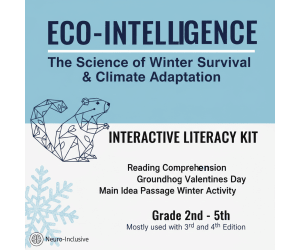
Eco-Intelligence:The Science of Winter Survival & Climate Adaptation
Winter, Seasons, Holiday & Seasonal, Science, Earth and Environmental Sciences, Earth Sciences, Environmental Science, Geology, Space, STEM, Homeschool Curriculum, Homeschool Templates, Grade 2, 3, 4, 5, 6, Worksheets & Printables, Workbooks, Worksheets, Teacher Tools, Assessments, Lesson Plans, Outlines, Presentations, Rubrics, Literacy Readers
Discover the ultimate Groundhog Day reading comprehension activity with this engaging Eco-Intelligence Interactive Literacy Kit, which is perfect for blending science and literacy within the confines of your classroom or homeschool setup. The 40-page digital resource looks into winter survival, climate adaptation, and animal behavior as highly interesting topics: Groundhog Day, Valentine's Day main idea passages, and science regarding hibernation. Merging in some nature's seasonal cycles-phenology-with important reading skills for elementary students, such as determining main ideas versus supporting details, vocabulary building, structures of compare and contrast, and thematic synthesis. They will love the "Anchor & Abstract" methodology that anchors abstract concepts like photoperiodism, metabolism, and ethology to holidays they know well. This Kit is full of sample texts, cloze, sorting activities, visual literacy, paragraph shrinking techniques, and exercises on conservation tasks. It reworks folklore into rigorous STEM education. Ideal for 3rd grade reading comprehension worksheets, 4th grade science units, Valentine's Day classroom activities, and Groundhog Day crafts with a twist: increase the level of engagement for your students while aligning them to Common Core standards for non-fiction reading and biological sciences. Download immediately upon purchase of this printable PDF today for instant access to neuro-inclusive, multidisciplinary lessons. Why Parents/Schools Love It: Multidisciplinary Engagement: Blends science topics like hibernation, photoperiodism, animal adaptation with literacy skills like main idea, vocabulary, text evidence, translating holiday topics into meaningful STEM learning that holds kids’ interest without sacrificing academic content. Neuro-Inclusive Design: Follows principles of 'Anchor & Abstract' which utilizes visual aids to meet the needs of learners suffering from dyslexia or those facing difficulties in terms of Executive Functions. Holiday-Relevant Rigor: Reframes Groundhog Day and Valentine's Day in terms of biology and nature, skipping over "fluff" and still providing holiday-relevant learning objectives—great in an already existing unit of instruction in early February about predicting the weather, animal behaviors, and protecting nature. Ready to Use Activities - Several types of activities such as sorting strategies, a cloze activity with a passage, a paragraph shrinking activity, and a highlighting protocol are available in CTL. Proven Skill Building: Assists students in progressing from memorization to abstract thematic comprehension, nurturing neural pathways for ultimate comprehension, along with real-world practice for projects creating environments for wildlife. Target Classes/Students : From the analysis of the 40-page document, which is summarized in its introduction of various teaching methods, in-depth discussions of chronobiology, metabolic sciences, the science of biological courtship, and the teaching of literacy themes, followed by the various exercises, activities, and aids in the latter portion of the document, it is clear that the document is intended for elementary school-level students in Grades 2-5, particularly with the emphasis on Grades 3 and 4, as it addresses the transition from the "Learning to Read" to the "Reading to Learn" approach, which is in line with the cognitive developmental level of the subject matter, utilizing words of higher tiers, cause and effect, as well as cognitive elements of main idea determination, among others, which is intended for Grades 2 as a foundational introduction, intensive synthetic exercises in Grade 5, and can therefore find its place in a heterogeneous or special educational model that emphasizes neuro-accessibility. Copyright/Terms of Use : Book Copyright by Syed Hammad Rizvi. This resource is intended only for personal and single classroom use, and you may not alter, redistribute, or sell the resource in any form. In other words, you cannot put it on the Internet, where it can be found and downloaded by the public freely. If you need to share this file with your colleagues, please consider buying additional licenses from Teachsimple. Thanks for respecting the terms of use! This product is happily brought to you by Syed Hammad Rizvi
Author Creative Book Store
Rating
Tags GroundhogDayActivities, ValentinesDayWorksheets, WinterSurvivalScience, ElementaryLiteracyKit, HomeschoolResources, ReadingComprehension, MainIdeaPassages, AnimalAdaptation, HibernationScience, Photoperiodism
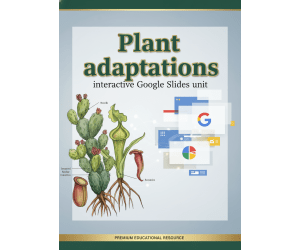
Plant Adaptations Interactive Google Slides Unit
Science, Earth and Environmental Sciences, Earth Sciences, Environmental Science, Geology, Space, Life Sciences, Animals, Nature & Plants, Biology, Grade 3, 4, 5, 9, 10, 11, 12, Experiments, Activities, Labs, Projects, Assessments, Teacher Tools, Diagrams, Lesson Plans, Outlines, Presentations
Find the best 4th Grade Plant Adaptations Interactive Google Slides Unit – a complete no-prep digital science resource that is perfectly correlated to NGSS 4-LS1-1! This teacher edition is a game-changer for teaching plant biology as an interactive adventure for students! With this resource, students will enjoy a hands-on approach to learning about plant adaptations as they explore interactive slides featuring desert succulents/cacti, rainforest drip tips/epiphytes, water plants floating leaves/stretching stems, structural vs. behavioral adaptations, roots, stem/leaf adaptations, defense structures, carnivorous plants Venus flytrap/pitcher plant, seed dispersal, mystery plant analysis, and a final knowledge check with answer keys! Students will actively engage in classifying adaptations, creating their own extremophiles, analyzing scenarios using Claim Evidence Reasoning, and connecting science to ELA, math, engineering, and technology using cross-curricular activities. It includes a teacher guide, standard alignment, steps to integrate into Google Classroom, instructional tips, interactive slide ideas, image credits, and ideas for self-grading. It can be used in a variety of learning environments, such as in-class learning, distance learning, homeschooling, etc. It saves automatically in Google Slides. Keywords: plant adaptation 4th grade, NGSS 4-LS1-1, Google Slides, interactive science unit, desert rainforest aquatic plants, carnivorous plants, seed dispersal activities, digital science resource, structure and function NGSS, no prep plant biology. Why Parents/Schools Love It : NGSS-Aligned & Standards-Ready: No planning required – lesson plans, objectives, and assessments are provided and align perfectly with 4th grade requirements. Truly Interactive & Engaging: Drag and drop sorting, CER plant mysteries, and biome builders ensure all students (including reluctant ones) are actively engaged and motivated to learn for hours. Cross-Curricular Powerhouse: Perfectly blends ELA (informative writing, vocabulary), math (data analysis, volume calculation), and engineering (biomimicry design challenges). Google Classroom Perfection: One-click “make a copy for each student,” auto-saving, and self-grading features save teachers 10+ hours per unit. Differentiation Built-In: Visual aids, scaffolding, and differentiation in activity levels and types meet the needs of diverse learners and challenge advanced students. Target Student Classes : This lesson is designed for 4th grade science (ages 9-10), specifically targeting the 4-LS1-1 standard for Structure and Function in plants/animals, as well as the cross cutting concepts of Systems and System Models + the Science and Engineering Practices of Engaging in Argument from Evidence. This lesson is suitable as the main resource for: Standard 4th grade life science curriculum for 4th grade students in public/private schools Homeschool 4th grade science curriculum (allows for fast or slow pacing for gifted or remedial students) Advanced 3rd grade science for 3rd grade students or 5th grade review for 5th grade students Special education or ESL students (visual learning tool of drag and drop CERs) Not recommended as the main resource for middle school students (6th+). Copyright/Terms of Use: This Book is copyrighted by Syed Hammad Rizvi. This is for your personal and single classroom use only. You may not change, reproduce, redistribute, or sell this in any way. This means you may not put it on the Internet in a way that it can be located and downloaded by others. If you wish to share this resource with others, please consider purchasing additional licenses from Teachsimple. Thank you for respecting these copyright laws! This product is happily brought to you by Syed Hammad Rizvi
Author Creative Book Store
Rating
Tags PlantAdaptations, 4thGradeScience, NGSS4LS11, GoogleSlidesScience, InteractiveScience, ScienceTeachers, ElementaryScience, NGSSScience, PlantAdaptationsUnit, DigitalScienceResource

Blockchain for Beginners: High School Computer Science Guide Book
Technology, Science, Computer Science, Engineering, Special Education Needs (SEN), Special Resources, Coaching, Life Studies, Common Core, STEM, Grade 3, 4, 5, 9, 10, 11, 12, Activities, Teacher Tools, Assessments, Lesson Plans, Outlines, Rubrics, Worksheets & Printables, Workbooks, Writing Prompts, Drawing Templates & Outlines
Unleash the power of technology in the future with "Beginner Blockchain Explorations - Computer Science," a complete and novice-friendly guide on the blockchain, cryptographic, and decentralized system revolution. Written by Syed Hammad Rizvi, this 382-page educational text addresses basics such as centeralized vs. Decentralized systems, Distributed Ledgers, Hashing, Public Key Cryptography, and P2P Networking, progressing on to in-depth information on blockchain basics, blocks, transactions, UTXOs, wallets,Consensus models like Proof of Work & Proof of Stake, mining, and forking. Discover its applications in Bitcoin, Ethereum, Smart Contracts, DApps, NFTs, DeFI, Stable Coins, Supply Chain Management, Healthcare, Digital Identity, Voting Systems, Game Economies, Metaverse,Cross-Border Transactions, and Business Blockchain solutions. Advanced discussions include its scaling, security, regulation, sustainable or environmentally responsible use, quantum computing threats, interoperability, zero-knowledge, Web3, Artificial intelligence, and its future developments in Sharding and DePIN solutions. This educational book on computer science is perfect for class studies and lessons, instilling a critical mindset on its relevance in society, applications, prospects, and uses in our technological future. Greatly suitable for educational teachers, parents, and teenagers eager to learn about beginner-friendly cryptocurrency, blockchain explanation, Smart Contract guide, NFT guide, DeFI guide, Web3 guide, and Decentralized finance lessons. Why Parents/Schools Love It: Thorough and Age-Appropriate Curriculum Alignment: The course encompasses all the necessary computer science subject content, from the basics to the latest blockchain technology applications, and aligns with the high school computer science curriculum. Real World Application and Skills Development: Provides real-life applications of cryptography, smart contracts, DeFi, and other essential areas of cryptocurrency, without delving into complexities that would intimidate a beginner. Fosters Ethical and Critical Thinking: Deals with matters such as privacy, environmental impact, and regulation in a manner that promotes ethical and critical thinking. Engaging and Future-Proof Education: It covers applications related to gaming, healthcare, finance, and Web3. The topics are aimed at making learning an engaging process while equipping students with skills related to futuristic applications in the integration of blockchain. Aids to Self-Study or Class Discussion: Chapters are arranged in a well-structured sequence of increasing complexity to enable home-schooling, solo study, or class study. Target Students/Classes : After understanding the structure and content of this book, and analyzing its level of advancement, commencing from fundamental knowledge of digital fundamentals and cryptography and progressing onward towards more sophisticated applications such as DeFi, NFT, metaverse, quantum resistive securities, AI intersection, and more, this book can be deemed perfectly suitable for students in Grades 10-12, who are pursuing Computer Science as a subject in school. Additionally, this book may also be used as auxiliary educational content for advanced students of Grade 9 and introductory-level college courses related to blockchain and digital innovation, owing to its simplified descriptions and practical application-oriented content, apt for 15-18 years old youth interested in computer technology electives, STEM education, and home learning programs. Copyright/Terms Of Use : This Book was copyrighted by Syed Hammad Rizvi. This resource file is for your personal use and use in your classroom. You cannot reproduce or distribute this resource file. What this means is that you cannot put this resource file on the internet so that anyone with access to the internet may download a copy. You may share this resource with others at your school if you purchase additional licenses through Teachsimple. Thank you for abiding by these usage guidelines. This product comes very happily under the auspices of Syed Hammad Rizvi
Author Creative Book Store
Rating
Tags BlockchainForBeginners, BlockchainEducation, ComputerScienceBook, HighSchoolBlockchain, CryptocurrencyBasics, SmartContractsTutorial, NFTGuide, DeFiExplained, Web3Introduction, EthereumFundamentals

Daffodils Kindergarten Science Projects + Lesson Outline
Science, Life Sciences, Nature & Plants, Writing, ELA, Creative Writing, Kindergarten, Grade 1, Teacher Tools, Outlines, Parts of and Anatomy of, Worksheets & Printables
Take the humble Daffodil and transform it into an engaging Kindergarten Science Project that your pupils will love this spring. You will be able to cover much of the Curriculum for Science (Plants) without your pupils knowing they are learning. Suggestions are made and resources are provided to enable you to integrate your science work with language (poetry) and creativity. Who is it for? This Daffodils Science project is intended to be used with Kindergarten and Grade 1 children. Home educators can also use it in the course of nature study/Science learning. What does it contain? · PowerPoint The pack comes with an 18-slide PowerPoint, which can be used to either start your lesson or as a recap at the end. The PowerPoint begins with the bulb under the ground waiting for spring, and then shows how the Daffodil grows. It teaches about the parts of a Daffodil: the bulb, stem, leaves, buds, calyx (the papery covering protecting the buds), petals, trumpet and pollen. The PowerPoint is a taught lesson and comes with sound. · Lesson outlines Two lesson outlines are provided, one for ages 5-6 and another for ages 6-7, though other ages might also benefit. It can be used successfully with mixed age-range classes. Notes as to how to dissect a Daffodil. · Worksheets/Activities · Label the parts of a Daffodil. · 5 pages to make a Daffodil diary: choice of coloured or black/white front cover. Let the children make observations of a Daffodil growing near them that can be observed easily. · Poetry work – read the poem ‘Daffodils’ by William Wordsworth (provided) and use our suggestions to think about the poem. · Acrostic worksheets for pupils to write their own Daffodils acrostic poem. · Daffodil writing paper For display: Beautiful original photos · A5 photos of parts of a Daffodil · A4 pictures and vocabulary cards for Daffodil Life Cycle: use for Science work, language or display, word walls, etc… · Display headers What is included? 1 18-slide PowerPoint 1 PDF file with 47 pages
Author Lilibette's Resources
Rating
Tags Daffodils, Daffodils Life Cycle, Daffodils Science, Daffodils Plants Lesson, Daffodil Life Cycle, Kindergarten Science Projects, Nature, Plants, Parts Of A Flower

The 'Sick Day' Savior: K-5 Emergency Sub Plans Bundle
Science, Special Resources, Social Emotional Learning (SEL), Life Skills, Social Skills, Special Education Needs (SEN), Basic Science, Life Studies, Career, Leadership, Kindergarten, Preschool, Grade 1, 2, 3, 4, 5, Teacher Tools, Anchor Charts, Assessments, Charts, Diagrams, Graphic Organizers, Lesson Plans, Literacy Readers, Outlines, Presentations
Find out what is considered the ultimate "Sick Day" Savior – K-5 Emergency Sub Plans Bundle Professional Edition – your one-stop-shop for No Prep Substitute Teacher Lesson Plans specifically created for Elementary Teachers and School Administrators. This 49-page PDF bundle is designed to alleviate the pressure of unplanned teacher absences with its ready-to-deploy, standards-based independent work packets for English Language Arts, Mathematics, Science, Social Studies, and Integrated Studies for Kindergarten through 5th Grade students. This bundle includes detailed overviews, quick-start deployment instructions, substitute teacher welcome packets, grade-level activities (phonics and tracing for Kindergarten, analysis and decimals for 5th Grade), differentiated math drills, early finisher activities such as word searches and logic puzzles, behavior management tools, complete answer keys, and editable instruction templates – all designed for a seamless classroom deployment. Reusable for multiple years, this bundle is perfect for teachers looking for peace of mind – protect your students' learning journey against unplanned sick days with this essential emergency sub plans bundle for Elementary Teachers and School Administrators. Why Parents/Schools Love It: Peace of Mind During Absences: The absence of "lost days" is ensured with ready-to-use and independent activities that will keep students productively engaged and allow teachers to concentrate on recovery without worrying about classroom disruptions. Standards-Aligned and Versatile: The material covers basic subjects like ELA, math, science, and social studies with age-appropriate and differentiated content that is aligned with elementary school curricula and meets the needs of diverse learners from pre-readers to advanced students. Easy Implementation for Subs: The material is equipped with instructions and behavior tools and provides answer keys, enabling substitute teachers to easily maintain classroom routines and high expectations without prior knowledge of classroom operations. Reusable and Cost-Effective: The digital/print-optimized material is reusable and saves administrative hassles and money on last-minute planning. Promotes Student Growth: The material develops students' fine motor skills, critical thinking skills, and independence through fun extensions like puzzles and color-by-code, and provides stability and structure for young students. Target Classes/Students : After a thorough analysis of the PDF, which has different sections for different grades with appropriate material for each grade, such as tracing and pattern activities for pre-readers in Kindergarten, CVC words and single-digit math for Grade 1, reading comprehension and double-digit math for Grade 2, grammar and multiplication for Grade 3, writing and fractions for Grade 4, and scientific analysis with decimals for Grade 5, it can be deduced that the target classes would be from Kindergarten to 5th grade. This would include elementary school classes and would be appropriate for the different developmental phases from literacy and numerical basics for 5-6-year-olds to more critical thinking and multi-step problems for 10-11-year-olds. Copyright/Terms of Use: This Book was copyrighted by Syed Hammad Rizvi. This resource is only for personal and single classroom use. You are not allowed to change, redistribute, and/or sell this resource. In other words, you are not allowed to put this resource on the Internet where it can be publicly found and/or downloaded. If you want to share this resource with your fellow teachers, please buy additional licenses from Teachsimple. Thank you very much for respecting these terms of use. This product is happily brought to you by Syed Hammad Rizvi
Author Creative Book Store
Rating
Tags EmergencySubPlans, K5LessonPlans, SubstituteTeacherResources, NoPrepSubPlans, ElementaryEducation, TeacherSickDay, SubPlansBundle, StandardsAlignedActivities, KindergartenWorksheets, FirstGradeActivities
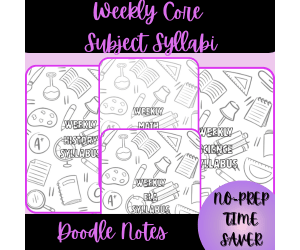
Weekly Core Subject Syllabi Doodle Notes Bundle
Creative Arts, ELA, Writing, Math, Science, Social Studies, Resources for Teachers, High School, Homeschool Resources, Middle School, Worksheets & Printables, Writing Prompts, Teacher Tools, Graphic Organizers, Outlines, Templates
Let's be honest, juggling ELA, Math, History, and Science in our homeschool week can feel overwhelming, right? I have created something that has been a game-changer: this Weekly Core Subject Syllabi Doodle Notes Bundle ! It is like a breath of fresh air – instead of dreading lesson planning, it's actually become kind of fun! These templates use a mix of visual learning and practical organization, which means I'm not scrambling to remember anything, and my teen is way more engaged. Seriously, say goodbye to those boring, dry lesson plans and hello to a colorful and effective way to map out our learning week! INCLUDED IN THIS RESOURCE: ✔Weekly ELA Syllabus Doodle Notes ✔Weekly Math Syllabus Doodle Notes ✔Weekly History Syllabus Doodle Notes ✔Weekly Science Syllabus Doodle Notes ✔Structured templates for daily planning ✔Visually engaging doodle elements This Weekly Core Subject Syllabi Doodle Notes Bundle has truly transformed how I approach our core subjects. By pairing practical organization with those awesome visual learning principles, it's empowered me to create weekly plans that are actually clear, effective, and – believe it or not – enjoyable! It's been amazing to watch my teenager be more engaged and get more involved, organized, and even excited about learning. It is all thanks to a planning system that speaks to both the logical and creative sides of how they learn. If you are looking for a way to streamline your homeschool and make it more inspiring, definitely give this bundle a try! If you and your students/homeschoolers enjoyed this bundle, please leave a review. Thank you for your support! Tina - Big Easy Homeschooling Mom
Author Homeschool with Big Easy Homeschooling Mom
Rating
Tags Weekly Core Subject Syllabi Doodle Notes, Weekly Planners For Students/homeschoolers, Student Engagement, Student Organization, Engaging Syllabi Templates, Subject-specific Planners, Weekly Doodle Notes, Homeschool Curriculum Planner, Syllabus Templates

Generative AI Ethics, Deepfakes & Responsible Use Case Studies
Science, Technology, Computer Science, Engineering, Research, Resources for Teachers, Classroom Management, STEM, ELA, Language Development, Grade 6, 7, 8, 9, 10, 11, 12, Worksheets & Printables, Workbooks, Worksheets, Word Searches, Writing Prompts, Teacher Tools, Lesson Plans, Presentations, Outlines, Quizzes and Tests
The complete high school curriculum is prepared and provides an interactive exploration of the topic of ethics in generative AI; deepfakes; responsible use of synthetic media; and provides a thorough introduction to how synthetic media works (to be used by all of our student participants in grades 9-12). The curriculum includes an academic overview of Synthetic Media architecture; multiple chapters for deepfake discussion/analysis; Copyright/Author status; algorithmic bias and epistemic security/provability protocols regarding the use of synthetic media. In addition, there are ten practical, complete, and interactive worksheets for active, individual student participation that have real examples, such as "the Synthesized Senator," "Med-Synthetica Diagnostic Bias," "Voice Cloning," "Influencer Avatars," etc. The students have to complete fill-in-the-blank terminology exercises, scenario analyses, and ethical synthesis prompts that promote critical thinking, media literacy, and digital citizenship skill acquisition. There is also the following in the resource book: (conceptual visual diagrams [mind maps, escalation matrices, process flows], a comprehensive answer key with notes for teachers and benchmarks for mastery) and a detailed teacher guide with pedagogical strategies, assessment tools (rubrics) and teaching protocols. This curriculum is also perfect for English/Language Arts, Social Studies, Computer Science, Digital Literacy, or elective Technology & Ethics classes. This resource is an instant digital download and requires no prep time. Give your students the information they need to be responsible in their use of AI and the topics related to ethics regarding the generative technology called "deepfake." Parents/Schools Appreciate It Because: Essential 21st century skills are being taught through critical thinking, verifying media sources & making ethical choices in dealing with misinformation & threats from deep-fakes and counterfeit media, thereby counteracting those very problems. Students remain engaged while staying motivated to learn by using real-world examples of ethical & responsible use of technology through use of case studies/workheets. The format requires zero preparation & can be easily implemented by teachers; includes lesson plans, case studies, worksheets, visuals, answer keys, teacher’s implementation guide (in pdf format). Responsible use of artificial intelligence & digital stewardship is promoted through use of technology in an aligned manner with modern school standards regarding digital citizenship/social-emotional learning. Materials are flexible in nature so can be used across multiple curriculum areas & for hybrid & remote learning situations. Based on a complete analysis of the submitted PDF, the target audience for this document are Students in grades 9-12 (age 14-18). This project is most suited for high school students enrolled in the following classes: - English/Language Arts or Media Literacy - Social Studies/Civics/Government - Computer Science/Digital Citizenship/Technology and Society - Ethics/Philosophy/STEM/STEAM The majority of the content is age appropriate for students and offers academically challenging material using fictional case studies that are relatable to a student's experience (there are no graphic illustrations or inappropriate material) on real-world current events such as misinformation, bias, copyright, and consent regarding the use of generative AI technology. "Terms & Copyright of Use": This resource has been copyrighted by Syed Hammad Rizvi. Personal use/Single-use in a classroom only. You may NOT change, share or sell this resource. i.e You may NOT post this on the Internet for others to search for/download. If you want to share this resource with other people in your school or district purchase additional copies through Teachsimple. Thank you for your cooperation. This product is provided to you by Syed Hammad Rizvi
Author Creative Book Store
Rating
Tags AIEthics, Deepfakes, GenerativeAI, SyntheticMedia, AI Ethics, DeepfakeAwareness, AIEthicsCurriculum, DeepfakesLessonPlans, GenerativeAIEthics, SyntheticMediaEthics

The Quantum Leap:Unlocking the Mysteries of Quantum Computing for Teen
Career, Life Studies, Research, Technology, Science, Computer Science, Life Skills, Special Resources, Social Skills, Special Education Needs (SEN), Grade 6, 7, 8, 9, 10, 11, 12, Lesson Plans, Teacher Tools, Worksheets & Printables, Workbooks, Parts of and Anatomy of, Presentations, Outlines, Centers, Activities
Explore the quantum revolution with The Quantum Leap: Unlocking the Mysteries of Quantum Computing for Teens, written by Syed Hammad Rizvi – a comprehensive resource for upfront and center students interested in innovative and advanced applications in computer science and related physics and technological domains. A thorough and correct resource on understanding complex ideas such as a bit compared to a qubit, quantum superpositions and entanglements, quantum gate and quantum circuit designs, Shor's algorithm and Grover's algorithm, and further applications in drug development simulation, economic modeling simulation, climate simulation modeling, and quantum cryptography beyond post-quantum cryptography. This 351-page book serves a thorough introduction to computer and physics students who are interested in understanding advanced computer applications and related physics. The Quantum Leap serves a detailed platform for students to learn about quantum paralleling, quantum correction, and quantum internet connectivity. Perfectly effective and aptly SEO-ed for educators on quantum mechanics resources and applications. A necessary read for students and professionals interested in quantum physics and computer applications. Why Parents/Schools Love It: Sparks STEM Passion: Makes the concept of quantum computing easy to understand for teens by comparing it to things they know and love, sparking their interest in the technological applications of the future such as artificial intelligence and cryptography. Teaches Future-Proof Skills: The course deals with applications, ethics, and future career options, providing students with knowledge required for in-demand jobs in quantum technology. Accessible and Engaging: Step-by-step analyses and context knowledge provided help make difficult subjects more accessible, overcoming intimidation factors and encouraging critical thinking. Comprehensive Curriculum Fit: It is compatible with the computer science and physics curriculum of high schools and is very suitable for being incorporated in the classroom or homeschooling settings. Encourages Ethical Awareness: It deals with the effects, limitations, and initiatives taken around the world, thus instilling ethical innovation in the minds. Target Student Classes: Having considered the entire contents and structure of this book and its intended audience from various perspectives such as its front cover and introduction chapters, it is intended for high school students from Grades 10 to 12 and aged 15 to 18 years. It commences from a level of basic discussion on classical and quantum fundamentals such as superpositions and entanglement concepts and then proceeds to more complex aspects of quantum studies such as algorithms and error correction strategies based on assumed foundational knowledge and interests but without rigorous prerequisite knowledge. Hence it is intended for high school seniors enrolled in introductory computer science studies at college or more in-depth math and physics studies at school levels above Grades 9; it may also serve Grade 9 students who take more challenging subjects at school and college-level new students at introductory stages as add-on reading contents, while its mainstream audience would be Grades 10 to 12 students in line with its teen-level comparison aids and refraining from more mature themes of mathematics chapters. Copyright/Terms of Use : This Book was copyrighted by Syed Hammad Rizvi. You may use this resource for personal and single class use. You are not authorized to modify, redistribute, and sell this resource or its part. That means you are not authorized to upload this resource to the Internet so people can freely access and download it. If you wish to share these resources with others in your workplace or with classmates at school, then go ahead and buy additional licenses from Teachsimple. "This product is happily brought to you by Syed Hammad Rizvi"
Author Creative Book Store
Rating
Tags QuantumComputingForTeens, QuantumLeapBook, UnlockQuantumMysteries, QubitsForBeginners, SuperpositionExplained, EntanglementForKids, QuantumAlgorithmsTeens, ShorsAlgorithmGuide, GroversSearchTeen, QuantumComputing2026

AI Ethics for Young Learners - Artificial Intelligence Book
Strategies, Reading, ELA, Reading Comprehension, Research, Technology, Science, Computer Science, Engineering, STEM, Grade 3, 4, 5, 9, 10, 11, 12, Activities, Projects, Teacher Tools, Assessments, Lesson Plans, Literacy Readers, Outlines, Rubrics, Writing Prompts, Worksheets & Printables
Unravel the fascinating realm of artificial intelligence through "AI Ethics for Young Learners - Artificial Intelligence," an all-inclusive textbook crafted to inculcate AI concepts and ethical values in young minds in an interesting and young-friendly manner. Offering in-depth information starting from AI in daily life examples such as assistants and video games to more complex topics such as biased computer algorithms, issues of data privacy, fundamental concepts of cybersecurity, and AI use, this SEO-friendly kids’ book is most suited to class 4 to class 12 settings, providing young minds with empowerment to learn AI basics, identify ethical issues, and become responsible digital participants. With 90 chapters spread throughout AI learning patterns in young minds, ethical issues in decision-making algorithms, robot AI while maintaining system security, program accountability in AI, and AI in the coming age of medicine, creativity, and environmental protection, this AI book by subject experts is ideal to disrupt young minds with AI-related critical thinking skills through practical AI examples and ethical tales of AI adventures in society. Tags: AI ethics education in kids, AI textbook in classroom education, AI education in teen brains, ethical AI learning book, classroom learning books in grade 4 to grade12 levels. Why Parents/Schools Love It: Engaging and Age-Appropriate Content: Reduces complex AI and ethics topics to simple and relatable stories and examples that hold the attention of young learners without causing an overload. Encourages Critical Thinking and Responsibility: Students learn to second-guess AI decisions, to perceive bias, and to claim responsibility for their actions as advocates for the appropriate use of technology in daily life. Comprehensive Curriculum Support: With 90 chapters, it leads the students from the basics of AI through advanced ethical dilemmas; perfect for STEM lessons, homeschooling, or classroom discussions. Values and Safety: Stressing the importance of privacy, fairness, and human judgment in AI-all important to giving parents peace of mind that aligns with family values. Inspires Innovation: This lets the kids come up with their own ethical AI ideas and concepts, which can trigger their innovative thinking to make them future-ready in the tech arena. Targeted Classes for Students : It can be seen from the thorough evaluation of the contents and suitability of the material in the book that it is ideally suited for students from grades 4 through 12 as mentioned in the title page. The contents begin with explanatory pieces that are simple and accessible in terms of the examples they use such as “What is Artificial Intelligence?" and examples such as smart assistants in basic forms for earlier grades (4-6), then move into advanced examples such as bias in algorithms, the issue of privacy laws and cybersecurity threats and ethical problem-solving for advanced students from grades 7-12. The text is written in simple sentences and analogies (as in the explanation given in “How A.I. Learns Like Playing a Game"), and sophisticated technical terms are avoided in this manner and can be suited for the entire spectrum mentioned. Copyright/Terms of Use : This Book was copyrighted by Syed Hammad Rizvi. Please do not give out or sell copies of this resource or any part of it. Furthermore, do not post this resource on the Internet in such a way that people can download this resource. By the way, you can modify this resource, but only for your personal or school-class usage. Please note that if you would like to share this resource with your peers, licensing options for additional copies are available via Teachsimple. Thank you for your compliance with this usage agreement. This product is delightedly presented to you by Syed Hammad Rizvi
Author Creative Book Store
Rating
Tags AIEthicsForKids, ArtificialIntelligenceBook, AIEducationForTeens, EthicalAIForYoungLearners, STEMBooksForStudents, AIBasicsForGrades4to12, DataPrivacyForKids, BiasInAIExplained, ResponsibleTechForYouth, AIAndEthicsCurriculum
AI Productivity Workflows for Specific Professions Book
Science, Technology, Computer Science, Engineering, Research, Resources for Teachers, Classroom Management, Community Building, Life Studies, Business, Grade 6, 7, 8, 9, 10, 11, 12, Activities, Projects, Teacher Tools, Assessments, Lesson Plans, Outlines, Literacy Readers, Presentations, Workbooks, Worksheets & Printables
The Complete Guide To Using AI In Your Job AI Productivity Workflows for Specific Professions is a more than 394-page, professional resource that includes 90-plus role-specific prompts, templates and step-by-step workflows – all designed to give you the tools needed as a mid-career professional/freelancer working in a high-opportunity, low-competition niche to unlock the potential of AI in your career. AI Productivity Workflows provides practical and professional AI solutions for you in the following professions: - For Teachers: Use AI to create efficiently designed curriculum and personalize instruction. - For Real Estate Agents: Use AI to create search-engine-optimized property listing descriptions and develop virtual tours of properties, helping speed up property sales. - For Freelancers: Use AI to dramatically accelerate the pace at which you can create content and acquire new clients. - For Lawyers: Use AI to virtually automate the majority of your contract drafting and compliance process. - For Creative Professionals: Use generative AI to create amazing designs and branding for your products. Written by Syed Hammad Rizvi (AI Application Architect and AI Product Management Expert at Microsoft), this practical resource contains a wealth of information on key topics, including: - Basics of AI prompt engineering - Ethical use of AI in business - Advanced applications of AI in marketing, finance, HR, project management, data analysis and - Monetizing your AI expertise. This resource is ideal for gig economy and creative professionals who are ready to gain a competitive advantage in their professions starting in and beyond. Reasons Why Parents/Schools Appreciate It: 1) It gives teachers the ability to create adaptive lessons and resources for each individual child by personalizing their education at an increased rate with scalability. 2) It allows teachers to focus on building meaningful relationships with their students and being highly effective teachers by utilizing AI for administrative tasks creating more time in their day. 3) It prepares students for an automated future by providing teachers with tools to assist in classroom instruction as well as provide them with prompt guidance based on student need. 4) It provides measurable school-wide efficiency gains while upholding ethics in artificial intelligence, ensuring the protection of student data, and maintaining academic integrity. 5) It provides schools with affordable and immediately available professional development that enables school personnel to remain competitive without incurring significant costs for outside training. Intended Audience (Level and Age of Students/Class) : This book is geared more towards professional development for teachers than basic beginner students. It has been written as a resource for: Teachers in grades 6-12 who teach Computer Science, Business, Career and Technical Education (CTE), English/Language Arts and more; or any other subject area that includes Artificial Intelligence/digital literacy Higher Education Instructors/ADE Facilitators who teach AI skills, digital entrepreneurship or professional growth and development courses School Administrators & Instructional Coaches - to assist with a school-wide plan for implementing Artificial Intelligence Each chapter that discusses how to use Artificial Intelligence in Education such as curriculum design, personalized learning, assessment and feedback, creating educational content, administrative automation and engaging students has been included to provide teachers with ideas on how they can help their students become proficient as well as knowledgeable about using Artificial Intelligence so they can spend less time teaching and more time helping students achieve success in the classroom. Terms of Use/Copyright: This book is under copyright and ownership of Syed Hammad Rizvi. This resource can only be used in its entirety or in part for a single personal class, including no alterations, redistributing, or selling any part of this resource. This means that you cannot place this resource on the internet where it can be searched/pulled and downloaded by the public. You may wish to share this resource with your colleagues; however, you will need to obtain additional Teachsimple licenses to do so. Thank you for respecting the copyright and terms of use. Syed Hammad Rizvi presents this product with joy.
Author Creative Book Store
Rating
Tags AIForTeachers, AIForRealEstate, AIForFreelancers, AIForLawyers, AIForEducators, AIForMarketers, AIForDesigners, AIForRealEstateAgents, AIForContentCreators, TeacherAI

Blackbirds: Kindergarten Science Project: Science Outline
Science, Life Sciences, Animals, Preschool, Grade 1, Outlines, Teacher Tools, Presentations
Kindergarten Science Projects: Blackbirds This 34-page kindergarten science project plus a 40-slide PowerPoint presentation, is based on Blackbirds, and it will help children to use their local surroundings to investigate and respond to questions about animals in their natural habitat all year long. Reading and writing non-fiction can be utilized to teach English and science. Helps children to ask questions and find answers, first through observation and then from other sources. Learn about - colour/identification - what Blackbirds eat - where they live, how they move and their nesting behaviour. The pack will help you teach science holistically - the best way for Kindergarten children to learn! This science project is only a mini one, but your pupils will be highly engaged! Teach science as it is meant to be taught! This Science project has been created with kindergarteners in mind, gently introducing important language. It has been written by a specialist in Early Years Environmental Education (ages 3–8) who is knowledgeable about how children learn. Your Science curriculum covered: This Blackbird's science project will lead pupils to: Identify and name the blackbird Explain and contrast the anatomical features of a blackbird Describe the habitat of a blackbird Describe the behaviours of a blackbird Learn the term: omnivores. When this mini science project is completed, you can compare it to other birds or even to other animals in the local environment. What is included: 1 PDF 1 40-slide presentation Contains: Lesson guidance and notes for 2 lessons (but you could stretch these into more lessons if required) 3 reading pages (print A3 and fold into A4, or print 2x A4) fully differentiated A series of 4 pictures telling the story of nesting blackbirds, with multiple uses including: 1 page mini black and white pictures of the story - suitable for making into a child's own book 2 coloring pages 3 Blackbird Facts worksheets - differentiated 4 reading comprehension sheets (based on the factual reading pages) - differentiated 2 writing sheets for factual writing - differentiated 5 beautiful photographs
Author Lilibette's Resources
Rating
Tags Birds Lesson Resources, Science KS1 Animals, Kindergarten Science Project, Birds, Blackbirds, Science Project, Science Outlines, Kindergarten Science
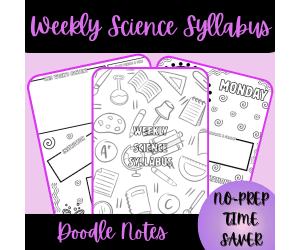
Weekly Science Syllabus Doodle Notes
ELA, Writing, Graphic Arts, Creative Arts, Science, High School, Homeschool Resources, Middle School, Worksheets & Printables, Writing Prompts, Teacher Tools, Graphic Organizers, Templates, Outlines
Are you ready to breathe new life into your science lessons? T hese Weekly Science Syllabus Doodle Notes were born out of my own frustration as a homeschool mom trying to juggle curriculum planning while keeping my kids actually interested in science. Trust me, I have spent countless late nights staring at bland planning sheets thinking, "There has to be a better way!" After one too many uninspiring science lessons, I created these templates that have completely transformed how we approach science in our homeschool. These are not just another pretty printable—they are the answer to that moment when you realize your kiddo has retained exactly zero information from last week's lesson on photosynthesis! I have designed them to be your visual playground, where mapping out experiments and research activities becomes something you and your students/homeschoolers actually look forward to. My own teenage daughter went from groaning about science to pointing at their doodle notes saying, "Remember when we did that cool experiment?" The secret sauce? These notes engage both the logical and creative sides of your brain, which means those scientific concepts finally stick—no more blank stares when you ask, "Remember what we learned last Tuesday?" These have been a game-changer in our homeschool, and I can't wait for them to transform yours too! INCLUDED IN THIS RESOURCE: ✔Comprehensive weekly science planning template with visually engaging design ✔Designated spaces for scientific learning objectives, content focus, and instructor information ✔Daily sections for documenting science classwork, lab activities, quizzes, and attendance ✔Specialized reading assignment sections for scientific texts and research articles ✔Homework planning areas with website research recommendations and writing prompts ✔Visual note-taking spaces that connect scientific concepts with creative representation ✔Structured organization that accommodates the unique needs of science instruction Sunday nights used to be my nightmare—frantically scrambling to plan science lessons while dreading the glazed-over looks I would get from my teenager the next day. Sound familiar? Those days are OVER! With these Weekly Science Syllabus Doodle Notes , I have actually caught myself looking forward to planning time (weird, right?). Let me tell you, juggling high school science with a creative teen who'd rather be doing anything else pushed me to my breaking point. My kitchen table was buried under boring worksheets that neither of us was excited about. That is when I decided to create these templates—not because I am some super-organized homeschool mom (ha!), but because I desperately needed something that would work for both my planning sanity AND my visually-oriented teenager. The magic happens when organization meets creativity! Now my daughter can actually see what is coming each week, and those complex scientific concepts finally stick because the visual elements speak her language. I still cannot believe how much easier our science days flow now! Seriously, grab these today—your future bleary-eyed, lesson-planning self will high-five you when you realize science class has transformed from a battle to the highlight of your homeschool week! If you and your students/homeschoolers enjoyed this resource, please leave a review. Thank you for your support! Tina - Big Easy Homeschooling Mom Website: tidewindacademyhomeschool.com
Author Homeschool with Big Easy Homeschooling Mom
Rating
Tags Visual Aids, Visual Learning Tools, Weekly Planning Template, Science Planning, Science Syllabus, Creative Syllabus Templates For Science Students/homeschoolers, Science Curriculum Organizer, Creative Teaching Tools, Homeschool Science Organization, Homeschool Planning

Drone Data Detectives:Mastering UAVs for Environmental Mapping
Research, Community Building, Resources for Teachers, Science, Earth and Environmental Sciences, Earth Sciences, Environmental Science, Geology, Space, Life Sciences, Grade 2, 3, 4, 5, 9, 10, 11, 12, Activities, Centers, Experiments, Labs, Assessments, Teacher Tools, Graphic Organizers, Lesson Plans, Outlines, Literacy Readers
Get ready for the ultimate in drones and environmental science with "Drone Data Detectives: Mastering UAVs for Environmental Mapping & Climate Monitoring." The comprehensive high school STEM book on drones deepens the knowledge of teens into the world of Unmanned Aerial Vehicles, making them drone pilots, data analysts, and environmental stewards. This key resource covers everything needed to take raw drone data and develop actional insights in support of climate change monitoring, conservation, agriculture, and disaster response-from the basics in drone piloting and safety regulations to planning flights, and from the advanced sensors that capture aerial data, such as thermal imaging and multispectral cameras, to LiDAR. Packed full of real-world missions, ethical considerations, GIS analysis techniques, machine learning applications, and project-based learning, it is a no-brainer for aspiring scientists interested in remote sensing, photogrammetry, vegetation health metrics, and sustainable technology. This is an ideal textbook for grades 9-12 classrooms, great for homeschooling, or self-study, this book aims to fire up the theoretical teaching with practical skills in order to inspire the next generation of eco-innovators. Keywords: drone education for teens, UAV environmental mapping, climate monitoring drones, STEM books high school, data analysis environmental science, drone piloting guide, remote sensing technology, Why Parents/Schools Love It: Hands-On STEM Activities: Blends theoretical concepts with hands-on drone operations, developing critical thinking and real-world problem-solving capabilities, especially in environmental sectors such as climate change and biodiversity. Future Ready Career Preparation: It delves into areas such as conservation using drones, data science, which matches global career requirements in the field of Green Technology, sustainable development, among others. Encourages Environmental Awareness: Emphasizes responsible use of drones and awareness of global issues that encourage teens to play a role in protecting the planet with technology. Thorough and Readily Available: This text consists of 100 chapters perfectly suited for a classroom setting as it covers topics ranging from fundamental to advanced levels. Safe & Responsible Focus: It is more bent on rules, safety, and risk management, offering reassurance for educational UAV operations. Target Audience : After analyzing the content of the book in entirety—right from the introduction about basic components of drones to aerodynamics, followed by intermediate levels of topics such as sensors and data acquisition, advanced topics of machine learning and analysis of space, to practical implementations in conservation and climate observation—the book has been written for students in grades 9-12 (14-18 years of age), aiming at students expressing interest in the science of tech but gradually increasing in content across: For grade 9 and 10 students, one may focus on the fundamental chapters related to the history of drones, its parts, and the basics of piloting a drone. Grade 11/12 students: Engage with advanced topics such as multi-spectral indices, GIS integration, and photogrammetry. Designed for students who are deeply interested in environment/earth science, technology, and data sciences, and for students of STEM streams such as those in robotics and science clubs. Not designed for middle-school students due to technical complexity such as operations in the electromagnetic spectrum and calculations for NDVI, and nor for college students who would be doing research and hence would require research detail. Copyright/Terms of Use : This book is copied and adapted from Syed Hammad Rizvi. This Work/Way is intended Solely for Private Use. Neither the text nor any part of this Work/Way shall be copied, distributed, or sold. This means that no part of this Work/Way shall be placed on the Internet where it could be publicly accessed. If you want to Share it with your fellow teachers, you can buy additional licenses from Teachsimple. Thank you for Using Responsibly. “This product is happily brought to you by Syed Hammad Rizvi”
Author Creative Book Store
Rating
Tags DroneDataDetectives, MasteringUAVs, EnvironmentalMapping, ClimateMonitoring, UAVTechnology, DroneEducation, STEMBooks, HighSchoolSTEM, EnvironmentalScience, DronePiloting

Arctic Animals Coloring Pages worksheet activity printables
Animals, Life Sciences, Science, Geography, Social Studies, Creative Arts, Art, Grade 2, 3, 4, 5, Activities, Outlines, Teacher Tools, Worksheets & Printables, Coloring Pages, Worksheets
Engage your students by teaching about Arctic animals while allowing them to use their imagination while developing their motor skills by creating no-prep coloring pages featuring polar wildlife. Students can learn about the different types of Arctic animals such as polar bear, penguin, seal, whale, and they can also practice color, detail, and hand-eye coordination. The no-prep format provides an easy-to-use, enjoyable activity that allows you to combine learning with enjoyment, thus making learning memorable and fun! The Arctic Animals Coloring Pages are great for all levels of students and can be utilized in science, geography, and art centers, in addition to being utilized as homework assignments and during the time students finish early. ❄️🐾 Why Do it : The purpose of the activity is to provide students with knowledge of Arctic animals and their habitats 🐻❄️., enhance fine motor skills ✏️., create an awareness of polar regions and ecosystems 🌍., create curiosity about wildlife ❄️. Coloring provides a hands-on, creative approach to making learning fun and engaging for students of all levels. How Do You Do It : To use the Arctic Animals Coloring Pages, follow these simple steps: 1️⃣ Print the Arctic Animals Coloring Pages. 2️⃣ Introduce some key facts about the Arctic and its animals. 3️⃣ Ask the students to color the animals focusing on their details and patterns. 4️⃣ Discuss some of the interesting facts about each animal or Arctic habitat. 5️⃣ Use optional extension activities like labeling animals or habitats. ✅ Audience : K-5 Grades 🌟, individual assignment, paired assignment, student who finish early, science and geography center or substitute lesson plan 🤝. Practical use within the classroom: This type of assignment can be used for individual student practice, in classroom centers, for students to complete at home, and as a creative way for students who finish their work early to enhance their creative thinking skills. 🤲 Variations that may be fun to incorporate into your classroom: Artwork & Science Extensions 🎨: Drawing your own arctic animal habitat. Timely Coloring Competition For Students ⏳: See how many arctic animals students can colour within a certain time frame. Fact Labelling ✏️: Create a simple fact that describes each creature. Inventing Your Own Habitat 🧩: Construct a complete Arctic habitat with living creatures. How This Assignment Meets NGSS, Science/Geography Standards, and Helps Develop Hand Eye Coordination, Concentration/Focus, and Creativity within a Number of Subject Areas. File Format/Printing Information: The PDF file will have both colour and black/white pages of this lesson, which can easily be printed in a classroom setting because of the ink-saving features provided. Teacher Strategies 🌟: While helping students learn about the arctic environment and associated animal species, I would suggest that teachers provide students with an opportunity to apply their creative skills while learning about ecosystems and animal habitats within a hands on manner, which makes it a very enjoyable learning experience for all students! ❄️🐾
Author Classsimple
Rating
Tags Arctic , Animals, Coloring Pages , Worksheet, Activity, Printables , Arctic Animals, Arctic Animals Coloring Pages , Arctic Animals Coloring Pages Worksheet , Arctic Animals Coloring Pages Worksheet Activity Printables

Semester 1 Unit Outline
Science, Chemistry, Physics, Grade 6, 7, 8, 9, 10, 11, 12, Outlines, Teacher Tools
Semester 1 Unit Outline is a strategic tool for educators aiming to refine class organization and expand learning horizons. Prepared for printing, it can be handed out to students to maintain in their binders. This resource serves dual purposes: operating as an exhaustive Table of Contents and assisting students in organizing their binders efficiently, hence, promoting swift glance at notes and activity look up. The profundity of the study material is thoroughly delineated on this page aiding an overview of every unit covered. To enhance memory recall, each unit has an exclusive icon representation—the same icons are present on corresponding notes from those units. This teaching asset has a wide-ranging application from Grade 6 up until Grade 12, rendering particular advantage for subjects seated in Science disciplines such as Chemistry and Physics. Acting as activities aiming at improving understanding levels among students it takes on multiple roles. A standout aspect laying special stress on its practicality lies around file accessibility and modification—educators are presented with considerable flexibility here. .pptx files or .docx designed to undergo customization within PowerPoint or Word should you prefer that way . Needless to say you necessarily need Microsoft Word or any other compatible word processor capable enough supporting these formats. Likewise all enclosed .pptx files permit alterations matching personal preferences soon after possessing software like Microsoft PowerPoint partnered with similar presentational software advocating these type extensions If editing isn't your thing but only wish viewing—the resource doesn't disappoint! Non-editable.pdf files accessible through basic PDF viewers such as Adobe Reader form part of the package too! Mind you! Ensure checking computer's compatibility spec regarding opening /editing these given file types prior buying or downloading Semester 1 Unit Outline—it simply offers endless implementations such as homework tasks, small group assignments additionally being used during whole-class sessions promising an all-round teaching experience.
Author Integrated Chemistry and Physics
Tags Teaching Resource, Unit Outline, Class Organization, Learning Tool, Binder Organization

Semester 2 Unit Outline
Science, Chemistry, Physics, Grade 6, 7, 8, 9, 10, 11, 12, Outlines, Teacher Tools
Semester 2 Unit Outline: A Marvel for Education Navigating the vast world of education can be a challenge for both educators and students. With this in mind, we present the Semester 2 Unit Outline to make this journey smoother. Originally schemed for Science subjects like Chemistry and Physics, it's suitable for grades 6 through 12. The Tool: This isn't just an outline; consider it as an excellent aid to systematize your lessons by providing a catalog of each topic planned throughout the semester. Students also benefit by being able to order their notes accordingly. Visual Aid: To enhance your experience, we have incorporated an exclusive system that uses distinct icons for each unit. These symbols appear uniformly on every note sheet relevant to that unit, facilitating swift location of materials. Versatile File Types: We understand the need for flexibility in teaching styles and curriculum demands. Hence, accessible versions include .docx files (for Word processors) or .pptx files (for presentation software). Non-editable .pdfs are available too – perfect even if you're not tech-savvy. In Summary... The Semester 2 Unit Outline is more than just a course guide - it's your reliable partner in delivering lessons, engaging with smaller study groups or allocating individual homework assignments effectively. By simplifying subject planning, promoting student organization and integrating visual cues into materials organization – learning outcomes are bound reach new heights!
Author Integrated Chemistry and Physics
Tags Semester 2, Unit Outline, Science, Chemistry, Physics