



2,380 products added recently
Social Emotional Learning Worksheets
Use SEL worksheets to help students navigate emotions, build resilience, and improve social interactions. Activities include scenarios, reflection prompts, and cooperative tasks. Incorporate them to strengthen community and foster a respectful learning environment.

 Show filters


AI Image Creation Ethics & Creative Prompt Engineering Pack Worksheets
Research, Resources for Teachers, Classroom Management, Community Building, Science, Technology, Computer Science, Engineering, Special Resources, Social Emotional Learning (SEL), Homeschool Curriculum, Homeschool Templates, Grade 4, 5, 6, 7, 8, Worksheets & Printables, Worksheets, Workbooks, Word Searches, Writing Prompts, Teacher Tools, Graphic Organizers, Lesson Plans, Diagrams, Quizzes and Tests
Prepare your students for a creative and ethical future with a comprehensive (34-page) digital workbook designed specifically for grade level students that covers everything students need to know when creating and using Images created by Machines (AI). That means learning how to use AI ethically. This Creative Prompt Engineering Pack provides elementary teachers, homeschool parents, and digital literacy coaches with everything they need to teach students how to create image-based prompts through the use of the Four Pillars of Prompt Construction (Subject, Environment, Lighting and Aesthetic) while also covering such topics as (but not limited to) Intellectual Property Rights; Digital Consent; Misinformation; Combating Bias; and Full Disclosure. Components Included: *) 4 chapters of hands-on student worksheets (fill-in-the-blank; scenario analysis; prompt rewriting; ethical debates) *) Visual anchors and flowcharts *) 1 Lifecycle diagrams *) 1 complete answer key for educators with complete implementation guide *) No prep, print-and-go/digital Google Classroom compatible Ideal for STEM, Arts, ELA, Digital Citizenship and AI Literacy curricula. Support your students develop into ethical and creative "prompt engineers" who respect artists and tell the truth when creating images generated by AI. Keywords that are integrated naturally into this Creative Prompt Engineering Pack Include AI Prompt Engineering for Kids; AI Ethics Curriculum Grade 93; Text-to-Image AI Workbook; Responsible Digital Art Maker; Digital Literacy PDF; Creative Prompt Engineering Pack. Parents and Schools Appreciate This Product: Provides Students with TRUE 21st Century Skills - Demonstrated through students’ ability to write quality prompts, demonstrate ethical decision making, be good digital citizens and use critical thinking; exactly what was requested in new educational standards. No Preparation Required - Easy to use for the teacher. Includes full answer keys, visual aides, Madlib sheets; everything you need to have no preparation time. This is a time saver! (Additionally, Families can use them to home school.) Promotes Creativity and Responsibility - Ongoing excitement generated by kids learning to create art through AI while at the same time understanding why it is inappropriate to steal the style of an artist, spread false information and/or conceal their use of AI. Ideal for Diverse Learning Needs (Although all materials created/based on target grade level - Fourth Grade) - Case studies, fill in the blanks and pictures make it attainable to all grades 4 & 5 regardless of ability (includes exceptional education students). Future-Proofing Students with Digital Literacy - Equips students with at least an understanding of how to appropriately use technology (Artificial Intelligence), enabling parents and schools to feel good about the ethical use of technology by their children. The target audience : of the material is 4th and 5th graders (ages 9 - 11 years old). The teacher's guide on page 25 clearly indicates this is intended for "students in the 4th/5th grade" and uses "Grade 4-5 Student Pack" as reference. The vocabulary and activities, as well as case studies and visuals, are ideally suited for upper elementary and/or early middle school students. This resource could also be used with success in a homeschool setting, advanced gifted 3rd graders, and as a beginning unit in 6th grade technology/digital literacy/arts classes. Copyright and Usage Terms: This publication is owned by Syed Hammad Rizvi and is intended only for personal and classroom use. You may not sell, alter, or redistribute this publication in any way. In other words, you cannot place it on the World Wide Web for anyone to find and download. If you wish to share this publication with other teachers, please purchase another license from Teachsimple. Thank you for respecting the use of this publication. This publication was created with much joy by Syed Hammad Rizvi
Author Creative Book Store
Rating
Tags AIPromptEngineering, AIForKids, AIEthics, PromptEngineering, AIImageCreation, DigitalLiteracy, AIArtForKids, TextToImage, ResponsibleAI, EthicalAI

Health 2nd Grade Unit 1: Personal Health
P.E. & Health, Health, Physical Education, Common Core, Special Resources, Life Skills, Social Emotional Learning (SEL), Social Skills, Grade 2, Lesson Plans, Teacher Tools, Worksheets & Printables, Worksheets
For 2nd Grade Health there are seven standards that need to be taught. Unit 1 Personal Health Unit 2 Growth and Development Unit 3 Nutrition and Physical Activity Unit 4 Substance Use and Abuse Unit 5 Injury/ Violence Prevention Control and Safety Unit 6 Prevention/Control of Disease Unit 7 Environmental Consumer Health These units can be taught out of order. They are only numbered for your convenience. At the end of each unit, there is an assessment to test students’ understanding. Through using this Health 2nd Grade Unit 1: Personal Health students will explore and learn to identify daily healthy habits by knowing what foods are best to eat and how to set goals for physical activity. Habits included are: * Students will learn about healthy and unhealthy activities. These activities will include what is the difference between physical activities and sedimentary activities. * Students will learn how to make healthy choices that will benefit their nutritional goals. * They will learn about goals. Along with knowing the difference between long-term and short-term goals. And how to set both. * Students will come to understand their emotions and how to they can express those emotions as they learn to deal with their feelings. * Lastly, students will learn when and who they can rely on and who to talk to an adult about how they are feeling and how to get help when needed. At the end of the unit, there is an assessment to check for understanding. A total of 11 pages for this 2nd Grade Health Unit 1 on Personal Health There are seven units that cover all the health requirements for second grade. Here are the links to other health units: Health 2nd Grade Unit 1: Personal Health Health 2nd Grade Unit 2: Growth and Development Health 1st Grade Unit 3: Nutrition and Physical Activity Health 2nd Grade Unit 4: Substance Use and Abuse Health 2nd Grade Unit 5: Injury / Violence Prevention and Safety Health 2nd Grade Unit 6: Prevention / Control of Disease Health 2nd Grade Unit 7: Environmental / Consumer Health 2nd grade Coronavirus / Covid-19 Facts This unit meets Common Core Standards.
Author K-5 Treasures
Tags Health Unit, Personal Health, Healthy Goals, Unhealthy Choices, Health Activities, Physical Goals, Health Goals, Health And Wellness, 2nd Grade Health, Second Grade Health

AI Tools for Research – Fact-Checking & Bias Detection Worksheets
Science, Technology, Computer Science, Engineering, Special Resources, Social Emotional Learning (SEL), Social Skills, Life Skills, STEM, Research, Grade 6, 7, 8, 9, 10, 11, 12, Worksheets & Printables, Workbooks, Worksheets, Word Searches, Writing Prompts, Teacher Tools, Lesson Plans, Assessments, Diagrams, Presentations
This 41-page PDF is a fully prepared to print middle school Digital Literacy Curriculum called "Advanced Digital Tools for Research: Fact-Checking and Detecting Bias Worksheets" designed for students in grades 6-8 to be able to use the V.E.R.I.F.Y. Framework (Validate, Extract, Read Lateral, Interrogate Bias, Find Primary Evidence, Yield Conclusion) to critically evaluate content generated by AI, identify hallucinatory or fabricated information, detect algorithmic bias, and utilize lateral reading skills. This resource is ideal for the AI era and includes: - Four theoretical chapters with practical real-world examples (e.g., Titanic, Great Wall of China, Space Race, Paleo-Diet). - Ten hands-on student worksheets (e.g., Anatomy of a Digital Claim, Spotting Plausible Falsities, Lateral Reading Protocol, Unmasking Structural Bias, The Phantom Citation Mystery, Chronological Confusion, etc.). - Three full-color visual frameworks/diagrams (Fact-Checking Workflow, Algorithmic Bias Triad, Source Credibility Spectrum). - A complete answer key with rubrics and high proficiency examples. - A complete Teacher Implementation Guide including pacing (4-6 class periods), differentiation for ELLs/developing readers and gifted students, formative assessment examples, and examples of exit tickets. - A ready-to-teach PDF requiring no preparation that increases research skills, media literacy, and critical thinking through an alignment to both the CCSS, ISTE, and Digital Citizenship Standards, making it appropriate for use in English Language Arts, Social Studies, Science, and Technology classes. Why Schools/Parents Find It To Be Effective: Develops Real World Skills that Kids Need to Survive in an AI World. Kids will learn how to identify when they are being deceived by hallucinations, bias, and fake citations before they copy and paste into their papers or projects. No Preparation or Planning Time Required - Teachers get full theory, worksheets, visuals, answers and pacing guide when using this product. Parents appreciate the independent critical thinking experience provided to their children. Fun Way to Increase Student Engagement - Kids enjoy using the detective-style worksheets (Tree Octopus Hoax, Phantom Biologist, Brooklyn Bridge Hoax, etc.) to develop critical thinking skills through the use of skepticism as a game. Differentiated, Inclusive, and Fully Accessible - Students are able to access the materials because of the built in supports provided for ELL/Developing Readers, and extension challenges for Gifted Students. Ensures Academic Integrity Now and in the Future - Aligns well with the local school districts expanding policies regarding the appropriate use of AI, as well as standards for digital citizenship. Intended Audience of Book (As per complete PDF analysis): This resource is specifically created for students in Grades 6 to 8 (Middle School). There are examples throughout the resource, as can be seen in the seven (7) and eight (8) examples referenced. Answer keys and teacher guides both have "Grade 6 to 8 Student Workbook" clearly labeled on them. Best Fit: ELA, Social Studies/History, Research projects in Science, Digital Literacy/Media Literacy, or Technology courses Excellent for Homeschoolers, Gifted Programs, or Educators Teaching AI Ethics and Responsible Research. Copyright & Terms of Use This Book is copyrighted by Syed Hammad Rizvi. This resource is solely for personal and individual classroom use. You may not modify, redistribute or sell any part of this resource (including putting it online for others to back or download). In order to share this resource with your coworkers please buy more licenses from Teachsimple. Thank you for following these terms of use. -------------------------------------------------------------------* This product was created by Syed Hammad Rizvi to be enjoyed!
Author Creative Book Store
Rating
Tags AIFactChecking, BiasDetection, DigitalLiteracy, MiddleSchoolWorksheets, AIFactCheck, VERIFyFramework, CriticalThinking, MediaLiteracy, AIforTeachers, DigitalLiteracyWorksheets

Who Has It? – Chemical Elements Game (1–118) – 3 Levels of Differentia
STEM, Science, Chemistry, Physics, Life Sciences, Earth and Environmental Sciences, Basic Science, Special Resources, Social Emotional Learning (SEL), Special Education Needs (SEN), Homeschool Templates, Grade 6, 7, 8, 9, 10, 11, Activities, Games, Worksheets & Printables, Task Cards, Quizzes and Tests, Teacher Tools, Quizzes, Worksheets, Projects, Flashcards
Who Has It? – Chemical Elements Game (1–118) – 3 Levels of Differentiation A cooperative chemistry card game for grades 7–10 to review atomic numbers, element names, and symbols 🧪🎯 This resource is a classroom game that helps students become more confident with the chemical elements – from hydrogen to oganesson. The game follows the well-known “I have… who has?” format and is designed to reinforce students’ understanding of element names, symbols, and atomic numbers in a playful and interactive way. To support different learning levels, the material includes three differentiated versions of the full game, each with 118 element cards: With element names for both question and answer (beginner level) Only the “I have…” part includes the name , the question uses the symbol/number (intermediate level) Without element names – players must match based on symbol and atomic number alone (advanced level) Each version builds on the last and can be used flexibly depending on students' prior knowledge. The game works best with medium to large groups and encourages students to listen carefully, stay engaged, and support one another. What’s included: 3 full card sets (118 cards per set = 354 total) Differentiated by content and level of language support Clear instructions for printing, laminating, and use Ideal for individual, pair, or group work How I use it in class: I’ve played this game both at the end of a chemistry unit and as a fun opener when starting the periodic table. It’s also perfect for substitute lessons or for classes with mixed ability levels. Since each student needs to be ready when their card comes up, it fosters attention and collaboration. This is one of those games where learning happens almost by accident – students are so focused on playing that they internalize atomic numbers and symbols without even noticing. A simple, engaging way to bring structure, repetition, and movement into chemistry class – no extra prep needed. If you're looking for an easy way to help students become more confident with the periodic table, this might be worth trying in your classroom. Best, Heike from Lernfitness Did You Know? I teach with a certified therapy dog, and together we create a positive and welcoming learning environment. 🐶
Author Lernfitness
Rating
Tags Game, Educational Card Games, Chemistry, Physics, STEM Science Matching Game, Chemical Elements, Periodic Table Matching Game, Who Has It, STEM, Who Has It?

Prompt Engineering Game Kits: Seasonal & Holiday Challenge for Future
Life Studies, Business, Technology, Science, Computer Science, STEM, Special Resources, Life Skills, Social Emotional Learning (SEL), Social Skills, Homeschool Curriculum, Homeschool Templates, Grade 9, 10, 11, 12, Worksheets & Printables, Parts of and Anatomy of, Workbooks, Worksheets, Word Searches, Writing Prompts, Teacher Tools, Assessments, Lesson Plans, Presentations
Take your classroom to the next level with the most powerful AI tool for education: "AI Prompt Engineering Game Kits: Seasonal & Holiday Challenges for Future-Ready Classrooms!" – a 43-page printable PDF toolkit with an interactive digital companion to bring generative AI to Grades 6-12 classrooms. This professionally developed digital tool makes prompt engineering accessible to all, transforming it from an esoteric idea into an artistic skill for budding students. From basic principles involving role assignment, task definition, context delivery, constraints, to output format, to more expert strategies involving chain-of-thought prompts, few-shot prompts, deconstructing complex prompts, to constraint prompts, this tool is an unrivaled aid for educators. Organized in three levels: Phase 1: Core Content & Theory (encompassing topics of foundation, advanced procedures, ethics in AI, bias reduction, challenge development); Phase 2: Student Workbook (consisting of gamified tasks); and Phase 3: Visuals & Teacher Resources (incorporating keys, implementation handouts, graphics), this resource set equips teachers with strategies for encouraging AI teamwork through interactive challenges related to seasons/holidays. Some of these challenges encompass: creating biographies for Thanksgiving, making scavenger hunt riddles for Halloween, conceptualizing a Winter Solstice poetic sequence or an Enchanted Ice Garden Festival, celebrating the Lunar New Year. Why Parents/Schools Love It: Future-Proof Skills Development: Provides the skills that students need to have as AI system designers and as responsible digital citizens, helping them succeed in an AI-enhanced future. Engaging Learning: Thematic challenges based on seasonal activities like Halloween puzzles and Thanksgiving tales make abstract concepts like AI fun and applicative for students. Ethical Emphasis and Safety: Weaves together information on bias in AI systems,accuracy,privacy,and responsible integration to assist in creating an excellent moral foundation for appropriate technology use in a safe and suitable environment for Easy Implementation and Differentiation: Also includes teacher keys, visuals, and frameworks, making easy integration possible without prep, and providing support for all levels of learners. Established Pedagogic Effectiveness: Founded upon the tenets of constructivism, project learning, and design, it moves the evaluation point from outcome to process and teamwork. Target Classes/Students : The resource explicitly targets students in Grades 6 through 12, based on a complete analysis of the PDF, its theoretical underpinnings, methodological framework, chapter breakdowns, student workbook challenges, teacher resources, and implementation guide. It also differentiates by age group to optimize engagement: Grades 6-8: Outlines structured, foundational challenges to build basic understanding of prompt engineering, with simpler tasks such as brainstorming themes or generating short narratives, emphasizing engagement through familiar holiday contexts and guided iteration. Grades 9-12: High School Students - Assigns more open-ended and complex problems to higher-order techniques, including ethical dilemmas, bias analysis, and sophisticated outputs, such as multi-stage event planning or nuanced creative writing, in order to afford the opportunity for deepened critical thinking and real-world application. This targeting allows for appropriate rigor at each age group, where younger students receive concrete and gamified activities, while older students take the work into the realms of ethical and interdisciplinary extensions. Copyright/Terms of Use : This Book is copyrighted by Syed Hammad Rizvi. This material is for a single classroom use only. It may not be copied or altered in any way. In other words, it may not be placed on the Internet where it will be generally accessible for download. If you are interested in sharing the resource with other colleagues, you can purchase additional licenses through TpT. Thank you for honoring the terms of use. "This product is happily brought to you by Syed Hammad Rizvi"
Author Creative Book Store
Rating
Tags AIPromptEngineering, AIinEducation, PromptEngineeringGuide, EducationalAI, ClassroomAIActivities, FutureReadyClassrooms, SeasonalAIChallenges, HolidayAIProjects, EthicalAI, DigitalCitizenship

Health | 3rd Grade Unit 2: Growth and Development
P.E. & Health, Life Studies, Physical Education, Health, Special Resources, Life Skills, Social Emotional Learning (SEL), Social Skills, Grade 3, Teacher Tools, Lesson Plans, Worksheets & Printables, Worksheets
This 3rd Grade Health Unit focuses on Growth and Development and is essential to help students with their health and wellness. There are seven units in all taught in 3rd grade that focus on health. These units include: Unit 1 that focuses on Personal Health and Wellness Unit 2 that focuses on Growth and Development Unit 3 teaches students about Nutrition and Physical Activity and how to eat right and stay active Unit 4 that helps students with Substance Use and Abuse and how to avoid bad substances Unit 5 that will teach students about Injury/ Violence Prevention Control and Safety Unit 6 that covers what happened during Covid and how to protect themselves while learning about Prevention/Control of Disease Unit 7 discusses our environment and how to help save our planet with Environmental Consumer Health These units all about health can be taught out of order. They are only numbered for your convenience. At the end of each unit, there is an assessment to test students’ understanding. Through using this Health 3rd Grade Unit 2: Growth and Development, students will be able to study and learn about body organs, our body systems, and their emotional and physical features. Included in this 3rd Grade Health Unit are the following: In this unit, students will learn about several different organs in the body including: brain, lungs, heart, liver, kidneys, and the small and large intestines. They will find a worksheet with a blank body and label all these parts after reading about these vital organs. Students will also learn about the many different body systems we have which include: skeletal and nervous systems, circulatory system, digestive system, respiratory system, muscular system, and learn about our skin and hair. They will assemble in order how these systems look in a body as they compile a book. They will also label each system after looking a drawings. They will explore the emotional and physical features of people when they are sad, surprised, happy, etc. Lastly, they will compare their physical features to other classmates and come to understand how our genes are all different. This unit meets Common Core Standards. It is 13 pages of fun engaging activities! At the end of the unit, there is an assessment to check for understanding. There are seven units that cover all the health requirements for 3rd grade. Here are the links to other health units:
Author K-5 Treasures
Rating
Tags Health Unit, Personal Health, Healthy Goals, Unhealthy Choices, Health Activities, Physical Goals, Health Goals, Health And Wellness, 3rd Grade Health, Third Grade Health

Health 2nd Grade Unit 7: Environmental / Consumer Health
P.E. & Health, Health, Physical Education, Common Core, Special Resources, Life Skills, Social Emotional Learning (SEL), Social Skills, Grade 2, Lesson Plans, Teacher Tools, Worksheets & Printables, Worksheets
For 2nd Grade Health there are seven standards that need to be taught. Unit 1 Personal Health Unit 2 Growth and Development Unit 3 Nutrition and Physical Activity Unit 4 Substance Use and Abuse Unit 5 Injury/ Violence Prevention Control and Safety Unit 6 Prevention/Control of Disease Unit 7 Environmental Consumer Health These units can be taught out of order. They are only numbered for your convenience. At the end of each unit, there is an assessment to test students’ understanding. Through using this Health 2nd Grade Unit 7: Environmental / Consumer Health students will explore and learn: * How our environment is important to our health * Understanding pollution and the different types of pollution. * A focus on keeping our oceans clean and protecting sea life. * Environmental resources. * How to reduce, reuse, and recycle. * Project ideas on how to recycle some materials. * The importance of farmers markets and it is important to a community. With so many activities, students will learn all about their environment and how to protect it better with these worksheets. This unit meets Common Core Standards. At the end of the unit, there is an assessment to check for understanding. Answers to the assessment questions are provided. A total of 12 pages for 2nd Grade Health on Environmental and Consumer Health. There are seven units that cover all the health requirements for second grade. Here are the links to other health units: Health 2nd Grade Unit 1: Personal Health Health 2nd Grade Unit 2: Growth and Development Health 1st Grade Unit 3: Nutrition and Physical Activity Health 2nd Grade Unit 4: Substance Use and Abuse Health 2nd Grade Unit 5: Injury / Violence Prevention and Safety Health 2nd Grade Unit 6: Prevention / Control of Disease Health 2nd Grade Unit 7: Environmental / Consumer Health 2nd grade Coronavirus / Covid-19 Facts
Author K-5 Treasures
Tags Health Unit, Environment, Consumer Health, Reduce Reuse Recycle, Second Grade Health, 2nd Grade Health, Healthy Habits, Reducing Pollution, Health Activities, Health Resources For 2nd Grade

Kindergarten Health: Unit 5
P.E. & Health, Life Studies, Physical Education, Health, Special Resources, Life Skills, Social Emotional Learning (SEL), Social Skills, Kindergarten, Lesson Plans, Teacher Tools, Worksheets & Printables, Worksheets
For Kindergarten Health there are seven standards that need to be taught to achieve healthy habits! Unit 1 Personal Health Unit 2 Growth and Development Unit 3 Nutrition and Physical Activity Unit 4 Substance Use and Abuse Unit 5 Injury/ Violence Prevention Control and Safety Unit 6 Prevention/Control of Disease Unit 7 Environmental Consumer Health These units can be taught out of order. They are only numbered for your convenience. Through using this Kindergarten Health: Unit 5, students will explore and learn to identify daily healthy habits. Included in this unit : Students will learn what to do if they are lost by learning their phone numbers of a parent or guardian. Students will also learn their address and full name, and guardian's names if lost. Students will complete a cut and paste activity for when to call 911 and when not to call 911. Students will learn about bike safety and the signals used when riding a bike. Playground safety is also taught in this unit . Learning about stranger danger is outlined in this unit with a cut and paste activity . Lastly, students will learn about bullying and what it means to be bullied and what to do. This excellent product comprises 11 pages chock-full of useful resources aimed at fostering critical life skills for the well-being of young learners. Embrace Kindergarten Health: Unit 5 in your classroom today! There are seven units that cover all the health requirements for Kindergarten. Here are the links to other health units: Kindergarten Health: Unit 1 Personal Health Kindergarten Health: Unit 2 Growth and Development Kindergarten Health: Unit 3 Nutrition and Physical Activity Kindergarten Health: Unit 4 Substance Use and Abuse Kindergarten Health: Unit 5 Injury / Violence Prevention Control and Safety Kindergarten Health: Unit 6 Prevention / Control of Disease Kindergarten Health: Unit 7 Enviromental Consumer Health You can also teach your students about keeping yourself safe by studying about the Coronavirus, where and when it started and facts that plagued our world with this virus. Kindergarten Health: Covid 19 / Coronavirus Facts This unit meets Common Core Standards.
Author K-5 Treasures
Tags Health Worksheets, Health, Kindergarten Health, Personal Health, Kids Health, Worksheets On Health, Elementary Health, Healthy Foods, Healthy Habits, Health Units

Health 1st Grade Unit 3: Nutrition and Physical Activity
P.E. & Health, Health, Physical Education, Special Resources, Life Skills, Social Emotional Learning (SEL), Social Skills, Grade 1, Lesson Plans, Teacher Tools, Worksheets & Printables, Worksheets
For 1st Grade Health there are seven standards that need to be taught. Unit 1 Personal Health Unit 2 Growth and Development Unit 3 Nutrition and Physical Activity Unit 4 Substance Use and Abuse Unit 5 Injury/ Violence Prevention Control and Safety Unit 6 Prevention/Control of Disease Unit 7 Environmental Consumer Health These units can be taught out of order. They are only numbered for your convenience. At the end of each unit, there is an assessment to test students’ understanding. Through using this Health 1st Grade Unit 3: Nutrition and Physical Activity students will explore and learn to identify: * Students will be able to categorize healthy foods. * Students will be able to identify healthy foods and physical activities to help them stay healthy. * Students will be able to identify active verses inactive and understand the consequences of being active vs inactive At the end of the unit, there is an assessment to check for understanding. A total of 11 pages for Health 1st Grade Unit 3: Nutrition and Physical Activity. There are seven units that cover all the health requirements for first grade. Here are the links to other health units: Health 1st Grade Unit 1: Personal Health Health 1st Grade Unit 2: Growth and Development Health 1st Grade Unit 3: Nutrition and Physical Activity Health 1st Grade Unit 4: Substance Use and Abuse Health 1st Grade Unit 5: Injury / Violence Prevention and Safety Health 1st Grade Unit 6: Prevention / Control of Disease Health 1st Grade Unit 7: Environmental / Consumer Health You can also teach your students about keeping yourself safe by studying about the Coronavirus, where and when it started and facts that plagued our world with this virus. 1st grade Coronavirus / Covid-19 Facts by Teach Simple This unit meets Common Core Standards.
Author K-5 Treasures
Tags Health Unit, Nutrition, Physical Activity, Healthy Foods, Active Vs. Inactive, 1st Grade Health, First Grade Health, Personal Health, Physical Activities, 1st Grade Resources

Dog-Themed Scattergories – A Fun & Educational Game About Dogs! 🐶🎲
Social Emotional Learning (SEL), Special Resources, Social Skills, Life Skills, Animals, Life Sciences, Science, Common Core, Biology, STEM, Grade 5, 6, 7, 8, 9, 10, Projects, Activities, Drawing Templates & Outlines, Worksheets & Printables, Worksheets, Task Cards, Games, Word Searches, Templates, Teacher Tools
Dog-Themed Scattergories – A Fun & Educational Game About Dogs! 🐶🎲 A Fun Way to Learn, Laugh, and Think – All About Dogs! Whether you’re teaching animal education, therapy dog awareness, or just looking for a creative classroom activity, this Dog-Themed Scattergories Game is a perfect choice! Students will think fast, get creative, and expand their vocabulary while playing this classic word game—now with a fun, dog-inspired twist. It’s a great way to spark discussions about responsible pet ownership, dog behavior, and working dogs while encouraging teamwork and critical thinking. 🐾 Why This Game is a Must-Have for Your Classroom ✔ Engaging & Fun – Students love the challenge of coming up with unique answers before time runs out! ✔ Encourages Quick Thinking – Builds vocabulary, critical thinking, and problem-solving skills. ✔ Great for Therapy Dog Programs – Perfect for discussing therapy dogs, service dogs, and how animals help people. ✔ No Prep Needed – Just print and play! Ideal for busy teachers and last-minute lesson plans. ✔ Versatile & Adaptable – Works for elementary, middle, and high school students, plus ESL learners. 📌 What’s Inside? 📜 Printable Dog-Themed Scattergories Game (PDF) ✔ Multiple game sheets with different dog-related categories ✔ Simple instructions for classroom or small-group play ✔ Ready-to-print format for easy use 💡 How to Play This Game in Class 📍 Step 1: Pick a Letter. Randomly choose a letter of the alphabet. 📍 Step 2: Set the Timer. Give students a set time (e.g., 1-2 minutes). 📍 Step 3: Brainstorm Dog-Themed Words! Students write down words that match the category AND start with the chosen letter. 📍 Step 4: Score Points. Unique answers earn points—if multiple students write the same word, they don’t get points! 📍 Step 5: Celebrate the Winner. The student with the most unique answers at the end wins! Bonus Idea: Use this game as an icebreaker, brain warm-up, or substitution lesson—it’s a fantastic way to keep students engaged! 🌟 Why Teachers Love This Game ✔ “A fantastic way to get students thinking fast while learning about dogs!” ✔ “Perfect for therapy dog discussions and a great addition to my classroom activities.” ✔ “Simple, fun, and no prep—I just printed it and played with my students.” 🐶 A Fun, Educational Game That’s All About Dogs! This Dog-Themed Scattergories Game isn’t just fun—it helps students develop language skills, think critically, and learn more about dogs in an interactive way. Whether you use it in an animal studies unit, therapy dog discussion, or as a creative brain break, your students will love it! 📥 Print it today and bring dog-themed fun into your classroom! 🐾✨ 📍 Best wishes, Heike from Lernfitness Did You Know? I teach with a certified therapy dog, and together we create a positive and inspiring learning environment. 🐶✨
Author Lernfitness
Tags Therapy Dog, Animal-assisted Learning, Inclusive Education Tools, Therapy Dog In School, Social-emotional Learning, SEL, Dog, Scattergories, Game, Substitution Lesson

Health 1st Grade Unit 7: Environmental / Consumer Health
P.E. & Health, Special Resources, Health, Physical Education, Life Skills, Social Emotional Learning (SEL), Social Skills, Grade 1, Lesson Plans, Teacher Tools, Worksheets & Printables, Worksheets
For 1st Grade Health there are seven standards that need to be taught. Unit 1 Personal Health Unit 2 Growth and Development Unit 3 Nutrition and Physical Activity Unit 4 Substance Use and Abuse Unit 5 Injury/ Violence Prevention Control and Safety Unit 6 Prevention/Control of Disease Unit 7 Environmental Consumer Health These units can be taught out of order. They are only numbered for your convenience. At the end of each unit, there is an assessment to test students’ understanding. Through using this Health 1st Grade Unit 7: Environmental / Consumer Health includes the following concepts: * Students will learn about sun damage. * Students will learn how to protect themselves from sun rays. * Students will learn about community health workers. * Students will learn about slogans and safety slogans. At the end of the unit, there is an assessment to check for understanding. With this unit, your students are sure to be engaged and learn so much about their health! A total of 13 pages for Health 1st Grade Unit 7: Environmental / Consumer Health. There are seven units that cover all the health requirements for first grade. Here are the links to other health units: Health 1st Grade Unit 1: Personal Health Health 1st Grade Unit 2: Growth and Development Health 1st Grade Unit 3: Nutrition and Physical Activity Health 1st Grade Unit 4: Substance Use and Abuse Health 1st Grade Unit 5: Injury / Violence Prevention and Safety Health 1st Grade Unit 6: Prevention / Control of Disease Health 1st Grade Unit 7: Environmental / Consumer Health You can also teach your students about keeping yourself safe by studying about the Coronavirus, where and when it started and facts that plagued our world with this virus. 1st grade Coronavirus / Covid-19 Facts by Teach Simple This unit meets Common Core Standards.
Author K-5 Treasures
Tags Health Unit, Environment, Consumer Health, 1st Grade Health, First Grade Health, Healthy Habits, Environmental Health, Community Health, Health, 1st Grade Resources

Claude Monet | Artist Biography + Activities | Elementary Art Lesson
ESL, Language Development, ELA, Biographies, Social Studies, Social Emotional Learning (SEL), Special Resources, Art, Creative Arts, Art History, Elementary, Lesson Plans, Teacher Tools, Presentations, Coloring Pages, Worksheets, Worksheets & Printables
This resource offers your students the opportunity to independently explore and summarize the life of the famous French Impressionist artist Claude Monet, thanks to this engaging discovery and learning tool. This resource is designed to guide students through the artist's biography: from his early childhood passions to his first experiments, from his encounters with other Impressionist artists (Pissarro, Renoire, Degas) to his artistic maturity. Teaching with this resource is simple! Start by showing the biography slides: through illustrations created in Monet's unmistakable style and the first-person narrative, students will approach him empathetically, seeing him first as a friend and playmate. Once the story is complete, you will find the proposed activities. "Monet's Artist" section: - Color recognition activity based on the series of paintings "The Rouen Cathedral"; - Coloring: Theory of color and color contrasts; - Redrawing and coloring a still life by Monet "The Artist's Qualities" section. In this section, students will describe the "human" qualities that made Monet famous: passion, love of nature, perseverance, and determination. "Chat with the Artist" section. In this final phase, students will have the opportunity to chat with Monet through a specially designed AI experience to stimulate interest and engagement. The resource is structured to answer questions and provide new conversation starters. The resource is available in four languages: English, French, German, and Italian.
Author TeachFizz
Rating
Tags Claude Monet, Impressionism, Artist Biography, Art History Lesson, Famous Artist, No-prep Art Lesson, Elementary Art, Artist Study, Homeschool Art

Kindergarten Health: Unit 3
P.E. & Health, Life Studies, Health, Physical Education, Special Resources, Life Skills, Social Emotional Learning (SEL), Social Skills, Kindergarten, Lesson Plans, Teacher Tools, Worksheets & Printables, Worksheets
For Kindergarten Health there are seven standards that need to be taught to achieve healthy habits! Unit 1 Personal Health Unit 2 Growth and Development Unit 3 Nutrition and Physical Activity Unit 4 Substance Use and Abuse Unit 5 Injury/ Violence Prevention Control and Safety Unit 6 Prevention/Control of Disease Unit 7 Environmental Consumer Health These units can be taught out of order. They are only numbered for your convenience. Through using this Kindergarten Health: Unit 3, students will explore and learn to identify daily healthy habits. Students will cut, paste, and sort healthy and unhealthy foods. Also included is a fun engaging story about an unhealthy cat who learns how to be healthy by eating the appropriate food and getting exercise. There are a total of 12 pages included in this unit for Kindergarten Health. Included in this unit: * Students will sort healthy foods by their color. Teachers will help students understand that fruits and vegetables are colorful and healthy for their bodies. * Students will cut and sort healthy foods verses unhealthy foods by pasting them into the correct column. * Students will read individually or as a group a story about an unhealthy cat who learns how to be healthy. At the end of the story, students will identify and draw healthy foods and a physical healthy habit that is good for their bodies. There are seven units that cover all the health requirements for Kindergarten. Here are the links to other health units: Kindergarten Health: Unit 1 Personal Health Kindergarten Health: Unit 2 Growth and Development Kindergarten Health: Unit 3 Nutrition and Physical Activity Kindergarten Health: Unit 4 Substance Use and Abuse Kindergarten Health: Unit 5 Injury / Violence Prevention Control and Safety Kindergarten Health: Unit 6 Prevention / Control of Disease Kindergarten Health: Unit 7 Enviromental Consumer Health You can also teach your students about keeping yourself safe by studying about the Coronavirus, where and when it started and facts that plagued our world with this virus. Kindergarten Health: Covid 19 / Coronavirus Facts This unit meets Common Core Standards.
Author K-5 Treasures
Tags Health, Health Units, Personal Health, Health Worksheets, Kindergarten Health, Kids Health, Elementary Health, Worksheets On Health, Healthy Habits, Healthy Foods
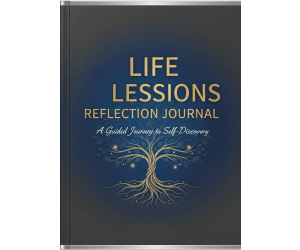
Life Lessons Reflection Journal Professional Edition
Life Studies, Business, Career, Coaching, Leadership, Special Resources, Life Skills, Social Emotional Learning (SEL), Social Skills, Special Education Needs (SEN), Grade 6, 7, 8, 9, 10, 11, 12, Worksheets & Printables, Workbooks, Worksheets, Crosswords Puzzles, Dot To Dots, Word Searches, Teacher Tools, Assessments, Lesson Plans, Charts
Introducing the Life Lessons Reflection Journal - Professional Edition: A complete 40-page digital PDF workbook/journal focused on providing adults (adaptable for high school/college-age individuals) by providing a breakdown of each module and instructional design for personal success, building emotional intelligence; and developing high-performance habits. The journal is structured around twelve (12) modules, mainly constructed by providing structured lessons, evidence-based practices (based on positive psychology and cognitive-behavioral practice), daily journaling prompts, and worksheets that will be provided. The worksheets will consist of the following: SMART Goals Wheel, Daily Gratitude Logs, 30-Day Grid for Habit Tracking, Why-Why Analysis for Destabilizing Blockages, Mood Tracker for Emotional Check-Ins, determining Key Milestones, Reflecting on Lessons Learned Through Difficulties, Core Values Alignment, Use of Mindfulness Tools (Box Breathing and 5-4-3-2-1 Grounding Techniques), Letter to Your Future Self, and an End-of-Year Review and Reflection Report. Beautiful infographics, fillable trackers and reflection exercises for journaling, gratitude, resilience, mindfulness, and habit building are included. This digital downloadable PDF can be printed or used on a tablet and reused from year to year. This is a comprehensive adult reflection journal. Included are journals, goal planners, gratitude logs, habit trackers, and mindfulness workbooks combined into one powerful book that can change your life. Reasons Why Parents/Schools Appreciate These Products: They provide evidence based SEL skills (emotional regulation, resilience, and growth mindset), which increase student academic success while decreasing student stress. They include pre-made lesson plans with corresponding worksheets, which can help educators save hours of preparation time when teaching advisory, psychology, or life skills courses/subjects. They encourage the practice of daily gratitude and mindfulness along with the tracking of positive daily behaviors. These components support improved attention, mental health and classroom behavior. The use of radar charts, habit grids and future self exercises will provide students with visual representations of success and will help students to remain accountable throughout the entire school year. Affordability and reusability in the digital PDF format make this product suitable for print or use in digital devices, and/or for use by an entire class at one time. Target Class and Students: While this course is labeled as "for: Adults looking to better themselves," it has many references to "academic progression," SMART goals for education/skills, life skills, social emotional learning (SEL) components and classroom-ready "Lesson Plan & Unit Plans." Here are just a few examples of where this material is ideally suited: High School (Grades 9-12): Character Education, Life Skills, Psychology, Advisory/Homeroom, Social/Emotional Learning and/or College & Career Readiness classes College/University: Freshman/First Year Success/Orientation Course, Personal Development Class or Career Readiness Course, and Introductory Psychology ELECTIVE Course Adult Education/Community College: Continuing Education, Workforce Readiness or Personal/Family Growth/GED program Homeschool Or Online Learning: Teen/Adult Self-Improvement, Parenting, Goal Setting Units Both teachers and parents find this unit a great way to effectively teach their students! Copyright and Terms of Use: Syed Hammad Rizvi holds the copyright to this book. This resource may only be used for personal use and for single classroom use. You are not authorized to change, share, or sell any part of this product. In other words, you cannot post this product on the internet so that it can be downloaded by anyone else. If you would like to use this resource with other teachers, please acquire additional licenses through Teachsimple. Thank you for complying with these terms of use. This product is proudly provided by Syed Hammad Rizvi
Author Creative Book Store
Rating
Tags SelfImprovement, PersonalGrowth, PersonalDevelopment, SelfGrowth, GrowthMindset, Journaling, GratitudeJournal, HabitTracker, Mindfulness, ReflectionJournal

Money Math Life Skills Worksheet: Grocery Shopping Level 1
Special Resources, Life Studies, Creative Arts, Art, Social Emotional Learning (SEL), Special Education Needs (SEN), Life Skills, Finance, Math, Money, Grade 7, 8, 9, Worksheets & Printables, Worksheets
Level 1 Grocery Shopping Money Math Level 1 Grocery Shopping Money Math is a helpful tool in Special Education that assists middle school students in learning how to figure out the prices of groceries, like fruits, vegetables, meat, dairy, dry goods, canned foods, sweets, personal care items, and household products. This Money Math Life Skills Worksheet helps students practice the following: - Figuring out the total cost when buying multiples of the same product (Improves multiplication skills). - Finding the total cost for various items with different prices (Strengthens addition skills). - Calculating the cost of fruits and vegetables based on their weight (Enhances both multiplication and addition skills). This Money Math Life Skills Worksheet includes a total of 64 questions to work on! Middle school students can use this worksheet to develop the necessary life skills to become more independent at school, at home and community. You can use this activity in special education classes or one-on-one settings like speech therapy, occupational therapy, ABA therapy, or Registered Behavior Technician (RBT) sessions. This is an excellent resource for defining, setting, and measuring IEP goals for middle school students working on independent living. Interactive, hands-on, and community instruction are excellent uses for this life skills activity. All correct answers are provided at the end of each section. This activity contains step-by-step instructions, questions, and answers that reinforce learning, age-appropriate graphics, real-world examples, and ideas for implementation. This is the perfect special education activity for grade 7, grade 8, grade 9, and autism life skill centers . It's a printable, easy-to-use activity ready to hand out! Engage your special education class with this highly interactive Middle School Money Math Life Skills Worksheet! Related Products for Developing Practical Money Math Skills Level 1 Reading Menus Level 2 Reading Menus Level 3 Reading Menus Level 4 Reading Menus Level 1 Clothes Shopping Level 2 Clothes Shopping Level 3 Clothes Shopping Level 4 Clothes Shopping A PDF with 38 unique pages. Color and black-and-white versions of each page are available for this pdf resource.
Author Adulting Life Skills Resources
Rating
Tags Life Skills Money Math , Money Management, Independent Living Skills, IEP Goal-Oriented Skills, Autism Resource For Parent , Life Skills For Autistic Teens And Adults, Adulting On The Spectrum, Social And Emotional Learning, Life Skills For Adults, Life Skills For Teens

Fun Capybara Activity Mats & Brain Break Activities
Special Resources, Social Emotional Learning (SEL), Elementary, Worksheets & Printables, Worksheets, Coloring Pages, Mazes, Word Searches, Games, Activities
Do your students love capybaras as much as my students do? In this resource, there are 10 different activities with the theme of capybaras. There are 2 resources that are both in color and black and white for options. There are two Find The Differences, 3 different activity mats, three coloring pages, a weekly planner and an "I spy" activity mat. These are great for brain breaks, calm down centers, centers, parties, etc. This resource is good for kindergarten, first, second, third, and fourth. For more SEL resources and fun stuff for students, please check out my store here: https://teachsimple.com/contributor/jennifer-moyer-taylor You may enjoy checking out my other fun resources here: https://teachsimple.com/product/20-hidden-objects-and-find-the-differences-puzzles-and-games (20 different puzzles and games for brain breaks and calm down activities. There are puzzles and games for different seasons.) https://teachsimple.com/product/unwind-your-mind-sel-activity-mats (Unwind Your Mind activity mats for brain breaks and calming activities. These are a great "lunch bunch and group resource.) https://teachsimple.com/product/fall-and-winter-holiday-and-seasonal-word-searches (Fall and winter word searches. There is a word search for Halloween, Christmas, Labor Day, Thanksgiving (fall), Valentine's day and Back To School. These are great for early finishers, back to school, Winter and fall classroom parties, group centers, etc.) https://teachsimple.com/product/2-sel-cute-coloring-pages-and-sel-posters (2 cute coloring pages-a sloth and a camera image. Great for mindfulness coloring, calm down corners, etc.) https://teachsimple.com/product/back-to-school-personalized-sel-bookmarks (Back to school bookmarks. You can personalize these with each student's name on it-they could be greeted on the first day of school with these personalized bookmarks and then color them.) https://teachsimple.com/product/a-to-z-coping-skills-and-calming-techniques-sel-posters (2 SEL, social emotional learning posters. One is an A to Z coping skills poster. The other one is Calming Down techniques for kids. There are 12 different calming down strategies.) https://teachsimple.com/product/all-about-me-tee-back-to-school-sel-coloring-pages (All About Me Tee for the first days of school. These are also great for getting to know you activities. There is one for younger students and one for older students. This would be great for bulletin boards.)
Author Jennifer Moyer Taylor
Rating
Tags Capybara, Activity Mats, Coloring Pages, Brain Breaks, Calm Down Corners, Mindfulness, Puzzles, Word Search, Fun Stuff, Sel
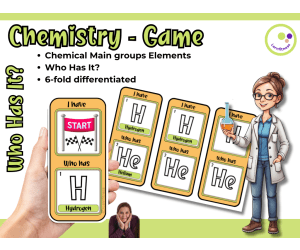
Who Has It? – Main Group Elements Game - 6 Levels of Differentiation
STEM, Science, Chemistry, Physics, Life Sciences, Earth and Environmental Sciences, Basic Science, Special Resources, Social Emotional Learning (SEL), Special Education Needs (SEN), Homeschool Templates, Grade 6, 7, 8, 9, 10, 11, Activities, Games, Worksheets & Printables, Task Cards, Quizzes and Tests, Teacher Tools, Quizzes, Worksheets, Projects, Flashcards
Who Has It? – Main Group Elements Game (6 Levels of Differentiation) A chemistry card game to review the main group elements in a structured and playful way (Grades 7–10) 🧪🎯 This classroom game is based on the “I have… who has?” format and helps students review the main group elements of the periodic table. It focuses on atomic numbers, element symbols, and – depending on the level – the correct element names. The game format encourages full-class participation, supports recall through repetition, and helps even quieter students get involved in a low-pressure way. The special feature: six levels of differentiation , so you can tailor the material to your students’ abilities. Whether you teach a mixed-level group or want to build in progression over time, these sets offer plenty of flexibility. What’s included: 3 card sets × 2 difficulty paths = 6 levels total Each set contains 52 cards (156 cards total) Elements included: all main group elements up to element 118 Levels range from fully labeled to no element names at all Clear instructions for printing, cutting, and gameplay Differentiation overview: Levels 1 & 2: All names included Levels 3 & 4: Only “I have” part includes names Levels 5 & 6: No names – only symbols and atomic numbers How to use in class: In my own lessons, I’ve used this as a review after teaching atomic structure or periodic trends. It works well as a class opener, during stations, or even in a substitute lesson. The A/B sets are helpful when students sit close together – it prevents copying but keeps everyone working on the same task. Students enjoy the rhythm of the game, and because every card depends on the one before, they naturally stay attentive. It’s a great way to combine repetition with interaction. Low-prep, flexible, and genuinely useful for learning chemical elements in a collaborative setting. Best, Heike from Lernfitness Did You Know? I teach with a certified therapy dog, and together we create a positive and welcoming learning environment. 🐶
Author Lernfitness
Rating
Tags Game, Educational Card Games, Chemistry, Physics, STEM Science Matching Game, Chemical Elements, Periodic Table Matching Game, Who Has It, STEM, Main Groups
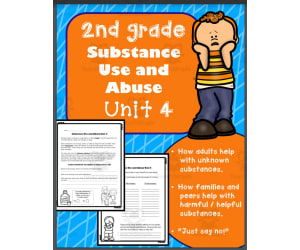
Health 2nd Grade Unit 4: Substance Use and Abuse
P.E. & Health, Health, Physical Education, Special Resources, Life Skills, Social Emotional Learning (SEL), Social Skills, Grade 2, Lesson Plans, Teacher Tools, Worksheets & Printables, Worksheets
For 2nd Grade Health there are seven standards that need to be taught. Unit 1 Personal Health Unit 2 Growth and Development Unit 3 Nutrition and Physical Activity Unit 4 Substance Use and Abuse Unit 5 Injury/ Violence Prevention Control and Safety Unit 6 Prevention/Control of Disease Unit 7 Environmental Consumer Health These units can be taught out of order. They are only numbered for your convenience. At the end of each unit, there is an assessment to test students’ understanding. Through using this Health 2nd Grade Unit 4: Substance Use and Abuse students will learn to identify how adults can help with unknown substances and understand what is a safe and what is not safe or otherwise what is known as an unsafe substance. Students will also learn the following concepts: * How adults help students to understand what is an unknown substance. * Students will learn to “Just say no” to many harmful substances that are not healthy and habit forming. * How families and peers help with harmful / helpful substances. At the end of the unit, there is an assessment to check for understanding. A total of 10 pages for this 2nd Grade Health Unit 4 on Substance Use and Abuse. There are seven units that cover all the health requirements for second grade. Here are the links to other health units: Health 2nd Grade Unit 1: Personal Health Health 2nd Grade Unit 2: Growth and Development Health 1st Grade Unit 3: Nutrition and Physical Activity Health 2nd Grade Unit 4: Substance Use and Abuse Health 2nd Grade Unit 5: Injury / Violence Prevention and Safety Health 2nd Grade Unit 6: Prevention / Control of Disease Health 2nd Grade Unit 7: Environmental / Consumer Health 2nd grade Coronavirus / Covid-19 Facts This unit meets Common Core Standards.
Author K-5 Treasures
Tags Health Unit, Substance Use, Substance Abuse, Safe And Unsafe Substances, 2nd Grade Health, Second Grade Health, Health, Elementary Health, Health Resources, Health For 2nd Grade

Guided Reading Level N - The Power of the Team (with Lesson Plan)
ELA, Resources for Teachers, Reading Comprehension, Reading, Language Development, P.E. & Health, Sports, Social Emotional Learning (SEL), Special Resources, Physical Education, Grade 2, 3, 4, Worksheets & Printables, Worksheets, Teacher Tools, Centers, Activities, Literacy Readers, Quizzes, Quizzes and Tests, Assessments
This Guided Reading Book - The Power of the Team (Level N) with lesson plan includes: Guided Reading Color Label (front cover x1) This is a quick way to match the book’s demands to what students can generally handle.. The overall goal is to use the level/color to pick books for several smaller groups. To qualify for a certain level, a student is expected to read a book from that level with about 90–94% accuracy. If a student is consistently accurate and understands, move up a level. If the student is struggling at that level, drop down and add more support. Each student will improve at completely different rates, but it is generally one of the best ways to check progress across the class. DOWNLOAD THE CATALOG TO VIEW ALL GUIDED READING BOOKS AVAILABLE (SORTED LEVELS A-Z) Pre-Reading Question (x1) Teacher asks the prompt aloud, can be while showing the cover or first page. Students share what they already know, or make educated guesses from the cover. Prompt them to use the target vocabulary. Write some of their responses on the board to look back at during the reading. Vocabulary Words (x5) Introduce the five words, best doing it one at a time. Start by saying it, while students repeat and then see if anyone knows what it means before reading further. Read through the meaning and try to briefly connect each word to a picture or gesture so it’s meaningful. Ask students to flip through the book pages and point to where they see each of the vocabulary words. While reading the book pause upon coming across one of the vocab words or read the sentence twice to make sure students understand the word has appeared. Optional: Ask students to raise hands whenever they see/hear one of the new words. Guided Reading Pages (x10) Check the book snapshot (below) for: primary topic - do you need to prep extra reading or intro materials on this? what is taught best - decide on 1-2 bullets to focus on, use the prompt or words provided here for best results. learning goals - what you are checking for students to be able to do after the session, elicit answers using prompts or words provided. key vocabulary (see section above). questions overview - so you know what is coming up and if you need to prep extra materials to assist understanding. Run the lesson You may have already looked at a few of the pages together, but you can show them some of the pictures again first to set meaning. Depending on how much time you have and how familiar your students are with guided reading class, you may want to read the book aloud first with the group first. Students whisper or partner read, while you listen in. If time, do it as a group, one student reading a page each. Use the guided page’s prompts to coach: “Check the picture / does it make sense?” “Point under the words / try the first sound” “Reread the sentence smoothly”. Try to focus more on one student per session (rotating every time), so you can work out if they are ready to move up or need to move down a level. Comprehension Questions (back cover x3) This is your way to check that students didn’t just say the words, but actually understood the text. First, let students answer by pointing to the page/picture and saying a short sentence. After any answer, follow with: “Show me where you found that in the text.” In bigger groups, have partners answer first (10–20 seconds), then call on 2–3 students to share. Differentiation tips: Emerging speakers/struggling readers: oral + pointing On-level: oral in a full sentence Higher: one written sentence or draw + label Book Snapshot Title: The Power of the Team Genre: Nonfiction (informational) Subject: SEL / Physical Education / Reading Primary Topic: Teamwork skills that help teams succeed Estimated Guided Reading Level (A–Z): N What This Book Teaches Best Teamwork and shared goals: Teamwork happens when people work together to reach a common goal and play “for the whole group.” Communication in fast-paced play: Players use loud voices or hand signals to share information so everyone knows what to do next. Trust and cooperation through passing: Passing the ball (or puck) makes it harder for the other team to take it and shows teammates trust each other. Support and encouragement: Teammates help each other after mistakes and keep spirits high when things get difficult. Planning, practice, and coordination: Teams use strategy, practice together, and coordinate timing (like passing a relay baton) to perform smoothly. Learning Goals Students will explain what teamwork is and what it helps a team reach, using details from the text. Students will describe how communication helps a team during a fast-paced game. Students will explain why passing is important and what it shows about trust on a team. Students will describe ways teammates support one another with encouragement when someone struggles or makes a mistake. Students will explain how strategy and practice help a team work “like a single machine.” Students will describe how coordination and shared defense help teams succeed. Key Vocabulary From the Text cooperation — working together to reach a goal. vital — very important. encouragement — kind support that helps someone keep trying. strategy — a plan for the best way to play. coordination — moving and working together at the right time. Discussion Prompts Pre-reading question: How can working together help a team do better in a sport? Comprehension questions: What does the text say teamwork helps a group of people reach? According to the text, what do players use to share information during a fast-paced game? What does the text say teamwork teaches people how to be in every game they play? Printing Tips 1. Best Printing Method (Recommended) “Booklet” Printing (Best if Available) If your printer or PDF viewer supports Booklet Printing , use this. Settings to use: Print mode: Booklet Paper size: Letter or A4 (either works) Orientation: Landscape Print on both sides: Yes Flip on: Short edge Scaling: Fit to printable area Booklet subset: First test: Front sides only Then: Back sides only This will automatically: Pair pages correctly Put the cover on the outside Align everything for folding After printing, fold in half and staple along the spine . 2. If “Booklet” Printing Is NOT Available You can still print this correctly with manual duplex printing . Step-by-step: Open the PDF. Choose Print . Set: Orientation: Landscape Pages per sheet: 1 Print on both sides: Yes Flip on: Short edge Print all pages . Because each PDF page already contains two facing book pages, the result will still fold cleanly into a book. Thousands of Cored Education products are included with your TeachSimple membership. Download links and encyclopedia index available here.
Author Cored Education
Rating
Tags Reading Comprehension, Reading Passages, Reading, Guided Reading, Guided Reading Lesson Plan, Guided Reading Activity, Pre-reading, Vocabulary, Sports, P.e. Lesson Plans

Sel coloring pages -5 social emotional learning Pages
Resources for Teachers, Special Resources, Social Emotional Learning (SEL), Social Skills, Special Education Needs (SEN), Life Skills, Kindergarten, Grade 1, 2, 3, 4, 5, Activities, Worksheets & Printables, Worksheets, Coloring Pages
In This SEL coloring page resource and mindfulness coloring resources, students will have 5 different coloring pages with inspirational quotes to ponder as they color these wonderful coloring pages. The quotes are; "I Feel Crabulous", "Be The Anchor In A Friend's Storm", "Friendship Is Like A Ray Of Sunshine", "Let Your Worries Drift Away", "I Think Therefore I Am". All of these quotes are geared toward helping students realize their true potential and also consider how they are talking to themselves. These are great as a brain break, quiet time activity, early finisher activity or after an SEL lesson. You may also enjoy these SEL products from my store at: https://teachsimple.com/contributor/jennifer-moyer-taylor You may also enjoy these products from my store: https://teachsimple.com/product/christmas-themed-coping-skills-sel-coloring-pages (These are 5 color by coping Christmas fun activities. Students will learn about different coping skills strategies as they color some very fun and engaging Christmas themed activities. There is a picture of a Christmas tree, reindeer, snowman, gingerbread man, santa and snowman. These activities teach students about the various coping skills available to them.) https://teachsimple.com/product/changing-negative-self-talk-into-positive-self-talk-sel-presentation (An SEL presentation about self-talk. Students will learn about the fact that we talk to ourselves every day without even knowing it! This is a very engaging lesson to talk to students about how much we self-talk and should talk to ourselves so we feel better, not worse.) https://teachsimple.com/product/put-down-sel-presentation (In this very important lesson, students learn about nonverbal and verbal put-downs. They will analyze part of a story and also part of a video to see how many put-downs are happening. Then there is a homework assignment for students to analyze the put-downs they see and hear on TV or on a Video clip.. The they will bring their findings to school to analyze their findings and how this may impact other younger students when they watch these shows.)
Author Jennifer Moyer Taylor
Tags Sel Coloring Pages, Sel Worksheets, Sel, Social Emotional Learning, Mindfulness, Mindfulness Coloring, School Counseling, Social Skills, Special Education

Executive Functioning & Neuro-Inclusive Seasonal Curriculum: The Comp
Social Emotional Learning (SEL), Special Resources, Social Skills, Special Education Needs (SEN), Speech Therapy, Life Skills, Life Studies, Career, Leadership, Grade 3, 4, 5, 6, 7, 8, Assessments, Teacher Tools, Charts, Lesson Plans, Quizzes and Tests, Quizzes, Tests, Worksheets, Worksheets & Printables, Workbooks
Unlock the potential of neurodiverse students with this complete Executive Functioning Curriculum for Grades 3-8, a neuro-inclusive seasonal resource that helps develop vital skills such as task initiation, emotional control, cognitive flexibility, and metacognition. This 43-page digital resource, optimized for educators, parents, and homeschoolers, combines neurobiology theory with worksheets, visual aids, and teacher guidance to address the learning needs of neurodiverse students with conditions such as ADHD, Autism, Dyslexia, and more. By utilizing the natural rhythms of the academic calendar, the curriculum moves from a reactive teaching style to a proactive teaching style, reducing cognitive load for the student and promoting self-regulation. This seasonal resource includes 10 fun worksheets with fillable prompts for the students, 3 vital visuals for the teacher, an answer key, and a teacher guide with differentiation ideas for different neurotypes. This SEO-optimized resource for developing executive functioning skills, designed for special education, RTI, and regular classrooms, promotes inclusive education, reduces behavioral problems, and increases the learning stamina of your students. Keywords: Executive Functioning Activities, Neurodiverse Curriculum, ADHD Resources for Teachers, Autism Classroom Tools, Dyslexia Support Materials. Why Parents/Schools Love It: Aligns with the Seasons, Avoiding Burnout: "Executive functioning skills are aligned with the natural ebbs and flows of the school calendar, making strategies more effective and avoiding common pitfalls such as winter dysregulation and spring fatigue." Neuro-Inclusive, Differentiated, and Accessible: "Designed with neurodiverse students (ADHD, Autism, Dyslexia) in mind, with the use of visuals and worksheets that can be adapted for different neuroprofiles." Practical, Ready-to-Use, and Action-Oriented: "Includes 10 student worksheets, teacher guides, answer keys, and visuals for immediate application, promoting real-world skills such as self-regulation, metacognition, and independence." Evidence-Based, with Measurable Progress: "Based on neurobiology and cognitive load theory, with an emphasis on process, not product, to promote a growth mindset and functional independence." Engaging, Empowering, and Transformational: "From compliance to comprehension, this program empowers students to 'engineer their own cognitive environments' with hands-on, engaging activities that increase self-confidence and decrease behavioral problems." Target Classes/Students : The curriculum has been designed to target students from Grade 3 to Grade 8 based on an exhaustive analysis of the entire PDF content, which includes theoretical aspects, worksheets for students, visuals, and teacher guides. It specifically targets the period of brain development where the prefrontal cortex is developing and the "literacy watershed" from learning to read to reading to learn. It specifically mentions case studies for Grade 4-6, scaffolding for Grade 3-5 and Grade 6-8, and strategies for neurodiverse students such as ADHD, Autism, and Dyslexia for middle elementary to early middle school ages. It would be appropriate for elementary and middle school classrooms, special education programs, homeschooling programs, and intervention programs for ages 8-14. Copyright/Terms of Use: This Book was copyrighted by Syed Hammad Rizvi. This is for personal use and use in one classroom. It is not for you to change, redistribute, or sell any part of this product. This means you cannot put it on the Internet for any person to find and download. If you wish to use the product with other teachers, you can purchase additional licenses through Teachsimple. Thank you for understanding these terms of use. This product is happily brought to you by Syed Hammad Rizvi
Author Creative Book Store
Rating
Tags ExecutiveFunctioningCurriculum, NeuroInclusiveEducation, SeasonalCurriculum, ADHDResources, AutismSupportTools, DyslexiaInterventions, ExecutiveFunctioningActivities, NeurodiverseLearners, Grades3to8, SpecialEducationResources
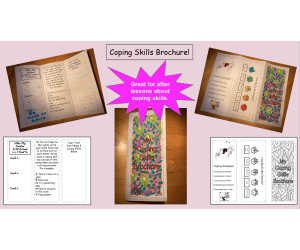
Coping Skills Brochure and SEL coloring pages
Special Resources, Social Emotional Learning (SEL), Social Skills, Special Education Needs (SEN), Grade 3, 4, 5, 6, Activities, Worksheets & Printables, Coloring Pages, Worksheets
In this resource, your students will have a take home brochure to help them think of and remember ways to calm down and cope with big feelings. There are 6 sections of this resource. There are SEL coloring pages in this resource. The first section is the cover page with has a mindfulness coloring activity that students can customize to their liking. This in and of itself is a coping skill! Next you have a place where students can use their name and use the acronym of their name to help them come up and customize how they would like to calm down when they have a big feeling. For example, if the name is Jenny, they can write; J is for make a joke or listen to a joke, E is for Exercise, N is for Try something New, the other N is for Notice objects in the room (such as all the things that are green, blue, etc.) and the Y is for do yoga poses. On of the pages is the directions and the other page (flap) is for them to write their own name and customize their strategies. One of the flaps give them the acronym of CALMS which stands for C-Calming Exercises, A-Activities that distract (reading, playing a game or sport, puzzle, word search, etc) L-Look around the room (Look for all the blue objects, Look for things you see that begin with the letter A, etc.) and then M-Mindfulness practices. These are things that really bring students into the present moment. Look for 5 things you see, 4 things you hear, 3 things you feel, 2 things you smell, 1 thing you taste, etc. The S is for Sensations. Do things that make you feel different sensations that are pleasant such as place an ice pack on your forehead, go into a hot shower or hot tub, etc. Taste something sweet or spicy. These are all the things that can help someone cope with a strong feeling.
Author Jennifer Moyer Taylor
Tags Sel, Social Emotional Learning, Coping Skills, Stress Management, School Counseling, Social Skills, Self-regulation, Calming Down, Sel Coloring Pages

Health 2nd Grade Unit 6: Prevention / Control of Disease
P.E. & Health, Health, Physical Education, Special Resources, Life Skills, Social Emotional Learning (SEL), Social Skills, Grade 2, Teacher Tools, Lesson Plans, Worksheets & Printables, Worksheets
For 2nd Grade Health there are seven standards that need to be taught. Unit 1 Personal Health Unit 2 Growth and Development Unit 3 Nutrition and Physical Activity Unit 4 Substance Use and Abuse Unit 5 Injury/ Violence Prevention Control and Safety Unit 6 Prevention/Control of Disease Unit 7 Environmental Consumer Health This Health 2nd Grade Unit 6: Prevention / Control of Disease covers topics such as: * Communicable vs non-communicable diseases with a cut, sort, and paste activity. * What to do when you are sick and how not to spread germs. * Steps to wash hands effectively. * Overall personal hygiene worksheets. * Vocabulary words related to dental care. * This 2nd Grade Health Unit even covers Covid 19 and how it started and its effects on the body and how to prevent the spread of this disease. With this 2nd grade health unit, students will be able to understand how to better prevent the spread of diseases. It is a great way to help them learn how to stay healthy and well at home, at school, and in public places. At the end of the unit, there is an assessment to check for understanding. A total of 31 pages for 2nd Grade Health on Prevention and Control of Disease. There are seven units that cover all the health requirements for second grade. Here are the links to other health units: Health 2nd Grade Unit 1: Personal Health Health 2nd Grade Unit 2: Growth and Development Health 1st Grade Unit 3: Nutrition and Physical Activity Health 2nd Grade Unit 4: Substance Use and Abuse Health 2nd Grade Unit 5: Injury / Violence Prevention and Safety Health 2nd Grade Unit 6: Prevention / Control of Disease Health 2nd Grade Unit 7: Environmental / Consumer Health 2nd grade Coronavirus / Covid-19 Facts This unit meets Common Core Standards.
Author K-5 Treasures
Tags Health Unit, Prevention, Control Of Disease, Germs, Second Grade Health, 2nd Grade Health, Healthy Activities, Healthy Habits, Coronavirus, Health Resources For 2nd Grade

High School Life Skills Worksheet - How to Complete a Boarding Pass
Special Resources, Creative Arts, Art, Life Studies, Social Emotional Learning (SEL), Special Education Needs (SEN), Social Skills, Speech Therapy, Life Skills, Grade 10, 11, 12, Activities, Worksheets & Printables, Worksheets
How to Complete a Boarding Pass is a high school life skills worksheet that teaches students about the airline's requirements for boarding a plane. Using simple language, this worksheet explains the information on a basic boarding pass, including passenger information, flight details, seat assignments, boarding information, and more. The resource covers topics such as: The importance of an accurate boarding pass for a smooth travel experience. The benefits of a mobile boarding pass include the ease of use and the absence of the worry of losing it. Checking in early after completing the boarding pass may help you avoid long airport lines. There are a total of 30 reading comprehension questions in this Functional Life Skills resource! This activity will assist high school students in developing the necessary life skills to become more independent at school, at home, and in their communities. A great place to use this handout is in special education classes or one-to-one settings, such as ABA therapy, speech therapy, job coaches, occupational therapy, and Registered Behavior Technician (RBT) sessions. High school students working on independent living would benefit significantly from this activity for defining, setting, and measuring IEP goals. In addition to interactive instruction, this resource is ideal for hands-on and community-based learning. Engage your special education class with this highly interactive High School Functional Life Skills Activity! This activity contains step-by-step instructions, questions, and answers that reinforce learning, age-appropriate graphics, real-world examples, and ideas for implementation. This is the perfect special education activity for grade 10, grade 11, grade 12, and autism life skill centers . This special education life skills handout was designed to assist teens and adults with difficulties developing independent living skills. It's a printable, easy-to-use activity ready to hand out! Related Products for Developing Independent Living Skills How to Read a Basic Pay Stub How to Fill Out a Job Application How to Create an Emergency Exit Plan How to Create a Strong Password A PDF with 16 unique pages. Color and black-and-white versions of each page are available for this pdf resource.
Author Adulting Life Skills Resources
Tags Employment Related, Independent Living Skills, IEP Goal-Oriented Skills, Community-Based Instruction, Autism Resource For Parent , Life Skills For Autistic Teens And Adults, Adulting On The Spectrum, Social And Emotional Learning, Life Skills For Adults, Life Skills For Teens