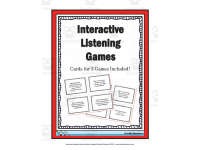
Interactive Listening Games

- Year levels
- Years 1–5
- File type
- Preparation
- Print ready


- Topic
- Interactive, Listening Games
- Resource types
- Games
- Preparation
- Print ready
- Australian Curriculum content descriptions
- AC9EFLY02 — interact in informal
From the author
About this resource
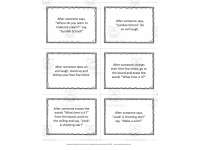
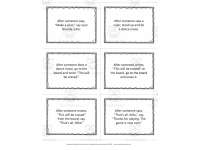
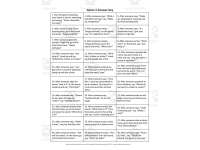
Interactive Listening Games contains three sets of thirty cue-and-response cards, instructions and sequence keys. Students read their cards, watch or listen for a cue, and perform the next spoken line or action.
Print and cut the cards, optionally laminate them, and keep each game separate. With fewer than thirty players, give extra cards to some students so every card stays in play. The final line is “Thanks for playing. The game is now over.”
Use the sequence keys to help a group resume after a missed cue. The cards practise reading, listening and following directions rather than provide a marked assessment.
Related resources
More resources teachers may find useful
More resources on the same subject and topic.



In the classroom
Teaching tips & learning objectives

Learning objectives
Listen actively for a specific spoken or written cue among ongoing classroom noise.
Respond promptly with the correct scripted line or action when a personal cue is heard.
Track a multi-step chain of classroom events to understand how one student's action connects to the next.

Teaching tips
Laminate all three sets before first use, as the directions suggest, since the cards will be handled and reshuffled repeatedly.
Use the printed game number in each card's corner to keep the three 30-card sets separate when storing or redistributing them.
Check a stuck sequence against the included answer key rather than restarting the whole class, since each set's exact 30-step order is listed there.
Play a different one of the three sets each time to keep the community-building icebreaker fresh across the week.

Skills covered
Active listening for cues — students track spoken and written prompts across a full class of peers to know when it is their turn.
Sequential chain-following — students recognise how their card connects to the one before and after it in a 30-step class-wide sequence.
Classroom community building — the game is used as an icebreaker requiring cooperation from every student to complete the chain.
Good to know
Questions teachers ask about this resource
What happens if there are fewer than 30 students available to play?
The directions say to pass out the extra cards to a few students so that all 30 cards stay in play, since the game will not work properly unless every card is distributed.

No reviews yet
Downloaded this resource? Tell other teachers how it went.
Australian Curriculum (Version 9.0)
Australian Curriculum content descriptions
Australian Curriculum content descriptions
 Australian Curriculum content descriptions
- AC9EFLY02 — interact in informal and structured situations by listening while others speak and using features of voice including volume levels
Core concepts
 Core concepts
Active listening
Classroom community
Sequencing
 Topics
Explore more
Categories this resource belongs to
Explore related searches


More to explore