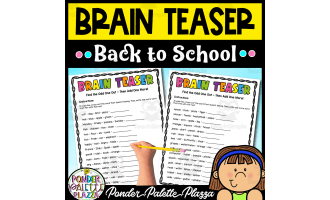
Brain Teasers – Hidden Meaning Puzzles (Part 4)


- Grades
- Grades 7–9
- File type
- Preparation
- Print ready


- Subject
- Vocabulary, Language Development, ELA
- Topic
- Brain Teaser, Expressions
- Resource types
- Worksheets
- Preparation
- Print ready
From the author
About this resource
Related resources
More resources teachers may find useful
More resources on the same subject and topic.



In the classroom
Teaching tips & learning objectives

Learning objectives
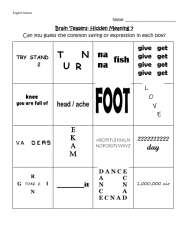
Decode a rebus-style visual arrangement of letters or words to identify the common English idiom or expression it represents.
Recognize wordplay techniques such as letter substitution, repetition, and scrambled spelling as clues to a hidden phrase.

Teaching tips
Model one or two puzzles as a class -- for example, "hoROBod" for Robin Hood -- before assigning the rest independently, since the visual-clue format is unfamiliar to some students.
Use the matching answer pages for a quick self-check or a whole-class reveal after independent attempts.
Assign one Hidden Meaning page (six puzzles) per session rather than all eighteen at once.

Skills covered
Visual wordplay decoding -- students interpret an unconventional arrangement of letters or words as a clue to a hidden idiom, such as "trail mix" from the scrambled letters T-R-A-I-L.
Idiom and expression recognition -- students identify common English sayings and phrases once the visual clue is decoded.

No reviews yet
Downloaded this resource? Tell other teachers how it went.
Resource details
Concepts & topics
Core concepts
 Core concepts
Idioms
Wordplay
Rebus puzzles
 Topics
Explore more
Categories this resource belongs to
Explore related searches



More to explore