Adding + Subtracting Polynomials – Leveled Worksheet
- Grades
- High School
- Pages
- 4
- File type
- Answer key
- Included


- Subject
- Math, Algebra
- Topic
- Polynomial addition, Polynomial subtraction
- Answer key
- Included
- Standards
- HSA-APR.A.1
Product description
From the author
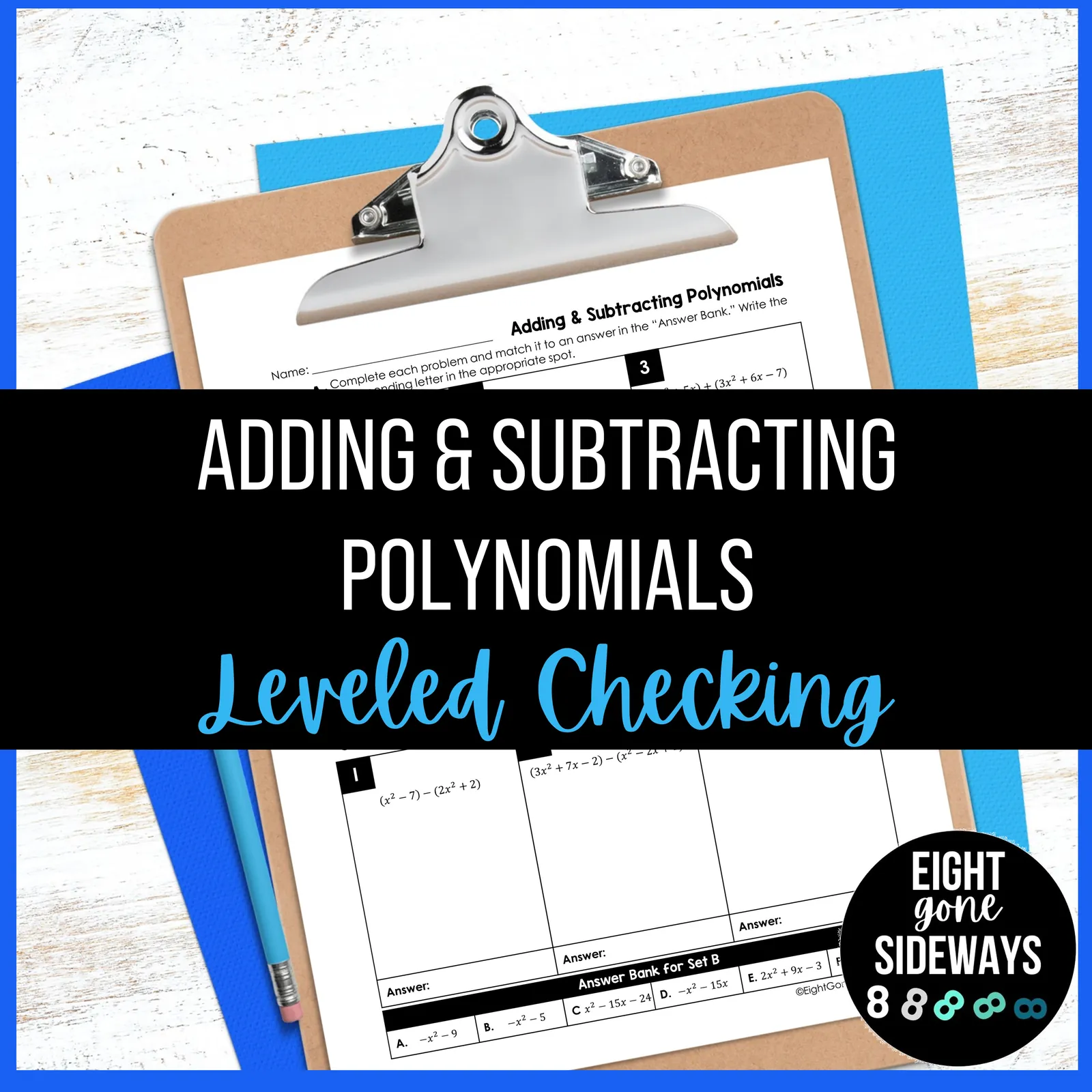
Adding and Subtracting Polynomials - Leveled Checking Worksheet
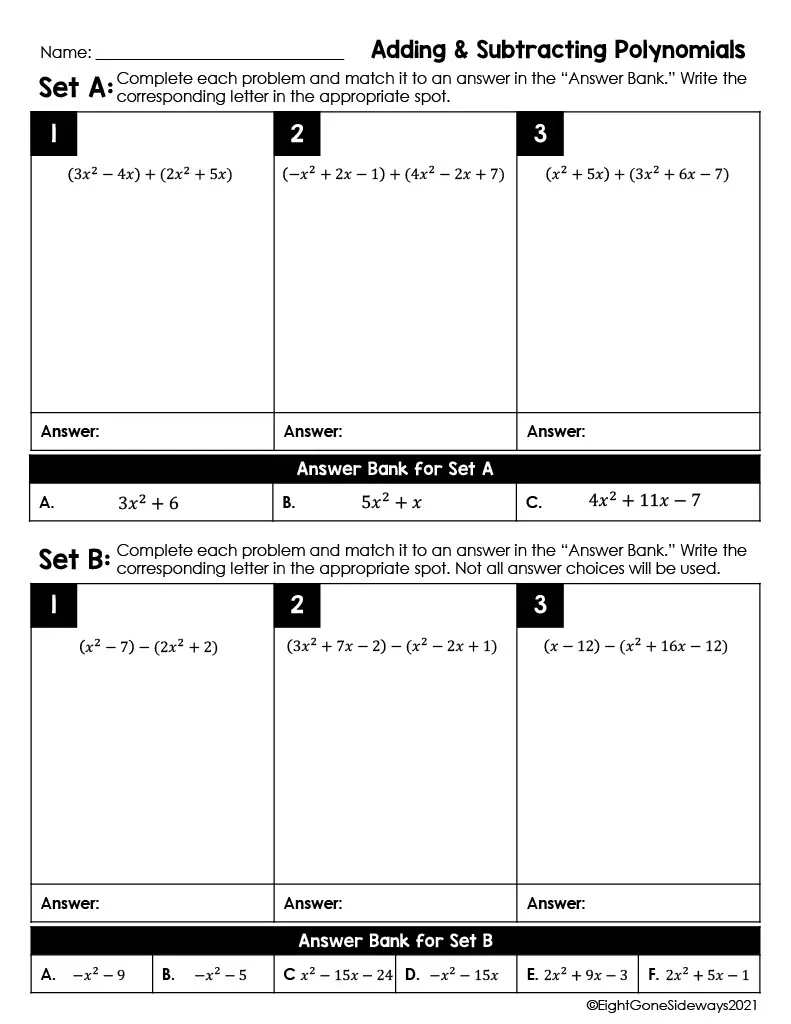
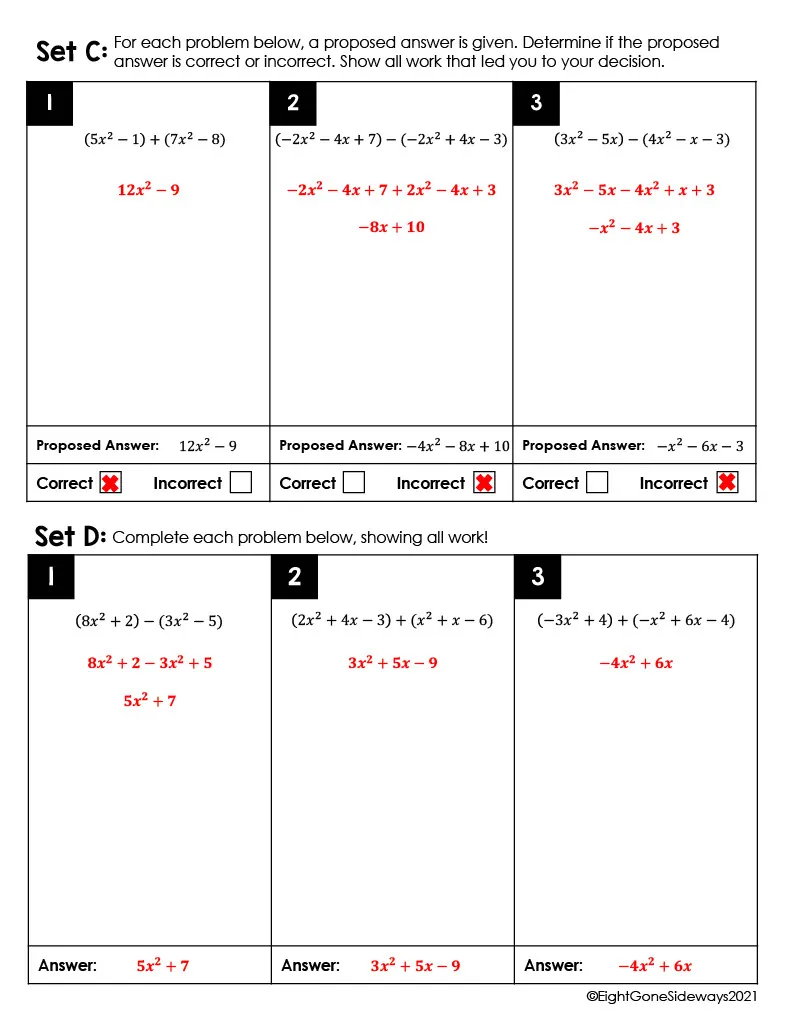
This math resource provides practice with adding and subtracting polynomials for high school algebra students. The worksheet features 4 sets of 3 problems each that allow students to check and reinforce their understanding at different levels. Sets A and B have students match their work to an answer bank. Set C gives a proposed answer for students to verify. Set D has students complete problems and show all work. With various levels of scaffolding and answer keys included, this resource can be used for whole-class instruction, small group practice, homework, or individual assignments to build fluency with manipulating polynomial expressions. The leveled nature of the worksheet allows teachers to differentiate to meet each learner’s needs.
Related resources
More resources teachers may find useful
24 related resources were found using this product's title, contributor, categories and tags.



In the classroom
Teaching tips & learning objectives

Learning objectives
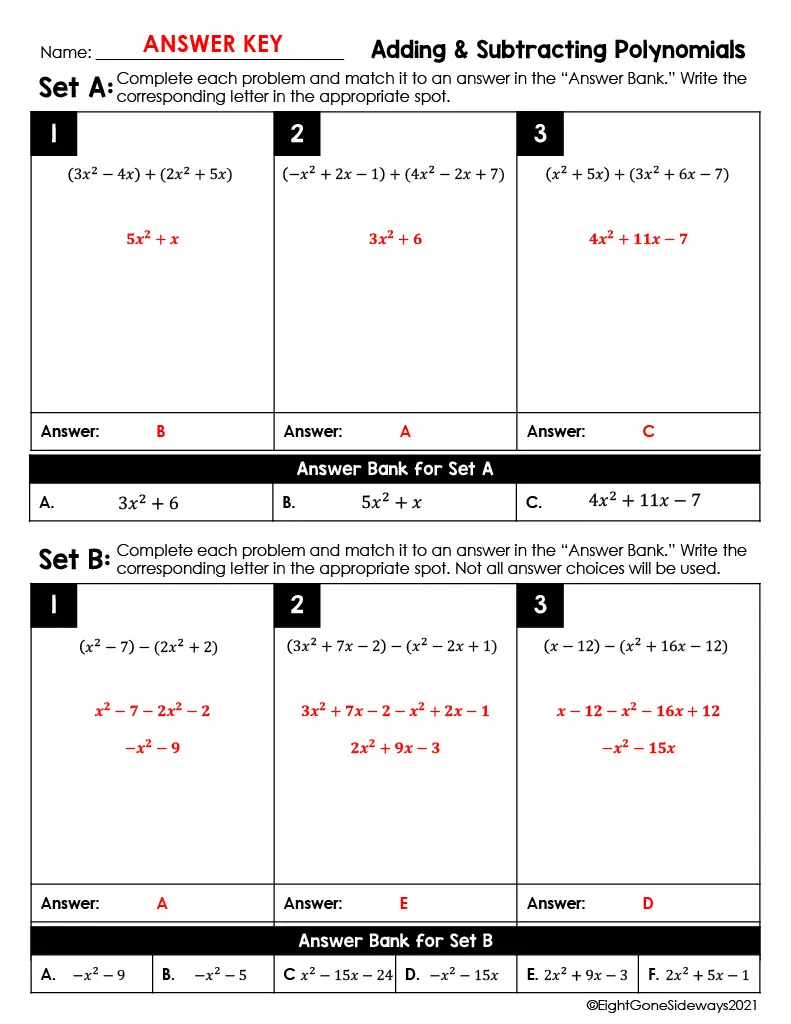
Add polynomials by combining like terms, as in 3x² − 4x + (2x² + 5x) = 5x² + x
Subtract a polynomial by distributing the negative across every term inside the bracket, as in x² − 7 − (2x² + 2) = −x² − 9
Judge whether a supplied answer to a polynomial problem is correct, and justify the judgement with written working

Teaching tips
Introduce the matching, answer-checking and independent-solving formats one at a time.
Ask students to show how subtraction changes each term inside parentheses before combining like terms.
Use a selected answer as a starting point for discussing the working, rather than assuming why the student chose it.

Skills covered
Adding polynomials — Set A combines like terms across sums such as 3x² − 4x + (2x² + 5x) and x² + 5x + (3x² + 6x − 7).
Subtracting polynomials — Sets B, C and D all require distributing a negative across a bracket, as in x − 12 − (x² + 16x − 12), which the key expands term by term before simplifying.
Setting out working — Sets C and D both instruct students to show all work, and the key models intermediate lines in Sets B–D.
Good to know
Questions teachers ask about this resource
How do the four sets differ?
Set A uses a three-choice answer bank for three problems. Set B has six choices for three problems. Set C asks students to judge a proposed answer and show their work, while Set D asks them to solve without a bank.
Are all of Set B’s answer choices used?
No. The directions state that some choices are unused. Students should simplify each expression before choosing an answer and check their signs when subtracting.

No reviews yet
Downloaded this resource? Tell other teachers how it went.
Curriculum
Standards, concepts & topics
Standards
 Standards
- HSA-APR.A.1
Core concepts
 Core concepts
Polynomials
Adding polynomials
Subtracting polynomials
Combining like terms
 Topics
Explore more
Categories this resource belongs to
Explore related searches
More to explore
You may also like