Crash Course Psychology #5: Sensation & Perception


- Grades
- Grades 7–12, Middle School, High School
- Pages
- 2
- File type
- Zip


- Subject
- Social Studies, History, Psychology
- Topic
- sensation, perception
- Resource types
- Worksheets & Printables, Worksheets
About this resource
What's inside this resource
Related resources
More resources teachers may find useful
24 related resources were found using this product's title, contributor, categories and tags.
In the classroom
Teaching tips & learning objectives

Learning objectives
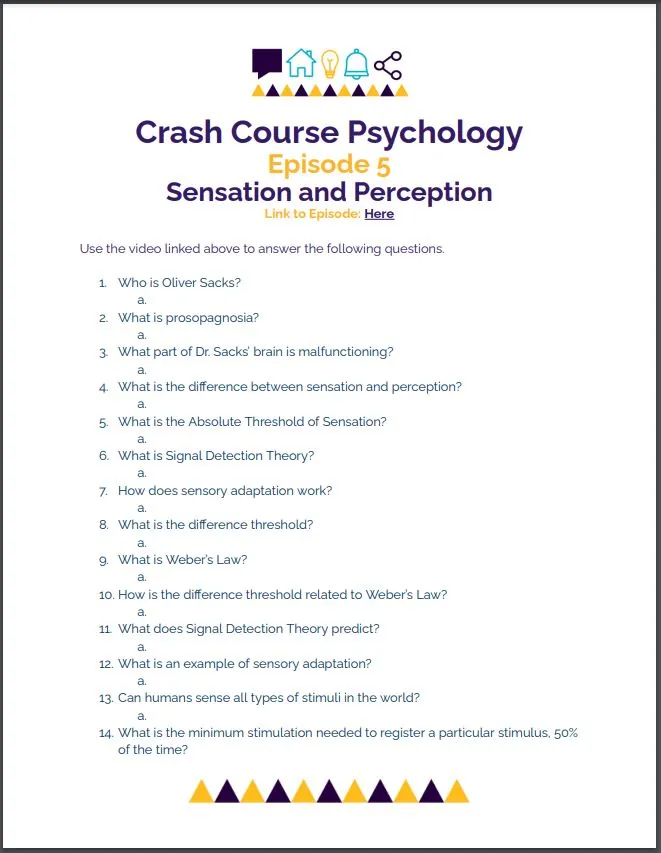
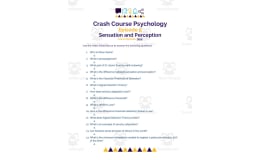
- Distinguish sensation as a bottom-up process from perception as a top-down process
- Define the absolute threshold of sensation and the difference threshold
- Explain Weber's Law as proportional rather than absolute change

Teaching tips
- The worksheet is useless without the video - check the embedded episode link resolves before assigning it.
- The .docx versions are editable, so questions can be cut or reworded for a shorter class period.
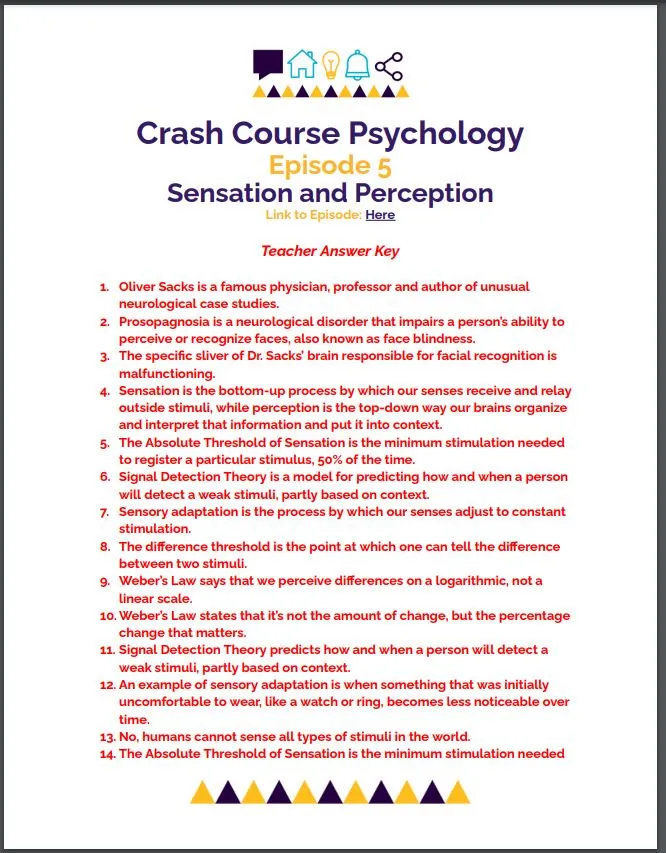
- The key gives full-sentence answers rather than single words, so it doubles as a revision sheet or a substitute-teacher script.

Skills covered
- Note-taking from video
- Defining psychological terminology
- Applying a concept to a real-world example
Good to know
Questions teachers ask about this resource
What grade level is this for?
No grade is stated. The vocabulary (signal detection theory, Weber's Law, absolute threshold) is introductory or AP psychology, so roughly Grade 9-12.
Is an answer key included?
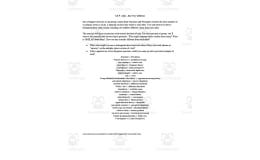
Yes - a separate file headed 'Teacher Answer Key' gives full-sentence answers to all fifteen questions, although the store record says no answer key is provided.
Is it editable?
Yes. Both the student sheet and the key are included as Word .docx files as well as PDFs.
Do I need anything else to use it?
Yes - the Crash Course Psychology episode itself, reached through the link embedded at the top of the sheet.

No reviews yet
Downloaded this resource? Tell other teachers how it went.
Resource details
Concepts & topics
Core concepts
 Core concepts
- Sensation
- Perception
- Absolute threshold of sensation
- Difference threshold
- Weber's Law
- Sensory adaptation
- Signal detection theory
- Prosopagnosia
 Topics
Explore more
Categories this resource belongs to
Explore related searches
More to explore
You may also like