Crash Course Sociology #41: Schools & Social Inequality Worksheet
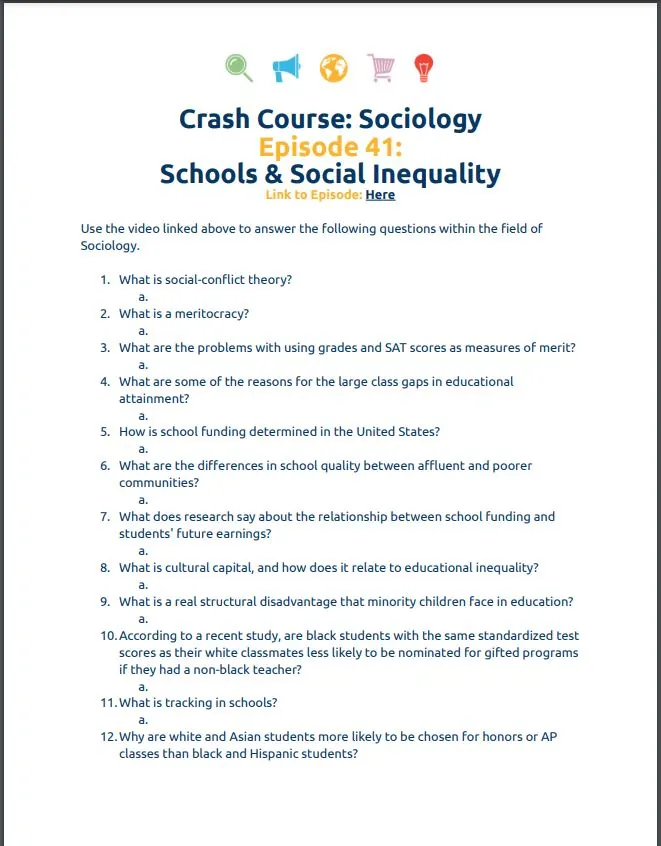
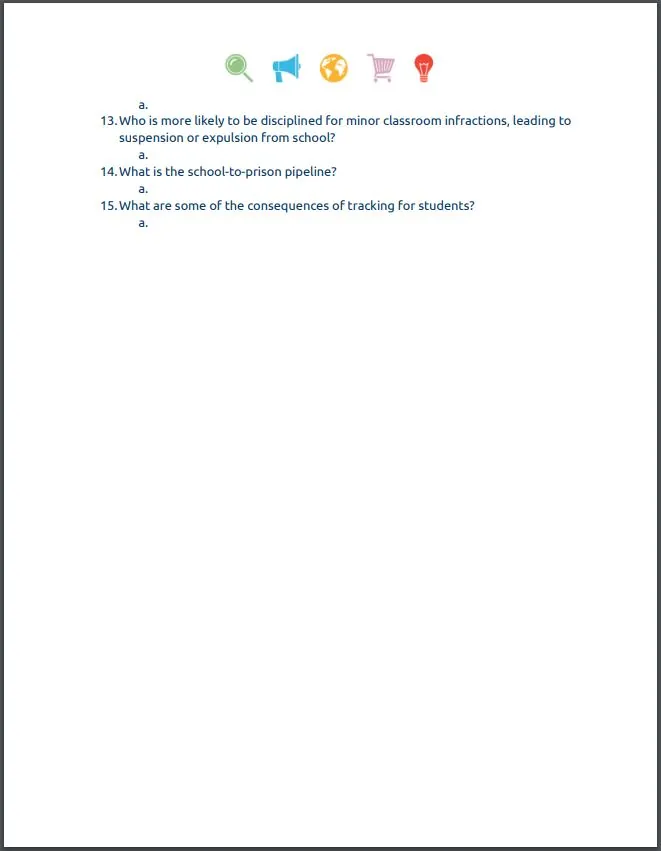
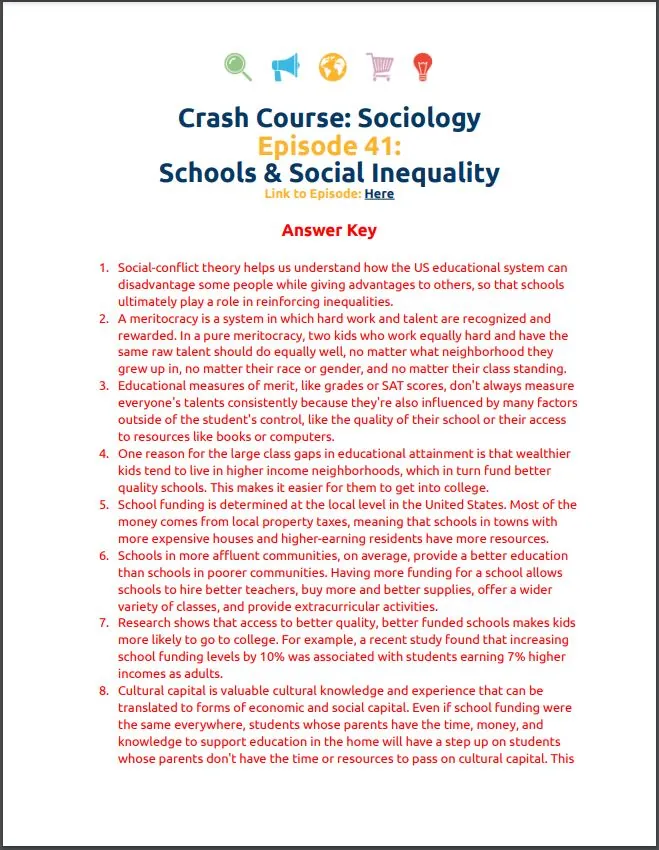
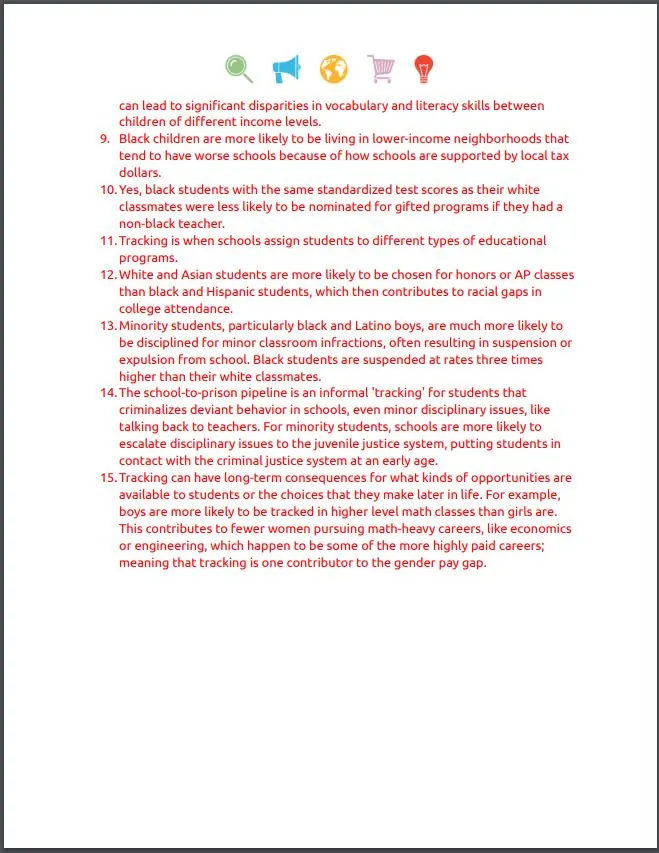
- Grades
- Grades 7–12, Middle School, High School
- Pages
- 2
- File type
- Zip


- Subject
- Social Studies, Sociology
- Topic
- meritocracy, cultural capital
- Resource types
- Worksheets & Printables, Worksheets
About this resource
What's inside this resource
Related resources
More resources teachers may find useful
24 related resources were found using this product's title, contributor, categories and tags.



In the classroom
Teaching tips & learning objectives

Learning objectives
Explain how meritocracy is supposed to work and identify specific ways SAT scores and grades fall short as pure measures of merit
Trace how local property-tax school funding connects neighborhood wealth to school quality and, ultimately, college attendance
Explain cultural capital and how it can create educational disparities separate from school funding

Teaching tips
Have students watch the linked Crash Course episode before assigning the worksheet, since every question is written to be answered directly from the video's content rather than from background knowledge alone
Use the editable Word version if you want students to type answers directly into the document for Google Classroom or another LMS, and the PDF version for printing
Pair questions 9-15 (gifted-program nominations, discipline disparities, tracking, and the school-to-prison pipeline) as a discussion cluster, since the answer key's own statistics for these questions build on each other

Skills covered
Video-based note-taking and comprehension — all 15 questions require information stated directly in the linked Crash Course episode.
Sociological concept application — students define and apply terms like meritocracy, cultural capital, and tracking to real school-system examples.
Interpreting statistical claims — several answers cite specific figures (a 10% funding increase linked to 7% higher earnings; suspension rates three times higher for Black students), which the worksheet has students identify and explain.
Good to know
Questions teachers ask about this resource
What statistic does the video cite linking school funding to future earnings?
A cited study found that a 10% increase in school funding was associated with students earning 7% higher incomes as adults.
How does the worksheet define tracking?
Tracking is defined as schools assigning students to different types of educational programs, with a note that it can affect long-term outcomes, such as which level of math classes students are placed into.

No reviews yet
Downloaded this resource? Tell other teachers how it went.
Resource details
Concepts & topics
Core concepts
 Core concepts
Meritocracy
Cultural capital
Educational tracking
School-to-prison pipeline
School funding inequality
 Topics
Explore more
Categories this resource belongs to
Explore related searches
More to explore
You may also like