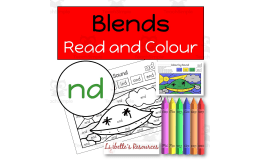
Final ND Blend Find and Colour Phonics Worksheet


- Grades
- Preschool–K, Not Grade Specific
- Pages
- 1
- File type
- Answer key
- Included


- Subject
- Special Resources, ELA, Special Education Needs (SEN), Language Development, Phonics
- Topic
- initial blends, consonant blends
- Resource types
- Worksheets & Printables, Worksheets
- Answer key
- Included
- Standards
- CCSS.RF.2 CCSS.RF.1.2.b
About this resource
What's inside this resource
This final blend _ND fun, Find and Color worksheet for final blends is excellent for acquainting children orally with final consonant blends and helping them develop the necessary phonemic awareness in preparation for more advanced blending work, involving four phonemes.
What is included in the pack?
One PDF sheet for the final _ND blend.
What do the worksheets involve?
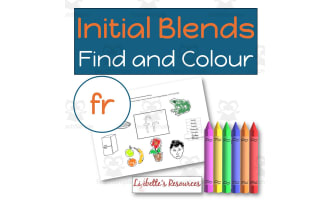
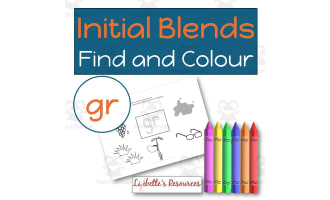
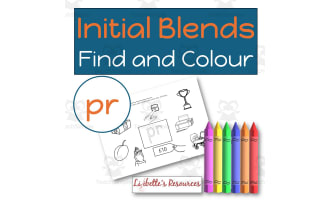
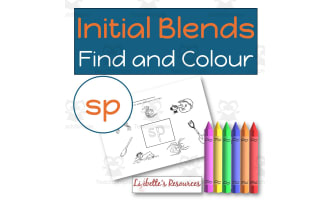
Pupils are instructed to combine the two letters on the worksheet and then look for objects that end with that consonant blend. Then, these items ought to be coloured, leaving the others uncoloured.
Children can easily work on the sheet unaided once they have been instructed, although, with those children with special needs, it is strongly suggested that an adult works with the child for maximum benefit.
How to use
The introduction of the concept of final blends needs to be done thoroughly. When I work with children, especially those with a special need, I first like to teach children to blend two consonant letters. Then I work on developing the children's phonemic awareness: that being the ability to hear two consonant letters blended at the end of a word, easily. Some children find final blends easier than initial blends as they can sound out the first three sounds, and simply add a fourth: h-a-n: han-d.
I call /n/ 'naughty' 'n' as he likes to hide in words: children are apt to miss out the nasal sound and spell hand as 'had'. I then ask them to sound back what they have written and we laugh. Often they can quickly insert the missing letter, having had plenty of practice aurally, such as this sheet affords.
However all pupils need practice, some more than others. These worksheets can assist by first encouraging students to blend the two consonant letters and then by helping them to hear the blend at the end of a word. As often as you can, practice blending the letters in each final blend and encourage the students to follow suit. I find that modelling is key at this stage.
Who are the final blends Find and colour worksheets for?
Young learners
Those with a special need
Due to their non-babyish nature, they can be successfully used with older ESL/EFL pupils.
Answer keys:
The answer key is included on the sheet, in small print.
Related resources
More resources teachers may find useful
24 related resources were found using this product's title, contributor, categories and tags.


In the classroom
Teaching tips & learning objectives

Learning objectives
Identify the target consonant blend at the start or end of a picture's name and colour only the matching pictures.
Match, trace, and write consonant blend letter pairs across dedicated practice pages.
Circle a target blend within printed words and spell blend words from a letter jumble.

Teaching tips
Work through the blends in small groups across multiple sessions rather than in one sitting, since the set covers 20 separate blends plus matching, tracing, and sentence-reading follow-on pages. When students are ready to compare a beginning blend with the final ND sound, try these BR blend worksheets.
Use the modeled first example on the circle-the-blend puzzle pages to show students the exact task before they work independently. Revisit CVC words before longer blends with these CVC and consonant blend worksheets.
Assign the closing decodable sentences only after a student has practiced the relevant blends on the earlier find-and-colour and matching pages, since the sentences reuse that same vocabulary.

Skills covered
Initial and final blend identification — students colour only the pictures whose word contains the target blend, rejecting a listed distractor.
Letter-pair formation — dedicated pages have students trace and write each blend's two letters.
Blend spotting in print — word-search-style pages have students circle a target blend within printed words, following a modeled example.
Good to know
Questions teachers ask about this resource
Does the set only cover the 'nd' blend named in the title?
No — it covers 19 initial consonant blends (sw, tw, sk, sp, st, sn, br, cr, dr, fr, gr, pr, tr, bl, cl, fl, gl, pl, sl) in addition to the final 'nd' blend, plus matching, tracing, and sentence-reading pages built around that full blend set.
Is there follow-on practice after the find-and-colour pages, or is colouring the only activity?
There's follow-on practice — later pages add blend-matching grids, letter tracing, circle-the-blend word puzzles, cut-and-stick picture matching, letter-jumble spelling, and ten pages of short decodable sentences.

No reviews yet
Downloaded this resource? Tell other teachers how it went.
Curriculum
Standards, concepts & topics
Standards
 Standards
- CCSS.RF.2 — Demonstrate understanding of spoken words, syllables, and sounds (phonemes).
- CCSS.RF.1.2.b — Orally produce single-syllable words by blending sounds (phonemes), including consonant blends.
Core concepts
 Core concepts
consonant blends
phonemic awareness
phonics
decoding
 Topics
Explore more
Categories this resource belongs to
Explore related searches
More to explore
You may also like