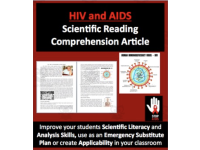
HIV and AIDS Reading Comprehension Article

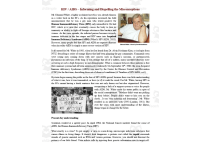
- Grades
- Grades 10–12, High School
- File type
- Multiple File Types


- Subject
- Science, Life Sciences, Biology
- Topic
- science literacy, reading comprehension
- Resource types
- Worksheets & Printables, Worksheets
- Standards
- CCSS.RI.10.1 CCSS.RI.10.4
About this resource
What's inside this resource
HIV and AIDS Reading Comprehension Article: A Teaching Resource
The HIV and AIDS Reading Comprehension Article is an invaluable teaching resource specifically designed for grades 10, 11, and 12 to educate students about the real facts surrounding HIV/AIDS. This resource aids in dispelling myths while boosting scientific literacy.
Key Topics Included
- Stigma associated with HIV/AIDS
- Present-day understanding of the diseases
- Stages of infection and transmission precautions
- Treatments available for these diseases
- Important stats providing context to the global problem posed by these diseases.
This comprehensive set easily integrates with remote learning environments, being Google Classroom-ready. The articles come in multiple file types including Microsoft Word and PDF versions, eliminating worries over formatting issues or accessibility across different devices.
Benefits of Using this Resource:
- In-Depth Questions:
Detailed questions follow each article read. These are specifically crafted not only for testing comprehension but also pushing student’s thinking skills to higher levels. It further enhances their connecting skills via open-ended query types - all critical aspects required in scientific discussions.
- Versatility:
The worksheets can be used during whole-group instruction or assigned out in smaller group increments depending on class dynamics. They serve equally well as extra credit assignments or homework tasks.
- Ease-of-Use for Educators:
An provided answer key aids teachers mark rapidly & effectively while offering constructive input based on student responses during these sessions. It provides support to busy educators tasked with improving their learners’ reading comprehension skills & scientific knowledge using a simple yet comprehensive resource pack.
Concluding Thoughts:
This robust teaching tool tackles not just an understanding of Global Health concerns like HIV/AIDS but advocates a deeper appreciation and application of Science Literacy. For gifted pupils, extension activities are inclusive, allowing for a wider reach in educational inclusivity.
Related resources
More resources teachers may find useful
24 related resources were found using this product's title, contributor, categories and tags.
In the classroom
Teaching tips & learning objectives

Learning objectives
Explain how HIV enters a cell and uses reverse transcription to convert its RNA into DNA
Describe how HIV's destruction of CD4+ cells leads to an AIDS diagnosis
Distinguish accurate HIV transmission routes from common public misconceptions (e.g., touch, tears, saliva)

Teaching tips
Read the opening Edmund White narrative aloud first, since the biology sections that follow build directly on the case introduced there
Assign the extension question on Magic Johnson as a short research task to compare a second real-world case against Edmund White's
Use the seven-source reference list to model how to evaluate and cite outside sources when discussing a health topic

Skills covered
Scientific text comprehension — students read a six-page nonfiction article on HIV/AIDS biology and answer questions that require citing details from the text.
Technical vocabulary in context — students encounter and apply terms such as retrovirus, reverse transcription, and CD4+ cells as defined within the article.
Misconception correction — question 5 has students identify a false transmission claim (tears/saliva) and supply the medically accurate route instead.
Good to know
Questions teachers ask about this resource
How does the article frame the science content?
It opens with novelist Edmund White's own 1981 HIV diagnosis and follows his story through to an epilogue on his life today, using his case to introduce the virology, transmission, and treatment sections that follow.
What do the extension questions ask students to do beyond the article itself?
They ask students to research Earvin 'Magic' Johnson's HIV diagnosis and compare his experience to Edmund White's, design an original HIV/AIDS information poster, and research how far HIV cure science has progressed since the article's sources were published.

No reviews yet
Downloaded this resource? Tell other teachers how it went.
Curriculum
Standards, concepts & topics
Standards
 Standards
- CCSS.RI.10.1 — Cite strong and thorough textual evidence to support analysis of what the text says explicitly as well as inferences drawn from the text.
- CCSS.RI.10.4 — Determine the meaning of words and phrases as they are used in a text, including figurative, connotative, and technical meanings; analyze the cumulative impact of specific word choices on meaning and tone (e.g., how the language of a court opinion differs from that of a newspaper).
Core concepts
 Core concepts
HIV/AIDS biology
Retrovirus reproduction
Immune system (CD4+ cells)
Disease transmission and prevention
 Topics
Explore more
Categories this resource belongs to
Explore related searches
More to explore
You may also like