24 related resources

Safe Hands and Feet – Social Story for Kids
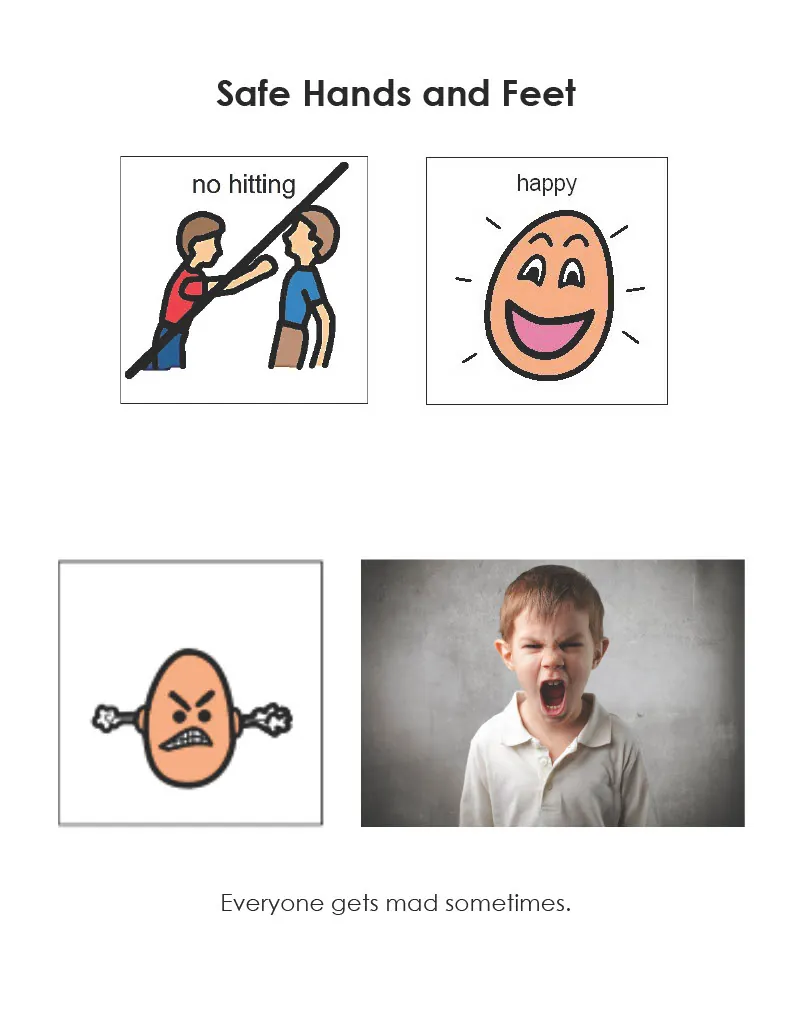
An eight-page first-person social story helps a child recognize the feeling of anger, understand why hitting, kicking, or pushing hurts others, and practice calming strategies like counting to ten and taking deep breaths.
Grades
Preschool–1, Elementary
File type
PDF
Preparation
Print ready

Updated Feb 21, 2023

Subject
Special Resources, Social Skills
Topic
social emotional learning, special education
Resource types
Worksheets & Printables, Worksheets
Preparation
Print ready

About this resource

What's inside this resource

This is a Social Story for Safe Hands and Feet.


Social stories are ideal for young learners who need more support with interacting in social settings as well as students with developmental delays.


Exposing any of your young learners to social stories will benefit them as most students can benefit from developing stronger social skills.


Students who enter Kindergarten but did not attend any sort of preschool may especially benefit from social stories.


These can be implemented at the start of the school year when you begin to discuss classroom procedures and expectations. This is also ideal any time of the year.


Social stories are impactful in school settings, home settings and any other childcare settings.


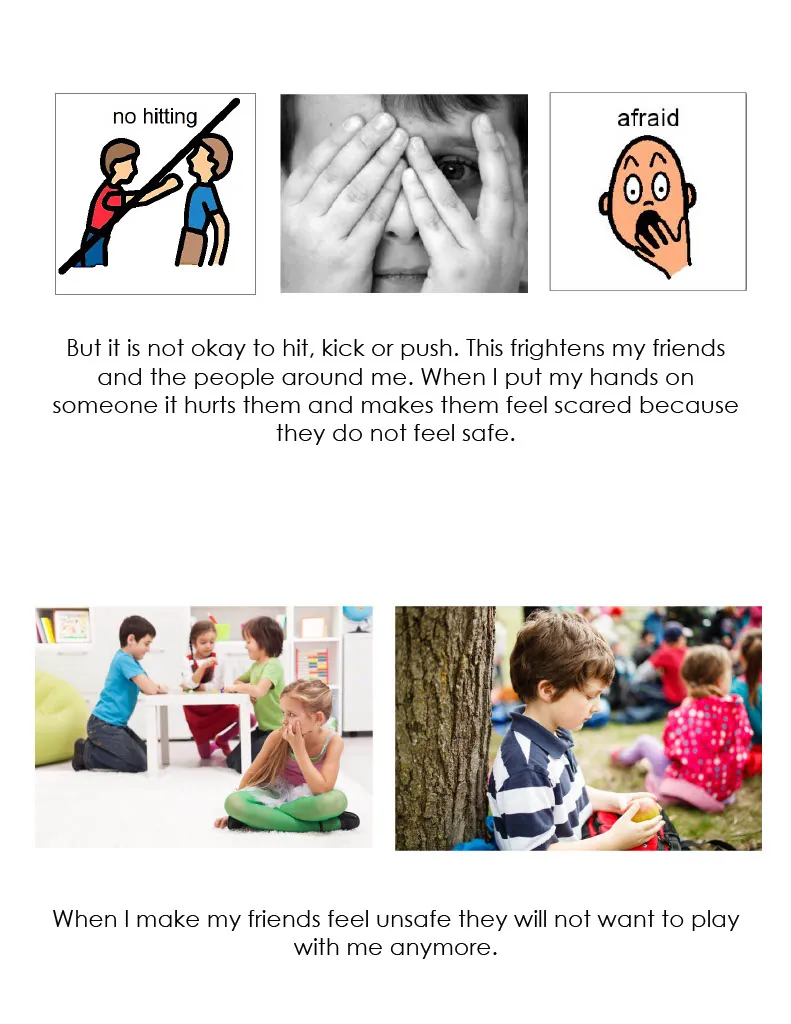
The words are paired up with images that will help students identify certain emotions and how to best respond in certain situations.


Some examples of the stories included are:


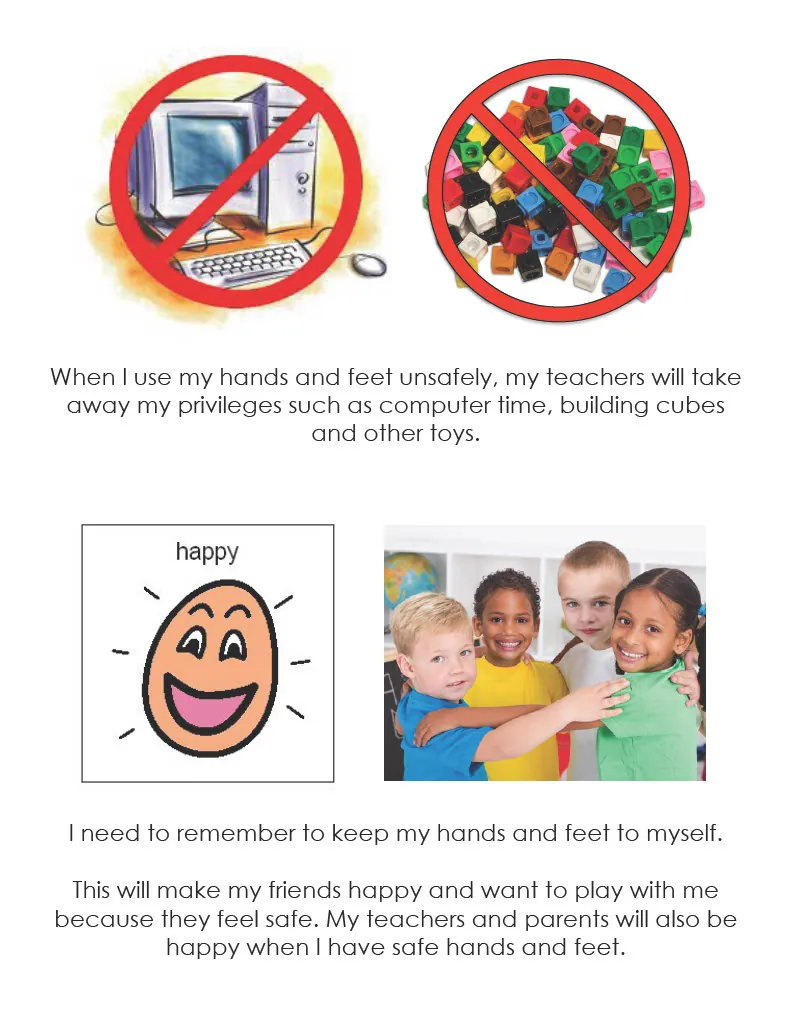
I need to remember to keep my hands and feet to myself. This will make my friends happy and want to play with me because they feel safe. My teachers and parents will also be happy when I have safe hands and feet.


When I get angry or I think someone is being mean to me I need to STOP and think is this a good choice or a bad choice?


I can sit in a quiet place until I can calm down.


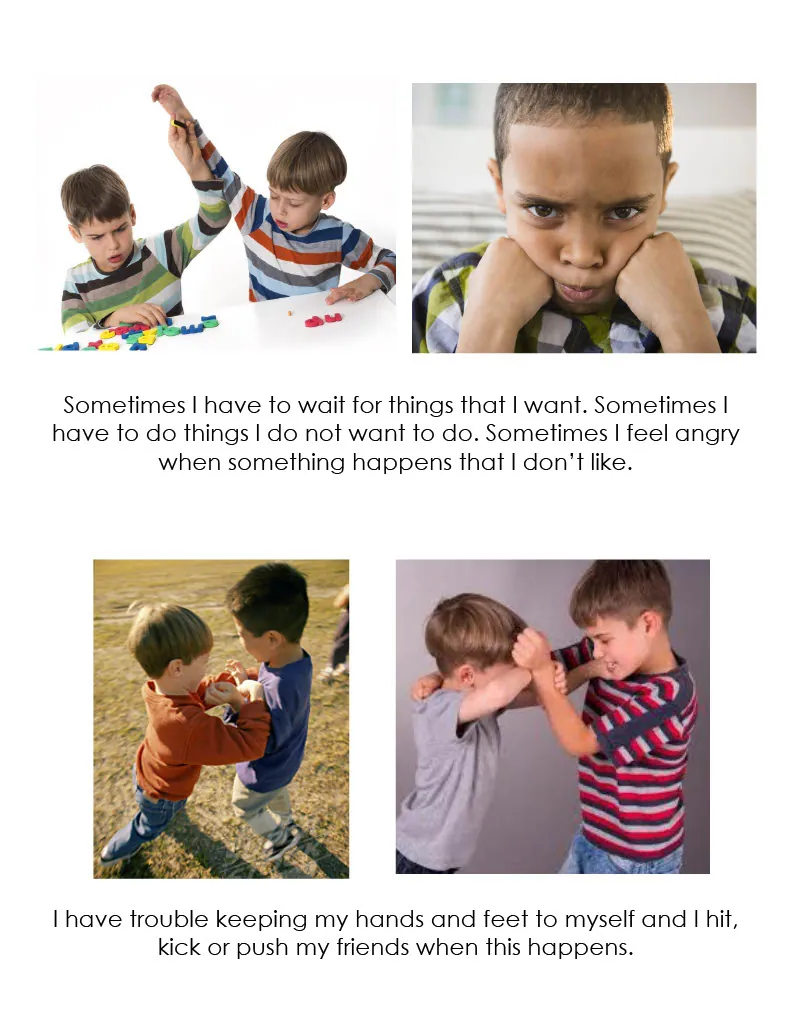
Sometimes I have to wait for things that I want. Sometimes I have to do things I do not want to do. Sometimes I feel angry when something happens that I don’t like.

In the classroom

Teaching tips & learning objectives

Learning objectives

  • Recognize and name the feeling of anger or frustration as a normal emotion.

  • Understand how unsafe hands and feet (hitting, kicking, pushing) affect the safety and feelings of others.

  • Practice a "STOP and think" strategy to pause before reacting to anger.

  • Apply a calming strategy — talking to an adult, counting to 10, taking deep breaths, or sitting in a quiet place — when feeling upset.

Teaching tips

  • Read this social story one-on-one or in a small group with a child who is working on keeping hands and feet to themselves, rather than as a whole-class read-aloud, since its first-person framing is written for an individual child.

  • Practice the four calming strategies (talking to an adult, counting to 10, deep breaths, quiet space) in a calm moment first, so they're familiar before a child needs to use them in the moment.

  • Revisit the story regularly rather than reading it once, since social stories work best with repeated exposure to reinforce the pattern of recognizing a feeling, pausing, and choosing a safe response.

Skills covered

  • Emotional self-awareness — recognizing and naming feelings of anger or frustration.

  • Perspective-taking — understanding how one's actions affect how safe others feel.

  • Self-regulation strategies — using a stop-and-think prompt and calming techniques (counting, deep breathing, a quiet space) before reacting.

Good to know

Questions teachers ask about this resource

What calming strategies does the story teach?

Four strategies: talking to an adult about how you're feeling, counting to 10, taking slow deep breaths, and sitting in a quiet place until you feel calm.

How does the story frame the child's feelings?

It opens by validating that everyone gets mad sometimes, then walks through why keeping hands and feet safe matters before introducing calming strategies — the child is never framed as bad, only as learning to make safe choices.

No reviews yet

Downloaded this resource? Tell other teachers how it went.

Resource details

Concepts & topics

Explore more

Categories this resource belongs to

Explore related searches

More to explore

You may also like