Urbanization Reading Packet
- Grades
- Grades 5–8
- Pages
- 13
- File type
- Answer key
- Included


- Subject
- Social Studies, History: USA, Reading Comprehension
- Topic
- Urbanization, Rural to urban migration
- Answer key
- Included
- Standards
- RI.5.1
Product description
From the author
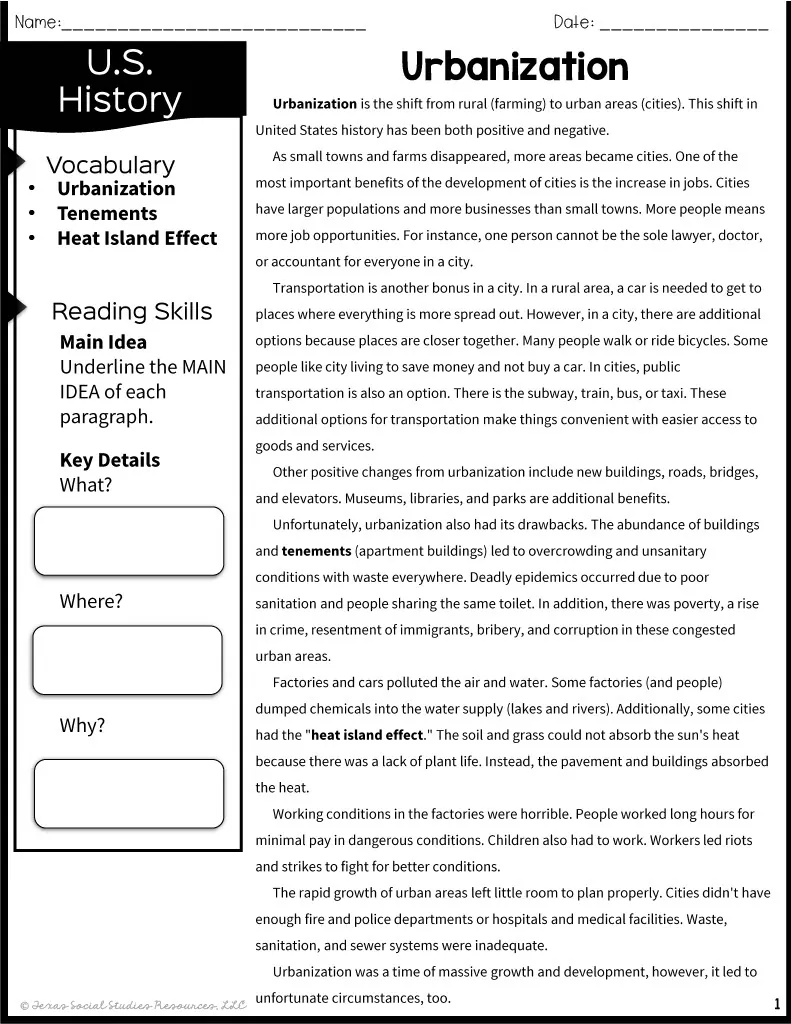
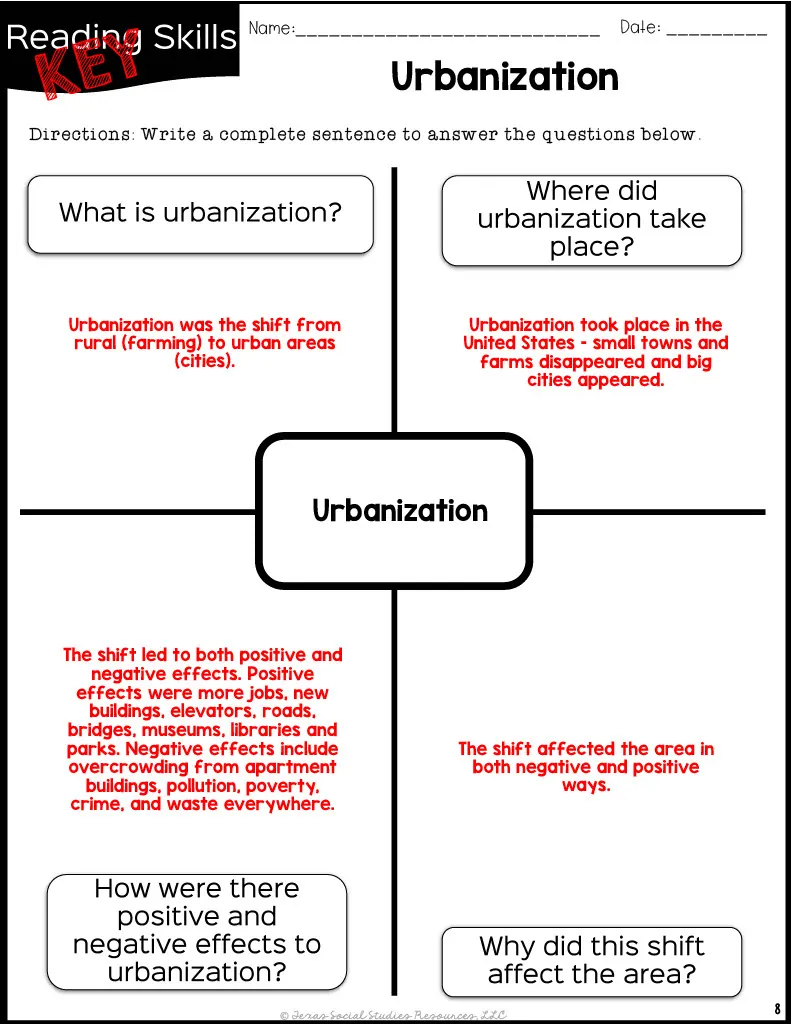
The Urbanization Reading Packet is an informative social studies resource for fifth grade students to learn about the history of urbanization in America. This printable packet includes a passage detailing the shift from rural to urban living in the late 1800s and early 1900s. Students will strengthen their reading comprehension and social studies knowledge as they read about technological innovations that enabled city growth during this industrial boom. Multiple choice questions, graphic organizers, vocabulary exercises, and answer keys are provided for assessing and scaffolding learning. Educators can utilize these materials in whole group lessons, small group instruction, or as independent practice for assessing students' understanding of this pivotal time period that shaped the urban landscape we know today. The passage and activities have been thoughtfully designed to engage students while building their literacy skills and content knowledge.
Related resources
More resources teachers may find useful
24 related resources were found using this product's title, contributor, categories and tags.


In the classroom
Teaching tips & learning objectives

Learning objectives
Explain urbanization as the historical shift from rural to urban living in the United States
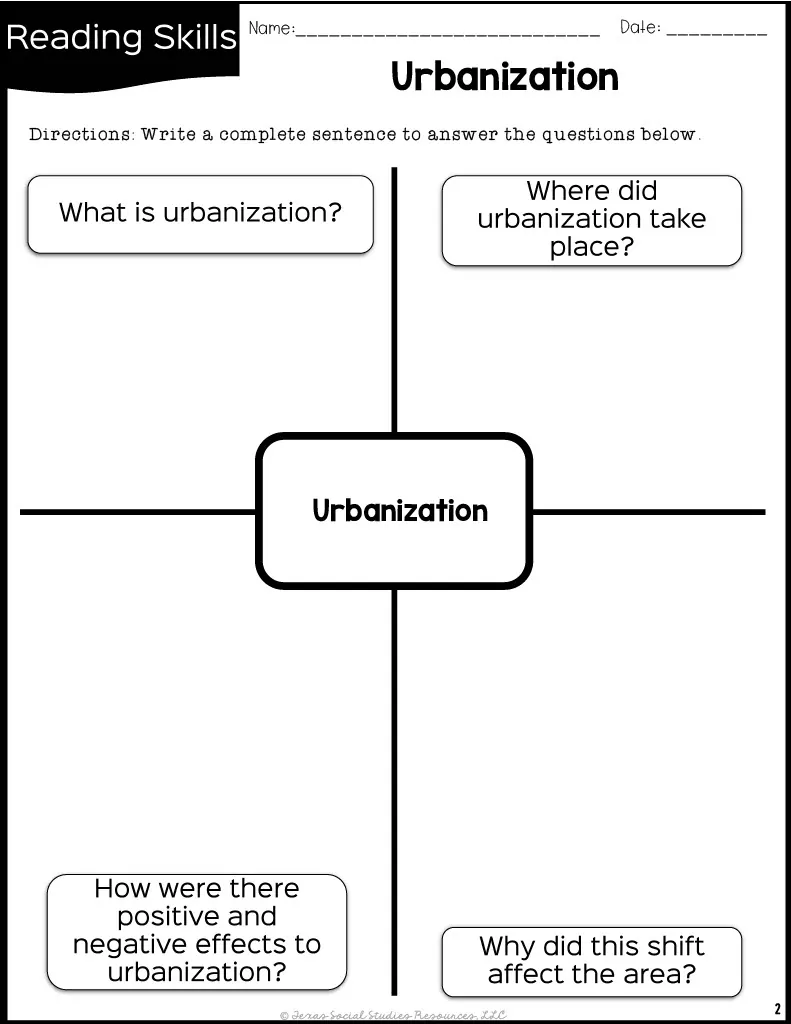
Identify and organize multiple supporting facts about a historical shift using a graphic organizer
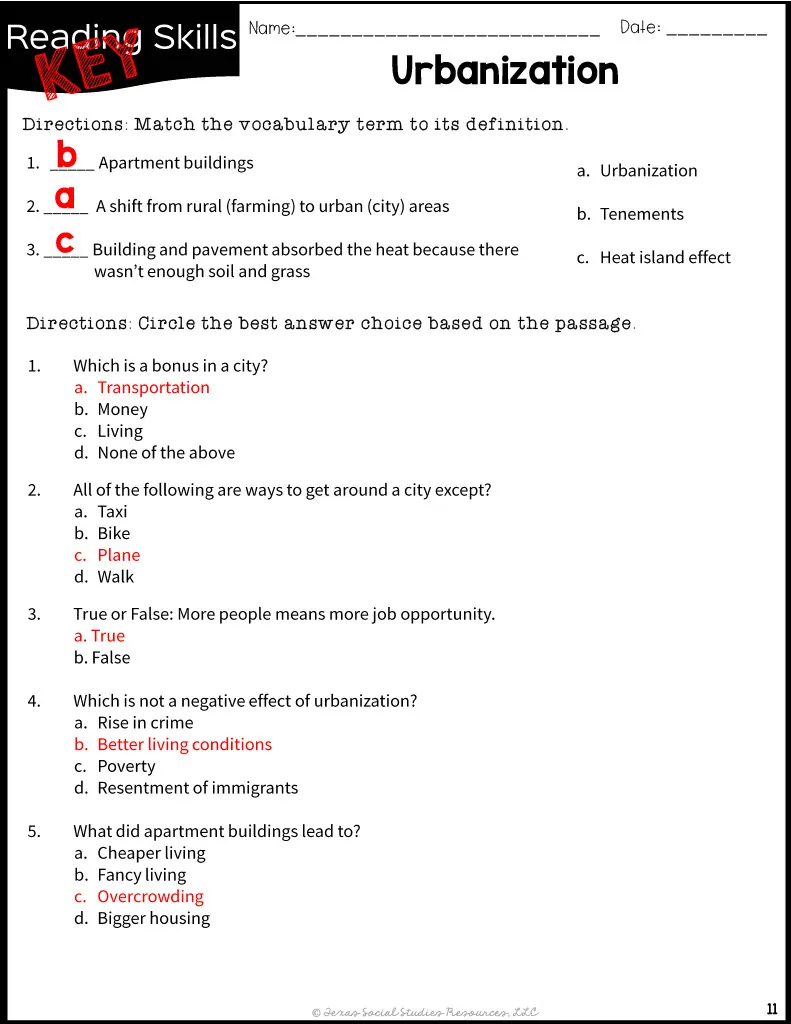
Match urbanization-related vocabulary terms to their definitions and answer multiple-choice questions based on a passage

Teaching tips
Use the fact-triangle organizer as a warm-up before the pros-and-cons chart, since it establishes the basic shift (rural to urban) that the chart then expands into specific benefits and drawbacks
Have students complete the vocabulary-matching section before the questions that continue onto the next page, since the matched terms reappear in the quiz questions
Use the model-answer pages as a discussion key for whole-group review rather than only as a self-grading tool, since several responses are marked 'Answers may vary' rather than single fixed answers

Skills covered
Historical cause-and-effect reasoning — students sort urbanization's benefits and drawbacks into a pros-and-cons chart covering jobs, infrastructure, overcrowding, and public-health effects.
Content vocabulary matching — students connect urbanization-related terms to their definitions before answering related passage questions.
Passage-based multiple-choice comprehension — students answer multiple-choice questions keyed to the same reading passage used across the packet.
Good to know
Questions teachers ask about this resource
Do the fact-triangle organizer and the pros-and-cons chart draw on the same information?
Yes. Both build from the same urbanization passage: the fact triangle states three summary facts (the rural-to-urban shift, its causes, and its mixed effects), while the pros-and-cons chart expands those effects into specific benefits like new jobs and public transportation against drawbacks like overcrowding and pollution.
How are vocabulary and comprehension checked together?
A two-page quiz begins with three term-to-definition matches, then asks ten passage questions using multiple-choice and short responses.

No reviews yet
Downloaded this resource? Tell other teachers how it went.
Curriculum
Standards, concepts & topics
Standards
 Standards
- RI.5.1
Core concepts
 Core concepts
Urbanization
Rural-to-urban migration
Cause and effect (history)
Pros and cons analysis
 Topics
Explore more
Categories this resource belongs to
Explore related searches
More to explore
You may also like