resources by type
resources by grade
resources by subject
other resources

2,398 products added recently

ELA Quizzes

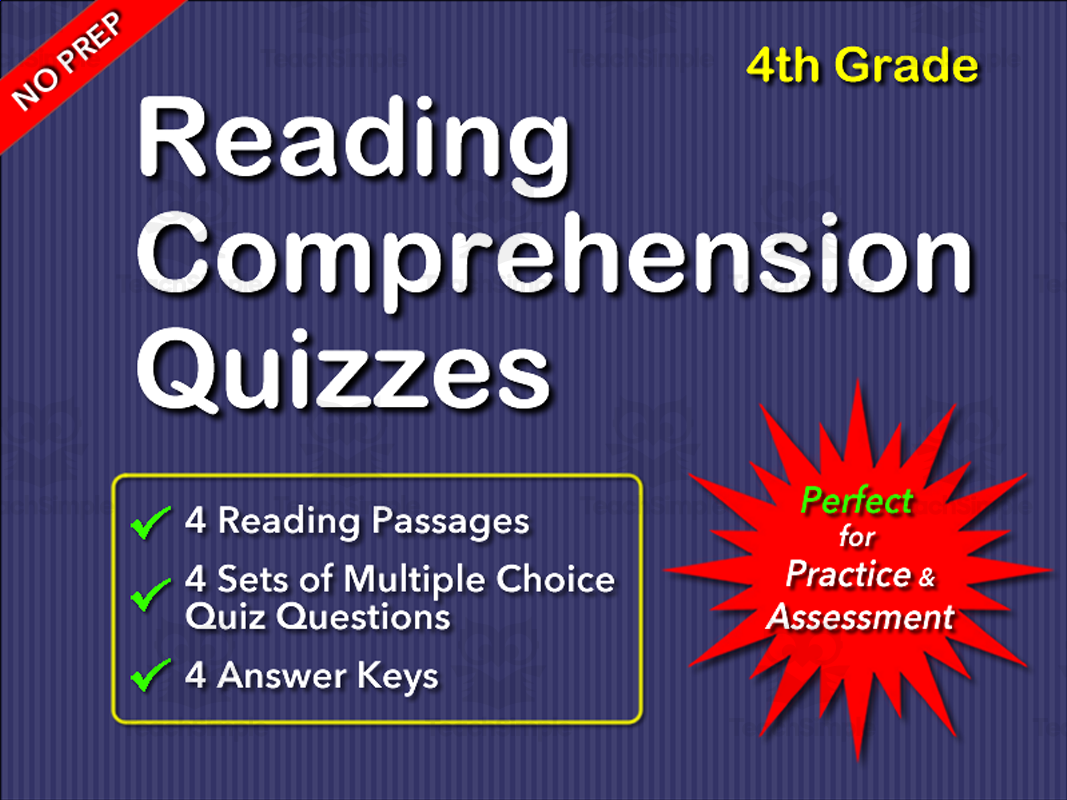
English Language Arts (ELA) Quizzes are essential tools for measuring students' literacy skills. They cover areas such as reading comprehension, vocabulary, grammar, writing conventions, and literary analysis. Using ELA Quizzes allows you to identify strengths and weaknesses in students' language abilities, guiding your instruction to address specific needs. These quizzes support skill development that is crucial for academic success across all subjects.

Relevant
alt down
Any Time
alt down
filter by
alt down
All File Types
alt down
filter nav Show filters
Sort by: Relevant
CLEAR
resources by type
Activities
down arrow
Classroom Decor
down arrow
Teacher Tools
up arrow
Anchor Charts
Assessments
Charts
DBQ's
Diagrams
Graphic Organizers
Lesson Plans
Literacy Readers
Outlines
Presentations
Quizzes and Tests
up arrow
Quizzes
Tests
Rubrics
Templates
Worksheets & Printables
down arrow
resources by grade
Early Learning
down arrow
Pre-K
down arrow
Elementary
down arrow
Middle School
down arrow
High School
down arrow
Adult Education
Not Grade Specific
resources by subject
Creative Arts
down arrow
ELA
up arrow
Language Development
down arrow
Literature
down arrow
Reading
down arrow
Writing
down arrow
Holiday & Seasonal
down arrow
Life Studies
down arrow
Math
down arrow
P.E. & Health
down arrow
Social Studies
down arrow
Special Resources
down arrow
Science
down arrow
Foreign Languages
down arrow
Resources for Teachers
down arrow
other resources
Common Core
Homeschool Resources
down arrow
Montessori
Research
STEM
Reading Comprehension Passages Fiction Set 1 - Nature (PDF)

Reading Comprehension Passages Fiction Set 1 - Nature (PDF)
ELA, Reading, Reading Comprehension, Common Core, ESL, Language Development, Spelling, Vocabulary, Writing, Resources for Teachers, Grade 2, 3, Worksheets & Printables, Worksheets, Writing Prompts, Assessments, Teacher Tools, Quizzes, Quizzes and Tests, Centers, Activities

Reading Comprehension Passages Fiction Set 1 Overview Fascinating reading comprehension passages, each with an array of activities included. Stories are written for the modern classroom and topics are designed to promote enthusiasm from each student. Each lesson contains a mixed questions section to check understanding, a vocabulary or spelling activity to help remember key language introduced, and a writing exercise. Full answer keys are provided. For a more detailed overview, check the section under the links at the bottom of this description. Passages Include 1.Bring on the Snow: Kellie wants to make it snow. How does she try? 2.Walk through the Woods: A walk in the woods turns into a huge adventure. 3.Nature Photographer: Donna get some amazing snaps in this story. 4.Nature's Beautiful Colors: Rusty enjoys finding out about the colors in nature. 5.Flower Fun: Learn about flower names and colors in this fun lesson. 6.Picking Cherries: Ross spends his day picking cherries but is it worth it? Additional File: Nature Photographer: Drawing Nature Printable PDF Version This is the PDF uneditable version. This download is available in GOOGLE Docs, GOOGLE Forms, GOOGLE Slides. PDF, PPT, WORD. FULL CATALOG OF DOWNLOAD LINKS HERE Grade 2/3 Links Fiction Set 1 - Nature Google Docs Google Forms Google Slides PDF PPT Word Guided Reading Materials Fiction Set 2 - Animals Google Docs Google Forms Google Slides PDF PPT Word Guided Reading Materials Fiction Set 3 - Food Google Docs Google Forms Google Slides PDF PPT Word Guided Reading Materials Fiction Set 4 - School Google Docs Google Forms Google Slides PDF PPT Word Guided Reading Materials Fiction Set 5 - Friends Google Docs Google Forms Google Slides PDF PPT Word Guided Reading Materials Fiction Set 6 - Family Google Docs Google Forms Google Slides PDF PPT Word Guided Reading Materials Fiction Set 7 - Sports Google Docs Google Forms Google Slides PDF PPT Word Guided Reading Materials Nonfiction Set 1 - Technology Google Docs Google Forms Google Slides PDF PPT Word Guided Reading Materials Nonfiction Set 2 - Nutrition Google Docs Google Forms Google Slides PDF PPT Word Guided Reading Materials Nonfiction Set 3 - Animals Google Docs Google Forms Google Slides PDF PPT Word Guided Reading Materials Reading Passages Overview Each passage is especially written for Grade 2-3 students, including key vocabulary required for this age group. Topics are varied and are accompanied by colorful graphics. Topics are meant to educate, yet entertain the modern student. These passages are perfect for the modern classroom. Whereas textbooks can become outdated in no time, any changes to technology or the world will result in updates to this product. Mixed Questions The mixed questions section of each lesson includes a variation of fivecomprehension, vocabulary and math questions. In addition, key reading strategies are frequently covered including cause & effect, summarizing, compare & contrast and making conclusions. Three of the questions will be MCQs and two will require a written response of some kind. Full answers and example responses appear at the end of the lesson. Spelling & Vocab Each reading passage contains a variety of words and phrases designed for Grade 2-3 students. Spelling and vocab activities provide the opportunity to build fluency with these words. As it can become quite mundane doing the same activities over and over, each lesson in a set will contain a different spelling and vocab activity . Writing Prompts Writing prompts are designed to continue the theme or lessons learned in the story. Students are persuaded to write in a variety of ways and each prompt includes several cues to help. As with the spelling/vocab section, writing prompts will vary. This includes research pieces, reading responses, poetry and creative writing prompts. Full Answer Keys Full answer keys and sample responses are provided so no matter how busy you are, you know you're covered! Mixed question answers provide evidence from the text, math questions contain the relevant workings. Answers are designed for use by the teacher, but also suitable as a handout to the student. Additional File One lesson will have an additional file. This is something fun to extend the lesson with. For similar downloads and other frees, do check out Cored Group on TeachSimple.

Author Cored Education

Rating

Tags Elementary, Reading, Comprehension, Vocabulary, Common Core, Speling, Writing, Passages, Reading Centers, Reading Comprehension Assessments

Animal Skin, Cats, & T. Rex: Reading Comprehension passages (Docs)

Animal Skin, Cats, & T. Rex: Reading Comprehension passages (Docs)
Science, ELA, Reading, Reading Comprehension, Strategies, Resources for Teachers, Life Sciences, Animals, Insects, Nature & Plants, Grade 6, 7, 8, 9, Writing Prompts, Worksheets & Printables, Centers, Activities, Teacher Tools, Assessments, Quizzes and Tests, Quizzes, Tests

Animal Skin, Cats, & T. Rex: Reading Comprehension Passages (Docs) This very engaging collection of life science reading passages about Animal Skin, Cats, & T. Rex is designed to bridge the gap between science and literacy through strengthening reading comprehension and sparking scientific curiosity in middle school students. Each passage blends English Language Arts skills with accurate science content that supports NGSS classroom practice. Ideal for interdisciplinary learning in ELA and Science. Suitable for Grade 9 review, too! What Is Included? There are (3) informational passages: Tyrannosaurus rex: The Tyrant Lizard King Step into the late Cretaceous and see T. rex up close, from its towering build and crushing bite to the clues fossils give about speed and feeding. CT scans, trackways, and healed injuries help scientists piece together how this predator lived. Cats and Sweetness: A Taste They Don’t Have A small change in a taste receptor means cats do not detect sugar. This trait fits a meat-first diet and helps explain why scent, texture, fats, and proteins matter more than sweetness. Animal Skin: A Tool for Survival Skin works as armor, thermostat, camouflage, warning, and display. Examples include the hippo’s natural sunscreen, zebra stripes that confuse attackers, and king snakes that copy coral snake colors to stay safe. Student Tasks for Each Passage: 5 multiple-choice questions targeting main idea, key details, inference, vocabulary in context, and use of evidence 5 vocabulary matching items with clear, student-friendly definitions 5 text-based questions that require citing specific lines or facts 1 summary prompt that asks students to condense central ideas accurately Full answer key for every section Available Formats for this Resource PDF Word Docs FULL CATALOG OF DOWNLOADING LINKS HERE Reading Passage Links: Astronomy & Space Science PDF Word Docs Google Docs Volcanoes, Rocks, & Mountains PDF Word Docs Google Docs Rock Cycle, Soil, & Sinkholes PDF Word Docs Google Docs Mars, Glaciers, & Antarctica PDF Word Docs Google Docs Water Cycle, Acid Rain, & Wastewater PDF Word Docs Google Docs Insects, Animals, & Ecosystems PDF Word Docs Google Docs Bioluminescence & Insects PDF Word Docs Google Docs Animal Skin, Cats, & T. Rex PDF Word Docs Google Docs Product Details Length: 1e pages total Grades: 6–8, also suitable for Grade 9 review Use cases: close reading, stations, homework, intervention, test prep, and sub plans Standards support: reinforces informational-text skills and supports NGSS-style sense making through observation, modeling, and clear use of claim, evidence, and reasoning Why Teachers Choose This Set Authentic science content paired with rigorous literacy practice Consistent task structure across all passages for easier planning and smoother student routines Clear, age-appropriate writing that builds confidence without oversimplifying Use this set to reinforce ELA skills in science, to add literacy to your lessons, or to support independent work. The passages strengthen main idea, evidence use, vocabulary in context, inference, cause and effect, and summary writing. With ready-to-use assessments and complete answer keys, you can provide focused practice that is simple to run and fast to review.

Author CORED Education - Middle & High School

Rating

Tags Middle School, Reading Comprehension, Reading Strategies, ELA, Centers, Reading Passage, Assessments, Vocabulary, Life Science, Dinosaurs

Shanghai Mini Unit - Includes Reading, Vocabulary, Facts, Adjectives

Shanghai Mini Unit - Includes Reading, Vocabulary, Facts, Adjectives
ELA, Language Development, ESL, Resources for Teachers, Vocabulary, Reading Comprehension, Reading, Geography, Social Studies, Grade 2, 3, 4, 5, Worksheets & Printables, Worksheets, Teacher Tools, Quizzes and Tests, Quizzes, Activities

Shanghai Mini Unit This Shanghai Mini Unit is a 5-day literacy resource created for students in grades 2–5. Each day follows a clear, consistent structure with seven engaging activities designed to build vocabulary, boost reading confidence, and explore the sights, sounds, and traditions of Shanghai. Students complete the same core activities each day, helping to build routine while keeping learning meaningful and fun: Vocabulary words Sentence writing Reading comprehension Act It Out (partner conversation) Shanghai facts Discussion questions Describing words At the end of the week, students complete a 6-question written quiz to reflect on what they’ve learned and apply their vocabulary in complete sentences. The unit blends structure with cultural discovery, making it ideal for literacy blocks, geography-themed lessons, cultural studies, or enrichment. Vocabulary words included in the unit: skyline, harbor, temple, lantern, market, bamboo, ferry, skywalk, pagoda, vendor, calligraphy, silk, acrobat, dragon, palace, terrace, opera, Lantern Festival, rickshaw, spice, temple fair, scroll, porcelain, dim sum, kite Describing words (adjectives) used in Shanghai context: bright, busy, peaceful, colorful, tall, glowing, high, steady, tasty, smooth, flowing, bold, careful, graceful, grand, glowing, spicy, lively, delicate, playful, artful, festive How to Use This Shanghai Mini Unit This Shanghai Mini Unit is designed to be flexible and easy to implement in any classroom or learning setting. Each day features seven repeatable activities that build literacy skills through Shanghai-themed content. Teachers can guide students through each task as a whole class, in small groups, or independently. Start the day with vocabulary and sentence building, then move into reading comprehension and the Act It Out partner script to encourage fluency and expression. Fun facts and discussion questions spark critical thinking, while the describing words support writing and oral language. At the end of the week, use the included written quiz to review key vocabulary and concepts. The consistent structure allows students to build confidence while exploring the culture, language, and energy of one of the world’s most fascinating cities. Includes color and black and white versions. More Shanghai Products FULL CATALOG OF DOWNLOAD LINKS HERE Mini Unit Links Shanghai Spring St. Patrick's Day Starters St. Patrick's Day Sprinters Mini Units in Depth The mini unit series is a collection of structured language-learning resources that support students in building vocabulary, improving reading skills, and practicing language in context. Each unit focuses on a carefully selected set of words, ensuring students are introduced to meaningful vocabulary that connects to cultural traditions, historical events, or well-known symbols. The format includes vocabulary exercises, example sentences, reading passages, conversation prompts, fun facts, discussion questions, and quizzes to reinforce learning in an interactive and engaging way. Through these activities, students gain a deeper understanding of language beyond definitions. The reading passages provide contextual exposure, while the conversation and discussion sections encourage spoken fluency and critical thinking. Fun facts introduce cultural insights, helping students connect language to real-world traditions. The structured quiz and written response sections assess comprehension and encourage complete sentence answers, reinforcing proper grammar and sentence structure. This series supports ESL learners and elementary students in grades 2-5, offering a balanced approach to language acquisition, cultural learning, and interactive engagement. For similar downloads and other frees, do check out Cored Group on TeachSimple.

Author Cored Education

Tags Elementary, Reading, Comprehension, Vocabulary, Passages, Esl, Mini Unit, Discussions, Geography, Shanghai

Health & Applied Bioscience: Reading Comprehension Passages (Word)

Health & Applied Bioscience: Reading Comprehension Passages (Word)
Science, ELA, Reading, Reading Comprehension, Strategies, Resources for Teachers, Health, P.E. & Health, Life Sciences, Grade 6, 7, 8, 9, Writing Prompts, Worksheets & Printables, Centers, Activities, Teacher Tools, Assessments, Quizzes and Tests, Quizzes, Tests

Health & Applied Bioscience: Reading Comprehension Passages and Questions (Word) This very engaging collection of science reading passages about The Truth about Drinks, Green Tea, and Plastic in Medicine is designed to bridge the gap between science and literacy through strengthening reading comprehension and sparking scientific curiosity in middle school students. Each passage blends English Language Arts skills with accurate science content that supports NGSS classroom practice. Ideal for interdisciplinary learning in ELA and Science. Suitable for Grade 9 review, too! What Is Included? There are (3) informational passages: The Truth About Drinks: Many popular drinks add a lot of sugar, caffeine, or artificial sweeteners without people noticing. Knowing what is in sports drinks, sodas, and energy drinks helps you choose water or low-sugar options more often. Green Tea: Ancient Drink, Modern Science: Green tea comes from an old tradition, but today it is studied for its helpful plant chemicals. It can support alertness and health, but it works best as part of overall good habits, not as a magic drink. Plastic in Medicine: From Everyday Uses to Life-Saving Care: Plastics made it easier to keep hospitals clean, since items like gloves, syringes, and IV tubes can be used once and thrown away. They also make medical tools lighter and safer, though all that single-use plastic has to be handled carefully. Student Tasks for Each Passage: 5 multiple-choice questions targeting main idea, key details, inference, vocabulary in context, and use of evidence 5 vocabulary matching items with clear, student-friendly definitions 5 text-based questions that require citing specific lines or facts 1 summary prompt that asks students to condense central ideas accurately Full answer key for every section Available Formats for this Resource PDF Google Docs FULL CATALOG OF DOWNLOADING LINKS HERE Reading Passage Links: Astronomy & Space Science PDF Word Docs Google Docs Volcanoes, Rocks, & Mountains PDF Word Docs Google Docs Rock Cycle, Soil, & Sinkholes PDF Word Docs Google Docs Mars, Glaciers, & Antarctica PDF Word Docs Google Docs Water Cycle, Acid Rain, & Wastewater PDF Word Docs Google Docs Insects, Animals, & Ecosystems PDF Word Docs Google Docs Bioluminescence & Insects PDF Word Docs Google Docs Animal Skin, Cats, & T. Rex PDF Word Docs Google Docs Human Body and Senses PDF Word Docs Google Docs Health & Applied Bioscience PDF Word Docs Google Docs Waves, Light, & Imaging PDF Word Docs Google Docs Product Details Length: 14 pages total Grades: 6–8, also suitable for Grade 9 review Use cases: close reading, stations, homework, intervention, test prep, and sub plans Standards support: reinforces informational-text skills and supports NGSS-style sense making through observation, modeling, and clear use of claim, evidence, and reasoning Why Teachers Choose This Set Authentic science content paired with rigorous literacy practice Consistent task structure across all passages for easier planning and smoother student routines Clear, age-appropriate writing that builds confidence without oversimplifying Use this set to reinforce ELA skills in science, to add literacy to your lessons, or to support independent work. The passages strengthen main idea, evidence use, vocabulary in context, inference, cause and effect, and summary writing. With ready-to-use assessments and complete answer keys, you can provide focused practice that is simple to run and fast to review.

Author CORED Education - Middle & High School

Rating

Tags Middle School, Reading Comprehension, Reading Strategies, ELA, Centers, Reading Passage, Assessments, Vocabulary, Life Science, Health

Candy Reading Comprehension Passages and Questions Powerpoints

Candy Reading Comprehension Passages and Questions Powerpoints
ELA, Language Development, Resources for Teachers, Vocabulary, Spelling, Reading Comprehension, Reading, Common Core, Grade 2, 3, 4, 5, Teacher Tools, Centers, Activities, Assessments, Tests, Quizzes and Tests, Presentations, Quizzes

Themed Reading Comprehension Passages Series - Candy This reading comprehension series is built for grades 2 to 5 and keeps things simple, clear, and easy to use. Every title follows a fun, kid-friendly theme and comes with two passage levels, one written for grades 2 to 3 and a more challenging version for grades 4 to 5. Students then work through a mix of follow-up pages that check understanding in different ways: multiple-choice questions, short written responses, scrambled words, a quick summary, and a theme-based word problem. Answer keys are included, so prep stays minimal. Each resource also comes in nine classroom-friendly formats, so you can choose what fits your setup: print or digital, editable or ready to go, and even self-grading options. Because the layout stays consistent, it is easy to plug into whole-class lessons, small groups, literacy centers, morning work, fast finisher tubs, sub plans, or home learning. It is a straightforward way to build comprehension, practice reading skills in context, and strengthen written responses without adding extra steps for you. Candy Lesson List Note: This product has titles different to those in the rest of the themed series. 1. Candy Types 2. Candy Flavors 3. Candy Shapes and Colors 4. Candy Ingredients 5. Candy Fun Facts PPT VERSION Editable slides with all the Presentable PDF convenience, so you can customize text, images, and pacing for your class. Other versions are available in the links list below or in the full catalog. How to Use These Lessons Perfect for: Morning work or early-finisher bins Guided reading blocks or comprehension warmups Literacy centers or small-group rotations Holiday/seasonal review lessons Independent stations, sub plans, or take-home enrichment More Candy Themed Products CROSSWORDS WORDSEARCHES MAZES FULL CATALOG OF DOWNLOAD LINKS HERE Themed Reading Links Addition Animals Around the Home Birthday FORMATS: -FORMAL ASSESSMENT VERSION -PRESENTABLE PDF -PPT -SLIDES - PDF -FILLABLE PDF -WORD -FORMS -DOCS SUPPLEMENTARY MATERIALS (COMING SOON): -VISUAL READING PASSAGE VIDEO -GUIDED LEARNING VIDEO -LESSON PLANS Candy FORMATS: -FORMAL ASSESSMENT VERSION -PRESENTABLE PDF -PPT -SLIDES -PDF -FILLABLE PDF -WORD -FORMS -DOCS SUPPLEMENTARY MATERIALS (COMING SOON): -VISUAL READING PASSAGE VIDEO -GUIDED LEARNING VIDEO -LESSON PLANS Christmas Cinco de Mayo Clothes Colors Days and Months Division Earth Day Easter Easy Mazes Fall Father's Day Food Geography (Set 1) Geography (Set 2) Geography (Set 3) Graduation Health History (Set 1) History (Set 2) History (Set 3) Human Body Kindness Life Skills Mother's Day Multiplication Science (Set 1) Science (Set 2) Science (Set 3) Shapes Social Skills Spring Sports St. Patrick's Day Subtraction Summer Thanksgiving Transport Valentine's Day Winter Free One Lesson Themes Chinese New Year Lunar New Year Halloween Pink Shirt Day Independence Day Juneteenth President's Day Groundhog Day Readings in Depth Structure Each resource is built around a focused sub-theme within the broader topic. Students read two leveled passages (Grades 2–3 and Grades 4–5), then move through a short, consistent sequence of activities that checks understanding and keeps momentum: multiple-choice, brief written responses, a scrambled-words review, a compact summary task, and a light theme-linked word problem. The flow is predictable for students, but varied enough to feel fresh across topics. Each completed resource includes: Two differentiated reading passages (lower and upper level) A multiple-choice comprehension page Short written-response questions A scrambled-words or quick vocabulary check A brief summary activity A simple, theme-connected word problem Answer keys for fast marking and easy self-checking Nine classroom-friendly formats, including print, editable, digital, and self-grading options Themes Included These readings span a wide range of age-appropriate, high-interest topics, such as: Seasons and celebrations Real-world science and nature Community, character, and life skills Everyday high-frequency themes students already enjoy Each title connects to familiar experiences while strengthening comprehension, vocabulary in context, and clear written expression. Easy extensions (optional): Read twice: first for gist, second to highlight key details Write two “right there” questions and swap with a partner Create a 3-bullet fact list or mini mind map Turn the summary into a 3-sentence retell using sequence words Add one extra math question connected to the topic Compare the two levels: what details appear in both? Differentiation tips: Pre-teach 2–3 key words with quick examples Offer sentence starters for written responses Use partner reading: one reads aloud, one tracks evidence Allow highlighting or underlining before answering questions Provide a shorter chunking option for students who need breaks Encourage confident readers to justify answers with a quoted detail For similar downloads and other frees, do check out Cored Group on TeachSimple.

Author Cored Education

Rating

Tags Vocabulary, Spelling, Candy, Candy Activities, Writing Prompts, Word Problems, Reading Comprehension, Candy Reading, Candy Passages, Reading Passages

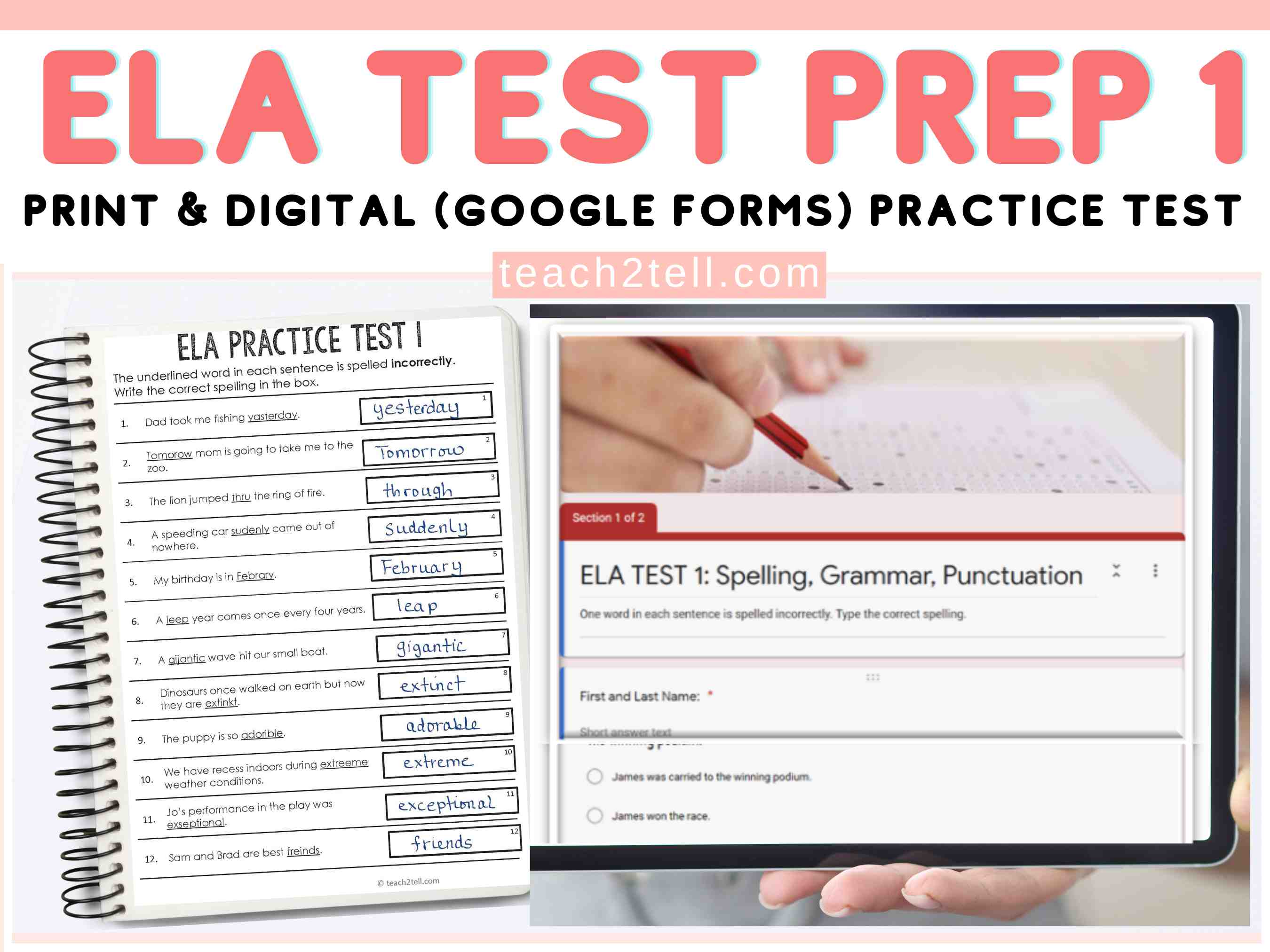
ELA Test Prep Worksheets Language Arts Review Print & Digital Activity

ELA Test Prep Worksheets Language Arts Review Print & Digital Activity
Common Core, Holiday & Seasonal, Language Development, ELA, Grammar, Spelling, Vocabulary, April, Months, Grade 3, 4, 5, 6, Activities, Assessments, Teacher Tools, Tests, Quizzes and Tests, Quizzes, Worksheets & Printables, Rubrics

Looking for ELA test prep worksheets that actually help your students review without feeling like another boring test? If your students tend to switch off during review time, you might find this resource a lot easier to manage. It’s designed to give you a solid language arts review while keeping things clear, structured, and purposeful—especially in the lead-up to testing. You can use this as a quick pre-assessment, a focused revision lesson, or even as a full practice test . I’ve used it in all three ways, depending on where my class is at. What’s included: 60-question ELA test prep worksheet (PDF) for print use Matching digital version (Google Forms) – self-checking Questions covering spelling, grammar, vocabulary, and punctuation A mix of multiple choice, checkbox, and short response Answer key for quick marking (or no marking at all with digital) Why this works What tends to happen with test prep is students either rush… or completely overthink it. This set helps balance that. The questions are varied enough to keep students thinking, but still familiar in format—so they’re building confidence as they go. You’ll also start to notice patterns in errors (especially with punctuation and sentence structure), which makes your follow-up teaching much more targeted. And honestly, the digital version saves a lot of time. The instant feedback alone is worth it. Ideal for Grades 3–5 (and useful for early Grade 6 review) End-of-term revision Standardized test preparation Homework or independent review How it can be used Whole-class test prep session Small group targeted revision Literacy centers Early finishers Independent practice before assessment Pre-test or post-test check-in Skills covered Spelling Grammar Punctuation Vocabulary Parts of speech Sentence structure Clause structure If you’re needing something straightforward that gives you a clear snapshot of where your students are at (without hours of prep), this tends to do the job really well.

Author Teach2Tell

Rating

Tags ELA Test Prep Worksheets, Language Arts Review, Grammar Worksheets Grade 4, ELA Practice Test, Print And Digital ELA, Upper Elementary ELA, Punctuation Practice Worksheets, Reading And Grammar Review, Standardized Test Prep ELA, Google Forms ELA Quiz

Flour Reading Comprehension Passage - Cored Ed Encyclopedia

Flour Reading Comprehension Passage - Cored Ed Encyclopedia
ELA, Reading Comprehension, Reading, Science, Technology, Language Development, Social Studies, History, Pre-Reading, Life Sciences, Grade 2, 3, 4, 5, Worksheets & Printables, Worksheets, Teacher Tools, Centers, Activities, Writing Prompts, Assessments, Quizzes and Tests, Quizzes, Lesson Plans

This flour reading comprehension with lesson plan includes: Visualization (on the front cover) Start your lesson by taking a minute to think and share something about the topic. Read the script aloud (slowly), perhaps prepare some music or sound effects. Student close their eyes and let their imaginations wander. Students open their eyes, read the question aloud and give them a few minutes to complete. Ask a few students to share or keep answers until the end to compare with what they learn in the passage. Quick pause—thousands of Cored Education products are included with your TeachSimple membership. Download links and encyclopedia index available here. Pre-Reading Trivia Students will write down one thing they already know about the subject and then read five more facts and discuss. These facts are fun, and the students will enjoy learning about the subject before reading more. Give 1 minute for students to write what they already know (no pressure—best guess is fine). Read the five facts together. After each fact, do ask a student for their opinion, was it surprising? Set a purpose by asking students to highlight/underline one fact they want to learn more about during the reading. Reading Passage The text is a high-interest reading passage with set paragraphs, roughly three to four paragraphs long. It contains a variety of themes about the topic, anywhere from history to technology. The passage is between 250 and 350 words in length. First, ask students to look at the headings and see what they’ll learn about today. What do they know about the topic/heading? First read options: Teacher read-aloud (best for support). Partner reading (paragraph by paragraph). While reading, students underline important details, and vocabulary words they think may come up in the questions section. Mixed Questions The first question page contains four multiple-choice questions, each with a choice of four answers, and three written response questions that require a sentence or two from the student. Students complete the mcqs first independently, then review quickly as a class. For the 3 written responses, try to get students giving the answer with some form of evidence: “I think ___ because the text says ___.” If students get stuck, send them back to check the passage. Vocabulary Questions Practice seven key words from the text in this section across two activities. First section is scrambled words where students will unscramble three words given a clue for each. The second section is a word to meaning matching activity. Before starting, have some students read out words they underlined in the passage. Ask students to say the word and read aloud the sentence(s) around each word. Ask students to do scrambled words and the matching exercise in pairs then go through answers as a class. For the scrambled spelling task, get four pairs to come up to the board and write the words for extra practice with the other student reading out the clue. For the matching task, prompt students to give full sentences: “I matched ___ with ___ because ___.” Creative Writing In this question, the student will be required to write a five to eight sentence paragraph on a question related to the topic. Before starting, ask students write down 3 key ideas they are going to include in their piece. Ask students for ideas to share around the class to help those struggling. Pro writing expectations: 5–8 sentences At least 2 facts or details from the passage At least 2 vocabulary words from the previous page Students read their paragraphs while classmates listen for facts and vocabulary words. Extension Activities This page is optional for fast finishers or to take home. There are several activities, each one requiring a different skill. Do some, do none, do all, completely optional - but you will feel reassured knowing every possibility is planned for. Includes summary writting question and additional facts. Answer Key There are answers for the multiple-choice questions, written response questions have sample answers, vocabulary answers and if there is a summary question then a sample summary will be provided as well. Lesson Plan Included Customized lesson plan for this lesson is included. Lesson Snapshot Title: Flour Genre: Nonfiction (Informational Text) Subject: Science (Food Science) / Reading (Informational Text) Primary Topic: How flour is made from seeds and grains Estimated Guided Reading Level (A–Z): P What This Lesson Teaches Best Explains what flour is made from: flour begins as a seed , and people grind grains (and other plants) into powder used for many foods. Teaches the three main parts inside a grain seed — bran , germ , and endosperm —and what each part is like. Describes how milling changed over time, from heavy stones to steel rollers and lots of sifting to make very fine flour. Builds understanding of why white flour became popular (it kept longer) and what “enriched” flour means in this text. Connects ingredient science to baking by explaining how wheat proteins can form gluten , helping dough rise and hold bubbles of air. Learning Goals Students will explain how flour begins as a seed and becomes powder through grinding. Students will identify the three main parts of a grain seed: bran, germ, and endosperm. Students will describe how modern mills use rollers and sifting to make fine flour. Students will explain why white flour kept longer, based on what the text says about oils. Students will describe what “enriched” flour means in the passage and why it mattered. Students will explain how gluten helps dough rise and hold bubbles of air. Key Vocabulary From the Text bran — the outer part of a grain seed. germ — the tiny part that could sprout. endosperm — the starchy part that feeds the seed. enriched — flour with certain vitamins and iron added back. gluten — stretchy net that helps dough rise and hold air. FULL CATALOG OF DOWNLOAD LINKS AND ENCYCLOPEDIA INDEX HERE

Author Cored Education

Rating

Tags Vocabulary, Reading Comprehension, Reading Passages, Lesson Plans, Ela Lesson Plans, Reading Comprehension Lesson Plans, Pre-reading, Science Lesson Plans, History, Technology

Spring-Themed Number Learning Game: Who Has It? Elementary + ESL

Spring-Themed Number Learning Game: Who Has It? Elementary + ESL
Math, Numbers, Early Math, ESL, Language Development, ELA, Seasons, Holiday & Seasonal, Spring, Grade 1, 2, 3, 4, 5, 6, Activities, Games, Worksheets & Printables, Quizzes and Tests, Teacher Tools, Quizzes, Flashcards

A Fun Spring Game to Make Learning Numbers Easy! 🌸🐝 Looking for a simple way to make learning numbers engaging and fun this spring? The Spring "Who Has It?" Game is a fantastic way to get your students actively involved while practicing number recognition and number words. Whether you're teaching young learners or ESL students, this game makes learning natural, interactive, and exciting. Why Your Students Will Love It 🌷 It’s a Game, Not a Worksheet! – No more boring number drills. Students will be excited to participate. 🐝 Spring-Themed Fun – Flowers, butterflies, and a fresh seasonal design keep kids interested and engaged. 🎲 Great for All Levels – Covers numbers 0 to 30, making it perfect for different skill levels. ✂ Super Easy for Teachers – Just print, cut, and start playing—no extra prep required! 👫 Encourages Teamwork – Students work together and build communication skills. How to Play 1️⃣ Hand out the cards to students. 2️⃣ The first player reads their card aloud: "I have five. Who has six?" 3️⃣ The student with the matching number responds and reads their next prompt. 4️⃣ The game continues until all numbers have been called and the loop is complete! Why This Game is a Classroom Favorite ✔ Keeps Students Engaged – Learning numbers feels like play, not work! ✔ Boosts Confidence – Helps students recognize, read, and say numbers aloud with ease. ✔ Supports ESL Learners – Reinforces number vocabulary and fluency in a low-pressure way. ✔ Versatile for Any Setting – Use it for whole-class activities, small groups, or even one-on-one practice. Instead of worksheets, give your students a fun way to learn numbers with laughter, movement, and teamwork. This spring-themed number game is the perfect way to make learning feel fresh and exciting! 🌸 Want to bring more energy into your math lessons? Download now and start playing today! Wishing you and your students lots of fun! Best, Heike from Lernfitness Did You Know? I teach with a certified therapy dog, and together we focus on creating a positive and inspiring learning environment.

Author Lernfitness

Tags Numbers, Math, EFL, ESL, Game, Educational Card Games, Number Words, Easter, Who Has It, Easter Game

Rock Cycle, Soil, & Sinkholes: SAMPLE Reading Passage (PDF)
Free Download

Rock Cycle, Soil, & Sinkholes: SAMPLE Reading Passage (PDF)
Science, Earth and Environmental Sciences, ELA, Reading, Reading Comprehension, Strategies, Resources for Teachers, Geology, Earth Sciences, Grade 6, 7, 8, 9, Writing Prompts, Worksheets & Printables, Centers, Activities, Teacher Tools, Assessments, Quizzes and Tests, Quizzes, Tests

This is a ONE PASSAGE SAMPLE. The following is the description of the FULL resource and the downloading links: Rock Cycle, Soil, & Sinkholes: Reading Comprehension Passages (PDF) This very engaging collection of earth science reading passages about Rock Cycle, Soil, and Sinkholes is designed to bridge the gap between science and literacy through strengthening reading comprehension and sparking scientific curiosity in middle school students. Each passage blends English Language Arts skills with accurate science content that supports NGSS classroom practice. Ideal for interdisciplinary learning in ELA and Science. Suitable for Grade 9 review, too! What Is Included? There are (3) informational passages: Soil: The Life Beneath Our Feet Explore how minerals, organic matter, water, and air build layered soil, and see how texture and structure affect roots, drainage, clean water, and healthy habitats. The Science of Sinkholes Understand how dissolving rock creates underground voids, what can trigger subsidence or collapse, and how mapping and prevention reduce risk in vulnerable areas. The Rock Cycle: How Rocks Form and Change Follow rock material as it melts, crystallizes, weathers, compacts, and transforms under heat and pressure, then connect these processes to examples in nature and everyday life. Student Tasks for Each Passage: 5 multiple-choice questions targeting main idea, key details, inference, vocabulary in context, and use of evidence 5 vocabulary matching items with clear, student-friendly definitions 5 text-based questions that require citing specific lines or facts 1 summary prompt that asks students to condense central ideas accurately Full answer key for every section Available Formats for this Resource Word Docs Google Docs FULL CATALOG OF DOWNLOADING LINKS HERE Reading Passage Links: Astronomy & Space Science PDF Word Docs Google Docs Volcanoes, Rocks, & Mountains PDF Word Docs Google Docs Rock Cycle, Soil, & Sinkholes PDF Word Docs Google Docs Mars, Glaciers, & Antarctica PDF Word Docs Google Docs Water Cycle, Acid Rain, & Wastewater PDF Word Docs Google Docs Insects, Animals, & Ecosystems PDF Word Docs Google Docs Bioluminescence & Insects PDF Word Docs Google Docs Animal Skin, Cats, & T. Rex PDF Word Docs Google Docs Product Details Length: 15 pages total Grades: 6–8, also suitable for Grade 9 review Use cases: close reading, stations, homework, intervention, test prep, and sub plans Standards support: reinforces informational-text skills and supports NGSS-style sense making through observation, modeling, and clear use of claim, evidence, and reasoning Why Teachers Choose This Set Authentic science content paired with rigorous literacy practice Consistent task structure across all passages for easier planning and smoother student routines Clear, age-appropriate writing that builds confidence without oversimplifying Use this set to reinforce ELA skills in science, to add literacy to your lessons, or to support independent work. The passages strengthen main idea, evidence use, vocabulary in context, inference, cause and effect, and summary writing. With ready-to-use assessments and complete answer keys, you can provide focused practice that is simple to run and fast to review.

Author CORED Education - Middle & High School

Rating

Tags Middle School, Reading Comprehension, Reading Strategies, Reading Passages, ELA, Centers, Reading Passage, Assessments, Vocabulary, Earth Science

Candy Reading Comprehension 1 Lesson Sample Google Forms
Free Download

Candy Reading Comprehension 1 Lesson Sample Google Forms
ELA, Language Development, Resources for Teachers, Vocabulary, Spelling, Reading Comprehension, Reading, Common Core, Grade 2, 3, 4, 5, Teacher Tools, Centers, Activities, Assessments, Tests, Quizzes and Tests, Quizzes, Word Problems, Worksheets & Printables, Writing Prompts

THIS IS A ONE LESSON FREE SAMPLE OF THE FOLLOWING PRODUCT: Themed Reading Comprehension Passages Series - Candy This reading comprehension series is built for grades 2 to 5 and keeps things simple, clear, and easy to use. Every title follows a fun, kid-friendly theme and comes with two passage levels, one written for grades 2 to 3 and a more challenging version for grades 4 to 5. Students then work through a mix of follow-up pages that check understanding in different ways: multiple-choice questions, short written responses, scrambled words, a quick summary, and a theme-based word problem. Answer keys are included, so prep stays minimal. Each resource also comes in nine classroom-friendly formats, so you can choose what fits your setup: print or digital, editable or ready to go, and even self-grading options. Because the layout stays consistent, it is easy to plug into whole-class lessons, small groups, literacy centers, morning work, fast finisher tubs, sub plans, or home learning. It is a straightforward way to build comprehension, practice reading skills in context, and strengthen written responses without adding extra steps for you. Candy Lesson List Note: This product has titles different to those in the rest of the themed series. 1. Candy Types 2. Candy Flavors 3. Candy Shapes and Colors 4. Candy Ingredients 5. Candy Fun Facts GOOGLE FORMS VERSION Mostly self-grading quizzes with built-in answer keys and sample responses, so you can collect scores and feedback in minutes. Non-self grading questions have a star before them, primarily the further questions writing section (4 questions), creative writing prompt and the summary. Sample answers are given for all but the creative writing. Other versions are available in the links list below or in the full catalog. How to Use These Lessons Perfect for: Morning work or early-finisher bins Guided reading blocks or comprehension warmups Literacy centers or small-group rotations Holiday/seasonal review lessons Independent stations, sub plans, or take-home enrichment More Candy Themed Products CROSSWORDS WORDSEARCHES MAZES FULL CATALOG OF DOWNLOAD LINKS HERE Themed Reading Links Addition Animals Around the Home Birthday FORMATS: -FORMAL ASSESSMENT VERSION -PRESENTABLE PDF -PPT -SLIDES - PDF -FILLABLE PDF -WORD -FORMS -DOCS SUPPLEMENTARY MATERIALS (COMING SOON): -VISUAL READING PASSAGE VIDEO -GUIDED LEARNING VIDEO -LESSON PLANS Candy FORMATS: -FORMAL ASSESSMENT VERSION -PRESENTABLE PDF -PPT -SLIDES -PDF -FILLABLE PDF -WORD -FORMS -DOCS SUPPLEMENTARY MATERIALS (COMING SOON): -VISUAL READING PASSAGE VIDEO -GUIDED LEARNING VIDEO -LESSON PLANS Christmas Cinco de Mayo Clothes Colors Days and Months Division Earth Day Easter Easy Mazes Fall Father's Day Food Geography (Set 1) Geography (Set 2) Geography (Set 3) Graduation Health History (Set 1) History (Set 2) History (Set 3) Human Body Kindness Life Skills Mother's Day Multiplication Science (Set 1) Science (Set 2) Science (Set 3) Shapes Social Skills Spring Sports St. Patrick's Day Subtraction Summer Thanksgiving Transport Valentine's Day Winter Free One Lesson Themes Chinese New Year Lunar New Year Halloween Pink Shirt Day Independence Day Juneteenth President's Day Groundhog Day Readings in Depth Structure Each resource is built around a focused sub-theme within the broader topic. Students read two leveled passages (Grades 2–3 and Grades 4–5), then move through a short, consistent sequence of activities that checks understanding and keeps momentum: multiple-choice, brief written responses, a scrambled-words review, a compact summary task, and a light theme-linked word problem. The flow is predictable for students, but varied enough to feel fresh across topics. Each completed resource includes: Two differentiated reading passages (lower and upper level) A multiple-choice comprehension page Short written-response questions A scrambled-words or quick vocabulary check A brief summary activity A simple, theme-connected word problem Answer keys for fast marking and easy self-checking Nine classroom-friendly formats, including print, editable, digital, and self-grading options Themes Included These readings span a wide range of age-appropriate, high-interest topics, such as: Seasons and celebrations Real-world science and nature Community, character, and life skills Everyday high-frequency themes students already enjoy Each title connects to familiar experiences while strengthening comprehension, vocabulary in context, and clear written expression. Easy extensions (optional): Read twice: first for gist, second to highlight key details Write two “right there” questions and swap with a partner Create a 3-bullet fact list or mini mind map Turn the summary into a 3-sentence retell using sequence words Add one extra math question connected to the topic Compare the two levels: what details appear in both? Differentiation tips: Pre-teach 2–3 key words with quick examples Offer sentence starters for written responses Use partner reading: one reads aloud, one tracks evidence Allow highlighting or underlining before answering questions Provide a shorter chunking option for students who need breaks Encourage confident readers to justify answers with a quoted detail For similar downloads and other frees, do check out Cored Group on TeachSimple.

Author Cored Education

Rating

Tags Vocabulary, Spelling, Candy, Candy Activities, Writing Prompts, Word Problems, Reading Comprehension, Candy Reading, Candy Passages, Reading Passages

Water Cycle, Acid Rain, & Wastewater: Reading Comprehension (Word)

Water Cycle, Acid Rain, & Wastewater: Reading Comprehension (Word)
Science, Earth and Environmental Sciences, ELA, Reading, Reading Comprehension, Strategies, Resources for Teachers, Environmental Science, Grade 6, 7, 8, 9, Writing Prompts, Worksheets & Printables, Centers, Activities, Teacher Tools, Assessments, Quizzes and Tests, Quizzes, Tests

Water Cycle, Acid Rain, & Wastewater: Reading Comprehension Passages (Word) This very engaging collection of environmental science reading passages about Water Cycle, Acid Rain, & Wastewater is designed to bridge the gap between science and literacy through strengthening reading comprehension and sparking scientific curiosity in middle school students. Each passage blends English Language Arts skills with accurate science content that supports NGSS classroom practice. Ideal for interdisciplinary learning in ELA and Science. Suitable for Grade 9 review, too! What Is Included? There are (3) informational passages: Wastewater: From Drain to Clean Follow water from your sink to the treatment plant as screens pull out debris, grit settles, microbes break down leftovers, and disinfection makes the water safe to release or reuse. The Water Cycle: The Engine of Our Planet Watch water move through evaporation, condensation, precipitation, and runoff, with plants and soils helping store and move it. See how this cycle powers weather and refills rivers and aquifers. Acid Rain: Causes, Impacts, and Solutions Learn how certain air pollutants turn rain more acidic, what that means for lakes, forests, and buildings, and how cleaner energy and emission controls help damaged ecosystems recover. Student Tasks for Each Passage: 5 multiple-choice questions targeting main idea, key details, inference, vocabulary in context, and use of evidence 5 vocabulary matching items with clear, student-friendly definitions 5 text-based questions that require citing specific lines or facts 1 summary prompt that asks students to condense central ideas accurately Full answer key for every section Available Formats for this Resource PDF Google Docs FULL CATALOG OF DOWNLOADING LINKS HERE Reading Passage Links: Astronomy & Space Science PDF Word Docs Google Docs Volcanoes, Rocks, & Mountains PDF Word Docs Google Docs Rock Cycle, Soil, & Sinkholes PDF Word Docs Google Docs Mars, Glaciers, & Antarctica PDF Word Docs Google Docs Water Cycle, Acid Rain, & Wastewater PDF Word Docs Google Docs Insects, Animals, & Ecosystems PDF Word Docs Google Docs Bioluminescence & Insects PDF Word Docs Google Docs Animal Skin, Cats, & T. Rex PDF Word Docs Google Docs Product Details Length: 15 pages total Grades: 6–8, also suitable for Grade 9 review Use cases: close reading, stations, homework, intervention, test prep, and sub plans Standards support: reinforces informational-text skills and supports NGSS-style sense making through observation, modeling, and clear use of claim, evidence, and reasoning Why Teachers Choose This Set Authentic science content paired with rigorous literacy practice Consistent task structure across all passages for easier planning and smoother student routines Clear, age-appropriate writing that builds confidence without oversimplifying Use this set to reinforce ELA skills in science, to add literacy to your lessons, or to support independent work. The passages strengthen main idea, evidence use, vocabulary in context, inference, cause and effect, and summary writing. With ready-to-use assessments and complete answer keys, you can provide focused practice that is simple to run and fast to review.

Author CORED Education - Middle & High School

Rating

Tags Middle School, Reading Comprehension, Reading Strategies, Reading Passages, ELA, Centers, Reading Passage, Assessments, Vocabulary, Environmental Science

Science Reading Passages: Astronomy and Space (FILLABLE PDF)

Science Reading Passages: Astronomy and Space (FILLABLE PDF)
Science, Space, Earth and Environmental Sciences, ELA, Reading, Reading Comprehension, Strategies, Resources for Teachers, Grade 6, 7, 8, 9, Writing Prompts, Worksheets & Printables, Centers, Activities, Teacher Tools, Assessments, Quizzes and Tests, Quizzes, Tests

Astronomy and Space Science: Reading Comprehension Passages and Questions (FILLABLE PDF) This engaging and fillable collection of science reading passages about Astronomy and Space Science is designed to bridge the gap between science and literacy through strengthening reading comprehension and sparking scientific curiosity in middle school students. Each passage blends English Language Arts skills with accurate science content that supports NGSS classroom practice. Ideal for interdisciplinary learning in ELA and Science. Suitable for Grade 9 review, too! These worksheets are designed as fillable PDFs , which means students can type their answers directly into the document on any computer or tablet . Each page includes highlighted text fields that show them exactly where to type! What Is Included? There are (3) informational passages: The Solar System: A Neighborhood in Motion The Story of Space Science Stars of Many Sizes: Dwarfs, Giants, and Neutrons Student Tasks for Each Passage 5 multiple-choice questions targeting main idea, key details, inference, vocabulary in context, and use of evidence 5 vocabulary matching items with clear, student-friendly definitions 5 text-based questions that require citing specific lines or facts 1 summary prompt that asks students to condense central ideas accurately Full answer key for every section Available Formats for this Resource: Word Docs Google Docs FULL CATALOG OF DOWNLOADING LINKS HERE Reading Passage Links: Astronomy & Space Science PDF Word Docs Google Docs Volcanoes, Rocks, & Mountains PDF Word Docs Google Docs Rock Cycle, Soil, & Sinkholes PDF Word Docs Google Docs Mars, Glaciers, & Antarctica PDF Word Docs Google Docs Water Cycle, Acid Rain, & Wastewater PDF Word Docs Google Docs Insects, Animals, & Ecosystems PDF Word Docs Google Docs Bioluminescence & Insects PDF Word Docs Google Docs Animal Skin, Cats, & T. Rex PDF Word Docs Google Docs Human Body and Senses PDF Word Docs Google Docs Health & Applied Bioscience PDF Word Docs Google Docs Waves, Light, & Imaging PDF Word Docs Google Docs Electricity & Energy PDF Word Docs Google Docs Motion & Materials PDF Word Docs Google Docs Chemistry and Materials Science PDF Word Docs Google Docs How to Use These PDFs Click on the highlighted area to start typing your answer. Move to the next question by clicking in the next highlighted box. When you are finished, close the document and select SAVE so your answers stay recorded. If you want to keep a blank copy for later, choose Save As and give your completed version a new name. Product Details Length: 14 pages total Grades: 6–8, also suitable for Grade 9 review Use cases: close reading, stations, homework, intervention, test prep, and sub plans Standards support: reinforces informational-text skills and supports NGSS-style sense making through observation, modeling, and clear use of claim, evidence, and reasoning Why Teachers Choose This Set Authentic science content paired with rigorous literacy practice Consistent task structure across all passages for easier planning and smoother student routines Clear, age-appropriate writing that builds confidence without oversimplifying Use this set to reinforce ELA skills in science, to add literacy to your lessons, or to support independent work. The passages strengthen main idea, evidence use, vocabulary in context, inference, cause and effect, and summary writing. With ready-to-use assessments and complete answer keys, you can provide focused practice that is simple to run and fast to review.

Author CORED Education - Middle & High School

Rating

Tags Middle School, Reading Comprehension, Reading Strategies, Reading Passages, ELA, Centers, Reading Passage, Assessments, Vocabulary, Earth Science

Gasoline Reading Comprehension Passage - Cored Ed Encyclopedia

Gasoline Reading Comprehension Passage - Cored Ed Encyclopedia
ELA, Reading Comprehension, Reading, Science, Technology, Earth and Environmental Sciences, Pre-Reading, Language Development, Vocabulary, Physics, Grade 2, 3, 4, 5, Worksheets & Printables, Worksheets, Teacher Tools, Centers, Activities, Writing Prompts, Assessments, Quizzes and Tests, Quizzes, Lesson Plans

This gasoline reading comprehension with lesson plan includes: Visualization (on the front cover) Start your lesson by taking a minute to think and share something about the topic. Read the script aloud (slowly), perhaps prepare some music or sound effects. Student close their eyes and let their imaginations wander. Students open their eyes, read the question aloud and give them a few minutes to complete. Ask a few students to share or keep answers until the end to compare with what they learn in the passage. Quick pause—thousands of Cored Education products are included with your TeachSimple membership. Download links and encyclopedia index available here. Pre-Reading Trivia Students will write down one thing they already know about the subject and then read five more facts and discuss. These facts are fun, and the students will enjoy learning about the subject before reading more. Give 1 minute for students to write what they already know (no pressure—best guess is fine). Read the five facts together. After each fact, do ask a student for their opinion, was it surprising? Set a purpose by asking students to highlight/underline one fact they want to learn more about during the reading. Reading Passage The text is a high-interest reading passage with set paragraphs, roughly three to four paragraphs long. It contains a variety of themes about the topic, anywhere from history to technology. The passage is between 250 and 350 words in length. First, ask students to look at the headings and see what they’ll learn about today. What do they know about the topic/heading? First read options: Teacher read-aloud (best for support). Partner reading (paragraph by paragraph). While reading, students underline important details, and vocabulary words they think may come up in the questions section. Mixed Questions The first question page contains four multiple-choice questions, each with a choice of four answers, and three written response questions that require a sentence or two from the student. Students complete the mcqs first independently, then review quickly as a class. For the 3 written responses, try to get students giving the answer with some form of evidence: “I think ___ because the text says ___.” If students get stuck, send them back to check the passage. Vocabulary Questions Practice seven key words from the text in this section across two activities. First section is scrambled words where students will unscramble three words given a clue for each. The second section is a word to meaning matching activity. Before starting, have some students read out words they underlined in the passage. Ask students to say the word and read aloud the sentence(s) around each word. Ask students to do scrambled words and the matching exercise in pairs then go through answers as a class. For the scrambled spelling task, get four pairs to come up to the board and write the words for extra practice with the other student reading out the clue. For the matching task, prompt students to give full sentences: “I matched ___ with ___ because ___.” Creative Writing In this question, the student will be required to write a five to eight sentence paragraph on a question related to the topic. Before starting, ask students write down 3 key ideas they are going to include in their piece. Ask students for ideas to share around the class to help those struggling. Pro writing expectations: 5–8 sentences At least 2 facts or details from the passage At least 2 vocabulary words from the previous page Students read their paragraphs while classmates listen for facts and vocabulary words. Extension Activities This page is optional for fast finishers or to take home. There are several activities, each one requiring a different skill. Do some, do none, do all, completely optional - but you will feel reassured knowing every possibility is planned for. Includes summary writting question and additional facts. Answer Key There are answers for the multiple-choice questions, written response questions have sample answers, vocabulary answers and if there is a summary question then a sample summary will be provided as well. Lesson Plan Included Customized lesson plan for this lesson is included. Lesson Snapshot Title: Gasoline Genre: Nonfiction (informational text) Subject: Science Primary Topic: What gasoline is, how it works, and impacts Estimated Guided Reading Level (A–Z): Q What This Lesson Teaches Best Explains what gasoline is and why it must be handled carefully because it “can catch fire very easily.” Describes how gasoline helps a car engine work (a spark burns gasoline in a controlled way to move parts that turn the wheels). Traces a brief history of gasoline’s changing value (from “leftover” in 1859 to useful once automobiles appeared in 1892). Introduces the idea of octane ratings and how they relate to engine “knocking” and early ignition. Connects gasoline use to environmental effects (vapors can pollute; burning creates gases including carbon dioxide) and mentions cleaner travel choices. Learning Goals Students will identify what gasoline is and where it comes from (petroleum/crude oil from deep underground). Students will describe how gasoline is used inside a car engine to help make the wheels turn. Students will explain how gasoline changed from being thrown away to becoming a valuable fuel. Students will explain what “octane” measures and how it relates to engine knocking. Students will describe two ways gasoline can affect the air (vapors and burning gases). Students will name choices mentioned in the text for using less gasoline (electric vehicles, bikes, buses, walking). Key Vocabulary From the Text gasoline — fuel liquid used in many cars. petroleum — thick oil material gasoline is made from. crude — raw oil from deep underground. kerosene — lamp fuel people wanted in 1859. octane — rating showing resistance to early ignition. FULL CATALOG OF DOWNLOAD LINKS AND ENCYCLOPEDIA INDEX HERE

Author Cored Education

Rating

Tags Vocabulary, Reading Comprehension, Reading Passages, Lesson Plans, Ela Lesson Plans, Reading Comprehension Lesson Plans, Pre-reading, Science Lesson Plans, Earth Science, Physics

Candy Reading Comprehension 1 Lesson Sample Formal Assessments
Free Download

Candy Reading Comprehension 1 Lesson Sample Formal Assessments
ELA, Language Development, Resources for Teachers, Vocabulary, Spelling, Reading Comprehension, Reading, Common Core, Grade 2, 3, 4, 5, Teacher Tools, Centers, Activities, Assessments, Tests, Quizzes and Tests, Quizzes, Word Problems, Worksheets & Printables, Writing Prompts

THIS IS A ONE LESSON FREE SAMPLE OF THE FOLLOWING PRODUCT: Themed Reading Comprehension Passages Series - Candy This reading comprehension series is built for grades 2 to 5 and keeps things simple, clear, and easy to use. Every title follows a fun, kid-friendly theme and comes with two passage levels, one written for grades 2 to 3 and a more challenging version for grades 4 to 5. Students then work through a mix of follow-up pages that check understanding in different ways: multiple-choice questions, short written responses, scrambled words, a quick summary, and a theme-based word problem. Answer keys are included, so prep stays minimal. Each resource also comes in nine classroom-friendly formats, so you can choose what fits your setup: print or digital, editable or ready to go, and even self-grading options. Because the layout stays consistent, it is easy to plug into whole-class lessons, small groups, literacy centers, morning work, fast finisher tubs, sub plans, or home learning. It is a straightforward way to build comprehension, practice reading skills in context, and strengthen written responses without adding extra steps for you. Candy Lesson List Note: This product has titles different to those in the rest of the themed series. 1. Candy Types 2. Candy Flavors 3. Candy Shapes and Colors 4. Candy Ingredients 5. Candy Fun Facts FORMAL ASSESSMENT VERSION Formal, test-style pages for quick grading, progress checks, and clear results. Other versions are available in the links list below or in the full catalog. How to Use These Lessons Perfect for: Morning work or early-finisher bins Guided reading blocks or comprehension warmups Literacy centers or small-group rotations Holiday/seasonal review lessons Independent stations, sub plans, or take-home enrichment More Candy Themed Products CROSSWORDS WORDSEARCHES MAZES FULL CATALOG OF DOWNLOAD LINKS HERE Themed Reading Links Addition Animals Around the Home Birthday FORMATS: -FORMAL ASSESSMENT VERSION -PRESENTABLE PDF -PPT -SLIDES - PDF -FILLABLE PDF -WORD -FORMS -DOCS SUPPLEMENTARY MATERIALS (COMING SOON): -VISUAL READING PASSAGE VIDEO -GUIDED LEARNING VIDEO -LESSON PLANS Candy FORMATS: -FORMAL ASSESSMENT VERSION -PRESENTABLE PDF -PPT -SLIDES -PDF -FILLABLE PDF -WORD -FORMS -DOCS SUPPLEMENTARY MATERIALS (COMING SOON): -VISUAL READING PASSAGE VIDEO -GUIDED LEARNING VIDEO -LESSON PLANS Christmas Cinco de Mayo Clothes Colors Days and Months Division Earth Day Easter Easy Mazes Fall Father's Day Food Geography (Set 1) Geography (Set 2) Geography (Set 3) Graduation Health History (Set 1) History (Set 2) History (Set 3) Human Body Kindness Life Skills Mother's Day Multiplication Science (Set 1) Science (Set 2) Science (Set 3) Shapes Social Skills Spring Sports St. Patrick's Day Subtraction Summer Thanksgiving Transport Valentine's Day Winter Free One Lesson Themes Chinese New Year Lunar New Year Halloween Pink Shirt Day Independence Day Juneteenth President's Day Groundhog Day Readings in Depth Structure Each resource is built around a focused sub-theme within the broader topic. Students read two leveled passages (Grades 2–3 and Grades 4–5), then move through a short, consistent sequence of activities that checks understanding and keeps momentum: multiple-choice, brief written responses, a scrambled-words review, a compact summary task, and a light theme-linked word problem. The flow is predictable for students, but varied enough to feel fresh across topics. Each completed resource includes: Two differentiated reading passages (lower and upper level) A multiple-choice comprehension page Short written-response questions A scrambled-words or quick vocabulary check A brief summary activity A simple, theme-connected word problem Answer keys for fast marking and easy self-checking Nine classroom-friendly formats, including print, editable, digital, and self-grading options Themes Included These readings span a wide range of age-appropriate, high-interest topics, such as: Seasons and celebrations Real-world science and nature Community, character, and life skills Everyday high-frequency themes students already enjoy Each title connects to familiar experiences while strengthening comprehension, vocabulary in context, and clear written expression. Easy extensions (optional): Read twice: first for gist, second to highlight key details Write two “right there” questions and swap with a partner Create a 3-bullet fact list or mini mind map Turn the summary into a 3-sentence retell using sequence words Add one extra math question connected to the topic Compare the two levels: what details appear in both? Differentiation tips: Pre-teach 2–3 key words with quick examples Offer sentence starters for written responses Use partner reading: one reads aloud, one tracks evidence Allow highlighting or underlining before answering questions Provide a shorter chunking option for students who need breaks Encourage confident readers to justify answers with a quoted detail For similar downloads and other frees, do check out Cored Group on TeachSimple.

Author Cored Education

Rating

Tags Vocabulary, Spelling, Candy, Candy Activities, Writing Prompts, Word Problems, Reading Comprehension, Candy Reading, Candy Passages, Reading Passages

The Universe Reading Comprehension Passage - Cored Ed Encyclopedia
Free Download

The Universe Reading Comprehension Passage - Cored Ed Encyclopedia
ELA, Language Development, Reading Comprehension, Reading, Science, Earth and Environmental Sciences, Space, Pre-Reading, Vocabulary, Physics, Grade 2, 3, 4, 5, Worksheets & Printables, Worksheets, Teacher Tools, Centers, Activities, Writing Prompts, Assessments, Quizzes and Tests, Quizzes, Lesson Plans

This universe reading comprehension with lesson plan includes: Visualization (on the front cover) Start your lesson by taking a minute to think and share something about the topic. Read the script aloud (slowly), perhaps prepare some music or sound effects. Student close their eyes and let their imaginations wander. Students open their eyes, read the question aloud and give them a few minutes to complete. Ask a few students to share or keep answers until the end to compare with what they learn in the passage. Quick pause—thousands of Cored Education products are included with your TeachSimple membership. Download links and encyclopedia index available here. Pre-Reading Trivia Students will write down one thing they already know about the subject and then read five more facts and discuss. These facts are fun, and the students will enjoy learning about the subject before reading more. Give 1 minute for students to write what they already know (no pressure—best guess is fine). Read the five facts together. After each fact, do ask a student for their opinion, was it surprising? Set a purpose by asking students to highlight/underline one fact they want to learn more about during the reading. Reading Passage The text is a high-interest reading passage with set paragraphs, roughly three to four paragraphs long. It contains a variety of themes about the topic, anywhere from history to technology. The passage is between 250 and 350 words in length. First, ask students to look at the headings and see what they’ll learn about today. What do they know about the topic/heading? First read options: Teacher read-aloud (best for support). Partner reading (paragraph by paragraph). While reading, students underline important details, and vocabulary words they think may come up in the questions section. Mixed Questions The first question page contains four multiple-choice questions, each with a choice of four answers, and three written response questions that require a sentence or two from the student. Students complete the mcqs first independently, then review quickly as a class. For the 3 written responses, try to get students giving the answer with some form of evidence: “I think ___ because the text says ___.” If students get stuck, send them back to check the passage. Vocabulary Questions Practice seven key words from the text in this section across two activities. First section is scrambled words where students will unscramble three words given a clue for each. The second section is a word to meaning matching activity. Before starting, have some students read out words they underlined in the passage. Ask students to say the word and read aloud the sentence(s) around each word. Ask students to do scrambled words and the matching exercise in pairs then go through answers as a class. For the scrambled spelling task, get four pairs to come up to the board and write the words for extra practice with the other student reading out the clue. For the matching task, prompt students to give full sentences: “I matched ___ with ___ because ___.” Creative Writing In this question, the student will be required to write a five to eight sentence paragraph on a question related to the topic. Before starting, ask students write down 3 key ideas they are going to include in their piece. Ask students for ideas to share around the class to help those struggling. Pro writing expectations: 5–8 sentences At least 2 facts or details from the passage At least 2 vocabulary words from the previous page Students read their paragraphs while classmates listen for facts and vocabulary words. Extension Activities This page is optional for fast finishers or to take home. There are several activities, each one requiring a different skill. Do some, do none, do all, completely optional - but you will feel reassured knowing every possibility is planned for. Includes summary writting question. Answer Key There are answers for the multiple-choice questions, written response questions have sample answers, vocabulary answers and if there is a summary question then a sample summary will be provided as well. Lesson Plan Included Customized lesson plan for this lesson is included. Lesson Snapshot Title: The Universe Genre: Nonfiction (informational text) Subject: Science (Earth & Space Science) Primary Topic: Evidence the universe is expanding over time Estimated Guided Reading Level (A–Z): S What This Lesson Teaches Best Defines universe as “all of space and time and everything inside them,” expanding beyond the idea of stars as a “roof” above Earth. Explains how improved telescopes helped people realize some “cloudy” spots were actually faraway galaxies beyond the Milky Way. Uses the idea of galaxy light “shifted toward red” to show galaxies moving away and that space itself is stretching. Introduces the Big Bang as an explanation for expansion from a hotter, denser beginning, including the estimated age of the universe (about 13.8 billion years). Builds scientific curiosity by highlighting unanswered questions about “dark” ingredients that can’t be seen directly but affect the universe through gravity and expansion. Learning Goals Students will explain what the word universe means using details from the passage. Students will describe how better telescopes changed what people understood about “cloudy” spots in the sky. Students will explain what “shifted toward red” light suggests about galaxies and space stretching. Students will summarize the Big Bang idea as the universe expanding from a hotter, denser state. Students will describe why looking deep into space can also mean looking back in time. Students will identify one mystery scientists still study about the universe mentioned in the text. Key Vocabulary From the Text universe — all space, time, and everything inside them. galaxies — huge groups of stars far beyond the Milky Way. stretching — space expanding so distances grow larger. expanding — growing bigger as space spreads out. gravity — a force that affects everything by pulling. FULL CATALOG OF DOWNLOAD LINKS AND ENCYCLOPEDIA INDEX HERE

Author Cored Education

Rating

Tags Vocabulary, Reading Comprehension, Reading Passages, Lesson Plans, Ela Lesson Plans, Reading Comprehension Lesson Plans, Pre-reading, Science Lesson Plans, Earth Science, Space

Vehicles Reading Comprehension Passage - Cored Ed Encyclopedia

Vehicles Reading Comprehension Passage - Cored Ed Encyclopedia
ELA, Language Development, Reading Comprehension, Reading, Pre-Reading, Science, Technology, Engineering, History, Social Studies, Grade 2, 3, 4, 5, Worksheets & Printables, Worksheets, Teacher Tools, Centers, Activities, Writing Prompts, Assessments, Quizzes and Tests, Quizzes, Lesson Plans

This vehicles reading comprehension with lesson plan includes: Visualization (on the front cover) Start your lesson by taking a minute to think and share something about the topic. Read the script aloud (slowly), perhaps prepare some music or sound effects. Student close their eyes and let their imaginations wander. Students open their eyes, read the question aloud and give them a few minutes to complete. Ask a few students to share or keep answers until the end to compare with what they learn in the passage. Quick pause—thousands of Cored Education products are included with your TeachSimple membership. Download links and encyclopedia index available here. Pre-Reading Trivia Students will write down one thing they already know about the subject and then read five more facts and discuss. These facts are fun, and the students will enjoy learning about the subject before reading more. Give 1 minute for students to write what they already know (no pressure—best guess is fine). Read the five facts together. After each fact, do ask a student for their opinion, was it surprising? Set a purpose by asking students to highlight/underline one fact they want to learn more about during the reading. Reading Passage The text is a high-interest reading passage with set paragraphs, roughly three to four paragraphs long. It contains a variety of themes about the topic, anywhere from history to technology. The passage is between 250 and 350 words in length. First, ask students to look at the headings and see what they’ll learn about today. What do they know about the topic/heading? First read options: Teacher read-aloud (best for support). Partner reading (paragraph by paragraph). While reading, students underline important details, and vocabulary words they think may come up in the questions section. Mixed Questions The first question page contains four multiple-choice questions, each with a choice of four answers, and three written response questions that require a sentence or two from the student. Students complete the mcqs first independently, then review quickly as a class. For the 3 written responses, try to get students giving the answer with some form of evidence: “I think ___ because the text says ___.” If students get stuck, send them back to check the passage. Vocabulary Questions Practice seven key words from the text in this section across two activities. First section is scrambled words where students will unscramble three words given a clue for each. The second section is a word to meaning matching activity. Before starting, have some students read out words they underlined in the passage. Ask students to say the word and read aloud the sentence(s) around each word. Ask students to do scrambled words and the matching exercise in pairs then go through answers as a class. For the scrambled spelling task, get four pairs to come up to the board and write the words for extra practice with the other student reading out the clue. For the matching task, prompt students to give full sentences: “I matched ___ with ___ because ___.” Creative Writing In this question, the student will be required to write a five to eight sentence paragraph on a question related to the topic. Before starting, ask students write down 3 key ideas they are going to include in their piece. Ask students for ideas to share around the class to help those struggling. Pro writing expectations: 5–8 sentences At least 2 facts or details from the passage At least 2 vocabulary words from the previous page Students read their paragraphs while classmates listen for facts and vocabulary words. Extension Activities This page is optional for fast finishers or to take home. There are several activities, each one requiring a different skill. Do some, do none, do all, completely optional - but you will feel reassured knowing every possibility is planned for. Includes summary writting question. Answer Key There are answers for the multiple-choice questions, written response questions have sample answers, vocabulary answers and if there is a summary question then a sample summary will be provided as well. Lesson Plan Included Customized lesson plan for this lesson is included. Lesson Snapshot Title: Vehicles Genre: Nonfiction (Informational text) Subject: Social Studies / Science & Technology Primary Topic: How transportation changed from wheels to flight Estimated Guided Reading Level (A–Z): P Support pages: Pre-reading trivia, mixed questions, vocabulary practice, creative writing, extension activities, and an answer key. Support-page QA check: Some vocab items don’t match the exact word forms in the passage (e.g., chariot vs chariots , battery vs batteries , submarine vs submarines , locomotive vs locomotives ). What This Lesson Teaches Best Sequence of transportation changes over time: Moves from walking/animals, to logs/sledges, to wooden wheels and wagons, to roads and coaches, to steam locomotives, motor vehicles, and airplanes. How inventions improved travel and hauling: Explains how wheels, roads, tracks/railroads, and engines made travel smoother, faster, and able to carry heavier loads. Using headings to organize information: Section headings (“Roads…,” “When Steam…,” “A Lift Into the Air”) help readers track time periods and big shifts. Key historical details in an informational text: Includes dates and examples such as Uruk clay tablets (3700–3500 BCE) and the Wright Flyer flight (December 17, 1903). Modern tech and environmental impact: Notes electric motors, rechargeable batteries, and “no tailpipe exhaust,” ending with a question about helping the planet. Learning Goals Students will describe how people traveled and carried loads before wheels, using details from the passage. Students will identify how wheels changed what vehicles could do (hauling goods and moving more easily). Students will explain how roads and railroads affected travel and connected places, based on the text. Students will summarize the “biggest leap” in travel described in the passage and name the example given. Students will use headings and key details to retell the passage’s main changes in transportation in order. Key Vocabulary From the Text sledge — a sled that helps heavy things slide. Mesopotamia — an ancient region where Uruk was located. spoked — having thin supports connecting wheel center to rim. locomotives — train engines that pull cars on tracks. rechargeable — can be filled with power again. FULL CATALOG OF DOWNLOAD LINKS AND ENCYCLOPEDIA INDEX HERE

Author Cored Education

Rating

Tags Vocabulary, Reading Comprehension, Reading Passages, Lesson Plans, Ela Lesson Plans, Reading Comprehension Lesson Plans, Pre-reading, Science Lesson Plans, Technology, History Lesson Plans

High School Science Fungi Life Cycle Reading Passage & Note-Taking She

High School Science Fungi Life Cycle Reading Passage & Note-Taking She
ELA, Reading, Writing, Science, Life Sciences, Nature & Plants, High School, Homeschool Resources, Middle School, Worksheets & Printables, Writing Prompts, Teacher Tools, Assessments, Quizzes and Tests, Quizzes

Take a journey the incredible world of fungi with this High School Science Fungi Life Cycle resource! As a homeschool mom who's passionate about quality science education, I created this reading passage and note-taking sheets with your biology students in mind – whether you're teaching in a traditional classroom or at your kitchen table like I do. Instead of drowning our kids in boring technical jargon, I have wrapped key mycological concepts in stories and explanations they will actually want to read (trust me, I have tested these on my own teenager daugther!), all while maintaining scientific integrity. INCLUDED IN THIS RESOURCE: ✔️10-page comprehensive reading passage with advanced mycological concepts ✔️20 challenging critical thinking questions with complete answer key ✔️Detailed note-taking sheets TOPICS COVERED: ✔️Plant Reproductive Cycles: Alternation of Generations and Seed Structure ✔️Germination: Molecular Regulation, Hormonal Control, and Dormancy Mechanisms ✔️Vegetative Growth Patterns and Meristematic Activity ✔️Flower Development: Genetic Basis, Floral Induction, and Pollination Ecology ✔️Fertilization Processes: Double Fertilization and Endosperm Development ✔️Ecological Dynamics: Seed Dispersal Strategies and Climate Change Impacts Your students/homeschoolers will get genuinely excited learning how fungi reproduce through fascinating processes like spore dispersal and hyphal networks, examine their unique structures up-close, and discover why these overlooked organisms are absolute superstars in practically every ecosystem. The reading passage flows naturally into questions and activities that encourage real critical thinking – no mindless worksheet filling here! I developed this resource because I believe our high schoolers/homeschoolers deserve science education that respects their intelligence and nurtures their curiosity. The content hits that sweet spot—deep enough to prepare them for college-level biology without overwhelming them. Beyond just teaching facts, these materials foster genuine appreciation for organisms most people walk right past. From the antibiotics in our medicine cabinets to the bread on our tables and the hidden networks beneath forest floors, fungi shape our world in remarkable ways. By connecting concepts to real life, I hope to spark a curiosity in your students that lasts long after the unit ends, just as I've seen happen with my own children. If you and your students/homeschoolers enjoyed this resources, please leave a review. Thank you for your support. Tina - Big Easy Homeschooling Mom

Author Homeschool with Big Easy Homeschooling Mom

Rating

Tags Fungi Life Cycle High School, Advanced Mycology Curriculum, Homeschool Biology Resources, Mycology Teaching Resources, Fungi Reproduction Lesson Plans, Homeschool Science, Fungal Biology Critical Thinking, Symbiotic Relationships Lessons, Fungi Life Cycle, High School Fungi Biology

Gunpowder Reading Comprehension Passage - Cored Ed Encyclopedia
Free Download

Gunpowder Reading Comprehension Passage - Cored Ed Encyclopedia
ELA, Reading Comprehension, Reading, Science, Technology, Pre-Reading, Language Development, History, Social Studies, Physics, Grade 2, 3, 4, 5, Worksheets & Printables, Worksheets, Teacher Tools, Centers, Activities, Writing Prompts, Assessments, Quizzes and Tests, Quizzes, Lesson Plans

This gunpowder reading comprehension with lesson plan includes: Visualization (on the front cover) Start your lesson by taking a minute to think and share something about the topic. Read the script aloud (slowly), perhaps prepare some music or sound effects. Student close their eyes and let their imaginations wander. Students open their eyes, read the question aloud and give them a few minutes to complete. Ask a few students to share or keep answers until the end to compare with what they learn in the passage. Quick pause—thousands of Cored Education products are included with your TeachSimple membership. Download links and encyclopedia index available here. Pre-Reading Trivia Students will write down one thing they already know about the subject and then read five more facts and discuss. These facts are fun, and the students will enjoy learning about the subject before reading more. Give 1 minute for students to write what they already know (no pressure—best guess is fine). Read the five facts together. After each fact, do ask a student for their opinion, was it surprising? Set a purpose by asking students to highlight/underline one fact they want to learn more about during the reading. Reading Passage The text is a high-interest reading passage with set paragraphs, roughly three to four paragraphs long. It contains a variety of themes about the topic, anywhere from history to technology. The passage is between 250 and 350 words in length. First, ask students to look at the headings and see what they’ll learn about today. What do they know about the topic/heading? First read options: Teacher read-aloud (best for support). Partner reading (paragraph by paragraph). While reading, students underline important details, and vocabulary words they think may come up in the questions section. Mixed Questions The first question page contains four multiple-choice questions, each with a choice of four answers, and three written response questions that require a sentence or two from the student. Students complete the mcqs first independently, then review quickly as a class. For the 3 written responses, try to get students giving the answer with some form of evidence: “I think ___ because the text says ___.” If students get stuck, send them back to check the passage. Vocabulary Questions Practice seven key words from the text in this section across two activities. First section is scrambled words where students will unscramble three words given a clue for each. The second section is a word to meaning matching activity. Before starting, have some students read out words they underlined in the passage. Ask students to say the word and read aloud the sentence(s) around each word. Ask students to do scrambled words and the matching exercise in pairs then go through answers as a class. For the scrambled spelling task, get four pairs to come up to the board and write the words for extra practice with the other student reading out the clue. For the matching task, prompt students to give full sentences: “I matched ___ with ___ because ___.” Creative Writing In this question, the student will be required to write a five to eight sentence paragraph on a question related to the topic. Before starting, ask students write down 3 key ideas they are going to include in their piece. Ask students for ideas to share around the class to help those struggling. Pro writing expectations: 5–8 sentences At least 2 facts or details from the passage At least 2 vocabulary words from the previous page Students read their paragraphs while classmates listen for facts and vocabulary words. Extension Activities This page is optional for fast finishers or to take home. There are several activities, each one requiring a different skill. Do some, do none, do all, completely optional - but you will feel reassured knowing every possibility is planned for. Includes summary writting question and additional facts. Answer Key There are answers for the multiple-choice questions, written response questions have sample answers, vocabulary answers and if there is a summary question then a sample summary will be provided as well. Lesson Plan Included Customized lesson plan for this lesson is included. Lesson Snapshot Title: Gunpowder Genre: Nonfiction (informational text) Subject: Science Primary Topic: How gunpowder was discovered and used over time Estimated Guided Reading Level (A–Z): Q What This Lesson Teaches Best Explains how gunpowder began in China during the Tang dynasty when alchemists mixed ingredients while searching for a life-lasting “elixir.” Identifies the three main powders in gunpowder—charcoal, sulfur, and saltpeter (also called potassium nitrate)—and describes what saltpeter adds to help burning. Describes how gunpowder behaves differently in an open pile versus a tight tube, leading to a strong push of hot gas. Traces how “fire medicine” was used first for celebrations and signals, then developed into fire arrows, bombs, fire lances, and hand cannons by the late 1200s. Shows how ideas travel as gunpowder and stories about rockets reached Europe, and how uses expanded to quarrying rock and digging tunnels, not only fighting. Learning Goals Students will describe how the text says gunpowder was discovered during the Tang dynasty in China. Students will identify the three main powders in gunpowder and explain what saltpeter adds to the burning process. Students will compare what happens when gunpowder burns in an open pile versus in a tight tube. Students will explain how “fire medicine” changed from signals and celebrations to fire arrows and later weapons over time. Students will describe two non-celebration uses of the powder mentioned in the text (quarrying rock and digging tunnels). Students will explain what the author means by “Ideas travel,” using the example of gunpowder reaching Europe. Key Vocabulary From the Text alchemists — people who mixed ingredients while searching for an “elixir.” elixir — a life-lasting drink they searched for. charcoal — powder from burned wood. sulfur — one of the three main powders. saltpeter — a mineral also called potassium nitrate. Discussion Prompts Pre-reading question: What do you think might happen if a powder burns very fast? Comprehension questions: How did the mixture get the name huoyao, or “fire medicine”? Comprehension questions: What role does saltpeter play when a tiny grain is lit? Comprehension questions: How did the uses of “fire medicine” change from celebrations to later tools or weapons? FULL CATALOG OF DOWNLOAD LINKS AND ENCYCLOPEDIA INDEX HERE

Author Cored Education

Rating

Tags Vocabulary, Reading Comprehension, Reading Passages, Lesson Plans, Ela Lesson Plans, Reading Comprehension Lesson Plans, Pre-reading, Science Lesson Plans, Social Studies Lesson Plans, History

Water Reading Comprehension Passage - Cored Ed Encyclopedia

Water Reading Comprehension Passage - Cored Ed Encyclopedia
ELA, Language Development, Reading Comprehension, Reading, Pre-Reading, Science, Technology, Physics, Earth and Environmental Sciences, Earth Sciences, Grade 2, 3, 4, 5, Worksheets & Printables, Worksheets, Teacher Tools, Centers, Activities, Writing Prompts, Assessments, Quizzes and Tests, Quizzes, Lesson Plans

This water reading comprehension with lesson plan includes: Visualization (on the front cover) Start your lesson by taking a minute to think and share something about the topic. Read the script aloud (slowly), perhaps prepare some music or sound effects. Student close their eyes and let their imaginations wander. Students open their eyes, read the question aloud and give them a few minutes to complete. Ask a few students to share or keep answers until the end to compare with what they learn in the passage. Quick pause—thousands of Cored Education products are included with your TeachSimple membership. Download links and encyclopedia index available here. Pre-Reading Trivia Students will write down one thing they already know about the subject and then read five more facts and discuss. These facts are fun, and the students will enjoy learning about the subject before reading more. Give 1 minute for students to write what they already know (no pressure—best guess is fine). Read the five facts together. After each fact, do ask a student for their opinion, was it surprising? Set a purpose by asking students to highlight/underline one fact they want to learn more about during the reading. Reading Passage The text is a high-interest reading passage with set paragraphs, roughly three to four paragraphs long. It contains a variety of themes about the topic, anywhere from history to technology. The passage is between 250 and 350 words in length. First, ask students to look at the headings and see what they’ll learn about today. What do they know about the topic/heading? First read options: Teacher read-aloud (best for support). Partner reading (paragraph by paragraph). While reading, students underline important details, and vocabulary words they think may come up in the questions section. Mixed Questions The first question page contains four multiple-choice questions, each with a choice of four answers, and three written response questions that require a sentence or two from the student. Students complete the mcqs first independently, then review quickly as a class. For the 3 written responses, try to get students giving the answer with some form of evidence: “I think ___ because the text says ___.” If students get stuck, send them back to check the passage. Vocabulary Questions Practice seven key words from the text in this section across two activities. First section is scrambled words where students will unscramble three words given a clue for each. The second section is a word to meaning matching activity. Before starting, have some students read out words they underlined in the passage. Ask students to say the word and read aloud the sentence(s) around each word. Ask students to do scrambled words and the matching exercise in pairs then go through answers as a class. For the scrambled spelling task, get four pairs to come up to the board and write the words for extra practice with the other student reading out the clue. For the matching task, prompt students to give full sentences: “I matched ___ with ___ because ___.” Creative Writing In this question, the student will be required to write a five to eight sentence paragraph on a question related to the topic. Before starting, ask students write down 3 key ideas they are going to include in their piece. Ask students for ideas to share around the class to help those struggling. Pro writing expectations: 5–8 sentences At least 2 facts or details from the passage At least 2 vocabulary words from the previous page Students read their paragraphs while classmates listen for facts and vocabulary words. Extension Activities This page is optional for fast finishers or to take home. There are several activities, each one requiring a different skill. Do some, do none, do all, completely optional - but you will feel reassured knowing every possibility is planned for. Includes summary writting question. Answer Key There are answers for the multiple-choice questions, written response questions have sample answers, vocabulary answers and if there is a summary question then a sample summary will be provided as well. Lesson Plan Included Customized lesson plan for this lesson is included. Lesson Snapshot Title: Water Genre: Nonfiction (informational text) Subject: Science (Earth & Physical Science) / Informational Reading Primary Topic: Water cycle, where water is found, and H₂O Estimated Guided Reading Level (A–Z): R What This Lesson Teaches Best Explains how water changes state and moves around Earth (puddle → vapor → clouds → rain/snow). Builds background knowledge about where Earth’s water is found (oceans, glaciers/ice caps, lakes/rivers, underground aquifers, air as vapor). Introduces key science ideas about what water is made of (hydrogen + oxygen; water as a compound; H₂O; molecule). Highlights an important property of water: when it freezes, it expands and floats , allowing fish to swim below lake ice. Connects science to real life by describing how people move and clean water (pipes, filters, treatment) and why keeping water clean matters. Learning Goals Students will explain what happens to some puddle water when it shrinks in the sun. Students will describe at least three places water is found on Earth or in living things, using details from the text. Students will identify what scientists learned in the late 1700s about what water is made from. Students will explain why ice can float on liquid water, based on the passage. Students will describe one way people make water safer to drink that is stated in the text. Key Vocabulary From the Text vapor — water as an invisible gas in the air. glaciers — large masses of ice that store fresh water. aquifers — underground places where water is stored. compound — something made from two different gases joined together. molecule — a tiny particle that makes up water (H₂O). FULL CATALOG OF DOWNLOAD LINKS AND ENCYCLOPEDIA INDEX HERE

Author Cored Education

Rating

Tags Vocabulary, Reading Comprehension, Reading Passages, Lesson Plans, Ela Lesson Plans, Reading Comprehension Lesson Plans, Pre-reading, Science Lesson Plans, Technology, Earth Science

Rock Cycle, Soil, & Sinkholes: SAMPLE Reading Passage (Word)
Free Download

Rock Cycle, Soil, & Sinkholes: SAMPLE Reading Passage (Word)
Science, Earth and Environmental Sciences, ELA, Reading, Reading Comprehension, Strategies, Resources for Teachers, Geology, Earth Sciences, Grade 6, 7, 8, 9, Writing Prompts, Worksheets & Printables, Centers, Activities, Teacher Tools, Assessments, Quizzes and Tests, Quizzes, Tests

This is a ONE PASSAGE SAMPLE. The following is the description of the FULL resource and the downloading links: Rock Cycle, Soil, & Sinkholes: Reading Comprehension Passages (Word) This very engaging collection of earth science reading passages about Rock Cycle, Soil, and Sinkholes is designed to bridge the gap between science and literacy through strengthening reading comprehension and sparking scientific curiosity in middle school students. Each passage blends English Language Arts skills with accurate science content that supports NGSS classroom practice. Ideal for interdisciplinary learning in ELA and Science. Suitable for Grade 9 review, too! What Is Included? There are (3) informational passages: Soil: The Life Beneath Our Feet Explore how minerals, organic matter, water, and air build layered soil, and see how texture and structure affect roots, drainage, clean water, and healthy habitats. The Science of Sinkholes Understand how dissolving rock creates underground voids, what can trigger subsidence or collapse, and how mapping and prevention reduce risk in vulnerable areas. The Rock Cycle: How Rocks Form and Change Follow rock material as it melts, crystallizes, weathers, compacts, and transforms under heat and pressure, then connect these processes to examples in nature and everyday life. Student Tasks for Each Passage: 5 multiple-choice questions targeting main idea, key details, inference, vocabulary in context, and use of evidence 5 vocabulary matching items with clear, student-friendly definitions 5 text-based questions that require citing specific lines or facts 1 summary prompt that asks students to condense central ideas accurately Full answer key for every section Available Formats for this Resource PDF Google Docs FULL CATALOG OF DOWNLOADING LINKS HERE Reading Passage Links: Astronomy & Space Science PDF Word Docs Google Docs Volcanoes, Rocks, & Mountains PDF Word Docs Google Docs Rock Cycle, Soil, & Sinkholes PDF Word Docs Google Docs Mars, Glaciers, & Antarctica PDF Word Docs Google Docs Water Cycle, Acid Rain, & Wastewater PDF Word Docs Google Docs Insects, Animals, & Ecosystems PDF Word Docs Google Docs Bioluminescence & Insects PDF Word Docs Google Docs Animal Skin, Cats, & T. Rex PDF Word Docs Google Docs Product Details Length: 15 pages total Grades: 6–8, also suitable for Grade 9 review Use cases: close reading, stations, homework, intervention, test prep, and sub plans Standards support: reinforces informational-text skills and supports NGSS-style sense making through observation, modeling, and clear use of claim, evidence, and reasoning Why Teachers Choose This Set Authentic science content paired with rigorous literacy practice Consistent task structure across all passages for easier planning and smoother student routines Clear, age-appropriate writing that builds confidence without oversimplifying Use this set to reinforce ELA skills in science, to add literacy to your lessons, or to support independent work. The passages strengthen main idea, evidence use, vocabulary in context, inference, cause and effect, and summary writing. With ready-to-use assessments and complete answer keys, you can provide focused practice that is simple to run and fast to review.

Author CORED Education - Middle & High School

Rating 5

Tags Middle School, Reading Comprehension, Reading Strategies, Reading Passages, ELA, Centers, Reading Passage, Assessments, Vocabulary, Earth Science

Guided Reading Level I - The Big Blue Ice (with Lesson Plan)

Guided Reading Level I - The Big Blue Ice (with Lesson Plan)
ELA, Resources for Teachers, Reading Comprehension, Reading, Science, Language Development, Earth and Environmental Sciences, Geography, Social Studies, Life Sciences, Grade 1, 2, 3, Worksheets & Printables, Worksheets, Teacher Tools, Centers, Activities, Literacy Readers, Quizzes, Quizzes and Tests, Assessments, Lesson Plans

This Guided Reading Book - The Big Blue Ice (Level I) with lesson plan includes: Guided Reading Color Label (front cover x1) This is a quick way to match the book’s demands to what students can generally handle.. The overall goal is to use the level/color to pick books for several smaller groups. To qualify for a certain level, a student is expected to read a book from that level with about 90–94% accuracy. If a student is consistently accurate and understands, move up a level. If the student is struggling at that level, drop down and add more support. Each student will improve at completely different rates, but it is generally one of the best ways to check progress across the class. DOWNLOAD THE CATALOG TO VIEW ALL GUIDED READING BOOKS AVAILABLE (SORTED LEVELS A-Z) Pre-Reading Question (x1) Teacher asks the prompt aloud, can be while showing the cover or first page. Students share what they already know, or make educated guesses from the cover. Prompt them to use the target vocabulary. Write some of their responses on the board to look back at during the reading. Vocabulary Words (x5) Introduce the five words, best doing it one at a time. Start by saying it, while students repeat and then see if anyone knows what it means before reading further. Read through the meaning and try to briefly connect each word to a picture or gesture so it’s meaningful. Ask students to flip through the book pages and point to where they see each of the vocabulary words. While reading the book pause upon coming across one of the vocab words or read the sentence twice to make sure students understand the word has appeared. Optional: Ask students to raise hands whenever they see/hear one of the new words. Guided Reading Pages (x10) Check the book snapshot (below) for: primary topic - do you need to prep extra reading or intro materials on this? what is taught best - decide on 1-2 bullets to focus on, use the prompt or words provided here for best results. learning goals - what you are checking for students to be able to do after the session, elicit answers using prompts or words provided. key vocabulary (see section above). questions overview - so you know what is coming up and if you need to prep extra materials to assist understanding. Run the lesson You may have already looked at a few of the pages together, but you can show them some of the pictures again first to set meaning. Depending on how much time you have and how familiar your students are with guided reading class, you may want to read the book aloud first with the group first. Students whisper or partner read, while you listen in. If time, do it as a group, one student reading a page each. Use the guided page’s prompts to coach: “Check the picture / does it make sense?” “Point under the words / try the first sound” “Reread the sentence smoothly”. Try to focus more on one student per session (rotating every time), so you can work out if they are ready to move up or need to move down a level. Comprehension Questions (back cover x3) This is your way to check that students didn’t just say the words, but actually understood the text. First, let students answer by pointing to the page/picture and saying a short sentence. After any answer, follow with: “Show me where you found that in the text.” In bigger groups, have partners answer first (10–20 seconds), then call on 2–3 students to share. Differentiation tips: Emerging speakers/struggling readers: oral + pointing On-level: oral in a full sentence Higher: one written sentence or draw + label Book Snapshot Title: The Big Blue Ice Genre: Nonfiction (informational) Subject: Earth Science + Reading (Informational Text) Primary Topic: Glaciers and what happens to ice Estimated Guided Reading Level (A–Z): I What This Book Teaches Best Defines what a glacier is and explains that it stays frozen all year long. Explains how snow can squeeze together and turn into hard ice in very cold places. Describes how glaciers move slowly like “rivers of ice” down mountain slopes. Teaches glacier features and changes, including crevasses, calving, and icebergs. Connects glaciers to living things and Earth systems (animals resting on ice, fresh water, keeping the world cool). Learning Goals Describe what a glacier is using details from the text. Explain how piled-up snow turns into hard ice in very cold places. Tell how glaciers move and where they move (down mountain slopes). Identify crevasses and describe what the text says they show. Explain what calving is and what happens when a glacier reaches the ocean. Describe two ways glaciers are important on Earth (cooling the world, holding fresh water). Key Vocabulary From the Text glacier — a huge mountain of ice. frozen — turned to ice from very cold weather. crevasses — long cracks on the glacier’s surface. calving — when big ice chunks break off into the ocean. icebergs — floating mountains of ice in cold water. Discussion Prompts Pre-reading question: What do you think a glacier is, and where might you find one? Comprehension questions: How does snow turn into hard ice, according to the book? Comprehension questions: Why do some glaciers look bright blue in the text? Comprehension questions: Where do seals rest to take a nap and stay safe from the water? Printing Tips 1. Best Printing Method (Recommended) “Booklet” Printing (Best if Available) If your printer or PDF viewer supports Booklet Printing , use this. Settings to use: Print mode: Booklet Paper size: Letter or A4 (either works) Orientation: Landscape Print on both sides: Yes Flip on: Short edge Scaling: Fit to printable area Booklet subset: First test: Front sides only Then: Back sides only This will automatically: Pair pages correctly Put the cover on the outside Align everything for folding After printing, fold in half and staple along the spine . 2. If “Booklet” Printing Is NOT Available You can still print this correctly with manual duplex printing . Step-by-step: Open the PDF. Choose Print . Set: Orientation: Landscape Pages per sheet: 1 Print on both sides: Yes Flip on: Short edge Print all pages . Because each PDF page already contains two facing book pages, the result will still fold cleanly into a book. Thousands of Cored Education products are included with your TeachSimple membership. Download links and encyclopedia index available here.

Author Cored Education

Rating

Tags Reading Comprehension, Reading Passages, Reading, Guided Reading, Guided Reading Lesson Plan, Guided Reading Activity, Pre-reading, Science Lesson Plans, Earth Science, Geography

Lighthouses Reading Comprehension Passage - Cored Ed Encyclopedia

Lighthouses Reading Comprehension Passage - Cored Ed Encyclopedia
ELA, Language Development, Resources for Teachers, Reading Comprehension, Reading, Pre-Reading, Writing, Strategies, Science, Physics, Grade 2, 3, 4, 5, Worksheets & Printables, Worksheets, Teacher Tools, Centers, Activities, Writing Prompts, Assessments, Tests, Quizzes and Tests, Quizzes

This lighthouses reading comprehension contains the following: Visualize on the Cover (Teacher Read Aloud Script) Start your lesson by taking a few moments to visualize the topic and share thoughts or feelings about it. Pre-Reading Trivia Students will write down one thing they already know about the subject and then read five more facts and discuss. These facts are fun, and the students will enjoy learning about the subject before reading more. Reading Passage The text is a high-interest reading passage with set paragraphs, roughly three to four paragraphs long. It contains a variety of themes about the topic, anywhere from history to technology. The passage is between 250 and 350 words in length. Mixed Questions The first question page contains four multiple-choice questions, each with a choice of four answers, and three written response questions that require a sentence or two from the student. Vocabulary Questions Practice seven key words from the text in this section across two activities. First section is scrambled words where students will unscramble three words given a clue for each. The second section is a word to meaning matching activity. Creative Writing In this question, the student will be required to write a five to eight sentence paragraph on a question related to the topic. Extension Activities This page is optional for fast finishers or to take home. There are several activities, each one requiring a different skill. Do some, do none, do all, completely optional - but you will feel reassured knowing every possibility is planned for. Includes summary writting question. Answer Key There are answers for the multiple-choice questions, written response questions have sample answers, vocabulary answers and if there is a summary question then a sample summary will be provided as well. FULL CATALOG OF DOWNLOAD LINKS AND ENCYCLOPEDIA INDEX HERE Lesson Snapshot Title: Lighthouses Genre: Nonfiction (informational text) Subject: Science & Technology / Social Studies (navigation and safety) Primary Topic: Lighthouse signals, fog warnings, and why lighthouses matter Estimated Guided Reading Level (A–Z): P What This Lesson Teaches Best What lighthouses do for ships: help pilots find safe water, avoid reefs and shoals, and line up with a harbor entrance. How lighthouse lights communicate: a strong beam can sweep as the lamp and lens rotate, and timed flashes form patterns that identify a lighthouse. Why special tools are needed in fog: thick fog can hide light, so lighthouses use other signals like foghorns and sometimes radio or radar signals. How lighthouses connect to history and change: the Lighthouse of Alexandria (built around 280 BCE) became ruins after earthquakes, and many modern lights are now automatic and may use LEDs. Learning Goals Students will explain the main job of a lighthouse using details from the passage. Students will describe how a lighthouse lens helps shape and send light into a strong beam. Students will explain how blinking patterns help sailors know which lighthouse they are seeing. Students will identify at least two signals lighthouses can use when fog makes the light hard to see. Students will summarize one way lighthouses have changed from the past to today (keepers, automation, LEDs, navigation). Key Vocabulary From the Text sandbar — a shallow pile of sand near/under water. shoals — shallow water areas that can be dangerous. beam — a strong line of light shining outward. rotate — to turn around in a circle. daymark — bold paint patterns that help in daylight. Cored Ed Encyclopedia Overview The Cored Ed Encyclopedia is a weekly series of lessons that you can pick up and use right away. These short readings fit into whatever time you have available. Each one includes a warm-up, a reading, and a set of questions, but it’s flexible — you can do just the reading, the full lesson, or skip the writing section if you need to. Each lesson focuses on a single topic so students don’t get lost. The writing is clear but never childish, making it perfect for grades two through five. Topics range from animals and science to history, inventions, and everyday things. No matter the level of the student, everyone should take away at least one new idea or fact from each lesson. The materials are easy to print, easy to explain, and require no setup. They work well for whole-class teaching, partner work, or independent study.

Author Cored Education

Rating

Tags Vocabulary, Spelling, Reading Comprehension, Reading Passages, Reading, Creative Writing, Reading Strategies, Writing Prompts, Lighthouses, Physics

Fresh Water: Guided Reading Level G with Lesson Plan

Fresh Water: Guided Reading Level G with Lesson Plan
ELA, Resources for Teachers, Reading Comprehension, Reading, Science, Language Development, Life Sciences, Geography, Social Studies, Earth and Environmental Sciences, Kindergarten, Grade 1, 2, Worksheets & Printables, Worksheets, Teacher Tools, Centers, Activities, Literacy Readers, Quizzes, Quizzes and Tests, Assessments, Lesson Plans

This Fresh Water (level g) guided reading book with lesson plan includes: Guided Reading Color Label (front cover x1) This is a quick way to match the book’s demands to what students can generally handle.. The overall goal is to use the level/color to pick books for several smaller groups. To qualify for a certain level, a student is expected to read a book from that level with about 90–94% accuracy. If a student is consistently accurate and understands, move up a level. If the student is struggling at that level, drop down and add more support. Each student will improve at completely different rates, but it is generally one of the best ways to check progress across the class. DOWNLOAD THE CATALOG TO VIEW ALL GUIDED READING BOOKS AVAILABLE (SORTED LEVELS A-Z) Pre-Reading Question (x1) Teacher asks the prompt aloud, can be while showing the cover or first page. Students share what they already know, or make educated guesses from the cover. Prompt them to use the target vocabulary. Write some of their responses on the board to look back at during the reading. Vocabulary Words (x5) Introduce the five words, best doing it one at a time. Start by saying it, while students repeat and then see if anyone knows what it means before reading further. Read through the meaning and try to briefly connect each word to a picture or gesture so it’s meaningful. Ask students to flip through the book pages and point to where they see each of the vocabulary words. While reading the book pause upon coming across one of the vocab words or read the sentence twice to make sure students understand the word has appeared. Optional: Ask students to raise hands whenever they see/hear one of the new words. Guided Reading Pages (x10) Check the book snapshot (below) for: primary topic - do you need to prep extra reading or intro materials on this? what is taught best - decide on 1-2 bullets to focus on, use the prompt or words provided here for best results. learning goals - what you are checking for students to be able to do after the session, elicit answers using prompts or words provided. key vocabulary (see section above). questions overview - so you know what is coming up and if you need to prep extra materials to assist understanding. Run the lesson You may have already looked at a few of the pages together, but you can show them some of the pictures again first to set meaning. Depending on how much time you have and how familiar your students are with guided reading class, you may want to read the book aloud first with the group first. Students whisper or partner read, while you listen in. If time, do it as a group, one student reading a page each. Use the guided page’s prompts to coach: “Check the picture / does it make sense?” “Point under the words / try the first sound” “Reread the sentence smoothly”. Try to focus more on one student per session (rotating every time), so you can work out if they are ready to move up or need to move down a level. Comprehension Questions (back cover x3) This is your way to check that students didn’t just say the words, but actually understood the text. First, let students answer by pointing to the page/picture and saying a short sentence. After any answer, follow with: “Show me where you found that in the text.” In bigger groups, have partners answer first (10–20 seconds), then call on 2–3 students to share. Differentiation tips: Emerging speakers/struggling readers: oral + pointing On-level: oral in a full sentence Higher: one written sentence or draw + label Book Snapshot Title: Fresh Water Genre: Nonfiction Subject: Life Science (Earth science—water) Primary Topic: Fresh water sources, places, and why it matters Estimated Guided Reading Level (A–Z): G What This Book Teaches Best How fresh water differs from salty water (fresh water is not salty). Where fresh water comes from (rain from clouds; snow melting on mountains). Places fresh water is found (rivers, a stream, a pond, deep lakes). How water can move fast or stay still depending on where it is (rivers vs. pond). Why fresh water is important for living things , including plants taking in water through roots. Learning Goals Students can explain that most water on Earth is salty and fresh water is not salty. Students can describe two ways fresh water forms (rain from clouds; snow melting on mountains). Students can name places the book shows fresh water (rivers, stream, pond, lakes). Students can compare how water moves in different places (rivers move fast; pond water stays still). Students can tell why fresh water matters to living things, including plants and trees. Key Vocabulary From the Text salty — tasting like salt. rivers — long, moving water that flows across land. stream — a small river. pond — water that stays in one place. roots — parts under the ground that take in water. Discussion Prompts Pre-reading question: Where do you think fresh water comes from, and where might we find it? Comprehension questions: What does the book say fresh water is not ? Comprehension questions: What are two places the book shows fresh water can be found? Comprehension questions: Why is fresh water important for living things in the book? Printing Tips 1. Best Printing Method (Recommended) “Booklet” Printing (Best if Available) If your printer or PDF viewer supports Booklet Printing , use this. Settings to use: Print mode: Booklet Paper size: Letter or A4 (either works) Orientation: Landscape Print on both sides: Yes Flip on: Short edge Scaling: Fit to printable area Booklet subset: First test: Front sides only Then: Back sides only This will automatically: Pair pages correctly Put the cover on the outside Align everything for folding After printing, fold in half and staple along the spine . 2. If “Booklet” Printing Is NOT Available You can still print this correctly with manual duplex printing . Step-by-step: Open the PDF. Choose Print . Set: Orientation: Landscape Pages per sheet: 1 Print on both sides: Yes Flip on: Short edge Print all pages . Because each PDF page already contains two facing book pages, the result will still fold cleanly into a book. Thousands of Cored Education products are included with your TeachSimple membership. Download links and encyclopedia index available here.

Author Cored Education

Rating

Tags Reading Comprehension, Reading Passages, Reading, Guided Reading, Guided Reading Lesson Plan, Guided Reading Activity, Pre-reading, Science Lesson Plans, Life Science, Geography

Erosion Reading Comprehension Passage - Cored Ed Encyclopedia
Free Download

Erosion Reading Comprehension Passage - Cored Ed Encyclopedia
ELA, Reading Comprehension, Reading, Science, Technology, Language Development, Social Studies, Earth and Environmental Sciences, Geography, Life Sciences, Grade 2, 3, 4, 5, Worksheets & Printables, Worksheets, Teacher Tools, Centers, Activities, Writing Prompts, Assessments, Quizzes and Tests, Quizzes, Lesson Plans

This erosion reading comprehension with lesson plan includes: Visualization (on the front cover) Start your lesson by taking a minute to think and share something about the topic. Read the script aloud (slowly), perhaps prepare some music or sound effects. Student close their eyes and let their imaginations wander. Students open their eyes, read the question aloud and give them a few minutes to complete. Ask a few students to share or keep answers until the end to compare with what they learn in the passage. Quick pause—thousands of Cored Education products are included with your TeachSimple membership. Download links and encyclopedia index available here. Pre-Reading Trivia Students will write down one thing they already know about the subject and then read five more facts and discuss. These facts are fun, and the students will enjoy learning about the subject before reading more. Give 1 minute for students to write what they already know (no pressure—best guess is fine). Read the five facts together. After each fact, do ask a student for their opinion, was it surprising? Set a purpose by asking students to highlight/underline one fact they want to learn more about during the reading. Reading Passage The text is a high-interest reading passage with set paragraphs, roughly three to four paragraphs long. It contains a variety of themes about the topic, anywhere from history to technology. The passage is between 250 and 350 words in length. First, ask students to look at the headings and see what they’ll learn about today. What do they know about the topic/heading? First read options: Teacher read-aloud (best for support). Partner reading (paragraph by paragraph). While reading, students underline important details, and vocabulary words they think may come up in the questions section. Mixed Questions The first question page contains four multiple-choice questions, each with a choice of four answers, and three written response questions that require a sentence or two from the student. Students complete the mcqs first independently, then review quickly as a class. For the 3 written responses, try to get students giving the answer with some form of evidence: “I think ___ because the text says ___.” If students get stuck, send them back to check the passage. Vocabulary Questions Practice seven key words from the text in this section across two activities. First section is scrambled words where students will unscramble three words given a clue for each. The second section is a word to meaning matching activity. Before starting, have some students read out words they underlined in the passage. Ask students to say the word and read aloud the sentence(s) around each word. Ask students to do scrambled words and the matching exercise in pairs then go through answers as a class. For the scrambled spelling task, get four pairs to come up to the board and write the words for extra practice with the other student reading out the clue. For the matching task, prompt students to give full sentences: “I matched ___ with ___ because ___.” Creative Writing In this question, the student will be required to write a five to eight sentence paragraph on a question related to the topic. Before starting, ask students write down 3 key ideas they are going to include in their piece. Ask students for ideas to share around the class to help those struggling. Pro writing expectations: 5–8 sentences At least 2 facts or details from the passage At least 2 vocabulary words from the previous page Students read their paragraphs while classmates listen for facts and vocabulary words. Extension Activities This page is optional for fast finishers or to take home. There are several activities, each one requiring a different skill. Do some, do none, do all, completely optional - but you will feel reassured knowing every possibility is planned for. Includes summary writting question and additional facts. Answer Key There are answers for the multiple-choice questions, written response questions have sample answers, vocabulary answers and if there is a summary question then a sample summary will be provided as well. Lesson Plan Included Customized lesson plan for this lesson is included. Lesson Snapshot Title: Erosion Genre: Nonfiction (Informational Text) Subject: Science (Earth Science) / Reading (Informational Text) Primary Topic: How erosion moves Earth materials and changes land Estimated Guided Reading Level (A–Z): N What This Lesson Teaches Best Clearly distinguishes weathering (breaking rock apart in place) from erosion (moving pieces away). (Reading Passage, p. 3) Explains multiple forces that cause erosion— water, wind, waves, ice, and gravity —and what they do to Earth’s surface. (p. 3) Shows how rivers reshape land over time, including how moving water and sediment can help carve deep valleys (Colorado River/Grand Canyon example). (p. 3) Introduces sediment and connects erosion to deposition , explaining how new landforms can build up (beaches, river deltas). (p. 3) Connects science to real-world problem solving by describing ways people can slow soil loss (trees, terraces, keeping plants on soil). (p. 3) Learning Goals Students will explain how erosion is different from weathering using the text’s definitions. Students will identify forces that can cause erosion (water, wind, waves, ice, gravity). Students will describe how rivers move sediment and can change riverbeds and valleys over time. Students will explain what sediment is and how deposition happens when sediment settles. Students will describe at least two ways people can help soil “stay home,” based on the passage. Key Vocabulary From the Text weathering — breaking rock apart where it sits. erosion — moving soil and rock to a new place. sediment — tiny bits of soil and rock that travel. deposition — when sediment settles and builds up land. terraces — steps that slow water on a steep slope. FULL CATALOG OF DOWNLOAD LINKS AND ENCYCLOPEDIA INDEX HERE

Author Cored Education

Rating

Tags Vocabulary, Reading Comprehension, Reading Passages, Lesson Plans, Ela Lesson Plans, Reading Comprehension Lesson Plans, Pre-reading, Geography, Earth Science, Science Lesson Plans