Animal Classification – Vertebrates + Invertebrates

- Year levels
- Years 5–7
- File type
- Preparation
- Print ready


- Subject
- Earth and Environmental Sciences, Life Sciences, Science
- Topic
- Animal Classification, Vertebrates & Invertebrates
- Resource types
- Graphic Organizers
- Preparation
- Print ready
- Australian Curriculum content descriptions
- AC9S7U01 — investigate the role of classification in ordering
From the author
About this resource
This resource was designed as an introductory lesson for any animal unit. Understanding the similarities and differences between different types of animals will allow students to classify animals as they study them.
Included:
Colour and black & white version
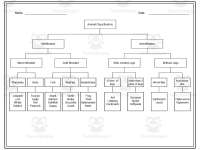
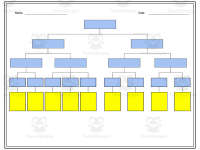
Vertebrates and invertebrates diagram
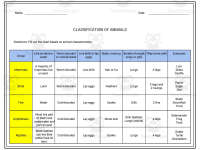
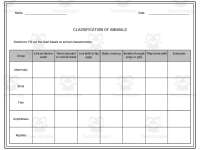
Animal classification chart, can be used as a content review tool or taken for a mark.
Answer key
Animals, the diverse living organisms that inhabit our planet, can be broadly categorised into two main groups: vertebrates and invertebrates. This classification is primarily based on the presence or absence of a backbone or spinal column. Vertebrates possess a well-developed internal skeleton made of bone or cartilage, while invertebrates lack a backbone and often have an exoskeleton or no skeletal structure at all. Let's delve deeper into these two groups and explore their characteristics.
This animal classification into vertebrates and invertebrates provides a broad framework for understanding the vast diversity of animals on Earth. Vertebrates, with their well-developed backbone and complex nervous systems, represent a smaller but highly diverse group. In contrast, invertebrates, lacking a backbone, dominate the animal kingdom in terms of species richness and ecological adaptations. Both groups play crucial roles in maintaining the balance of ecosystems and offer fascinating insights into the wonders of the animal world.
Examples: Invertebrates include insects (such as ants, bees, and butterflies), arachnids (such as spiders and scorpions), molluscs (such as snails and octopuses), annelids (such as earthworms and leeches), echinoderms (such as starfish and sea urchins), and many others.
It is important to note that the division between vertebrates and invertebrates is not the only way to classify animals. There are further subdivisions and classifications within each group based on various factors, such as body symmetry, habitat, reproductive strategies, and evolutionary relationships.
Related resources
More resources teachers may find useful
More resources on the same subject and topic.


In the classroom
Teaching tips & learning objectives

Learning objectives
Distinguish vertebrates from invertebrates, including jointed-leg and legless invertebrates
Compare the traits of mammals, birds, fish, reptiles and amphibians

Skills covered
Classifying animals — placing example animals into vertebrate and invertebrate subgroups
Comparing traits — completing chart columns such as body covering and breathing method

No reviews yet
Downloaded this resource? Tell other teachers how it went.
Australian Curriculum (Version 9.0)
Australian Curriculum content descriptions
Australian Curriculum content descriptions
 Australian Curriculum content descriptions
- AC9S7U01 — investigate the role of classification in ordering and organising the diversity of life on Earth and use and develop classification tools including dichotomous keys
Core concepts
 Core concepts
Vertebrates
Invertebrates
Warm-blooded and cold-blooded
Arthropods
Body covering
 Topics
Explore more
Categories this resource belongs to
Explore related searches


More to explore