CHARACTER: The FIVE Elements of a Story Graphic Organisers



- Pages
- 14
- File type
- Preparation
- Print ready


- Subject
- Pre-Reading, Reading Comprehension, Writing, Reading, Language Development, English
- Topic
- Study, Skills
- Resource types
- Graphic Organizers
- Preparation
- Print ready
From the author
About this resource
This is our CHARACTER section of our Graphic Organisers Series: The FIVE Elements of a Story. In this set, you can enjoy 10 custom graphic organisers for Character. These graphic organisers can be used in any classroom, for any year level, and with any student.
Included in this set are:
- Character Map
- Character Trait Chart
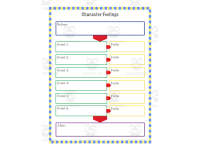
- Character Feelings
- Relationship Web
- Character Comparison
- Character Scrapbook
- Character Analysis
- Character Development
- Character Cluster
- Character Sketch
Use these graphic organisers to help students gain an understanding of Character in a story. Each graphic organiser comes with instructions on how to use them.
Character Graphic Organisers:
Character Map - Write the name of the character in the middle circle. Then, describe the character’s actions in the top left square; what the character says and how they speak in the top right square; the character’s feelings in the bottom left square; and what the character looks like in the bottom right square.
Character Trait Chart - Choose a character from the story. In the first column, write down any traits that your character has. Include physical features, personality, feelings, and anything else that describes your character. In the second column, provide evidence from the story to support your chosen trait.
Character Feelings - In the top box, describe the character’s feelings at the beginning of the story. In the next series of boxes, describe an event that has an effect on the character, then how this character feels as a result of this event. In the last box, describe the character’s feelings at the end of the story.
Relationship Web - Write the name of the main character in the story in the middle circle. In the circles branching out from the middle one, write down the relationships the character has. Include whether you think this is a good relationship or a bad one. Do the same for any other character in the story.
Character Comparison - Use the Venn Diagram to compare two characters from the story. Write the names of each character in the overlapping circles. Write any differences the characters have with one another in the outside circles. Write any similarities the characters have in the middle of both circles.
Character Scrapbook - Create a scrapbook for one of the characters in the story. Choose a character from the story. Choose some important events that happen in the story that shapes the character. Draw pictures of these events and explain what happened and how it affected the character.
Character Analysis - Keep track of every character in the story and their traits. Write the name of each character in the story in the first column. Write a trait that the character has in the second column. In the third column, write down the page and paragraph number of a quote that proves this trait.
Character Development - Choose a character from the story. Write down their initial thought on a topic or situation in the first column. In the second column, write down the event that has an effect on that character’s thoughts. Then, write down the character’s new thoughts on the topic or situation in the third column.
Character Cluster - This Cluster Map can be completed in many different ways. Start with a character in the middle triangle. Then, branch out from the character with related topics in the circles. Expand on those topics in the rectangles. Suggestions include: relationship web, traits web, feelings web.
Character Sketch - Complete this Character Sketch of any character in the story by writing what the character says, thinks, hates, loves, owns, does or uses. Also include the characters strengths and weaknesses, and where the character has come from in the story, and where the character is going.
Related resources
More resources teachers may find useful
More resources on the same subject and topic.



In the classroom
Teaching tips & learning objectives

Learning objectives
Support character traits with evidence from the text
Track how a character's feelings change across events
Compare two characters

Teaching tips
The feelings tracker and the development chart both follow a character from beginning to end, so they pair well for longer texts.

Skills covered
Citing evidence — listing a trait and the story detail that supports it
Comparing characters — sorting similarities and differences on a Venn diagram

No reviews yet
Downloaded this resource? Tell other teachers how it went.
Resource details
Concepts & topics
 Core concepts
 Topics
Explore more
Categories this resource belongs to
Explore related searches




More to explore