Crash Course Sociology Episode | 24 Social Class and Poverty in U.S.



- Year levels
- Years 9–12
- File type
- Microsoft Word
- Editable
- Yes


- Subject
- Social Studies
- Topic
- Social Class, Poverty
- Resource types
- Worksheets
- Editable
- Yes
From the author
About this resource
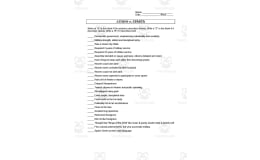
This companion worksheet for Crash Course Sociology Episode 24 asks fifteen questions about social class and poverty in the United States. Students compare class frameworks, record information from the episode and discuss explanations of poverty.
The download contains two editable Word documents: a two-page question sheet with a link to the video and a separate two-page answer key for teacher review or self-assessment. The video is accessed externally. Treat statistics as figures reported in the episode.
Related resources
More resources teachers may find useful
More resources on the same subject and topic.



In the classroom
Teaching tips & learning objectives

Learning objectives
Compare Marx's two-class model (bourgeoisie/proletariat) with Weber's multidimensional definition of social class (income, education, power, prestige).
Identify the five social classes sociologists use to describe American society and a defining characteristic of each.
Explain how the federal poverty level is calculated and identify groups particularly vulnerable to poverty.

Teaching tips
Pause the video after the Marx and Weber sections (questions 2-4) to confirm students can articulate the difference between the two theorists' definitions before moving on to the five-class breakdown.
Have students look up the current federal poverty guideline for their household size after question 13, since the worksheet explains how the threshold is set without citing a specific dollar figure.
Use the separate answer key for a quick self- or peer-check pass, since it gives a full explanation with specific percentages rather than a one-word answer for every item.

Skills covered
Comparative theory analysis — students distinguish Marx's two-class model from Weber's multidimensional definition of social class (questions 2-4).
Statistical interpretation — students record specific figures from the video, such as the percentage of Americans in the lower class and the percentage of low-income children who complete college.
Causal reasoning about social issues — students explain competing individual and systemic theories for the causes of poverty (question 15).
Good to know
Questions teachers ask about this resource
Do the questions only ask students to define terms from the video?
No — most ask for a definition or statistic, but question 3 asks students to apply Marx's framework to a specific example: how he would categorise a small business owner who also works at their store.

No reviews yet
Downloaded this resource? Tell other teachers how it went.
Resource details
Concepts & topics
Core concepts
 Core concepts
Social class theory (Marx, Weber)
American class structure
Poverty and its causes
 Topics
Explore more
Categories this resource belongs to
Explore related searches


More to explore