French Indirect Object Pronouns: Twenty Sentences

- Year levels
- Years 7–12
- File type
- ZIP archive


- Subject
- French, Foreign Languages
- Resource types
- Worksheets
From the author
About this resource
French Indirect Object Pronouns Worksheet - Complément d'Objet Indirect
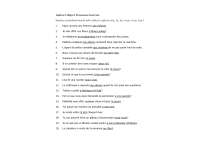
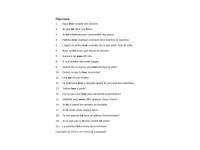
Rewrite the 20 sentences using the underlined phrase or parenthetical cue to choose an indirect-object pronoun. Exercise focuses on all indirect object pronouns: me, te, lui, nous, vous, leur.
Related resources
More resources teachers may find useful
More resources on the same subject and topic.


In the classroom
Teaching tips & learning objectives

Learning objectives
Identify the verb construction and recipient phrase in a French sentence
Select an indirect-object pronoun where the construction supports that replacement
Place the chosen pronoun appropriately with the conjugated verb or infinitive

Teaching tips
- Model the verb and recipient construction in selected examples before assigning the sheet. Do not present every pour + person phrase as automatically replaceable by an indirect-object pronoun.
- Have pupils self-check with the answer key sentence-by-sentence rather than all at once, since pronoun choice (lui vs. leur, te vs. vous) depends on carefully reading number and person in each sentence.
- Use item 7 or 8, where the indirect object is already given in parentheses rather than fully written out, as a quick check for whether pupils can still identify the correct pronoun from an abbreviated cue.

Skills covered
Verb-construction analysis — students consider the verb and recipient relationship before replacing a phrase
Pronoun selection — students choose a form matching person and number where replacement is appropriate
Sentence rewriting — students apply the placement pattern in the selected construction

No reviews yet
Downloaded this resource? Tell other teachers how it went.
Resource details
Core concepts
Core concepts
 Core concepts
French indirect-object pronouns
Verb-dependent recipient constructions
Pronoun placement
Explore more
Categories this resource belongs to
Explore related searches


More to explore