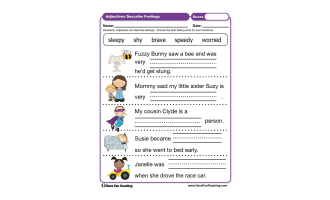
Printable Simple Present Tense Verbs Grammar Worksheets for Years 2–3


- Year levels
- Years 1–5
- Pages
- 7
- File type
- Preparation
- Print ready


- Subject
- Grammar, Language Development, English
- Topic
- Present Tense Verbs Worksheets, Present Simple Worksheets
- Resource types
- Worksheets
- Preparation
- Print ready
- Australian Curriculum content descriptions
- AC9E3LA08 — understand that verbs are anchored in time through tense AC9E3LA06 — understand that a clause is a unit of grammar usually containing a subject and a verb…
From the author
About this resource
Introduction
This set of Present Tense Verbs Worksheets helps learners understand how verbs are used in the present simple and present continuous tenses. Students practise completing sentences with the correct present tense form, identifying verb tenses, and using common time expressions with present tense verbs.
What’s Included:
Fill-in-the-blank present tense verb exercises
Practice with present simple and present continuous
Activities using time expressions (always, often, usually, etc.)
Identifying verb tenses in sentences
Pronoun and verb agreement practice
Exercises using the verb “to be” (am, is, are)
Year levels / Ages:
Ideal for Years 2–6
Implementation Format:
Perfect for literacy centres, morning work, small groups, grammar practice, independent work, or homework.
Answer Key:
Not included
File Type:
PDF (Non-editable)
Number of Pages:
7 pages total
License:
Paid product for personal or single-classroom use only
Tags to Use:
Present tense verbs worksheets, present simple worksheets, present continuous worksheets, English grammar worksheets, verb tense practice, ESL grammar activities, primary grammar worksheets, verb practice for students
Related resources
More resources teachers may find useful
More resources on the same subject and topic.


In the classroom
Teaching tips & learning objectives

Learning objectives
Form the correct present-simple verb ending for a given subject, including the third-person -s
Rewrite a present-simple sentence in the present continuous tense using the correct auxiliary and -ing verb
Identify whether a given sentence uses present simple or present continuous tense

Teaching tips
Assign the two present-simple sheets first since they isolate the -s ending before the pronoun-and-verb sheet asks students to supply both parts independently
Use the tense-identification page as a quick recognition check before the present-continuous rewriting page, which requires production rather than recognition

Skills covered
Present-simple verb conjugation — students supply the correct third-person and other subject forms across two fill-in-the-blank pages.
Frequency-adverb placement — students complete sentences using adverbs such as always, never, and sometimes in the correct position.
Subject-verb agreement with "to be" — students choose am, is, or are to match the sentence's subject.
Good to know
Questions teachers ask about this resource
Do the seven worksheets repeat the same present-tense skill, or focus on different parts of the tense?
Each page isolates a different part: two pages drill the plain present-simple fill-in-the-blank, one asks for present-continuous rewriting, one pairs verbs with frequency adverbs like always and never, one has students identify which tense a finished sentence uses, one combines pronoun and verb practice, and the last isolates the verb "to be."

No reviews yet
Downloaded this resource? Tell other teachers how it went.
Australian Curriculum (Version 9.0)
Australian Curriculum content descriptions
Australian Curriculum content descriptions
 Australian Curriculum content descriptions
- AC9E3LA08 — understand that verbs are anchored in time through tense
- AC9E3LA06 — understand that a clause is a unit of grammar usually containing a subject and a verb that need to agree
Core concepts
 Core concepts
Present simple tense
Present continuous tense
Frequency adverbs
 Topics
Explore more
Categories this resource belongs to
Explore related searches


More to explore