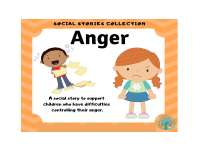
Sometimes I Feel Angry - A Social Story About Anger

- Year levels
- Pre-school (Early Years), Foundation–Year 2
- File type
- Preparation
- Print ready


- Subject
- Social Skills, Social Emotional Learning (SEL), Special Resources
- Topic
- Social Story, Anger
- Preparation
- Print ready
From the author
About this resource
This social story is to support children who get angry. It covers feeling angry and frustrated and that it is okay to feel this way however what is not okay is to hurt others or break things. It goes on to give suggestions for calming techniques.
These books should be used over and over to reinforce the point so I would suggest either putting the pages into a display book or laminating and binding them.
Clipart images courtesy of Kari Bolt.
Related resources
More resources teachers may find useful
More resources on the same subject and topic.


In the classroom
Teaching tips & learning objectives

Learning objectives
Identify personal triggers and physical signs of anger
Recognise that feeling angry is normal but that hurting others or breaking things is not acceptable
Apply a self-selected calming strategy (deep breaths, counting, stress ball, quiet space, or talking to someone) when feeling angry

Teaching tips
Read one or two pages at a time in a small group or one-on-one setting rather than the whole book at once, given its simple one-line-per-page format
Pause after the strategies section to have the child pick their preferred calming strategy from the five offered, reinforcing personal choice
Pair with a physical stress ball or designated quiet space in the classroom so the strategies described can be practised immediately, not just discussed

Skills covered
Emotion identification — students recognise personal triggers and physical signs of anger such as frowning or crossed eyebrows.
Self-regulation strategy selection — students learn and can choose among five specific calming techniques, including deep breathing and counting to ten.

No reviews yet
Downloaded this resource? Tell other teachers how it went.
Resource details
Concepts & topics
Core concepts
 Core concepts
Anger
Emotional regulation
Social story
Coping strategies
 Topics
Explore more
Categories this resource belongs to
Explore related searches


More to explore