Black History Month Creative Writing Prompts with Story Cards



- Grades
- Grades 2–4
- File type
- Preparation
- Print ready


- Subject
- Creative Writing, Holidays, Writing, Holiday & Seasonal, ELA
- Topic
- Black History, Creative Writing
- Resource types
- Writing Prompts
- Preparation
- Print ready
From the author
About this resource
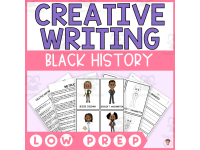
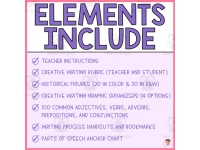
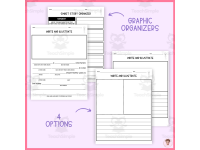
Never come up with a creative writing prompt again with this Black History Month-themed storytelling unit! Using the 'somebody wants but so then' (SWBST) approach, this comprehensive LOW PREP resource includes Black historical figure character cards, creative writing graphic organizers, writing rubrics, and more.
It makes a great addition to your Black History Month unit study; writing lessons or centres; or social studies or history class. Perfect for Grade 1, Grade 2, and Grade 3 classrooms, homeschool families, and cooperatives.
After printing the cards, select which graphic organizers you would like students to use, review the rubric with them, and send them off to write. This can be done individually or in small groups so they can bounce ideas off of one another. Students will submit their finished creative writing stories for teacher assessment.
HISTORICAL FIGURES INCLUDE:
Bessie Coleman
Booker T. Washington
Dr. Patricia Bath
Frederick Douglass
Garrett Morgan
George Washington Carver
Ida Bell Wells
Jackie Robinson
Louis Armstrong
Madam C.J. Walker
Mae C. Jemison
Malcolm X
Martin Luther King, Jr.
Maya Angelou
Muhammad Ali
Oprah Winfrey
Rosa Parks
Ruby Bridges
Sojourner Truth
Thurgood Marshall
THIS RESOURCE COVERS:
Art (illustrating and colouring)English language arts
Grammar
History
Research
Social studies
Writing (creative writing and storytelling)
Related resources
More resources teachers may find useful
More resources on the same subject and topic.

In the classroom
Teaching tips & learning objectives

Learning objectives
Student can plan an original short story using the Somebody-Wants-But-So-Then story structure.
Student can incorporate a chosen Black historical figure into a fictional or biographical narrative.
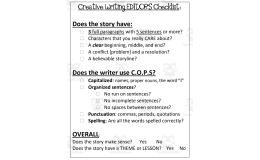
Student can revise a draft against a checklist covering spelling, capitalization, and punctuation.

Teaching tips
Decide in advance whether students will use Option 1 (figure as a secondary character in a fictional story) or Option 2 (figure as the main character in a fact-based story), since the sentence-starter template changes meaning depending on which is chosen.
Hand out the 100-word noun/verb/adjective/adverb lists to students who need vocabulary support before drafting, rather than after.
Use the teacher rubric to pre-teach the eight scoring categories so students know what 'excellent' looks like before they start writing.

Skills covered
Narrative story generation — students use the SWBST framework (Somebody-Wants-But-So-Then) to plan a short story built around a chosen Black historical figure.
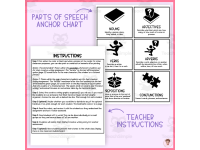
Descriptive sentence construction — students complete a fill-in-the-blank sentence frame using a noun, verb, adverb, and adjective to introduce their chosen character.
Self- and peer-editing — students apply a checklist covering spelling, capitalization, and punctuation before submitting their final piece.
Good to know
Questions teachers ask about this resource
What is the difference between using the character cards as 'Option 1' versus 'Option 2' in this resource?
In Option 1, the historical figure is a secondary character students write about in a fictional or self-insert story; in Option 2, the same figure becomes the main character, and the story instead retells the figure's real actions rather than an invented plot.

No reviews yet
Downloaded this resource? Tell other teachers how it went.
Resource details
Concepts & topics
Core concepts
 Core concepts
Narrative writing
Black History Month
Story structure
Parts of speech
 Topics
Explore more
Categories this resource belongs to
Explore related searches



More to explore