Crash Course: Entrepreneurship #8 The Core of a Business Worksheet

- Grades
- Grades 8–12
- Pages
- 1
- File type
- Zip


- Subject
- Life Studies
- Topic
- Entrepreneurship, Business
- Resource types
- Worksheets
From the author
About this resource
Related resources
More resources teachers may find useful
More resources on the same subject and topic.



In the classroom
Teaching tips & learning objectives

Learning objectives
Define competitive advantage as the reason a customer chooses one business over its competitors
Explain what a business's key activities are and list five of them for a named company
Use the five diagnostic questions the video supplies to identify the key activities of a venture of one's own
Distinguish physical, intellectual, human and financial resources and give examples of each
Describe a named company's value proposition and the resources needed to deliver it

Teaching tips
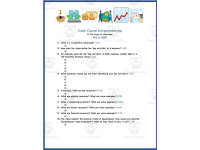
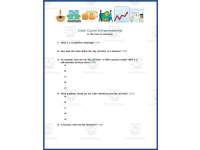
A timecode sits beside every question, so a student who loses the thread can jump to the right second instead of replaying the whole episode.
The online version leaves no writing space and the print version leaves plenty; the question wording is identical in both, so the choice is purely about how the class will record answers.
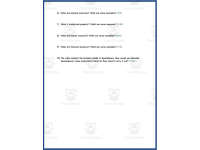
Question 3 works IKEA and question 10 works SquareSpace. The completed copy marks question 10 as answers-varying, which makes it the natural whole-class discussion point at the end.
Each version also ships as a Word file, so questions can be cut or reworded for a shorter lesson without retyping the sheet.

Skills covered
Note-taking from video - the ten questions are pinned to timecodes running from 1:47 to 7:45, so students listen for a specific answer rather than summarising freely.
Business vocabulary - competitive advantage, key activities, key resources, intellectual property and value proposition each get a question and a worked model answer.
Categorising resources - questions 6 to 9 separate physical, intellectual, human and financial resources and ask for examples of each, from equipment and patents to coders and stock options.
Applying a model to a real company - IKEA's key activities are listed out one by one and SquareSpace's value proposition is described, taking students from definition to a named business.
Self-diagnosis for a venture - question 4 gathers the five questions a founder should ask when working out their own key activities, including what is most important to creating revenue.
Good to know
Questions teachers ask about this resource
In Crash Course: Entrepreneurship #8 The Core of a Business Worksheet, what do the numbers in brackets after each question mean?
The point in the video where the answer is given. Competitive advantage is at 1:47, the definition of key activities at 1:55, IKEA's example at 2:30, intellectual property at 5:48 and the closing SquareSpace question at 7:45, so the sheet can be worked straight through as the episode plays.
How do the three versions of the sheet differ?
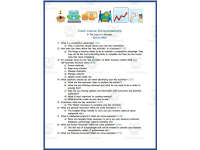
In layout, not in wording. The print version spreads the same ten questions over two pages with open writing space. The online version compresses them onto one page with lettered slots to type into and adds a "(Link to video)" line under the title. The third version carries a model answer beneath every question.
Which real companies are used as examples?
Two. IKEA appears at question 3, described as a self-assembly furniture store, with five key activities listed out - source materials, keep store stocked, manage shipments, manage website, update social media. SquareSpace appears at question 10, where students describe its value proposition and what it needs to deliver it.

No reviews yet
Downloaded this resource? Tell other teachers how it went.
Resource details
Concepts & topics
Core concepts
 Core concepts
Competitive advantage
Key activities
Key resources
Value proposition
Business model
 Topics
Explore more
Categories this resource belongs to
Explore related searches





More to explore