English Spelling Alphabet & Common Titles



- Grades
- Grades 3–6
- File type
- Microsoft PowerPoint
- Use
- Digital activity


- Subject
- Spelling, ESL
- Topic
- English, Alphabet
- Resource types
- Presentations
- Use
- Digital activity
From the author
About this resource
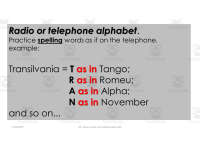
Introduce or review English letter names, then practise spelling words and names aloud. The presentation also includes a radio-alphabet reference, common names with IPA pronunciation, personal titles and guided name-spelling dialogues.
The PowerPoint Show file has 32 slides, including the licence slide. Model the dialogues, then let partners substitute their own names. Pacing can be adjusted to the group’s experience.
The file contains native text, but the included licence prohibits editing; follow those terms when using the supplied presentation.
Related resources
More resources teachers may find useful
More resources on the same subject and topic.


In the classroom
Teaching tips & learning objectives

Learning objectives
Pronounce and recite the English letter-name alphabet.
Use the radio/telephone alphabet (Alpha, Bravo, Charlie...) to spell words clearly aloud.
Ask for and give a spelled-out first, last, or full name in a guided dialogue.
Select the appropriate personal title (Mr., Mrs., Miss, Ms.) based on context.

Teaching tips
Model the guided-practice dialogues aloud with a student before pairing students to practice with each other.
Introduce the radio alphabet only after the standard letter-name alphabet is secure, since the lesson builds from one to the other.
Use the printed IPA pronunciations for the common names section as a pronunciation-checking reference rather than expecting students to read IPA independently unless they have prior exposure to it.
Adapt the closing dialogue examples (Merkel, Gross, Schmäh, Schmitt) to names more familiar to your own students' backgrounds if needed.

Skills covered
Alphabet pronunciation — students recite and pronounce the letters of the English alphabet correctly.
Radio alphabet spelling — students use words like Alpha, Bravo, and Charlie to spell out words unambiguously aloud.
Oral name-spelling dialogue — students ask and answer "How do you spell that?" while spelling their own or a partner's name.
Title usage — students select Mr., Mrs., Miss, or Ms. appropriately when addressing someone by their last name.
Good to know
Questions teachers ask about this resource
Why does the lesson teach the radio alphabet in addition to the standard letter names?
The radio/telephone alphabet assigns a distinct word to each letter (Alpha, Bravo, Charlie...) so that spelling can be understood clearly over the phone or in noisy conditions where individual letter names might be confused.

No reviews yet
Downloaded this resource? Tell other teachers how it went.
Resource details
Concepts & topics
Core concepts
 Core concepts
Spelling alphabet
Radio alphabet
Personal titles
ESL oral practice
 Topics
Explore more
Categories this resource belongs to
Explore related searches


More to explore