Genetically Modified Food Worksheet Answers



- Grades
- Grades 8–10
- File type
- Preparation
- Print ready


- Subject
- Biology, Life Sciences, Science
- Topic
- GMOS, Healthy Food
- Resource types
- Worksheets
- Preparation
- Print ready
From the author
About this resource
Do you know what GMOs are or what GM foods are? Are they useful or do they cause harm to us?
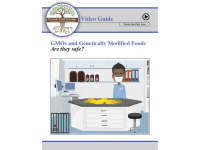
In this video lesson plan, students will learn what GMOs and GM foods are, and discuss their pros and cons.
GMO or the Genetically modified organism is basically an organism that can be a plant, an animal, or even a microorganism that is modified genetically in a laboratory to add certain desired characters in them. This is done when these desired characters are not present in them naturally. This same technique is used to create Genetically Modified Foods.
Format:
- Digital-PDF for easy sharing or printing
- Guide is 5 pages
- Video is hyperlinked directly into the guide for easy access
- Short answer and reflective questions
- Answer key included
Related resources
More resources teachers may find useful
More resources on the same subject and topic.


In the classroom
Teaching tips & learning objectives

Learning objectives
Define GMO and explain how genetically modified foods are created in a laboratory
Identify why genetically modified crops are used, including pest, herbicide, and drought resistance and increased nutrients or shelf life
Evaluate competing claims about GM food safety, including a real allergy case and a 2013 study the video explains was later judged flawed
Explain how a consumer can identify and avoid GM foods, contrasting US labelling (USDA organic) with mandatory labelling in Europe

Teaching tips
Use the hyperlinked video icon on the guide's first page to launch the video directly from the PDF, useful for both in-class and distance-learning delivery
Treat the two closing 'What do you think?' questions as open-ended reflection, since the key marks them as individual answers rather than fixed responses
Direct distance-learning students to the separate Google Doc link page for a fillable digital copy of the same guide
Pause the video before the Roundup and 2013-study questions (17-18), since both require careful listening to a specific claim

Skills covered
Scientific vocabulary — students define GMO and explain the laboratory process used to create genetically modified organisms.
Evaluating competing evidence — students weigh researcher safety claims against the video's account of a 2013 study later judged flawed.
Consumer science literacy — students identify how to recognize and avoid GM foods using US and European labelling requirements.
Video-based notetaking — students complete 23 fill-in-the-blank, multiple-choice, and short-answer items in the order the video presents them.
Good to know
Questions teachers ask about this resource
Do the closing reflection questions have a single correct answer?
No — the key marks both closing questions ('Do you think GM foods are harmful?' and how to avoid them) as individual answers, meant for a student's own reasoned opinion rather than one fixed response.
How does the guide explain the 2013 GM-food safety study?
It explains the study was later judged flawed because the researchers used too few rats, and the rats used were already prone to cancer, undermining the study's conclusions.

No reviews yet
Downloaded this resource? Tell other teachers how it went.
Resource details
Concepts & topics
Core concepts
 Core concepts
Genetically modified organisms
Genetic modification
Food labelling
GMO safety debate
 Topics
Explore more
Categories this resource belongs to
Explore related searches


More to explore