Sensory Details Graphic Organizer – Writing Tool

- Grades
- Grades 2–6
- File type
- Preparation
- Print ready


- Subject
- Writing, ELA
- Topic
- Graphic Organizer, Sensory Details
- Resource types
- Graphic Organizers
- Preparation
- Print ready
From the author
About this resource
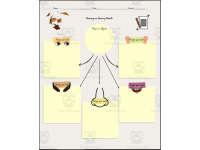
Focusing on Sensory Details is a one-page organizer for collecting descriptive-writing notes about a place or object. Five illustrated boxes prompt details for sight, sound, touch, taste and smell.
Model a shared subject, then let students gather relevant details before drafting. Leave a sense unused when it does not apply. The colour PDF uses pale yellow boxes; preview grayscale printing for readability.
Related resources
More resources teachers may find useful
More resources on the same subject and topic.


In the classroom
Teaching tips & learning objectives

Learning objectives
Name a place or object and gather observations about it under each of the five senses
Separate sight, sound, touch, taste and smell instead of writing one undifferentiated impression
Build a bank of concrete detail on the page before drafting a description of the chosen subject

Teaching tips
Fill the "Place or Object" field together the first time so the whole class is describing the same subject and the boxes can be compared afterwards
Agree in advance what to do with the taste box on subjects where it does not apply - leave it, or record what the thing might taste like - so nobody stalls halfway through
The organizer names no topic, so a single printing carries an outdoor walk, a still-life table, a photograph or a setting from a novel
Name, Date and Period lines make it practical to collect the sheet across several sections and return each set to the right class
The smell box sits alone below the four paired boxes, which makes it easy to overlook - point it out before students begin

Skills covered
Sensory observation - students record what they see, hear, feel, taste and smell about one chosen subject, each in its own labelled box.
Sorting detail by sense - because every box names a single sense, a general impression has to be broken apart rather than written as one description.
Pre-writing note collection - the subject is named once at the top and the detail is gathered around it, so a draft starts from notes rather than a blank page.
Choosing and naming a subject - the "Place or Object" field is left open, so students settle on what they are describing before collecting anything about it.

No reviews yet
Downloaded this resource? Tell other teachers how it went.
Resource details
Concepts & topics
Core concepts
 Core concepts
Sensory details
Five senses
Descriptive writing
Pre-writing
 Topics
Explore more
Categories this resource belongs to
Explore related searches


More to explore