Lines, Rays, Segments and Angles: Geometry Practice
Identify and draw geometric figures using point labels and notation, including parallel, perpendicular and intersecting lines.

- Grades
- Grade 4
- Pages
- 1
- File type


- Subject
- Geometry, Math
- Resource types
- Worksheets
From the author
About this resource
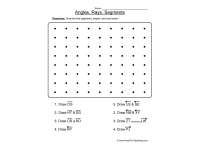
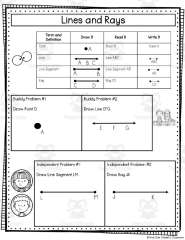
This worksheet is a great way for students to practice identifying and drawing parallel, perpendicular, and intersecting lines.
Related resources
More resources teachers may find useful
More resources on the same subject and topic.


In the classroom
Teaching tips & learning objectives

Learning objectives
- Draw a line segment with two endpoints and a ray with one endpoint
- Represent an angle from the notation given in a prompt
- Construct parallel, perpendicular, and intersecting line relationships

Teaching tips
- Review endpoints and arrowheads before beginning the drawing prompts.
- Compare parallel lines, which do not meet in a plane, with perpendicular lines, which meet at a right angle.

Skills covered
- Geometric construction — learners create figures instead of selecting completed diagrams
- Line relationship vocabulary — learners distinguish parallel, perpendicular, and intersecting arrangements
- Notation interpretation — learners convert named geometric objects into drawings

No reviews yet
Downloaded this resource? Tell other teachers how it went.
Resource details
Core concepts
Core concepts
 Core concepts
- Lines, rays, and segments
- Angles and line relationships
Explore more
Categories this resource belongs to
Explore related searches


More to explore