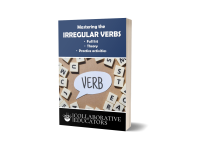
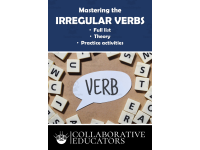
Mastering the Irregular Verbs

- Pages
- 10
- File type
- Answer key
- Included


- Subject
- ELA
- Topic
- Irregular, Verb
- Resource types
- Worksheets
- Answer key
- Included
From the author
About this resource
What are Irregular Verbs?
Irregular verbs are verbs that do not follow the standard rules of conjugation in English. Unlike regular verbs, which form the past simple and past participle by adding “-ed” (e.g., walk -> walked), irregular verbs change in unique ways.
Why Do We Use Irregular Verbs?
Irregular verbs are deeply rooted in the English language, often because of their origins in Old English or other Germanic languages. They are commonly used, and knowing them helps speakers sound more fluent and natural.
Irregular Verb Forms
In English, verbs can have three main forms:
Base Form: The root form of the verb (e.g., go, see, buy)
Past Simple: The form used for past events (e.g., went, saw, bought)
Past Participle: The form used in perfect tenses and the passive voice (e.g., gone, seen, bought)
Understanding these forms is essential for forming correct sentences in past and perfect tenses. This ebook will help you and your students with that.
Related resources
More resources teachers may find useful
More resources on the same subject and topic.


In the classroom
Teaching tips & learning objectives

Learning objectives
Identify the base, past simple and past participle forms of common irregular verbs
Choose the correct verb form for past simple and perfect tense sentences

Skills covered
Verb form lookup — finding the past simple and past participle of a verb in the alphabetized table
Good to know
Questions teachers ask about this resource
Does the guide include practice exercises?
Yes. After the verb list and memorization tips, an exercise chapter asks students to fill in past forms, match verb forms and transform sentences, followed by a story cloze and an answer key.

No reviews yet
Downloaded this resource? Tell other teachers how it went.
Resource details
Concepts & topics
 Core concepts
 Topics
Explore more
Categories this resource belongs to
Explore related searches

More to explore