



Reading Thermometers Worksheet


- Grades
- Grades 2–4
- File type
- Preparation
- Print ready


- Subject
- Measurements, Math
- Topic
- Have Fun Teaching, Reading a Themometer
- Resource types
- Worksheets
- Preparation
- Print ready
From the author
About this resource
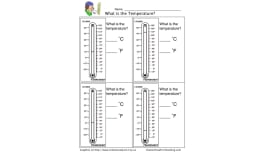
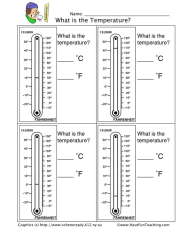
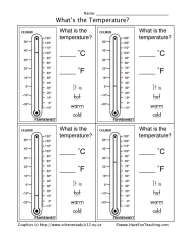
Use this math worksheet to practise showing given temperatures on three thermometers with Celsius and Fahrenheit scales. Students then choose a temperature for each of three pictured scenes.
The one-page PDF does not include conversion calculations or multi-step word problems. Model how to follow the named temperature scale before students draw the liquid level.
Related resources available separately
word problems
Related resources
More resources teachers may find useful
More resources on the same subject and topic.

In the classroom
Teaching tips & learning objectives

Learning objectives
Represent a stated temperature on a thermometer
Use scale intervals to position a liquid level
Distinguish how target values appear in two temperature units

Teaching tips
Mark the target tick first, then shade the level upward from the bulb.
Check that every drawn level starts at the base and stops at one consistent height.

Skills covered
Scale construction
Temperature representation
Interval counting

No reviews yet
Downloaded this resource? Tell other teachers how it went.
Resource details
Concepts & topics
Core concepts
 Core concepts
Drawing thermometer levels
Temperature scales
Units
 Topics
Explore more
Categories this resource belongs to
Explore related searches



More to explore


