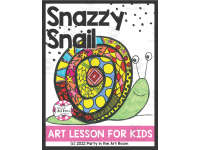
Snazzy Snail Art Lesson for Kids



- Grades
- Kindergarten, Grades 1–5
- File type
- Preparation
- Print ready


- Subject
- Art, Creative Arts, Science, ELA
- Topic
- Art Lesson, Crafts
- Resource types
- Lesson Plans, Activities
- Preparation
- Print ready
From the author
About this resource
The Snazzy Snail Art Lesson for Kids is a captivating and comprehensive resource designed to introduce young artists to the fascinating world of snails through engaging art activities. This lesson combines interactive dice games, collage-making techniques, and reflective writing tasks to provide an immersive and educational experience. Students will learn about snails, explore their unique characteristics, and express their creativity by creating vibrant snail artworks.
Discover the World of Snails:
The Snazzy Snail Art Lesson invites students to embark on a journey of discovery into the intriguing world of snails. Through captivating visuals and informative discussions, students will
learn about the anatomy, habits, and habitats of snails. They will explore the remarkable features of snails, such as their spiral shells, slimy trails, and unique locomotion.
Engaging Dice Games:
This resource incorporates interactive dice games to add an element of excitement and unpredictability to the art-making process. Students will roll the dice to determine various elements of their snail artwork, such as the colour scheme, the pattern on the shell, or the snail's environment. These games encourage creativity, problem-solving, and adaptability as students incorporate chance elements into their artistic creations.
Reflective Writing Tasks:
Writing tasks are included in this resource to promote reflection and self-expression. Students will engage in guided writing prompts that encourage them to describe their snail artwork, discuss their creative choices, and reflect on their artistic process. This reflective component fosters critical thinking, communication skills, and a deeper connection to their artwork.
The Snazzy Snail Art Lesson for Kids offers an exciting and educational experience for young artists to explore the world of snails through art. By combining interactive dice games, collage-making techniques, and reflective writing tasks, students will develop their creativity, problem-solving skills, and artistic expression. Whether in a classroom or homeschooling setting, the Snazzy Snail Art Lesson engages students in a fun and meaningful way, encouraging them to observe and appreciate the wonders of nature while honing their artistic abilities.
This resource is a Snazzy Snail Art Lesson for Kids.
Students will enjoy this detailed lesson about snails and making collages as they play dice games and create artwork.
Writing tasks are also included to ensure students can detail and reflect on their work.
Related resources
More resources teachers may find useful
More resources on the same subject and topic.



In the classroom
Teaching tips & learning objectives

Learning objectives
Draw a snail using basic shapes (spiral shell, body, eyes, antennae) by following a modelled step-by-step process
Identify and self-evaluate the elements of art (line, space, colour, shape, texture, composition) in a completed drawing
Sequence the steps of the art-making process using transition words (first, second, next, then, finally)
Extract nonfiction facts about snail anatomy and behaviour and connect new information to prior knowledge

Teaching tips
Use the hand-drawn instructional sheet, rather than a digitally rendered one, to lower students' expectations of 'perfect' drawing and reduce performance anxiety.
Offer the optional digitized, darker-lined version of the instructional sheet for students with visual perception needs.
Pair the drawing lesson with the 'Facts About Snails' reading insert as a cross-curricular art-and-science tie-in.
Use the numeric self-evaluation rubric (1-3 scale) as a quick formative check before students complete the longer written reflection sheet.

Skills covered
Step-by-step observational drawing — students build a snail from a spiral shell, rounded body, and simple facial features by following a modelled sequence.
Elements-of-art vocabulary application — students rate their own work on line, space, colour, shape, texture, and composition using a numeric rubric.
Process sequencing — students describe their art-making process in order using first/second/next/then/finally transition language.
Nonfiction fact extraction — students read a list of snail facts and record new information learned.
Good to know
Questions teachers ask about this resource
Why does the lesson intentionally use a hand-drawn instructional sheet instead of a digitally created one?
The creator explains that digitally rendered examples can make students feel pressure to draw 'perfectly,' since no child can replicate that polish by hand — a hand-drawn model lowers that expectation and helps students feel comfortable making mistakes.
How does the 'How I Created This Work of Art' sheet connect to the drawing lesson?
It has students narrate their own process in order — First, Second, Next, Then, Finally — turning the same step-by-step sequence used to teach the drawing into a writing task about their own artwork.

No reviews yet
Downloaded this resource? Tell other teachers how it went.
Resource details
Concepts & topics
Core concepts
 Core concepts
Elements of art
Drawing process
Sequencing
Snail anatomy facts
 Topics
Explore more
Categories this resource belongs to
Explore related searches



More to explore