Mood Keywords - Words to Describe Mood and Tone


- Grades
- Grades 4–8
- Pages
- 1
- File type
- Preparation
- Print ready


- Subject
- Literature, Vocabulary, Language Development, ELA
- Topic
- Language Arts, Vocabulary Enhancement
- Resource types
- Charts
- Preparation
- Print ready
From the author
About this resource
Product: Words to Describe Mood and Tone
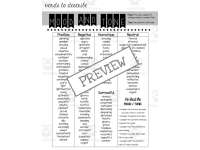
Handy and reusable reference sheet for students - perfect for close reading literature, end of year test prep, and creative writing.
The list includes mood/tone words that are separated by category: positive, negative, humorous, neutral, and sorrowful.
Also included is a short description of how to identify mood/tone and a few examples.
This is a great reference for students which can be used to reinforce the skill of identifying mood and tone throughout the year.
Printable PDF and editable Word versions are supplied.
Related resources
More resources teachers may find useful
More resources on the same subject and topic.



In the classroom
Teaching tips & learning objectives

Learning objectives
Students distinguish between mood (reader's feeling) and tone (author's attitude) when analyzing a text.
Students select a precise mood or tone word from the reference bank instead of a generic term.
Students apply the five guiding questions to reason through a text's mood or tone rather than guessing.

Teaching tips
Keep this sheet next to whatever text students are annotating, since it has no practice items of its own and is meant as a companion reference.
Model the five guiding questions on a shared class text before asking students to apply them independently to their own reading.
Have students underline the specific mood/tone word they chose in the word bank when writing about a text, to build the habit of citing precise vocabulary over vague terms.

Skills covered
Mood and tone vocabulary — students select a precise word from a 100+ term bank sorted by category (positive, negative, humorous, neutral, sorrowful).
Literary analysis reasoning — students apply five guiding questions (author's purpose, genre, attitude, characters' feelings, reader reaction) to determine a text's mood or tone.

No reviews yet
Downloaded this resource? Tell other teachers how it went.
Resource details
Concepts & topics
Core concepts
 Core concepts
Mood
Tone
Literary vocabulary
 Topics
Explore more
Categories this resource belongs to
Explore related searches




More to explore