



2,784 products added recently
Page 530 - Newest Teaching Resources

 Show filters
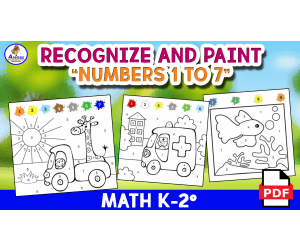
RECOGNIZE THE NUMBERS 1 TO 7 - Math for Kids
Math, Numbers, Kindergarten, Preschool, Grade 1, 2, Activities
1. Introduction As is known by educators, it is extremely important for children to develop skills such as painting, because it provides multiple benefits for their development. On this occasion, this wonderful worksheet has been created so that your students have the opportunity to associate painting and numbers. I hope it is very useful for you! 2.Objective Painting offers multiple benefits to children. Among them we can name the following: - Develops fine motor skills: When painting, children make multiple coordinated movements of their hands and fingers to control the brush and crayons. This will contribute to the development of fine motor skills, which are very essential elements for performing tasks such as writing, buttoning and other types of daily activities. - Stimulate creativity: Painting encourages creative expression in students, and also allows children and/or infants to explore their imagination. By having the freedom to choose between multiple colors and shapes, children will develop their creative thinking as well as learn to express their ideas visually. - Improve hand-eye coordination: Hand-eye coordination is essential in activities that require motor control as well as visual precision. Painting will help improve this type of coordination, since children will have to focus on the paper or canvas where the drawing is located, as well as they will have to apply the colors using all their possible precision. - Develop the recognition of shapes and colors: By choosing and applying colors, children and/or students will improve their ability to recognize and achieve the differentiation of colors and shapes. This process will help them better develop their visual and cognitive skills. - Promote concentration and patience: Painting requires the use of concentration and attention, because children must focus on the details of the drawing. 3.Order, scheme and stages Present the activity to the children, ask them to use their colors, markers or the marker of their choice. They can even use colored crayons. 4.Grades or ages This activity is aimed at 4,5,6 year old students who are learning their first numbers. 5. Form of application Print this sheet in A4 format, and in colors so that the colors can be distinguished perfectly and your students can correctly distinguish the activity . 6. Answer keys This game does not require answers. 7.Use text labels numbers, first numbers, mathematics, primary mathematics, numbers from 1 to 10. 8.Rules Specified above. 9.File types The archive is in PDF format. 10.Number of pages This document contains 10 pages.
Author EDITORIAL LAURA EDUCA
Tags Numbers, Numbers 1 To 10, Activity Numbers

Pronoun Antecedent Agreement Worksheets and Task Cards for Grades 3-4
ELA, Language Development, ESL, Grammar, Grade 3, 4, Worksheets, Worksheets & Printables
Pronoun Antecedent Agreement Worksheets, Task Cards and Activities for 3rd and 4th Grades + ESL/ELL This collection of ready to print, NO PREP pronoun antecedent worksheets and task cards contains hundreds of ready-made sentences appropriate for your 3rd and 4th graders. It is also very suitable for use by ELL / ESL. students. The printables are perfect for use in literacy centers, as assessment tools such as pre and post tests, and in seatwork, test prep, homework, and individual self-study situations. Included in the 70 page PDF package are: 7 pronoun antecedent agreement multiple choice worksheets 7 car rally theme multiple choice worksheets 7 motorcyle race theme multiple choice worksheets 7 reflexive pronoun multiple choice worksheets An Answer Key follows each worksheet for easy and self checking. The engaging racing themes help motivate your students and connect them to fun real world interests and experiences. In addition to the worksheets listed above, there are:: 24 pronoun antecedent agreement task cards, printed 8 per page These task cards are in color (laminating is recommended) but have been designed to be suitable for black-and-white or grayscale printing as well. With the task cards is an answer key and a student recording sheet form in black and white for easy copying and distribution. Directions for a two-player card game that uses the task cards and a "How to Play" handout, suitable for student reference. Teacher notes that contain additional suggestions for making and using the task cards effectively. These include instructions for fun whole class activities such as "Scoot!" and a Scavenger Hunt. Use this package to enrich your collection of English Language Arts resources and to add to your pool of grade-appropriate sentences for this important, language progressive skill (Common Core English Language Arts Standards, Language, Progressive Language Skills, L.3.1.f).Pronoun Antecedent Agreement Worksheets and Task Cards for Grades 3-4Pronoun Antecedent Agreement Worksheets and Task Cards for Grades 3-4
Author WorksheetsPlus
Tags Pronoun, Pronoun Antecedent Agreement, Task Cards, Pronoun Agreement, Worksheets, Grammar

NUMBER PUZZLES 1 TO 5 - Animal Theme
Math, Numbers, Preschool, Grade 1, 2, 3, Activities
1. Introduction As is known by many educational figures such as teachers, teachers, educational guides and even parents, the benefits that puzzles offer to children are multiple. For this reason, today I have created this fantastic educational resource. I hope you enjoy! 2.Objective The objective of the puzzles includes the following points: 1. Motivate students' cognitive development, because solving puzzles greatly stimulates cognition, thus improving skills such as memory, logical thinking and attention. 2. Encourage the development of fine motor skills: When students manipulate the puzzle pieces, they are improving their hand-eye coordination as well as their fine motor skills. 3. Motivate problem solving: When a student is faced with a puzzle, this student will learn to analyze situations, finding solutions and developing strategies to solve problems. 4. Develop mathematical skills: The use of many puzzles involves the use of mathematical concepts such as geometry, the relationship between sizes and shapes, which greatly contributes to the development of basic mathematical skills. 5. Encourage the development of spatial coordination skills: By placing the pieces in the correct place in a puzzle, children will improve their spatial coordination and visual perception. 6. Encourage careful observation of patterns and sequences: As is known, puzzles often require pattern recognition and sequence following, which will help strengthen cognitive skills related to foresight and logical thinking. 3.Order, scheme and stages Present this material to your students. Ask them to use their scissors and eraser and cut out and then put the puzzle back together. 4.Grades or ages This work material is designed for children ages 3, 4, 5, even up to 6 years old who wish to reinforce the learning of the first numbers from 1 to 5. 5. Form of application It is suggested to print this material on A4 sheets, in color so that students can then correctly visualize the numbers as well as the graphs. 6. Answer keys This game does not require answers. 7.Use text labels mathematics, numbers from 1 to 5, first numbers, basic numbers. 8.Rules Specified above. 9.File types The archive is in PDF format. 10.Number of pages This document contains 22 pages.
Author EDITORIAL LAURA EDUCA
Tags Numbers 1 To 5, Numbers, Puzzle, Math Puzzle, Puzzle For Kids

Novel Study on "The Metamorphosis" - Franz Kafka - World Literature
ELA, Reading, Reading Comprehension, Writing, Literature, Library, Research, Grade 7, 8, 9, 10, 11, 12, Novel Studies, Worksheets & Printables
Novel Study on "The Metamorphosis" - Franz Kafka - World Literature This English Language and Arts World Literature Project on "The Metamorphosis" by Franz Kafka ( Novel Study ) aims to make learners discover this Novella on a deeper level (Character's Description, Chapter Reading Comprehension Questions, Novel Analysis + Writing Activity to engage with the novel read) Within this World Literature Novel Study Research on "The Metamorphosis" by Frank Kafka, it is offered: 2 worksheets to write research outcomes 32 Cards to fish for this Novel Study Project on "The Metamorphosis" How does this Novel Study on "The Metamorphosis" Teaching Resource work? learners (or groups) fish a Research Topic card of each color (black for characters, green for chapters comprehension questions, purple for novel analysis and orange for writing activity prompts) each student or group makes their personalized Research Project on "The Metamorphosis", by focusing on their fished topic cards (ex. fished black card on Characters on "Gregor Samsa", green card on chapters on "Chapter 1", purple Cards on Novel analysis on the themes and a orange card on Book Review Writing Prompt) Learners stick their fished cards on their research worksheet and write their Novel Study Project's outcomes Learners make a presentation on their personalized rersearch on "The Metamorphosis" by Franz Kafka teacher evaluates research given learner or group's research outcomes written on worksheets Why is this Teaching Resource worth using? By fishing topic cards, students have a chance to: make unique randomized research projects focus on specific topics only and discover more the research Novel in "non-superficial" ways Connect their own Research outcomes with their peers' This World Literature Novel Study on "The Metamorphosis" PDF Printable Research Project Teaching Resource (6 slides) can be great for learners from 7th grade to 12th grade (high school) to study this Novellal by Franz Kafka Learning with Alan is a Brand New Teaching Resource/Educational Material Store whose aim is to help Teachers, Educators and Tutors to achieve their teaching objectives while creating a fun and stimulating environment. Never Forget! If you want to browse more of my Teaching Resources, click here Learning with Alan!
Author Learning with Alan
Tags Kafka, World Literature, Literature, Novel Study, Worksheet, Teaching Resource, Research, Project, Comprehension, Reading
Learn to Read: Lesson 7: OO
Special Resources, ELA, Special Education Needs (SEN), Language Development, Phonics, Reading, Spelling, Vocabulary, Writing, Grade 1, 2, 3, Lesson Plans, Teacher Tools
About This Product This is a pack of 49 Phonic OO worksheets to teach the OO, specially designed for those with special needs, including those with dyslexia or who may be suspected of being dyslexic, but will work equally well with young learners in Kindergarten/EYFS/Y1. These sheets are LETRS/Science of Reading and UK GOV requirements aligned. These worksheets also align with the most popular phonic programmes, including RWI and Letters and Sounds. Who are these worksheets for? I have written them for pupils who struggle with processing information - especially sounds. This includes children who are DYSLEXIC or have ANY other kind of processing disorder. Such children may have failed with other methods of teaching phonics. Such pupils need activities that: ·are highly structured - one tiny step at a time building on the one before using only a limited number of words to start with and only using words that the child has already learnt to sound out, with no nasty surprises. ·Have only a little on each pageas these pupils tire easily. What makes these worksheets special? I have a powerful three-step process which I use with my special needs pupils, which is worked out throughout the worksheets: 1. See it!where we focus on becoming aware of the new sound in words. This involves first hearing the new sound in words and then seeing it in words (tracking). 2. Sound-it-out!Having learnt to see the new sound in words, we learn to sound out these words to read and write them. We begin by usingsound-it-out boxesfor reading and spelling which help the child to segment the word before blending the sounds. Once the child can read and write individual words, we work on fluency by building familiarity with the common words in the new sound family. Once the child can sound the words out to read and spell confidently, we move on to recognising them/using them in longer reading and dictation passages, as soon as the child is able. I provide 2 reading passages with comprehension exercises and one dictation passage, with a page in the workbook dedicated to it, with room for a picture, which again cements understanding. 3. Write it! Incorporated into the above two steps, we constantly write the new sound. This adds a multi-sensory dimension to our work - we see with our eyes, we sound it with our mouth parts and voice, and then we move by writing. All three steps work together to help the child feel in control of his/her learning and to become a successful, confident learner. We finish each sound with a dictation which culminates our work before we move on to the next sound. I try to give this a week after we finish the book, to act as revision. The dictation: Read this passage to your pupil, who should write it. Have the child read his/her work and check for errors. Make sure the writing is completely accurate before saying the child has finished, including full stops and capital letters correctly used. Flashcards are included. What is included in the pack: 46 Activities 2 Games Flashcards Please note: This pack is in a series: Find the bundle here: https://teachsimple.com/product/phonic-worksheets-for-special-needs-bundle-highly-structured I do hope others find these Special Needs Phonic worksheets helpful for their pupils with ordering and processing difficulties!
Author Lilibette's Resources
Tags Special Needs Phonics, Dyslexia Phonic Worksheets, Phonic Worksheets For Dyslexics, Home Education, Reading Intervention, OO WORKSHEETS, OO Phonic Worksheets, Home-school

Phonic Worksheets for Special Needs Bundle: Highly Structured
Special Resources, ELA, Special Education Needs (SEN), Language Development, Pre-Reading, Phonics, Reading, Spelling, Kindergarten, Preschool, Grade 1, 2, Worksheets & Printables, Worksheets
This is a pack of Bumper Pack of six (to date) books of phonic worksheets for the digraphs: L blends, CK, OO, EE, AR, OR, A-E, I-E, O-E and U-E specially designed for those with special needs, including those with dyslexia or who may be suspected of being dyslexic but will work equally well with young learners in Kindergarten/EYFS/Y1. These sheets are LETRS and UK GOV requirements aligned. These worksheets also align with the most popular phonic programmes, including RWI and Letters and Sounds. What is included? PDF's of worksheets each covering the sounds: CK, OO, EE, OR, AR, A-E, I-E, O-E and U-E, all following my special method devised as I privately tutor children of all ages with profound special needs. Over 150+ Worksheets: Your phonics lessons covered! Tracking, fluency triangles, spelling, reading, games, comprehension exercises....and more! 2 PDF games for AR and A-E in full colour and black and white to send home for extra practice! Who are these worksheets for? I have written them for pupils who struggle with processing information - especially sounds. This includes children who are DYSLEXIC or have ANY other kind of processing disorder. Such children may have failed with other methods of teaching phonics. Such pupils need activities that: ·are highly structured - one tiny step at a time building on the one before using only a limited number of words to start with and only using words that the child has already learnt to sound out, with no nasty surprises. ·Have only a little on each pageas these pupils tire easily. What makes these worksheets special? I have a powerful three-step process which I use with my special needs pupils, which is worked out over the course of the 12 worksheets: 1. See it!where we focus on becoming aware of the new sound in words. This involves first hearing the new sound in words and then seeing it in words (tracking). 2. Sound-it-out!Having learnt to see the new sound in words, we learn to sound out these words to read and write them. We begin by usingsound-it-out boxesfor reading and spelling which help the child to segment the word prior to blending the sounds together. Once the child can read and write individual words, we work on fluency by building familiarity with the common words in the new sound family. Once the child can sound the words out to read and spell confidently, we move on to recognising them/using them in longer reading and dictation passages, as soon as the child is able. I provide 2 reading passages with comprehension exercises and one dictation passage, with a page in the workbook dedicated to it, with room for a picture, which again cements understanding. 3. Write it! Incorporated into the above two steps, we constantly write the new sound. This adds a multi-sensory dimension to our work - we see with our eyes, we sound it with our mouth parts and voice, and then we move by writing. All three steps work together to help the child feel in control of his/her learning and to become a successful, confident learner. We finish each sound (except the Consonant L-Blends) with a dictation which culminates our work before we move on to the next sound. I try to give this a week after we finish the book, to act as revision. The dictation: Read this passage to your pupil, who should write it. Have the child read his/her work and check for errors. Make sure the writing is completely accurate before saying the child has finished, including full stops and capital letters correctly used. Flashcards are included in most books. Phonic Games are also included for AR and A-E to make learning more fun! What is included? 10 PDFs totalling 150 + worksheets each covering the sounds: L BlENDS; CK; OO; EE, OR, AR, A-E, I-E, O-E and U-E. 1 PDF: of 40 worksheets: L Blends, 2 PDF games for AR and A-E in full colour and black and white
Author Lilibette's Resources
Tags Phonic Worksheets, Phonic Games, Special Needs, Ee Phonics, Or Phonics, Ar Phonics, A-e Phonics, Split Digraph Phonics, L Blends

Learn to Read: Lesson 6: CK
Special Resources, ELA, Special Education Needs (SEN), Language Development, Pre-Reading, Phonics, Spelling, Kindergarten, Preschool, Grade 1, 2, Literacy Readers, Teacher Tools
This is a set of 2, short vowel /ck/, decodable phonic reading books, with supporting activity packs to help struggling readers develop reading fluency. Each lesson focuses on just ten decodable CK words and introduces the odd words: be, me, she and he. What is included: This is a pack of 2 lessons (3 books, 2 games, 2 packs of worksheets) - 2 for each vowel sound: a total time of 2 weeks of phonics instruction. This CK pack of worksheets and reading books is part of the Reading Made Simple Special Needs programme and follows straight after the 'Learn to Read Five Vowels Packs. https://teachsimple.com/product/decodable-reading-books-activity-packs-short-vowels For best effect, the lessons should be taught in order. Reading Made Simple for Special Needs A 100% systematic phonic reading programme for all ages and abilities. Give your child a Head start in reading! Due to its 100% systematic nature, this reading programme is highly suitable for any child with a special need, including dyslexia (or suspected), or any other need that is causing a child to have difficulties learning to read. What makes this reading programme different? · It has its own, easy-to-download and print phonic reading books, making it accessible to many children worldwide. · Each book carefully builds on the vocabulary of those that have gone before, providing much repetition, without relying on predictable text. · Pictures aid the storyline without encouraging reading from the pictures – i.e. guessing. · The vocabulary is based on phonic families, which are introduced in a carefully planned way. · True sight words – those that cannot be sounded out - are kept to the very minimum. Most words are introduced in their phonic family wherever possible. · It is truly multisensory, using the power of the hand. We not only look at the words, but we write them too. This is powerful and has the bonus of turning the child not only into a reader but into a writer as well. It is written to help children process differences between commonly confused words The author anticipates the common pitfalls of learning phonics and helps to ease the pupils over the difficulties. Typical signs that this programme can help: · Difficulty recalling words when seen on flashcards or when reading texts, which results in no or little reading fluency · b/d letter reversal of a chronic nature – i.e. the child has not grown out of it · Difficulty ordering letters in words: E.g. top becomes pot. · Difficulty differentiating between like words: spoon/soon; back/black; sheep/sleep etc… · Difficulty tracking words across a page To help all children succeed, each phonic family is taught in two lessons, each a week in duration. This speed has been tried and tested to be the optimum speed to allow children to absorb new information without mental overload. You may find that some children need longer - but never less. Each phonic family is split into half and only 5/6 words in a family are studied each week. Activities are provided to give the child plenty of exposure to the new sound and the set of words that contain it. These activities are not hard, but simply bring the child face to face with the words, first individually, then in sentences, and finally in longer passages. We also seek to strengthen knowledge of blends and develop phonemic awareness through the activities, much needed by these learners. In all, the way that Reading Made Simple has been designed reduces the burden on the working memory, making it easier for children to learn to read. Children relax as they meet familiar words again and again. They begin to say – sometimes for the first time, ‘I can read’. With this programme, you can help a non-reader today! Activities include: Reading fluency triangles Word Level: reading and spelling CK words Sentence Level; reading and spelling sentences, including previously taught sounds and /ck/ words. Reading books to practice reading with short stories. Games Spelling activities/other reading activities Activities to develop relevant phonemic awareness Activities to help ease children over the areas most struggle with. What is included: Full teaching instructions Flashcards 2 packs of activities and worksheets 3 reading books 2 games Full teaching instructions What next? Once completed, students should move straight on to the /oo/ Decodable Reading Books and Activity Pack.
Author Lilibette's Resources
Tags Learn To Read Programme, Struggling Readers, Dyslexia, Special Needs, Phonics, Decodable Reading Books, Reading Fluency, Homeschool Curriculum, Ck Phonics, Reading Scheme For Struggling Readers
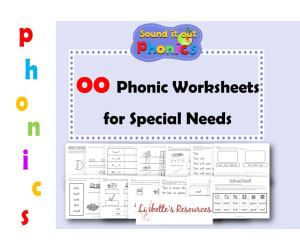
oo Phonic Worksheets for Early Years/Intervention
Special Resources, ELA, Special Education Needs (SEN), Language Development, Phonics, Reading, Spelling, Vocabulary, Writing, Grade 1, 2, 3, Worksheets & Printables, Worksheets
About This Product This is a pack of 42 Phonic OO worksheets to teach the OO, specially designed for those with special needs, including those with dyslexia or who may be suspected of being dyslexic, but will work equally well with young learners in Kindergarten/EYFS/Y1. These sheets are LETRS/Science of Reading and UK GOV requirements aligned. These worksheets also align with the most popular phonic programmes, including RWI and Letters and Sounds. Who are these worksheets for? I have written them for pupils who struggle with processing information - especially sounds. This includes children who are DYSLEXIC or have ANY other kind of processing disorder. Such children may have failed with other methods of teaching phonics. Such pupils need activities that: ·are highly structured - one tiny step at a time building on the one before using only a limited number of words to start with and only using words that the child has already learnt to sound out, with no nasty surprises. ·Have only a little on each pageas these pupils tire easily. What makes these worksheets special? I have a powerful three-step process which I use with my special needs pupils, which is worked out throughout the worksheets: 1. See it!where we focus on becoming aware of the new sound in words. This involves first hearing the new sound in words and then seeing it in words (tracking). 2. Sound-it-out!Having learnt to see the new sound in words, we learn to sound out these words to read and write them. We begin by usingsound-it-out boxesfor reading and spelling which help the child to segment the word before blending the sounds. Once the child can read and write individual words, we work on fluency by building familiarity with the common words in the new sound family. Once the child can sound the words out to read and spell confidently, we move on to recognising them/using them in longer reading and dictation passages, as soon as the child is able. I provide 2 reading passages with comprehension exercises and one dictation passage, with a page in the workbook dedicated to it, with room for a picture, which again cements understanding. 3. Write it! Incorporated into the above two steps, we constantly write the new sound. This adds a multi-sensory dimension to our work - we see with our eyes, we sound it with our mouth parts and voice, and then we move by writing. All three steps work together to help the child feel in control of his/her learning and to become a successful, confident learner. We finish each sound with a dictation which culminates our work before we move on to the next sound. I try to give this a week after we finish the book, to act as revision. The dictation: Read this passage to your pupil, who should write it. Have the child read his/her work and check for errors. Make sure the writing is completely accurate before saying the child has finished, including full stops and capital letters correctly used. Flashcards are included. What is included in the pack: 46 Activities 2 Games Flashcards Please note: This pack is in a series: Find the bundle here: https://teachsimple.com/product/phonic-worksheets-for-special-needs-bundle-highly-structured I do hope others find these Special Needs Phonic worksheets helpful for their pupils with ordering and processing difficulties!
Author Lilibette's Resources
Tags Special Needs Phonics, Dyslexia Phonic Worksheets, Phonic Worksheets For Dyslexics, Home Education, Reading Intervention, OO WORKSHEETS, OO Phonic Worksheets, Home-school
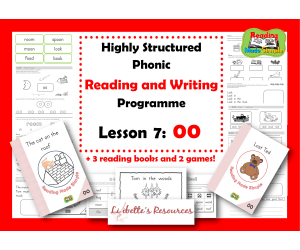
OO: 3 Decodable Reading Books and Supporting Activities
Special Resources, ELA, Special Education Needs (SEN), Language Development, Pre-Reading, Phonics, Spelling, Kindergarten, Preschool, Grade 1, 2, Literacy Readers, Teacher Tools
This is a set of 2, short vowel /oo/, decodable phonic reading books, with supporting activity packs to help struggling readers develop reading fluency. Each lesson focuses on just ten decodable OO words. What is included: This is a pack of 2 lessons (3 books, 2 games, 2 packs of worksheets) - 2 for each vowel sound: a total time of 2 weeks of phonics instruction. This OO pack of worksheets and reading books is part of the Reading Made Simple Special Needs programme and is preceded by the five vowels lessons and Lesson 6: CK. For best effect, the lessons should be taught in order. Reading Made Simple for Special Needs A 100% systematic phonic reading programme for all ages and abilities. Give your child a Head start in reading! Due to its 100% systematic nature, this reading programme is highly suitable for any child with a special need, including dyslexia (or suspected), or any other need that is causing a child to have difficulties learning to read. What makes this reading programme different? · It has its own, easy-to-download and print phonic reading books, making it accessible to many children worldwide. · Each book carefully builds on the vocabulary of those that have gone before, providing much repetition, without relying on predictable text. · Pictures aid the storyline without encouraging reading from the pictures – i.e. guessing. · The vocabulary is based on phonic families, which are introduced in a carefully planned way. · True sight words – those that cannot be sounded out - are kept to the very minimum. Most words are introduced in their phonic family wherever possible. · It is truly multisensory, using the power of the hand. We not only look at the words, but we write them too. This is powerful and has the bonus of turning the child not only into a reader but into a writer as well. Typical signs that this programme can help: · Difficulty recalling words when seen on flashcards or when reading texts, which results in no or little reading fluency · b/d letter reversal of a chronic nature – i.e. the child has not grown out of it · Difficulty ordering letters in words: E.g. top becomes pot. · Difficulty differentiating between like words: spoon/soon; back/black; sheep/sleep etc… · Difficulty tracking words across a page To help all children succeed, each phonic family is taught in two lessons, each a week in duration. This speed has been tried and tested to be the optimum speed to allow children to absorb new information without mental overload. You may find that some children need longer - but never less. Each phonic family is split into half and only 5/6 words in a family are studied each week. Activities are provided to give the child plenty of exposure to the new sound and the set of words that contain it. These activities are not hard, but simply bring the child face to face with the words, first individually, then in sentences, and finally in longer passages. We also seek to strengthen knowledge of blends and develop phonemic awareness through the activities, much needed by these learners. In all, the way that Reading Made Simple has been designed reduces the burden on the working memory, making it easier for children to learn to read. Children relax as they meet familiar words again and again. They begin to say – sometimes for the first time, ‘I can read’. With this programme, you can help a non-reader today! Activities include: Reading fluency triangles Word Level: reading and spelling CK words Sentence Level; reading and spelling sentences, including previously taught sounds and /ck/ words. Reading books to practice reading with short stories. Games Spelling activities/other reading activities Activities to develop relevant phonemic awareness Activities to help ease children over the areas most struggle with. What is included: Full teaching instructions Flashcards 2 packs of activities and worksheets 3 reading books 2 games Full teaching instructions What next? Once completed, students should move straight on to the /oo/ Decodable Reading Books and Activity Pack.
Author Lilibette's Resources
Tags Learn To Read Programme, Fluency, Struggling Readers, Dyslexia, Special Needs, Phonics, Decodable Reading Books, Reading Fluency, Short Vowel E, Homeschool Curriculum
OO: Decodable Reader and PowerPoint: Guided Reading: 2
Special Resources, ELA, Special Education Needs (SEN), Language Development, Pre-Reading, Phonics, Reading, Kindergarten, Preschool, Grade 1, Literacy Readers, Teacher Tools
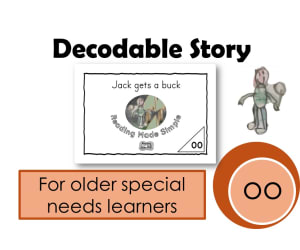
This OO decodable reading book can help children develop reading fluency. With a matching PowerPoint, is ideally suited to Guided Reading. It is part of a series of highly structured decodable reading books with controlled vocab; all vocab is decodable using phonic knowledge the child already has (if read in sequence) and true irregular sight words are only slowly and gradually introduced. Science of reading aligned. Based on the most up-to-date phonic research. This book is the next in our new series for budding historians who may be older pupils and may have special needs and need a more mature storyline than cats and dogs! It follows on from our previous sets of ' Learn to Read' packs covering the 5 vowels so the pupil is expected to be able to blend 3 and 4 sounds securely and be ready to read words with /ck/. It can be used as a stand-alone decodable reading book provided a child can blend CVC/CCVC/CVCC words and has learned the sound oo. These books are best read in sequence. This book contains words with the following sounds: ck. It can be used with the CK worksheets activity pack: https://teachsimple.com/product/Learn%20to%20Read:%20CK%20Reading%20Books%20+%20Activity%20Pack This series has been written with the aid of one of my pupils, aged 8. He writes his ideas and draws pictures and then I formulate them into a fool-proof reading book using only decodable words. Reading Made Simple for Special Needs A 100% systematic phonic reading programme for all ages and abilities. Give your child a Head start in reading! Due to its 100% systematic nature, this reading programme is highly suitable for any child with a special need, including dyslexia (or suspected), or any other need that is causing a child to have difficulties learning to read. What makes this reading programme different? · It has its own, easy-to-download and print phonic reading books, making it accessible to many children worldwide. · Each book carefully builds on the vocabulary of those that have gone before, providing much repetition, without relying on predictable text. · Pictures aid the storyline without encouraging reading from the pictures – i.e. guessing. · The vocabulary is based on phonic families, which are introduced in a carefully planned way. · True sight words – those that cannot be sounded out - are kept to the very minimum. Most words are introduced in their phonic family wherever possible. · It is truly multisensory, using the power of the hand. We not only look at the words, but we write them too. This is powerful and has the bonus of turning the child not only into a reader but into a writer as well. Typical signs that this programme can help: · Difficulty recalling words when seen on flashcards or when reading texts, which results in no or little reading fluency · b/d letter reversal of a chronic nature – i.e. the child has not grown out of it · Difficulty ordering letters in words: E.g. top becomes pot. · Difficulty differentiating between like words: spoon/soon; back/black; sheep/sleep etc… · Difficulty tracking words across a page To help all children succeed, each phonic family is taught in two lessons, each a week in duration. This speed has been tried and tested to be the optimum speed to allow children to absorb new information without mental overload. You may find that some children need longer - but never less. Each phonic family is split into half and only 5/6 words in a family are studied each week. Activities are provided to give the child plenty of exposure to the new sound and the set of words that contain it. These activities are not hard, but simply bring the child face to face with the words, first individually, then in sentences, and finally in longer passages. We also seek to strengthen knowledge of blends and develop phonemic awareness through the activities, much needed by these learners. In all, the way that Reading Made Simple has been designed reduces the burden on the working memory, making it easier for children to learn to read. Children relax as they meet familiar words again and again. They begin to say – sometimes for the first time, ‘I can read’. With this programme, you can help a non-reader today! How long are the books? The reading books are 12 pages long. Why are these books FREE when other people's books cost so much? Are they of lesser quality? They are free as I regard the ability to read as being a fundamental right of every living person. Why should some miss out on top-quality resources because they cannot pay for them? In terms of content, they are top quality, carefully planned and sequenced to help as many children as possible get started on the phonic road to reading. What is included? 1 PDF - 12 pages X A5 One 12-slide PowerPoint Print as a booklet Flip on the short edge
Author Lilibette's Resources
Tags Decodable Reading Books, Phonic Reading Scheme, Download And Print Decodable Readers, Reading Fluency, Oo Decodable Book, Oo Decodable Text, Learn To Read, Older Pupils, Remedial Phonics

EE: Decodable Reader and PowerPoint: Guided Reading: 4
Special Resources, ELA, Special Education Needs (SEN), Language Development, Pre-Reading, Phonics, Reading, Kindergarten, Preschool, Grade 1, Literacy Readers, Teacher Tools
This EE decodable reading book can help children develop reading fluency. With a matching PowerPoint, is ideally suited to Guided Reading. It is part of a series of highly structured decodable reading books with controlled vocab; all vocab is decodable using phonic knowledge the child already has (if read in sequence) and true irregular sight words are only slowly and gradually introduced. Science of reading aligned. Based on the most up-to-date phonic research. This book is the next in our new series for budding historians who may be older pupils and may have special needs and need a more mature storyline than cats and dogs! It follows on from our previous sets of ' Learn to Read' packs covering the 5 vowels so the pupil is expected to be able to blend 3 and 4 sounds securely and be ready to read words with /oo/. It can be used as a stand-alone decodable reading book provided a child can blend CVC/CCVC/CVCC words and has learned the sound oo. These books are best read in sequence. This book contains words with the following sounds: oo. This series has been written with the aid of one of my pupils, aged 8. He writes his ideas and draws pictures and then I formulate them into a fool-proof reading book using only decodable words. Reading Made Simple for Special Needs A 100% systematic phonic reading programme for all ages and abilities. Give your child a Head start in reading! Due to its 100% systematic nature, this reading programme is highly suitable for any child with a special need, including dyslexia (or suspected), or any other need that is causing a child to have difficulties learning to read. What makes this reading programme different? · It has its own, easy-to-download and print phonic reading books, making it accessible to many children worldwide. · Each book carefully builds on the vocabulary of those that have gone before, providing much repetition, without relying on predictable text. · Pictures aid the storyline without encouraging reading from the pictures – i.e. guessing. · The vocabulary is based on phonic families, which are introduced in a carefully planned way. · True sight words – those that cannot be sounded out - are kept to the very minimum. Most words are introduced in their phonic family wherever possible. · It is truly multisensory, using the power of the hand. We not only look at the words, but we write them too. This is powerful and has the bonus of turning the child not only into a reader but into a writer as well. Typical signs that this programme can help: · Difficulty recalling words when seen on flashcards or when reading texts, which results in no or little reading fluency · b/d letter reversal of a chronic nature – i.e. the child has not grown out of it · Difficulty ordering letters in words: E.g. top becomes pot. · Difficulty differentiating between like words: spoon/soon; back/black; sheep/sleep etc… · Difficulty tracking words across a page To help all children succeed, each phonic family is taught in two lessons, each a week in duration. This speed has been tried and tested to be the optimum speed to allow children to absorb new information without mental overload. You may find that some children need longer - but never less. Each phonic family is split into half and only 5/6 words in a family are studied each week. Activities are provided to give the child plenty of exposure to the new sound and the set of words that contain it. These activities are not hard, but simply bring the child face to face with the words, first individually, then in sentences, and finally in longer passages. We also seek to strengthen knowledge of blends and develop phonemic awareness through the activities, much needed by these learners. In all, the way that Reading Made Simple has been designed reduces the burden on the working memory, making it easier for children to learn to read. Children relax as they meet familiar words again and again. They begin to say – sometimes for the first time, ‘I can read’. With this programme, you can help a non-reader today! How long are the books? The reading books are 12 pages long. Why are these books FREE when other people's books cost so much? Are they of lesser quality? They are free as I regard the ability to read as being a fundamental right of every living person. Why should some miss out on top-quality resources because they cannot pay for them? In terms of content, they are top quality, carefully planned and sequenced to help as many children as possible get started on the phonic road to reading. What is included? 1 PDF 16 pp X A5 Print as a booklet Flip on the short edge One 16-slide PowerPoint
Author Lilibette's Resources
Tags Decodable Reading Books, Phonic Reading Scheme, Download And Print Decodable Readers, Reading Fluency, Guided Reading, Ee Decodable Reader, Special Needs, PowerPoint, Ee Phonics

Gumball Machine Printable Cut and Paste Identifying Feelings Worksheet
Special Resources, Social Emotional Learning (SEL), Life Skills, Kindergarten, Preschool, Grade 1, Worksheets, Worksheets & Printables
This gumball machine printable activity is an engaging, low-prep, and hands-on activity for your students. It includes 3 cut and paste worksheets that focus on matching emotions to facial expressions, identifying feelings based on their name, and relates feelings to different situations. These printable cut and paste worksheets will help your students develop social emotional skills and improve social awareness by allowing them to identifying different emotions. Each worksheet has a variety of emotion faces that are used as “gumballs”. Students will cut out the emotions gumballs and glue them into the gumball machine, matching them to the correct place. This activity is perfect for students with autism, and students who are beginning to label and identify their feelings. It also helps students practice their fine motor skills through cutting, pasting, and coloring. These worksheets also help to promote discussion about different situations that may make us feel these emotions. What Are The Benefits? - Enhances social emotional skills and self-awareness - Enhances fine motor skills - Helps students practice emotional identification - Promotes understanding of emotions and feelings and the situations that cause them - Interactive activity to promote engagement - No-prep! - Promotes creativity and individuality Perfect for: Pre K, kindergarten, and 1st grade Students with learning disabilities Students with autism Individual sessions Small groups Classroom lessons Busy binder activities Morning meeting activities Helpful Tips: 1. Print out the worksheets and give one to each student 2. Review the different emotions and discuss what situations might elicit those feelings. 3. Instruct students to cut out the emotions gumballs and paste them to the matching feeling/situation. 4. Encourage students to color the faces and gumball machine to make it their own and as creative as they would like 5. Talk about the different emotions and feelings as they complete the worksheets. 6.. Use the completed activity as a handy reference for future work with emotions
Author The Feelings and Friends Teacher
Tags Social Emotional Learning Autism, Emotions Matching, Counseling Activities, Feelings And Emotions, Gumball Machine Printable, Identifying Feelings Worksheets, Cut And Paste Activities

Letter O Flower Craft
ELA, Language Development, Phonics, Kindergarten, Preschool, Crafts, Activities
Enhance the teaching and learning of the beginning sound of letter O with our unique and interactive flower craftivity. This educational tool is designed to facilitate the understanding and recognition of the letter O sound with common, easy to recognize images. Our resource contains three different letter O flower templates to practice both beginning sounds as well as letter recognition. What's Included: There are two different templates that allow students to create a flower focused on recognizing the beginning sound of the letter O. There is one template that allows students to create a flower focused on letter recognition of both capital and lowercase forms of the letter O. Utilizing this Resource: Simply print the flower templates, and then allow the students to color, cut out, and assemble into a flower on colored construction paper. You can also print the flower design onto colored card stock to create a sorting activity . The flower will need to be cut and laminated. This can function as interactive materials in a literacy center, where students can match pictures to the correct letter O flower. Mix and match these with flowers of other letter flower crafts to encourage sorting and classification exercises. Possible Applications: Literacy Centers Classroom decorations or bulletin board displays Creative or Craft Sessions Individual Work Group-based Activities Supplementary Homework These flower craft templates are a perfect fit for educators seeking no-prep resources. All that is required is to print the craft page and distribute it to the students. Basic craft materials such as coloring tools, scissors, glue, and a base paper for the flower craft are needed. Each craft prints on a single page, promoting paper conservation, which aligns with an eco-friendly classroom. Skills Addressed: Identification of the beginning sound of the letter O Recognizing the capital and lowercase letter O Development of Scissors Skills Improvement of Direction Following abilities
Author The Connett Connection
Tags Flower Craft, Preschool Craft, Kindergarten Craft, Beginning Sounds, Letter Recognition, Letter N, Letter N Activities, Letter N Craft
Short Vowel u: 2 Decodable Reading Books and Supporting Activities
Special Resources, ELA, Special Education Needs (SEN), Language Development, Pre-Reading, Phonics, Spelling, Kindergarten, Preschool, Grade 1, 2, Literacy Readers, Teacher Tools
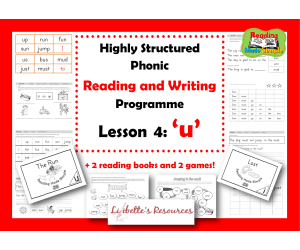
This is a set of 2, short vowel /u/, decodable phonic reading books, with supporting activity packs to help struggling readers develop reading fluency. Each lesson focuses on just ten decodable words with each medial vowel sound including a few words with consonant blends. What is included: This is a pack of 2 lessons (2 books, 2 games, 2 packs of worksheets) - 2 for each vowel sound: a total time of 2 weeks of phonics instruction. Who is this set of short vowel decodable readers for? This pack is part of the Reading Made Simple special needs reading and spelling programme. It has been trialled and tested on children with a range of processing difficulties which result in poor recall problems. These children are marked by having difficulty recalling words that have been sounded out when they meet them again and for whom, therefore, reading fluency seems elusive. They have been tried and tested on children with severe dyslexia, children with Cerebral Palsy and those with general learning difficulties. Children using these books are expected to be confident at reading and spelling CVC words with a short vowel and at reading words with consonant blends and a short vowel sound, but may still need support to spell them. This set of decodable reading books has a more controlled vocabulary than our main set of CVC Decodable reading books and our Consonant Blends books . Reading Made Simple for Special Needs A 100% systematic phonic reading programme for all ages and abilities. Give your child a Head start in reading! Due to its 100% systematic nature, this reading programme is highly suitable for any child with a special need, including dyslexia (or suspected), or any other need that is causing a child to have difficulties learning to read. What makes this reading programme different? · It has its own, easy-to-download and print phonic reading books, making it accessible to many children worldwide. · Each book carefully builds on the vocabulary of those that have gone before, providing much repetition, without relying on predictable text. · Pictures aid the storyline without encouraging reading from the pictures – i.e. guessing. · The vocabulary is based on phonic families, which are introduced in a carefully planned way. · True sight words – those that cannot be sounded out - are kept to the very minimum. Most words are introduced in their phonic family wherever possible. · It is truly multisensory, using the power of the hand. We not only look at the words, but we write them too. This is powerful and has the bonus of turning the child not only into a reader but into a writer as well. Typical signs that this programme can help: · Difficulty recalling words when seen on flashcards or when reading texts, which results in no or little reading fluency · b/d letter reversal of a chronic nature – i.e. the child has not grown out of it · Difficulty ordering letters in words: E.g. top becomes pot. · Difficulty differentiating between like words: spoon/soon; back/black; sheep/sleep etc… · Difficulty tracking words across a page To help all children succeed, each phonic family is taught in two lessons, each a week in duration. This speed has been tried and tested to be the optimum speed to allow children to absorb new information without mental overload. You may find that some children need longer - but never less. Each phonic family is split into half and only 5/6 words in a family are studied each week. Activities are provided to give the child plenty of exposure to the new sound and the set of words that contain it. These activities are not hard, but simply bring the child face to face with the words, first individually, then in sentences, and finally in longer passages. We also seek to strengthen knowledge of blends and develop phonemic awareness through the activities, much needed by these learners. In all, the way that Reading Made Simple has been designed reduces the burden on the working memory, making it easier for children to learn to read. Children relax as they meet familiar words again and again. They begin to say – sometimes for the first time, ‘I can read’. With this programme, you can help a non-reader today! What is included: Full teaching instructions Flashcards 10 packs of activities and worksheets 10 reading books 10 games Full teaching instructions What next? Once completed, students should move straight on to the /ck/ Decodable Reading Books and Activity Pack. .
Author Lilibette's Resources
Tags Learn To Read Programme, Fluency, Struggling Readers, Dyslexia, Special Needs, Phonics, Decodable Reading Books, Reading Fluency, Short Vowel O, Homeschool Curriculum

Short Vowel i: 2 Decodable Reading Books and Supporting Activities
ELA, Language Development, Pre-Reading, Phonics, Spelling, Kindergarten, Preschool, Grade 1, 2, Literacy Readers, Teacher Tools
This is a set of 2, short vowel /i/, decodable phonic reading books, with supporting activity packs to help struggling readers develop reading fluency. Each lesson focuses on just ten decodable words with each medial vowel sound including a few words with consonant blends. What is included: This is a pack of 2 lessons (2 books, 2 games, 2 packs of worksheets) - 2 for each vowel sound: a total time of 2 weeks of phonics instruction. Who is this set of short vowel decodable readers for? This pack is part of the Reading Made Simple special needs reading and spelling programme. It has been trialled and tested on children with a range of processing difficulties which result in poor recall problems. These children are marked by having difficulty recalling words that have been sounded out when they meet them again and for whom, therefore, reading fluency seems elusive. They have been tried and tested on children with severe dyslexia, children with Cerebral Palsy and those with general learning difficulties. Children using these books are expected to be confident at reading and spelling CVC words with a short vowel and at reading words with consonant blends and a short vowel sound, but may still need support to spell them. This set of decodable reading books has a more controlled vocabulary than our main set of CVC Decodable reading books and our Consonant Blends books . Reading Made Simple for Special Needs A 100% systematic phonic reading programme for all ages and abilities. Give your child a Head start in reading! Due to its 100% systematic nature, this reading programme is highly suitable for any child with a special need, including dyslexia (or suspected), or any other need that is causing a child to have difficulties learning to read. What makes this reading programme different? · It has its own, easy-to-download and print phonic reading books, making it accessible to many children worldwide. · Each book carefully builds on the vocabulary of those that have gone before, providing much repetition, without relying on predictable text. · Pictures aid the storyline without encouraging reading from the pictures – i.e. guessing. · The vocabulary is based on phonic families, which are introduced in a carefully planned way. · True sight words – those that cannot be sounded out - are kept to the very minimum. Most words are introduced in their phonic family wherever possible. · It is truly multisensory, using the power of the hand. We not only look at the words, but we write them too. This is powerful and has the bonus of turning the child not only into a reader but into a writer as well. Typical signs that this programme can help: · Difficulty recalling words when seen on flashcards or when reading texts, which results in no or little reading fluency · b/d letter reversal of a chronic nature – i.e. the child has not grown out of it · Difficulty ordering letters in words: E.g. top becomes pot. · Difficulty differentiating between like words: spoon/soon; back/black; sheep/sleep etc… · Difficulty tracking words across a page To help all children succeed, each phonic family is taught in two lessons, each a week in duration. This speed has been tried and tested to be the optimum speed to allow children to absorb new information without mental overload. You may find that some children need longer - but never less. Each phonic family is split into half and only 5/6 words in a family are studied each week. Activities are provided to give the child plenty of exposure to the new sound and the set of words that contain it. These activities are not hard, but simply bring the child face to face with the words, first individually, then in sentences, and finally in longer passages. We also seek to strengthen knowledge of blends and develop phonemic awareness through the activities, much needed by these learners. In all, the way that Reading Made Simple has been designed reduces the burden on the working memory, making it easier for children to learn to read. Children relax as they meet familiar words again and again. They begin to say – sometimes for the first time, ‘I can read’. With this programme, you can help a non-reader today! What is included: Full teaching instructions Flashcards 10 packs of activities and worksheets 10 reading books 10 games Full teaching instructions What next? Once completed, students should move straight on to the /ck/ Decodable Reading Books and Activity Pack.
Author Lilibette's Resources
Tags Learn To Read Programme, Fluency, Struggling Readers, Dyslexia, Special Needs, Phonics, Decodable Reading Books, Reading Fluency, Short Vowel I, Homeschool Curriculum
CK: 3 Decodable Reading Books and Supporting Activities; Lesson 6
Special Resources, ELA, Special Education Needs (SEN), Language Development, Pre-Reading, Phonics, Spelling, Kindergarten, Preschool, Grade 1, 2, Literacy Readers, Teacher Tools
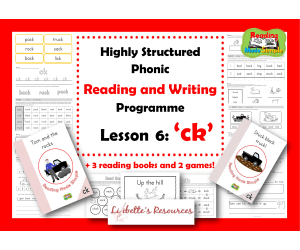
This is a set of 2, short vowel /ck/, decodable phonic reading books, with supporting activity packs to help struggling readers develop reading fluency. Each lesson focuses on just ten decodable CK words and introduces the odd words: be, me, she and he. What is included: This is a pack of 2 lessons (3 books, 2 games, 2 packs of worksheets) - 2 for each vowel sound: a total time of 2 weeks of phonics instruction. This CK pack of worksheets and reading books is part of the Reading Made Simple Special Needs programme and follows straight after the 'Learn to Read Five Vowels Packs. https://teachsimple.com/product/decodable-reading-books-activity-packs-short-vowels For best effect, the lessons should be taught in order. Reading Made Simple for Special Needs A 100% systematic phonic reading programme for all ages and abilities. Give your child a Head start in reading! Due to its 100% systematic nature, this reading programme is highly suitable for any child with a special need, including dyslexia (or suspected), or any other need that is causing a child to have difficulties learning to read. What makes this reading programme different? · It has its own, easy-to-download and print phonic reading books, making it accessible to many children worldwide. · Each book carefully builds on the vocabulary of those that have gone before, providing much repetition, without relying on predictable text. · Pictures aid the storyline without encouraging reading from the pictures – i.e. guessing. · The vocabulary is based on phonic families, which are introduced in a carefully planned way. · True sight words – those that cannot be sounded out - are kept to the very minimum. Most words are introduced in their phonic family wherever possible. · It is truly multisensory, using the power of the hand. We not only look at the words, but we write them too. This is powerful and has the bonus of turning the child not only into a reader but into a writer as well. It is written to help children process differences between commonly confused words The author anticipates the common pitfalls of learning phonics and helps to ease the pupils over the difficulties. Typical signs that this programme can help: · Difficulty recalling words when seen on flashcards or when reading texts, which results in no or little reading fluency · b/d letter reversal of a chronic nature – i.e. the child has not grown out of it · Difficulty ordering letters in words: E.g. top becomes pot. · Difficulty differentiating between like words: spoon/soon; back/black; sheep/sleep etc… · Difficulty tracking words across a page To help all children succeed, each phonic family is taught in two lessons, each a week in duration. This speed has been tried and tested to be the optimum speed to allow children to absorb new information without mental overload. You may find that some children need longer - but never less. Each phonic family is split into half and only 5/6 words in a family are studied each week. Activities are provided to give the child plenty of exposure to the new sound and the set of words that contain it. These activities are not hard, but simply bring the child face to face with the words, first individually, then in sentences, and finally in longer passages. We also seek to strengthen knowledge of blends and develop phonemic awareness through the activities, much needed by these learners. In all, the way that Reading Made Simple has been designed reduces the burden on the working memory, making it easier for children to learn to read. Children relax as they meet familiar words again and again. They begin to say – sometimes for the first time, ‘I can read’. With this programme, you can help a non-reader today! Activities include: Reading fluency triangles Word Level: reading and spelling CK words Sentence Level; reading and spelling sentences, including previously taught sounds and /ck/ words. Reading books to practice reading with short stories. Games Spelling activities/other reading activities Activities to develop relevant phonemic awareness Activities to help ease children over the areas most struggle with. What is included: Full teaching instructions Flashcards 2 packs of activities and worksheets 3 reading books 2 games Full teaching instructions What next? Once completed, students should move straight on to the /oo/ Decodable Reading Books and Activity Pack.
Author Lilibette's Resources
Tags Learn To Read Programme, Fluency, Struggling Readers, Dyslexia, Special Needs, Phonics, Decodable Reading Books, Reading Fluency, Short Vowel E, Homeschool Curriculum
Learn to Write: Patterns and Letters: For the Young Child
ELA, Writing, Handwriting, Kindergarten, Preschool, Worksheets & Printables, Worksheets
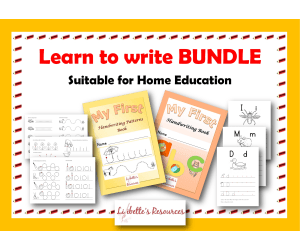
This is a 'Learn to Write' pack containing a booklet of handwriting patterns to help the child develop pencil control and a booklet teaching correct letter formation linked to phonics learning. Handwriting Patterns: Each page has a fun activity to help young children learn to control the pencil. Starting with straight lines, they can take bees to flowers and cars along the road and draw stems on flowers and branches on trees. Moving onto curved lines, they can take the horses to grass and fly jet planes through the sky! For zig-zag lines, students can bounce a ball, go upstairs and draw patterns of needles on a fir tree. For circles they can draw balls and then a pattern of lines and circles with bats and balls. We then move onto more complex patterns and curves, finishing with some letter shape movements: sticks, circles, v, w, o, u and c shapes. Learn to Write Letters This is a first, simple ‘learn to write’ book teaching letter formation linked to beginning sounds for young children. Order and steps: Each page has a picture of something that begins with the sound to be practised. The child can colour the picture while thinking about the sounds it begins with, The letter is then practised first in lower case, then in upper and finally alternating lower and upper cases. Red dots indicate where each letter starts and arrows to show direction are given on the first letter of the upper and lower case rows. Finally, the page finishes with a question, encouraging the child to think of other things that begin with that sound. By teaching the letters alongside their letter sound, we make the learning of phonics truly multisensory. The book is sized perfectly for little hands. Printing and paper Each book is A5 size. Print as a booklet; flip on the short edge. Print 2 pages per A4 sheet and either fold and staple (if you print as a booklet, flip on the short edge), or cut into 2 pages. What is included: 2 PDFs. There are 21 pages of patterns and 26 pages in the letter formation book. Printing and paper Each page is just right-for-little-hands A5 size. Print 2 pages per A4 sheet and either fold and staple (if you print as a booklet, flip on the short edge), or cut into 2 pages.
Author Lilibette's Resources
Tags Handwriting, K - 2, Handwriting Book, Handwriting Patterns, Pencil Control, Home-education, Kindergarten, Kindergarten Writing
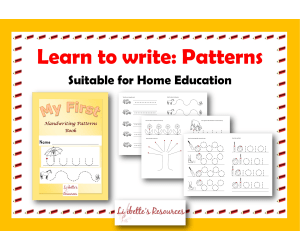
Handwriting Patterns Book
ELA, Writing, Handwriting, Kindergarten, Preschool,
This is a first, simple handwriting patterns book helping young children to develop good pencil control necessary for good handwriting. Order and steps: Each page has a fun activity to help young children learn to control the pencil. Starting with straight lines, they can take bees to flowers and cars along the road, and draw stems on flowers and branches on trees. Moving onto curved lines, they can take the horses to grass, and fly jet planes through the sky! For zig zag lines, students can bounce a ball, go upstairs and draw patterns of needles on a fir tree. For circles they can draw balls and then a pattern of lines and circles with bats and balls. We then move onto more complex patterns and curves, finishing with some letter shape movements: sticks, circles, v, w, o, u and c shapes. What is included: 1 PDF. There are 21 pages of patterns Printing and paper Each page is just right-for-little-hands A5 size. Print 2 pages per A4 sheet and either fold and staple (if you print as a booklet, flip on the short edge), or cut into 2 pages. More This book can be used alongside our First Handwriting Book, helping children to form the letters correctly.
Author Lilibette's Resources
Tags Handwriting, K - 2, Handwriting Book, Handwriting Patterns, Pencil Control, Home-education, Kindergarten, Kindergarten Writing
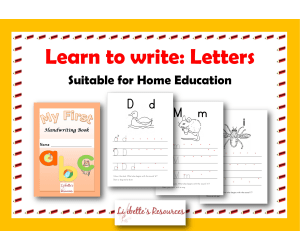
Learn to Write Letters
ELA, Language Development, Phonics, Writing, Handwriting, Kindergarten, Preschool, Worksheets & Printables, Worksheets
This is a first, simple ‘learn to write’ book teaching letter formation linked to beginning sounds for young children. Order and steps: Each page has a picture of something that begins with the sound to be practised. The child can colour the picture while thinking about the sounds it begins with, The letter is then practised first in lower case, then in upper and finally alternating lower and upper cases. Red dots indicate where each letter starts and arrows to show direction are given on the first letter of the upper and lower case rows. Finally, the page finishes with a question, encouraging the child to think of other things that begin with that sound. By teaching the letters alongside their letter sound, we make the learning of phonics truly multisensory. The book is sized perfectly for little hands. What is included: 1 PDF. There is one page for each letter. Printing and paper Each page is A5 size. Print 2 pages per A4 sheet and either fold and staple (if you print as a booklet, flip on the short edge), or cut into 2 pages. More This book can be used alongside our Handwriting Patterns book , helping children to develop good pencil control.
Author Lilibette's Resources
Tags Learn To Write Letters, Handwriting, Letter Formation, Phonics, K - 2, Handwriting Book, Home-education, Kindergarten, Pre-writing
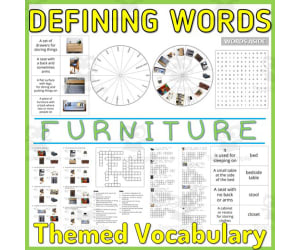
Reading Writing Games | Word Definitions 18
Special Resources, ELA, Special Education Needs (SEN), Speech Therapy, Reading, Reading Comprehension, Language Development, ESL, Writing, Handwriting, Vocabulary, Grade 2, 3, 4, 5, Worksheets & Printables, Worksheets
This series of PDF resources focuses on identifying noun concepts, with engaging visualizations ( pictures and graphic arrangements ) of vocabulary by topic. The activity materials in this assignment are designed to help students develop their vocabulary and reading comprehension skills through interactive activities and real-life examples. It includes clear definitions of words from common categories and can also serve as discussion prompts to encourage critical and analytical thinking, deepen your understanding of the language, and improve your communication skills . This resource is designed to be accessible and engaging to all students . Ideal for teaching English as a Second Language and intervention sessions on learning difficulties. Clear and concise language, visual aids and interactive activities help students easily understand and remember information, integrating visual and kinesthetic elements. You can choose from a variety of worksheets that suit your student's level, interests, and printing preferences. Each category topic includes : 2 sets of Flash cards ( definition sentence / image, image / definition sentence ) 2 sets of Flash cards ( definition word / phrase, definition phrase / word ) 3 Anagram strings ( mixed letters of single words or in definition text ) 1 Crossword ( word definition ) 2 sets of linked activities Draw a Line ( definition / image, image / definition ) 2 sets of matching activities Draw a line ( word / definition, definition / word ) 2 series of Quizzes ( definition / image, image / definition ) 2 series of Quizzes ( word / definition, definition / word ) 3 Wheels of Fortune ( words, definitions, images ) 1 Word Search page for ( word definition ) 2 Writing Boards ( words, definitions ) 2 Blank Boards ( words, definitions ) * Use as-is or create your own board games, like Snap, Memory, Match to Sample, and Knowledge Races . Distribute it as morning exercises, quiet time and focus activities, independent workbooks, or fun homework 41 PDF Pages
Author WORDS ASIDE
Tags Esl, Word Defining, Semantics, Word Search, Anagram, Flash Cards, Centers, Crossword, Words Aside, Definitions

Sight Word Foldable Book: blue
ELA, Reading, Preschool, Grade 1, Activities
With these sight word foldable book, students will practice sight word recognition. Students will use these books to find, write, and read the target sight word! This resource contains foldable books for the sight word: blue The pages included in this product are: There are 2 sight word activity foldable books. Both books have a cover page to color, a seek and find activity where students color or dab the sight word, and an area where students will trace the sight word. One book has a page where students will simply read sentences containing the sight word, while the other contains sentences for students to first write the sight word, then read the sentences. There are 2 sight word emergent readers. One reader has students simply color an image and read the sentence containing the target sight word. The second reader contains the same sentences with the sight word missing. Students will write the sight word, then read the sentences on these books. How to Make: Students can either fold the books first or complete the activities before folding the book. The order is not important. To create the books, students will first fold the book along the horizontal line, then they will fold along the vertical line. When to Use: Literacy Center - These foldable books can be used in literacy center for students to practice these sight words. Homework - These foldable books can be sent home from homework so parents can assist students in learning their sight words. Independent Practice - These foldable books make great independent practice for students learning sight words. Sub Plans - Since these foldable books have easy to follow directions, they make great activities to leave with substitutes. These foldable books are a great no-prep activity for teachers to give to students to complete. They pages just need to be printed and given to students. No cutting is necessary to create the books!
Author The Connett Connection
Tags Sight Words, Sight Word Recognition, Foldable Book, Sight Word: Blue

Sight Word Foldable Book: big
ELA, Reading, Preschool, Grade 1, Activities
With these sight word foldable book, students will practice sight word recognition. Students will use these books to find, write, and read the target sight word! This resource contains foldable books for the sight word: big The pages included in this product are: There are 2 sight word activity foldable books. Both books have a cover page to color, a seek and find activity where students color or dab the sight word, and an area where students will trace the sight word. One book has a page where students will simply read sentences containing the sight word, while the other contains sentences for students to first write the sight word, then read the sentences. There are 2 sight word emergent readers. One reader has students simply color an image and read the sentence containing the target sight word. The second reader contains the same sentences with the sight word missing. Students will write the sight word, then read the sentences on these books. How to Make: Students can either fold the books first or complete the activities before folding the book. The order is not important. To create the books, students will first fold the book along the horizontal line, then they will fold along the vertical line. When to Use: Literacy Center - These foldable books can be used in literacy center for students to practice these sight words. Homework - These foldable books can be sent home from homework so parents can assist students in learning their sight words. Independent Practice - These foldable books make great independent practice for students learning sight words. Sub Plans - Since these foldable books have easy to follow directions, they make great activities to leave with substitutes. These foldable books are a great no-prep activity for teachers to give to students to complete. They pages just need to be printed and given to students. No cutting is necessary to create the books!
Author The Connett Connection
Tags Sight Words, Sight Word Recognition, Foldable Book, Sight Word Big
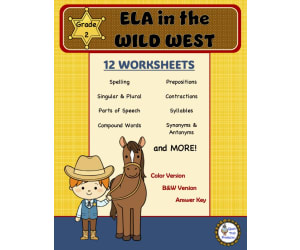
Grade 2 ELA Worksheets - Wild West Theme
ELA, Grammar, Reading, Language Development, Spelling, Vocabulary, Grade 2, Worksheets & Printables, Worksheets
Round-up your grade 2 learners for this set of ELA worksheets. They’re sure to enjoy practicing and/or reviewing a variety of skills set with an exciting Wild West theme. Aligned with current ELA standards, this set of 12 worksheets will give your 2nd graders the opportunity to work on skills such as spelling, syllables, prepositions, collective nouns, compound words, contractions, and more. These worksheets are versatile in that they can be used in a multitude of ways including indoor or outdoor learning, homework, resource exercises, or as a learning activity with substitute teachers. Learners can work on them individually or in large/small groups. They’re also great as an assessment tool. Use them after teaching a specific ELA skill or at the beginning of the school year to gauge the skill levels of your new learners. If you’re looking for an engaging learning activity to keep kids busy during the summer months, these worksheets fit the bill. Most worksheets are available in color, while all are available in black and white. An answer key is also included. Below are the details of each worksheet. WORKSHEET 1: learners will find Sam the snake and circle the preposition to show where he is located. WORKSHEET 2: learners will color the sheriff’s badge that contains the correct contraction. WORKSHEET 3: learners will write the singular or plural form of various Wild West themed words. WORKSHEET 4: learners will color the covered wagon that contains the correct irregular plural form of the provided word. WORKSHEET 5: learners will read a group of Wild West themed words and cross out the word that does not belong in the group. WORKSHEET 6: learners will read 10 Wild West themed sentences. They’ll circle the verbs and underline the adjectives in each sentence. WORKSHEET 7: learners will circle synonyms and antonyms found on “WANTED” posters. They’ll also write their own synonym or antonym for the provided words. WORKSHEET 8: learners will circle the correct spelling of Wild West themed words. They’ll also write said words in alphabetical order. WORKSHEET 9: learners will circle the correct number of syllables in the provided Wild West themed words. WORKSHEET 10: learners will cut out various Wild West themed words and sort them by “compound words” or “non-compound words”. They’ll glue the words into the correct column. WORKSHEET 11: learners will draw a line matching the collective nouns to their appropriate group names. WORKSHEET 12: learners will read 12 Wild West themed sentences. They’ll color the word that provides a different shade of meaning to the underlined word in the sentence. ANSWER KEY
Author Quail Trail Products
Tags Grade 2 ELA, Wild West, Spelling, Vocabulary, Syllables, Parts Of Speech, Contractions, Compound Words, Singular And Plural, Prepositions

Craft Stick Dome Challenge - MIDDLE SCHOOL - STEM Engineering
Science, Basic Science, Technology, Engineering, Physics, STEM, Grade 6, 7, 8, Activities
Craft Stick Dome STEM Challenge for High School Students. My Craft Stick Dome Challenge is an excellent way to get your students' excited for STEM in an engaging hands-on way. It also is a great way to introduce them to the world of engineering. This activity is designed for High School students. If you're looking for something for Middle School, please click here. In this activity, students will work in groups to design and build a Craft Stick Dome using only craft sticks with the goal of creating the most stable dome possible. By doing this activity, your students will experience the process of creating something new as they brainstorm, plan, design, and test their ideas. This challenge allows students to apply what they're learning in science and math classes, including geometry, physics, material science and more as they problem-solve to create the Craft Stick Dome using only simple materials. Additionally, they will develop critical thinking, creativity, communication, and collaboration skills while working in a group setting. Your STEM Challenge comes with: A full set of instructions Reflection questions An explanation on the science behind the challenge Instructions on creating their design Tips for getting started on the challenge The Craft Stick Dome Challenge is an activity your students will enjoy. It will allow them to: explore how shapes and structure affect stability. learn principles of weight distribution. use the engineering design process. develop perseverance, resourcefulness and an ability to learn from setbacks and mistakes. This activity is easy to implement with step-by-step instructions and is adaptable to different learning styles and abilities as you can customize it however you like to suit your students. It encourages students to embrace productive failure and to work together to create something tangible.
Author Teach With Fergy
Tags Stem, Engineering, Stem Challenge, Engineering Challenge, Paper Chair, Paper Chair Challenge, Paper Chair STEM