2,662 products added recently
Page 43 - 2nd Grade Worksheets
Provide your second graders with worksheets that promote growth in literacy, numeracy, and critical thinking. These resources align with curriculum standards and offer engaging activities. Incorporate them to strengthen understanding and encourage enthusiasm for learning.
Sight Words Find and Color
ELA, Reading, Preschool, Grade 1, 2, Worksheets & Printables, Worksheets
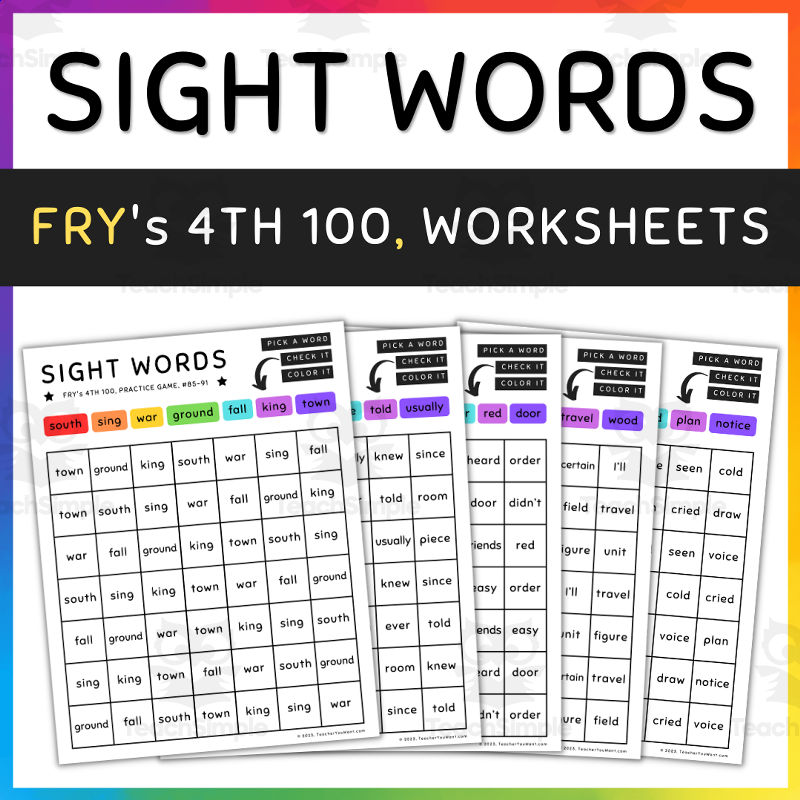
Sight Words Find and Color: A Comprehensive Teaching Resource Overview The Sight Words Find and Color teaching resource is a comprehensive collection of 25 PDF worksheets designed to enhance the reading skills of students from kindergarten to grade 2 levels. It puts an emphasis on high frequency sight words, which are key in improving language arts abilities, especially in reading. About the Worksheets Each worksheet features a unique high-frequency sight word. The student's mission is simple - identify and color the clouds containing the target word among others. Thanks to clear instructions, children can work independently or with guidance as part of: whole-group instruction small group learning activities homework assignments. The Learning Approach This method fully engages students by making education enjoyable through a coloring activity while reinforcing their recognition and understanding of necessary sight words. It asks students to focus as they look for each correct word before coloring it in."Visual learners", in particular, will find this style beneficial since it caters to their preference for seeing words instead of just hearing them. Add-on Features Making Sight Words Find and Color more appealing are its engaging clipart images from Kari Bolt Children's Illustrator that offer visual stimulation without overwhelming young learners. Ease-of-Use Format The resource is available in a user-friendly PDF format that guarantees smooth printing for physical worksheets or online sharing for virtual classrooms offering flexibility across diverse teaching scenarios. Towards Effective Literacy Instruction: Fusing literacy coaching with fun, Sight Words Find and Color creates an optimally productive learning environment inciting early readers' enthusiasm to master new words. This asset makes it an essential tool for every teacher's repertoire.
Author SEN Resource Source
Tags Sight Words, Reading Skills, Language Arts, Worksheets, High Frequency
Useful Robots Reading Comprehension Passage - Cored Ed Encyclopedia
ELA, Language Development, Reading Comprehension, Reading, Pre-Reading, History, Social Studies, Technology, Science, Earth and Environmental Sciences, Grade 2, 3, 4, 5, Worksheets & Printables, Worksheets, Teacher Tools, Centers, Activities, Writing Prompts, Assessments, Quizzes and Tests, Quizzes, Lesson Plans
This useful robots reading comprehension with lesson plan includes: Visualization (on the front cover) Start your lesson by taking a minute to think and share something about the topic. Read the script aloud (slowly), perhaps prepare some music or sound effects. Student close their eyes and let their imaginations wander. Students open their eyes, read the question aloud and give them a few minutes to complete. Ask a few students to share or keep answers until the end to compare with what they learn in the passage. Quick pause—thousands of Cored Education products are included with your TeachSimple membership. Download links and encyclopedia index available here. Pre-Reading Trivia Students will write down one thing they already know about the subject and then read five more facts and discuss. These facts are fun, and the students will enjoy learning about the subject before reading more. Give 1 minute for students to write what they already know (no pressure—best guess is fine). Read the five facts together. After each fact, do ask a student for their opinion, was it surprising? Set a purpose by asking students to highlight/underline one fact they want to learn more about during the reading. Reading Passage The text is a high-interest reading passage with set paragraphs, roughly three to four paragraphs long. It contains a variety of themes about the topic, anywhere from history to technology. The passage is between 250 and 350 words in length. First, ask students to look at the headings and see what they’ll learn about today. What do they know about the topic/heading? First read options: Teacher read-aloud (best for support). Partner reading (paragraph by paragraph). While reading, students underline important details, and vocabulary words they think may come up in the questions section. Mixed Questions The first question page contains four multiple-choice questions, each with a choice of four answers, and three written response questions that require a sentence or two from the student. Students complete the mcqs first independently, then review quickly as a class. For the 3 written responses, try to get students giving the answer with some form of evidence: “I think ___ because the text says ___.” If students get stuck, send them back to check the passage. Vocabulary Questions Practice seven key words from the text in this section across two activities. First section is scrambled words where students will unscramble three words given a clue for each. The second section is a word to meaning matching activity. Before starting, have some students read out words they underlined in the passage. Ask students to say the word and read aloud the sentence(s) around each word. Ask students to do scrambled words and the matching exercise in pairs then go through answers as a class. For the scrambled spelling task, get four pairs to come up to the board and write the words for extra practice with the other student reading out the clue. For the matching task, prompt students to give full sentences: “I matched ___ with ___ because ___.” Creative Writing In this question, the student will be required to write a five to eight sentence paragraph on a question related to the topic. Before starting, ask students write down 3 key ideas they are going to include in their piece. Ask students for ideas to share around the class to help those struggling. Pro writing expectations: 5–8 sentences At least 2 facts or details from the passage At least 2 vocabulary words from the previous page Students read their paragraphs while classmates listen for facts and vocabulary words. Extension Activities This page is optional for fast finishers or to take home. There are several activities, each one requiring a different skill. Do some, do none, do all, completely optional - but you will feel reassured knowing every possibility is planned for. Includes summary writting question. Answer Key There are answers for the multiple-choice questions, written response questions have sample answers, vocabulary answers and if there is a summary question then a sample summary will be provided as well. Lesson Plan Included Customized lesson plan for this lesson is included. Lesson Snapshot Title: Useful Robots Genre: Nonfiction (Informational passage) Subject: Science & Technology (Engineering/Robotics) Primary Topic: How robots developed and help people Estimated Guided Reading Level (A–Z): P Support pages included: Pre-reading trivia, mixed questions, vocabulary activities, creative writing prompt, extension activities, and an answer key. QA notes on support pages: Support content generally matches the passage; however, the support pages use “automaton” (singular) while the passage uses “automata” (plural), and an extension prompt suggests “hills,” which is not stated in the passage (the passage names rocks and dust). What This Lesson Teaches Best Robots have a history: Explains that long ago people created “automata” that moved using steam, air, water, or falling weights. Modern robots and factory work: Describes an early industrial robot, Unimate, working in 1961 at a General Motors plant handling hot metal parts that were tough and dangerous for people. How robots learn repeatable motions: Shows how a person can guide a robot’s movements while sensors send signals to a computer that stores a pattern to repeat the job. Robots go where people can’t: Highlights the rover Opportunity exploring Mars for years (2004–2018) and sending back clues from rocks and dust. Big idea across time: Connects early moving devices to today’s robots as tools that learned to move, repeat, and help humans discover more. Learning Goals Students will explain what “automata” were and what powered them. Students will describe why Unimate’s factory job mattered for people. Students will identify how a robot can be “taught” motions and then repeat them. Students will summarize how robots can help in places that are risky, far away, or hard to reach. Students will use details from the text to tell what Opportunity did on Mars and what it sent back. Key Vocabulary From the Text automata — moving devices from long ago; not thinking machines. program — give a machine instructions to do a job. industrial — related to factories and making things. sensors — parts that notice and send signals to a computer. rover — a robot vehicle that travels to explore places. FULL CATALOG OF DOWNLOAD LINKS AND ENCYCLOPEDIA INDEX HERE
Author Cored Education
Rating
Tags Vocabulary, Reading Comprehension, Reading Passages, Lesson Plans, Ela Lesson Plans, Reading Comprehension Lesson Plans, Pre-reading, Science Lesson Plans, Technology, History
Measurement - Drill Sheets Vol. 4 Gr. PK-2
Math, Measurements, Common Core, Grade 1, 2, Worksheets & Printables, Worksheets
Measurement - Drill Sheets Vol. 4 Gr. PK-2 This teaching resource is specifically designed for educators to enrich and solidify measurement concepts among students in grades PK-2, aligning with NCTM standards. Features: Versatile drill sheets with warm-up exercises and timed activities Differentiated learning opportunities adapting to each student's needs Covers key aspects such as length, volume, time, money, weight and area Incorporates spaces for reflection and critical thinking within each drill sheet Note: Use of technology enhancing digital learning has also been promoted in these worksheets. Bonus Content: An assessment rubric assisting teachers to gauge student performance effectively. Review sheets helping remember prior knowledge on measurements. Activity posters stimulating visual learners. Bonus worksheets offering additional practice. Standards rubrics specifying required conceptual understandings. The content is designed cohesively adhering to the norms of Common Core State Standards which ensures smooth curriculum planning for educators while ensuring Bloom's taxonomy criteria applicability facilitating higher order thinking skills development. Emphasis is given on STEM education vis NCTM guidelines promises contextualized problems relevant real-world scenarios makes the package a comprehensive one. Ease of Access :The material comes bundled in a user-friendly PDF file targeting multiple users: public-school teachers as well homeschoolers alike who may utilize it across whole groups or small groups or even as homework assignments.
Author Classroom Complete Press
Tags PDF
Hiking Reading Comprehension Passage - Cored Ed Encyclopedia
ELA, Reading Comprehension, Reading, Pre-Reading, Language Development, History, Social Studies, Geography, P.E. & Health, Physical Education, Grade 2, 3, 4, 5, Worksheets & Printables, Worksheets, Teacher Tools, Centers, Activities, Writing Prompts, Assessments, Quizzes and Tests, Quizzes, Lesson Plans
This hiking reading comprehension with lesson plan includes: Visualization (on the front cover) Start your lesson by taking a minute to think and share something about the topic. Read the script aloud (slowly), perhaps prepare some music or sound effects. Student close their eyes and let their imaginations wander. Students open their eyes, read the question aloud and give them a few minutes to complete. Ask a few students to share or keep answers until the end to compare with what they learn in the passage. Quick pause—thousands of Cored Education products are included with your TeachSimple membership. Download links and encyclopedia index available here. Pre-Reading Trivia Students will write down one thing they already know about the subject and then read five more facts and discuss. These facts are fun, and the students will enjoy learning about the subject before reading more. Give 1 minute for students to write what they already know (no pressure—best guess is fine). Read the five facts together. After each fact, do ask a student for their opinion, was it surprising? Set a purpose by asking students to highlight/underline one fact they want to learn more about during the reading. Reading Passage The text is a high-interest reading passage with set paragraphs, roughly three to four paragraphs long. It contains a variety of themes about the topic, anywhere from history to technology. The passage is between 250 and 350 words in length. First, ask students to look at the headings and see what they’ll learn about today. What do they know about the topic/heading? First read options: Teacher read-aloud (best for support). Partner reading (paragraph by paragraph). While reading, students underline important details, and vocabulary words they think may come up in the questions section. Mixed Questions The first question page contains four multiple-choice questions, each with a choice of four answers, and three written response questions that require a sentence or two from the student. Students complete the mcqs first independently, then review quickly as a class. For the 3 written responses, try to get students giving the answer with some form of evidence: “I think ___ because the text says ___.” If students get stuck, send them back to check the passage. Vocabulary Questions Practice seven key words from the text in this section across two activities. First section is scrambled words where students will unscramble three words given a clue for each. The second section is a word to meaning matching activity. Before starting, have some students read out words they underlined in the passage. Ask students to say the word and read aloud the sentence(s) around each word. Ask students to do scrambled words and the matching exercise in pairs then go through answers as a class. For the scrambled spelling task, get four pairs to come up to the board and write the words for extra practice with the other student reading out the clue. For the matching task, prompt students to give full sentences: “I matched ___ with ___ because ___.” Creative Writing In this question, the student will be required to write a five to eight sentence paragraph on a question related to the topic. Before starting, ask students write down 3 key ideas they are going to include in their piece. Ask students for ideas to share around the class to help those struggling. Pro writing expectations: 5–8 sentences At least 2 facts or details from the passage At least 2 vocabulary words from the previous page Students read their paragraphs while classmates listen for facts and vocabulary words. Extension Activities This page is optional for fast finishers or to take home. There are several activities, each one requiring a different skill. Do some, do none, do all, completely optional - but you will feel reassured knowing every possibility is planned for. Includes summary writting question and additional facts. Answer Key There are answers for the multiple-choice questions, written response questions have sample answers, vocabulary answers and if there is a summary question then a sample summary will be provided as well. Lesson Plan Included Customized lesson plan for this lesson is included. Lesson Snapshot Title: Hiking Genre: Nonfiction (informational text) Subject: Health / Physical Education Primary Topic: What hiking is, its history, and staying safe Estimated Guided Reading Level (A–Z): Q What This Lesson Teaches Best Defines hiking as “more than a stroll” and describes what hiking feels like on a trail or footpath. Explains how walking shifted from serious reasons (like religious pilgrimages) to walking for pleasure and adventure. Describes how trails needed signs, maps, and protection as hiking grew, including work to build and maintain the Appalachian Trail. Teaches basic hiking safety and preparedness (boots/shoes, backpack supplies, and the “Ten Essentials” such as a compass and first-aid kit). Names risks hikers can face when weather shifts or routes disappear, including dehydration and hypothermia. Learning Goals Students will describe what hiking is using details from the passage. Students will explain why people walked long ago and how walking for pleasure grew later. Students will identify why trails needed signs, maps, and protection as more people hiked. Students will describe what the passage says about the Appalachian Trail (where it stretches and how long it is). Students will list items hikers pack to “stay alert” and connect them to safety. Students will name risks mentioned in the text that can affect hikers’ bodies. Key Vocabulary From the Text pilgrimages — long journeys taken for religious reasons. destinations — places people want to go or visit. organizations — groups that work together for a purpose. dehydration — not enough water in the body. hypothermia — when the body gets too cold. FULL CATALOG OF DOWNLOAD LINKS AND ENCYCLOPEDIA INDEX HERE
Author Cored Education
Rating
Tags Vocabulary, Reading Comprehension, Reading Passages, Lesson Plans, Ela Lesson Plans, Reading Comprehension Lesson Plans, Pre-reading, Health Lesson Plans, Social Studies Lesson Plans, P.e.
Sight Words Mat - Rain
ELA, Reading, Kindergarten, Preschool, Grade 1, 2, Worksheets & Printables, Worksheets
Sight Words Mat - Rain Teaching Resource The Sight Words Mat is a teaching resource designed to enhance the literacy skills of early learners. Tailored for preschool, kindergarten, and grade 1 and 2 students, it focuses on an important aspect of language arts: reading. The tool seeks to extend children's vocabulary in an interactive and enjoyable way. Interactive Learning Materials Sturdy sight word mats are created for ideal spelling practice. They can be laminated for continued use or printed for single-use activities. These mats can be paired with various items available in most classrooms such as: Word cards Letters (for example, magnetic letters or letter cubes) Dough with stamps or cutters A Multi-Sensory Approach to Learning The multi-sensory learning approach aids comprehension and memory retention when students mold dough into letters shapes around their sight words. When coupled with chosen word cards from your collection: it’s quite magical! Versatility of the Sight Words Mat - Rain This particular mat version offers additional uniqueness through its adaptability - not limited to sight words alone but extends to any vocabulary exercise! It comes as a PDF file that allows easy sharing during remote learning sessions or printouts for conventional classroom settings. In summary, whether you guide a whole group lesson actively engaged in kinesthetic learning individualizing instruction during small-group work time delving into personalized revision for homework assignments – The Sight Word Mat - Rain steadfastly fosters interactive literacy skill development.</p
Author Cherry Workshop
Tags Sight Words, Literacy Skills, Vocabulary Development, Hands-on Learning, Interactive
Problem Size Scales with Examples | Differentiated Problem Size Scales
Special Resources, Life Skills, Preschool, Grade 1, 2, 3, 4, 5, Worksheets & Printables, Worksheets
Problem Size Scales with Examples | Differentiated Problem Size Scales This insightful teaching resource is curated for educators of kindergarten to grade 5 students. It aids in instilling a comprehensive understanding of various problems, their sizes and differentiation. Ideal for guiding children to effectively gauge the impact or seriousness of different issues. Inclusive Learning Tool The tool can be used individually or within group activities in classrooms, making it an inclusive educational product. Moreover, it can even be incorporated seamlessly into home-based learning plans. Packed with Content and Activities The resource comprises 32 pages of engaging content. Included are 5 vibrant color scales and their monochrome counterparts - both differentiated. A set of example cards available in both color and black-and-white options depicting varied problem sizes encourages interactive learning. An ‘ Picture It’ activity that urges kids to draw each problem size thereby also enhancing their visual memory. Fostering Interactive Engagement A special 'Animated Problem Scale Activity ', is included which bolsters life skills education by engaging students interactively in discussing real-life examples – leading standard worksheet-type instruction towards more dynamic teaching experiences. Digital Availability – Wide Outreach The resource is available as a universally compatible PDF file on across devices which aids its outreach without any technological barriers. The versatility embedded within this product makes it highly adaptable across public school environments as well as homeschooling setups – truly making 'Problem Size Scales with Examples | Differentiated Problem Size Scales' a practical ally in nurturing balanced perspectives among young scholars.
Author Socially Skilled Kids
Tags Problem Sizes, Perspective Development, Categorization, Life Skills Education, Interactive Engagement
Guided Reading Level N - Everest (with Lesson Plan)
ELA, Resources for Teachers, Reading Comprehension, Reading, Science, Earth and Environmental Sciences, Social Studies, Geography, Life Sciences, Physics, Grade 2, 3, 4, Worksheets & Printables, Worksheets, Teacher Tools, Centers, Activities, Literacy Readers, Quizzes, Quizzes and Tests, Assessments, Lesson Plans
This Guided Reading Book - Everest (Level N) with lesson plan includes: Guided Reading Color Label (front cover x1) This is a quick way to match the book’s demands to what students can generally handle.. The overall goal is to use the level/color to pick books for several smaller groups. To qualify for a certain level, a student is expected to read a book from that level with about 90–94% accuracy. If a student is consistently accurate and understands, move up a level. If the student is struggling at that level, drop down and add more support. Each student will improve at completely different rates, but it is generally one of the best ways to check progress across the class. DOWNLOAD THE CATALOG TO VIEW ALL GUIDED READING BOOKS AVAILABLE (SORTED LEVELS A-Z) Pre-Reading Question (x1) Teacher asks the prompt aloud, can be while showing the cover or first page. Students share what they already know, or make educated guesses from the cover. Prompt them to use the target vocabulary. Write some of their responses on the board to look back at during the reading. Vocabulary Words (x5) Introduce the five words, best doing it one at a time. Start by saying it, while students repeat and then see if anyone knows what it means before reading further. Read through the meaning and try to briefly connect each word to a picture or gesture so it’s meaningful. Ask students to flip through the book pages and point to where they see each of the vocabulary words. While reading the book pause upon coming across one of the vocab words or read the sentence twice to make sure students understand the word has appeared. Optional: Ask students to raise hands whenever they see/hear one of the new words. Guided Reading Pages (x10) Check the book snapshot (below) for: primary topic - do you need to prep extra reading or intro materials on this? what is taught best - decide on 1-2 bullets to focus on, use the prompt or words provided here for best results. learning goals - what you are checking for students to be able to do after the session, elicit answers using prompts or words provided. key vocabulary (see section above). questions overview - so you know what is coming up and if you need to prep extra materials to assist understanding. Run the lesson You may have already looked at a few of the pages together, but you can show them some of the pictures again first to set meaning. Depending on how much time you have and how familiar your students are with guided reading class, you may want to read the book aloud first with the group first. Students whisper or partner read, while you listen in. If time, do it as a group, one student reading a page each. Use the guided page’s prompts to coach: “Check the picture / does it make sense?” “Point under the words / try the first sound” “Reread the sentence smoothly”. Try to focus more on one student per session (rotating every time), so you can work out if they are ready to move up or need to move down a level. Comprehension Questions (back cover x3) This is your way to check that students didn’t just say the words, but actually understood the text. First, let students answer by pointing to the page/picture and saying a short sentence. After any answer, follow with: “Show me where you found that in the text.” In bigger groups, have partners answer first (10–20 seconds), then call on 2–3 students to share. Differentiation tips: Emerging speakers/struggling readers: oral + pointing On-level: oral in a full sentence Higher: one written sentence or draw + label Book Snapshot Title: Everest Genre: Nonfiction (informational text) Subject: Science (Earth Science/Geography) Primary Topic: Mount Everest’s location, formation, and extreme conditions Estimated Guided Reading Level (A–Z): N What This Book Teaches Best Key facts about Mount Everest’s height and setting in the Himalayas in Asia. How mountain ranges form over long periods of time, including tectonic plate movement. How borders and regions connect to physical geography (Nepal/China border across the summit). How extreme environments change with altitude, including the “Death Zone” and low oxygen. How glaciers, weather, earthquakes, and erosion shape Everest and keep it changing. Learning Goals Describe where Mount Everest is located and what mountain system it is part of. Identify what the text says about the border between Nepal and China on Everest. Explain how Everest was formed using the book’s description of tectonic plates. Describe what the “Death Zone” is and why most living things cannot survive there long. Describe how glaciers create features on the mountain, including crevasses. Explain one way Everest is still changing today, using details from the text. Key Vocabulary From the Text summit — the very top point of a mountain. glacier — a huge, slow-moving river of ice. tectonic — related to Earth’s moving crust plates. crevasses — deep cracks in ice. erosion — wind, water, or ice wearing rock away. Discussion Prompts Pre-reading question: Where does the book say Mount Everest stands? Comprehension questions: What does the text say about where the Nepal–China border is on Everest? Comprehension questions: How does the text explain that Everest was formed long ago? Comprehension questions: What is one way the text says Mount Everest is still changing today? Printing Tips 1. Best Printing Method (Recommended) “Booklet” Printing (Best if Available) If your printer or PDF viewer supports Booklet Printing , use this. Settings to use: Print mode: Booklet Paper size: Letter or A4 (either works) Orientation: Landscape Print on both sides: Yes Flip on: Short edge Scaling: Fit to printable area Booklet subset: First test: Front sides only Then: Back sides only This will automatically: Pair pages correctly Put the cover on the outside Align everything for folding After printing, fold in half and staple along the spine . 2. If “Booklet” Printing Is NOT Available You can still print this correctly with manual duplex printing . Step-by-step: Open the PDF. Choose Print . Set: Orientation: Landscape Pages per sheet: 1 Print on both sides: Yes Flip on: Short edge Print all pages . Because each PDF page already contains two facing book pages, the result will still fold cleanly into a book. Thousands of Cored Education products are included with your TeachSimple membership. Download links and encyclopedia index available here.
Author Cored Education
Rating
Tags Reading Comprehension, Reading Passages, Reading, Guided Reading, Guided Reading Lesson Plan, Guided Reading Activity, Pre-reading, Social Studies Lesson Plans, Science Lesson Plans, Geography
Diggers Reading Comprehension Passage - Cored Ed Encyclopedia
ELA, Language Development, Reading Comprehension, Reading, Science, Technology, Social Studies, Engineering, History, Physics, Grade 2, 3, 4, 5, Worksheets & Printables, Worksheets, Teacher Tools, Centers, Activities, Writing Prompts, Assessments, Quizzes and Tests, Quizzes, Lesson Plans
This diggers reading comprehension with lesson plan includes: Visualization (on the front cover) Start your lesson by taking a minute to think and share something about the topic. Read the script aloud (slowly), perhaps prepare some music or sound effects. Student close their eyes and let their imaginations wander. Students open their eyes, read the question aloud and give them a few minutes to complete. Ask a few students to share or keep answers until the end to compare with what they learn in the passage. Quick pause—thousands of Cored Education products are included with your TeachSimple membership. Download links and encyclopedia index available here. Pre-Reading Trivia Students will write down one thing they already know about the subject and then read five more facts and discuss. These facts are fun, and the students will enjoy learning about the subject before reading more. Give 1 minute for students to write what they already know (no pressure—best guess is fine). Read the five facts together. After each fact, do ask a student for their opinion, was it surprising? Set a purpose by asking students to highlight/underline one fact they want to learn more about during the reading. Reading Passage The text is a high-interest reading passage with set paragraphs, roughly three to four paragraphs long. It contains a variety of themes about the topic, anywhere from history to technology. The passage is between 250 and 350 words in length. First, ask students to look at the headings and see what they’ll learn about today. What do they know about the topic/heading? First read options: Teacher read-aloud (best for support). Partner reading (paragraph by paragraph). While reading, students underline important details, and vocabulary words they think may come up in the questions section. Mixed Questions The first question page contains four multiple-choice questions, each with a choice of four answers, and three written response questions that require a sentence or two from the student. Students complete the mcqs first independently, then review quickly as a class. For the 3 written responses, try to get students giving the answer with some form of evidence: “I think ___ because the text says ___.” If students get stuck, send them back to check the passage. Vocabulary Questions Practice seven key words from the text in this section across two activities. First section is scrambled words where students will unscramble three words given a clue for each. The second section is a word to meaning matching activity. Before starting, have some students read out words they underlined in the passage. Ask students to say the word and read aloud the sentence(s) around each word. Ask students to do scrambled words and the matching exercise in pairs then go through answers as a class. For the scrambled spelling task, get four pairs to come up to the board and write the words for extra practice with the other student reading out the clue. For the matching task, prompt students to give full sentences: “I matched ___ with ___ because ___.” Creative Writing In this question, the student will be required to write a five to eight sentence paragraph on a question related to the topic. Before starting, ask students write down 3 key ideas they are going to include in their piece. Ask students for ideas to share around the class to help those struggling. Pro writing expectations: 5–8 sentences At least 2 facts or details from the passage At least 2 vocabulary words from the previous page Students read their paragraphs while classmates listen for facts and vocabulary words. Extension Activities This page is optional for fast finishers or to take home. There are several activities, each one requiring a different skill. Do some, do none, do all, completely optional - but you will feel reassured knowing every possibility is planned for. Includes summary writting question and additional facts. Answer Key There are answers for the multiple-choice questions, written response questions have sample answers, vocabulary answers and if there is a summary question then a sample summary will be provided as well. Lesson Plan Included Customized lesson plan for this lesson is included. Lesson Snapshot Title: Diggers Genre: Nonfiction (informational text with headings) Subject: Science (Engineering & Technology) / Reading (Informational Text) Primary Topic: How diggers work and what they build Estimated Guided Reading Level (A–Z): P What This Lesson Teaches Best Explains key parts of a digger and what they do (cab on a turning platform; tracks or wheels; long arm and bucket). Describes how diggers changed over time—from hand digging to steam shovels to modern excavators using hydraulics. Teaches how hydraulics works in simple cause-and-effect terms (a small push becomes a bigger push through pressure in a system). Connects machines to real construction jobs (foundations, roads, clearing broken concrete, paths for water and sewer lines). Uses headings to organize information into sections (history, hydraulics, and what gets built). Learning Goals Students will describe how a digger moves and turns using details from the text. Students will explain at least two things a digger’s bucket can do on a building site. Students will explain how digging tools changed from long ago to modern excavators, using evidence from the passage. Students will explain how hydraulics helps a small joystick move a giant bucket, based on the text. Students will identify why oil is used as the hydraulic liquid in many machines, using details from the passage. Students will describe why some digging must be slow and careful, according to the passage. Key Vocabulary From the Text trench — a long, dug-out cut in the ground. excavators — digging machines that grew from power shovels. hydraulics — science of pushing liquids so pressure travels. cylinders — parts helped by oil to do powerful work. pressurized — under pressure (like oil that helps systems work). FULL CATALOG OF DOWNLOAD LINKS AND ENCYCLOPEDIA INDEX HERE
Author Cored Education
Rating
Tags Vocabulary, Reading Comprehension, Reading Passages, Lesson Plans, Ela Lesson Plans, Reading Comprehension Lesson Plans, Pre-reading, Science Lesson Plans, Engineering, Physics
Sentence Structure Sample - Grades 1-2 Grammar (Word)
ELA, Language Development, ESL, Grammar, Common Core, Resources for Teachers, Grade 1, 2, Teacher Tools, Assessments, Quizzes and Tests, Tests, Worksheets, Worksheets & Printables
Sentence Structure - 1 Sample Lesson ELA MCQS Overview: In this series of lessons, students will embark on an engaging exploration of the grammar skills that bring our language to life. These lessons are designed to help students identify, understand, and effectively use language arts skills in their writing and speech. Used with the free supplementary materials available for all topics, each lesson builds on the last, offering a mix of direct instruction, interactive group activities, and independent practice. Through fun and creative tasks, students will learn how to recognize grammar in sentences, understand their role in sentences and use them to enhance their own writing and speech. Sentence Structure Overview: Includes: Complete Sentences Sentence Fragments Subject of a Sentence Types of Sentence End Punctuation Word Version This is the Word editable and version. This download is available in GOOGLE Docs, GOOGLE Forms, GOOGLE Slides. PDF, PPT, WORD, check the links below for more details. FULL CATALOG OF DOWNLOAD LINKS HERE Grade 1/2 Links: Capitalization and Punctuation Google Docs Google Forms Google Slides PDF PPT Word Free Supplementary Materials Pack Adjectives Google Docs Google Forms Google Slides PDF PPT Word Free Supplementary Materials Pack Nouns Google Docs Google Forms Google Slides PDF PPT Word Free Supplementary Materials Pack Pronouns Google Docs Google Forms Google Slides PDF PPT Word Free Supplementary Materials Pack Verbs Google Docs Google Forms Google Slides PDF PPT Word Free Supplementary Materials Pack Prefixes & Suffixes Google Docs Google Forms Google Slides PDF PPT Word Free Supplementary Materials Pack Sentence Structure Google Docs Google Forms Google Slides PDF PPT Word Free Supplementary Materials Pack Subject-Verb Agreement Google Docs Google Forms Google Slides PDF PPT Word Free Supplementary Materials Pack ELA Review Questions Overview Questions have three answer choices. There are a handful of pictures on each test for aesthetic purposes, as well as a review sheet covering most of the topics covered in the product. Introduction or Example Sheet Each topic will include an introduction or example sheet to go through first with your students. Full Answer Keys Full answer keys and sample responses are provided so no matter how busy you are, you know you're covered! In the Supplementary Pack Interactive Ice Breakers: Fun, hands-on activities that get students thinking about adjectives right from the start. Guided Practice: Teacher-led exercises that reinforce the day’s lesson, ensuring students can confidently identify and use adjectives. Group and Partner Tasks: Collaborative activities that allow students to work together to solve problems, categorize adjectives, and create descriptive sentences. Independent Worksheets: Structured worksheets that provide individual practice and help solidify understanding of key concepts. Exit Tasks: Quick, reflective activities at the end of each lesson that assess understanding and encourage students to apply what they’ve learned. For similar downloads and other frees, do check out Cored Group on TeachSimple.
Author Cored Education
Tags Elementary, Reading, Comprehension, Vocabulary, Answers, Ccss, Common Core, Spelling, Writing, Passages
Reading Response Forms: Understanding Gr. 1-2
ELA, Reading, Common Core, Grade 1, 2, Worksheets & Printables, Worksheets
Reading Response Forms: Understanding Gr. 1-2 This teaching resource, meticulously curated for grade one and two, is an invaluable tool that carries an array of skills-based worksheets.Our prime focus is enabling comprehensive understanding and reading in young learners. This makes it a perfect choice for teachers who wish to enrich their reading programs, as well as homeschooling parents setting the stage for immersive learning. Firmly rooted in Bloom’s Taxonomy principles, this resource covers the six core cognitive operations - knowledge, comprehension, application, analysis synthesis and evaluation. Each activity aims to facilitate students sharing what they've understood from varying literature sources. Enriching Skills Fostering Cognitive Abilities: Each activity promotes a range of thinking faculties needed to comprehend text effectively. Diverse Reading Interactions: Our resources encourage close interaction with text independently or within group exercises. Inclusive Package Offerings The material inside not only incudes engaging activities encouraging critical thinking but also hosts several additional perks: A detailed teacher guide providing effective implementation strategies both within classrooms or homeschool settings. An array of student assessment rubrics along with word puzzles serving duel purpose; a fun-learning game cum vocabulary builder tool laying foundation for advanced linguistic capabilities in later stages. . Carefully crafted graphic organizers which can be customized based on specific lessons providing visual aids facilitating information retention. o Listed were just some among others; including a comprehension quiz helping evaluate pupil's understanding level individually ensuring alignment with Common Core State Standards simultaneously adhering to Bloom's Taxonomy principles. Easy Access & Availability Available in a straightforward PDF format, the product ensures hassle-free printouts for convenient utilization in carrying out teaching sessions. Our elementary goal with "Reading Response Forms: Understanding Gr. 1-2" is to nurture well-rounded readers at primary stages of their academic journey embarking upon an engaging learning experience. Flare up your student’s enthusiasm for reading with these hands-on activities!
Author Classroom Complete Press
Tags PDF
Double Entry Information Mats/Boards | premath data practice| GHOST
Special Resources, Special Education Needs (SEN), Speech Therapy, Math, Early Math, Preschool, Grade 1, 2, Worksheets & Printables, Worksheets
Double Entry Information Mats for Developing Math and Reasoning Skills | Ghost Theme Use this ghost-themed resource to help students develop cognitive, perceptual, and early math skills. The pack includes 8 versions of double entry boards filled with fun spots for students to engage with, including blank spots, ghost spots, dinosaur spots, and more. Students can color, circle, tick, or X the correct spots following oral, written, or picture instructions. The boards can also be used for matching activities, reasoning games, and even arts and crafts projects. With varying levels of difficulty using numbers, shapes, and colors, these materials are versatile for whole-group lessons, small groups, or independent practice. Suitable for K-2 special education, speech therapy, occupational therapy, or basic math sessions. More early math resources available from Words Aside.
Author WORDS ASIDE
Tags Premath, Instructions, Spatial Awareness, Occupational Therapy, Speech Therapy, Visual Perception, Boards, Numbers, Shapes, Words Aside
Prefixes | co- fore- mis- & tri- | Digital + Printable Quizzes & Lists
ELA, Grammar, Common Core, Grade 2, 3, 4, Worksheets, Worksheets & Printables
Are you looking for a high quality resource that practices prefixes? With this resource you have everything to introduce, practice and test the most common prefixes. In this set, the prefixes co- fore- mis- & tri- are featured. First of all, you can use the PDF based digital presentation to introduce these prefixes to your student. Just open the file, put it on full screen mode and use the arrow keys to navigate through the slides. You will first see the definition and then the word with its prefix. Ideal! You can also use the printable handouts to let your students practice at home. Then test them either on the computer or on paper. The paper version has an answer key, so it is very easy to check each and every answer. The digital version is again a PDF based digital file. Just put it up on the screen and use the arrows. Each second slide reveals the answer.
Author Tom's Talk
Tags Esl, Ela, Pdf, Digital, Printable, Prefix, Fore, Mis, Tri
Science Word Search - Set 2: 1 Page Sample (PDF)
ELA, Language Development, Vocabulary, Spelling, ESL, Resources for Teachers, Science, Physics, Earth and Environmental Sciences, Life Sciences, Grade 2, 3, 4, 5, Worksheets & Printables, Worksheets, Teacher Tools, Centers, Activities, Word Searches
THIS IS A ONE PAGE SAMPLE OF A SIX PAGE WORD SEARCH DOWNLOAD FULL SIX PAGE WORD SEARCH DOWNLOAD INFORMATION This wordsearch series is designed for students in grades 2–5. Each set of wordsearches is built around a clear vocabulary theme, helping students develop word recognition, improve spelling, and boost topic-related understanding through engaging visual puzzles. Every wordsearch also includes a fun hidden shape for students to guess—adding an interactive twist to traditional vocabulary practice. These wordsearches are student-friendly, classroom-ready, and perfect for integrating into literacy warmups, seasonal units, fast-finisher tasks, or home learning extensions. Each puzzle reinforces themed vocabulary in a playful, structured format that keeps learners motivated. Science Word Search Set 2 Word List 1. Energy and Electricity Energy, Electricity, Battery, Circuit, Switch, Solar, Light, Heat 2. Rocks and Minerals Rock, Mineral, Fossil, Sand, Crystal, Diamond, Lava, Soil 3. Life Cycles Egg, Larva, Pupa, Adult, Seed, Sprout, Grow, Change 4. The Water Cycle Water, Evaporate, Condense, Cloud, Rain, Puddle, River, Ocean 5. Scientific Inquiry and Tools Observe, Hypothesis, Experiment, Measure, Balance, Ruler, Data, Graph 6. Natural Disasters Earthquake, Tsunami, Hurricane, Tornado, Flood, Drought, Lightning, Volcano PDF Version Other versions will appear here when available. Follow the store for the lastest on new products. How to Use These Wordsearches These wordsearches are ideal for: Morning work or early finisher bins Vocabulary centers or anchor activities Holiday or seasonal review lessons Independent literacy stations or take-home enrichment Each puzzle includes a themed word list and a shaped grid for students to complete. Word directions may vary (horizontal, vertical, diagonal), and answer keys are included for easy checking. Optional vocabulary challenges or writing tasks can be added to extend the learning experience. Whether you're reviewing key vocabulary, exploring a seasonal topic, or offering fun literacy practice, these wordsearches provide a flexible and engaging tool to support vocabulary growth in grades 2–5. More Science Themed Products Science Crosswords (Set 1) PDF Science Crosswords (Set 2) PDF Science Crosswords (Set 3) PDF Science Word Searches (Set 1) PDF Science Word Searches (Set 3) PDF FULL CATALOG OF DOWNLOAD LINKS HERE Themed Word Search Links Addition PDF Animals PDF Around the Home PDF Birthday PDF Candy PDF Christmas PDF Cinco de Mayo PDF Clothes PDF Colors PDF Days and Months PDF Division PDF Earth Day PDF Easter PDF Easy Word Searches PDF Fall PDF Father's Day PDF Food PDF Geography (Set 1) PDF Geography (Set 2) PDF Geography (Set 3) PDF Graduation PDF Health PDF History (Set 1) PDF History (Set 2) PDF History (Set 3) PDF Human Body PDF Kindness PDF Life Skills PDF Mother's Day PDF Multiplication PDF Science Word Searches (Set 1) PDF Science Word Searches (Set 2) PDF Science Word Searches (Set 3) PDF Shapes PDF Social Skills PDF Spring PDF Sports PDF St. Patrick's Day PDF Subtraction PDF Summer PDF Thanksgiving PDF Transport PDF Valentine's Day PDF Winter PDF Wordsearches in Depth Structure Each wordsearch is crafted around a focused sub-theme and includes a visual puzzle shaped like a related object (e.g., balloon, gift, snowman). Students complete each puzzle using the provided themed word list, strengthening both content knowledge and spelling skills in a highly engaging format. Each completed set includes: A shaped wordsearch puzzle with 10 vocabulary words A student instruction guide with search directions (horizontal, vertical, diagonal) An answer key for teacher support or student self-checking A Did You Know? fact connected to the theme for enrichment or discussion Themes Included The wordsearches cover a wide range of fun, age-appropriate themes, including: Seasons & Holidays (e.g., Halloween, Easter, Valentine’s Day) Math Concepts (e.g., Addition, Number Words) Everyday Topics (e.g., Animals, Weather, School) Special Units (e.g., Health, Earth Day, Sports, Kindness) Each topic is selected to reflect students’ real-life experiences and interests while reinforcing literacy skills and content understanding in a playful, visual way. For similar downloads and other frees, do check out Cored Group on TeachSimple.
Author Cored Education
Rating
Tags Vocabulary, Spelling, Science, Energy And Electricity, Rocks And Minerals, Life Cycles, The Water Cycle, Natural Disasters, Science Word Searches, Word Searches
Reading Comprehension: Properties of Earth Materials (Fillable PDF)
Science, Earth and Environmental Sciences, Earth Sciences, Common Core, ESL, Language Development, ELA, Vocabulary, Reading Comprehension, Reading, Grade 2, 3, 4, Worksheets & Printables, Worksheets, Assessments, Teacher Tools, Tests, Quizzes and Tests, Diagrams
Reading Comprehension: Properties of Earth Materials for Earth Science Snapshot Genre: Nonfiction Subject: Science (Earth Science) Primary Topic: Earth materials, rocks, soils, and fossils Estimated Guided Reading Level (A–Z): Q What This Teaches Best It introduces the broad field of Earth science by showing that scientists study rocks, minerals, oceans, weather, and objects in the sky. It teaches how Earth materials are used by people, including rocks, minerals, metals, and energy resources from Earth and water. It explains how geologists identify minerals using luster, hardness, color, and streak. It clearly shows how rocks form and change through the rock cycle, including igneous, sedimentary, and metamorphic rocks. It builds understanding of soil composition and fossil formation through weathering, sediment, layers, molds, imprints, and petrified remains. Learning Goals Students will identify several areas of Earth science and the kinds of things each scientist studies. Students will describe how rocks, minerals, and elements are related. Students will explain how geologists use physical properties to identify a mineral. Students will describe how rocks can change from one type to another in the rock cycle. Students will explain how soil forms and why different soil mixtures feel different. Students will describe several ways fossils can form in sedimentary rock. Part 1 - Properties of Earth Materials Reading Passage 1: Earth Science and Earth Materials Reading Passage 2: Earth Materials and Their Uses Reading Passage 3: Minerals Reading Passage 4: Rocks and the Rock Cycle Reading Passage 5: Soils Reading Passage 6: Fossils FILLABLE PDF VERSION Worksheet-style pages, but with type-in answer boxes so students can complete and save their work digitally. Other versions are available in the links list below or in the full catalog. FULL CATALOG OF DOWNLOAD LINKS HERE Grade 3/4 Links: Physical Science Part 1 - Properties of Objects and Materials Google Docs/Slides/Forms PDF PPT Word Free Supplementary Pack Accompanying Videos Physical Science Part 2 - Position and Motion of Objects Google Docs/Slides/Forms PDF PPT Word Free Supplementary Pack Accompanying Videos Physical Science Part 3 - Light, Heat, Electricity, Magnetism Google Docs/Slides/Forms PDF PPT Word Free Supplementary Pack Accompanying Videos Life Science Part 1 - Characteristics of Organisms Google Docs/Slides/Forms PDF PPT Word Free Supplementary Pack Accompanying Videos Life Science Part 2 - Life Cycles of Organisms Google Docs/Slides/Forms PDF PPT Word Free Supplementary Pack Accompanying Videos Life Science Part 3 - Organisms and Environments Google Docs/Slides/Forms PDF PPT Word Free Supplementary Pack Accompanying Videos Earth Science Part 1 - Properties of Earth Materials Google Docs/Slides/Forms PDF PPT Word Free Supplementary Pack Accompanying Videos Earth Science Part 2 - Changes in the Earth and Sky Google Docs/Slides/Forms PDF PPT Word Free Supplementary Pack Accompanying Videos Earth Science Part 3 - Objects in the Sky Google Docs/Slides/Forms PDF PPT Word Free Supplementary Pack Accompanying Videos For similar products and other frees, do check out Cored Group on TeachSimple .
Author Cored Education
Rating
Tags Science, Elementary, Reading, Comprehension, Vocabulary, Science Assessments, Reading Comprehension Assessments, Vocabulary Assessments, Earth Science
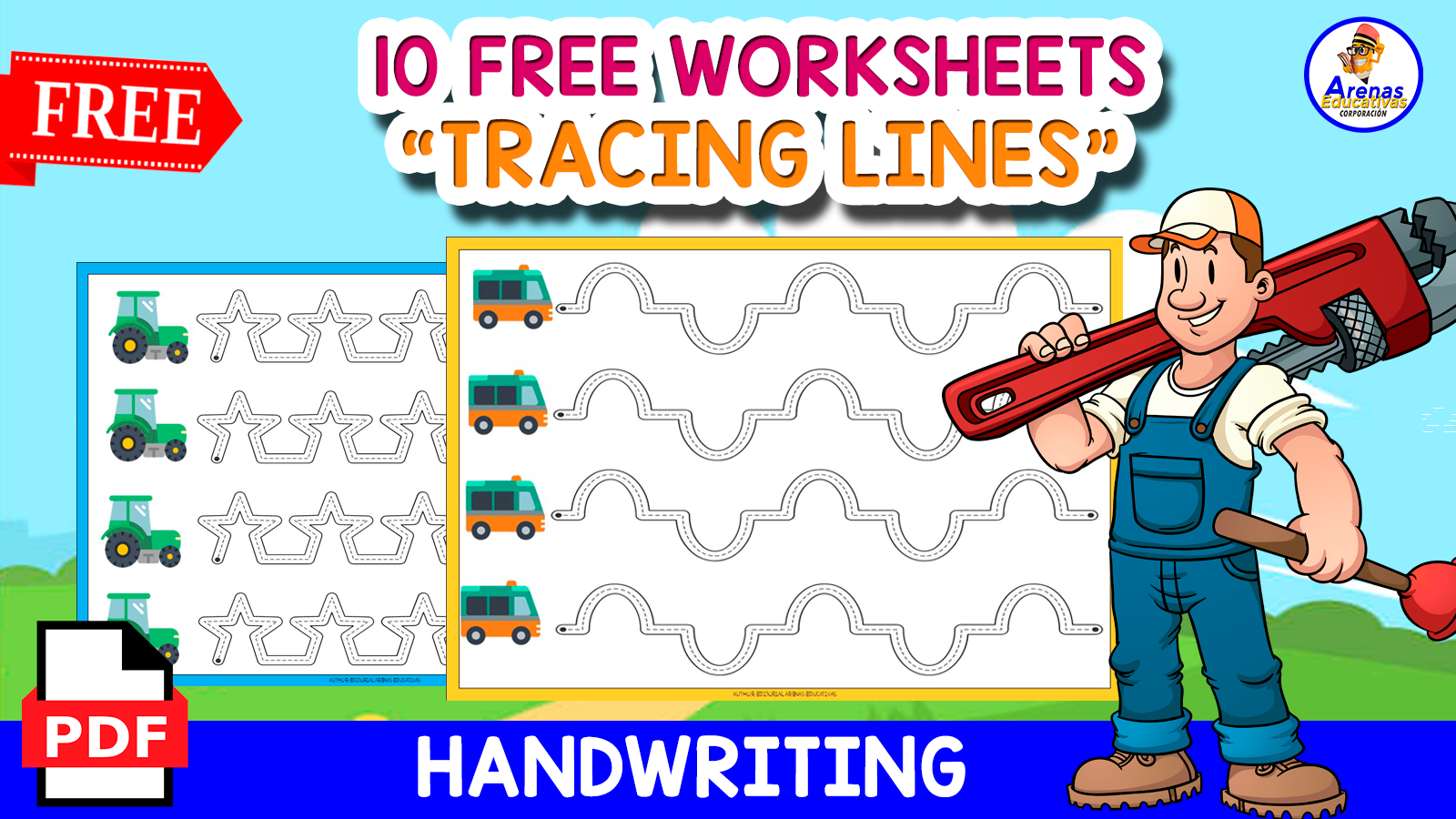
10 FREE WORKSHEETS FOR TRACING LINES | KIDS THEMED
ELA, Writing, Handwriting, Kindergarten, Preschool, Grade 1, 2, Worksheets & Printables, Worksheets
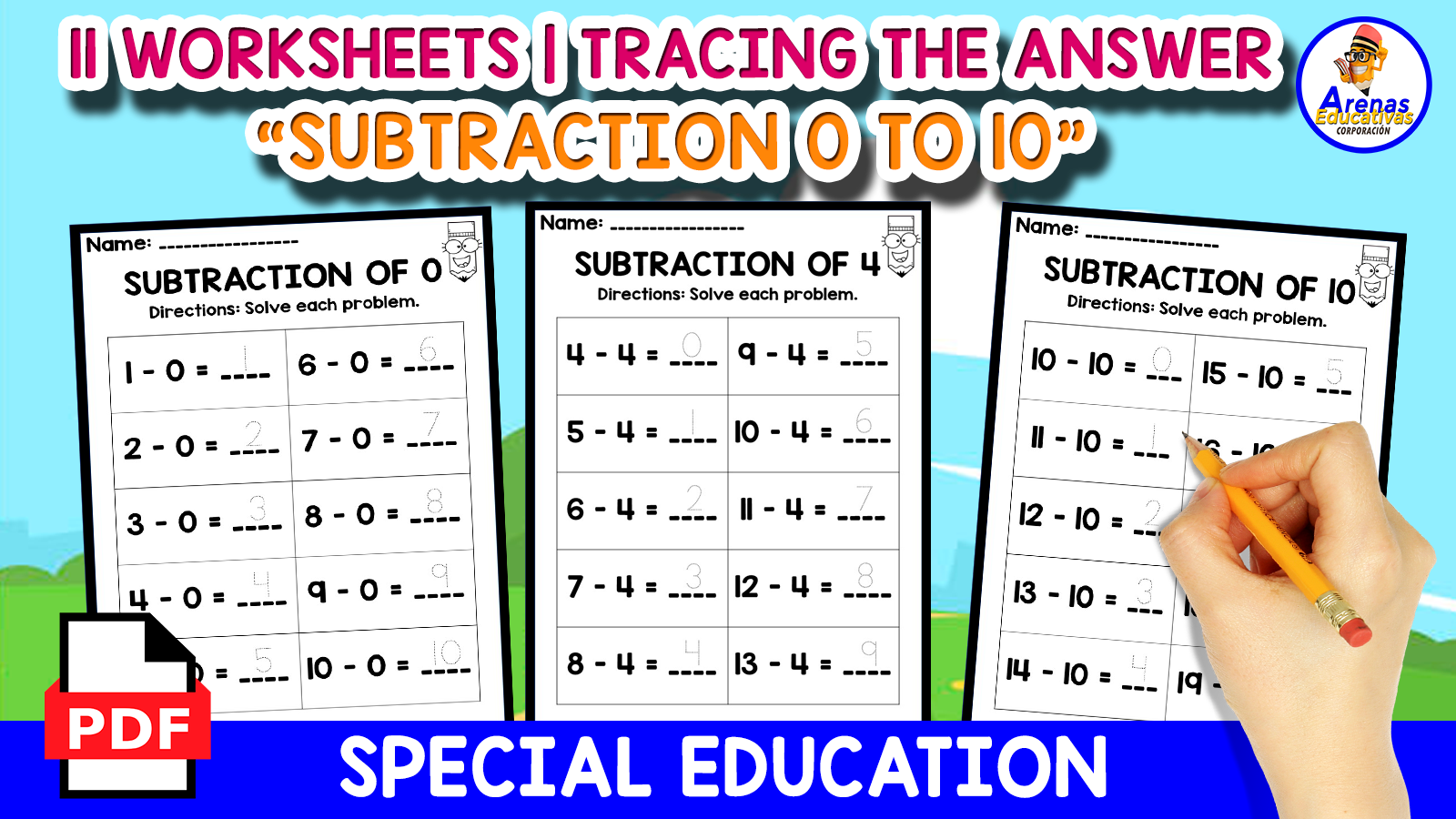
WELCOME TO MY ARENAS EDUCATIVAS STORE A. BENEFITS OF STROKE EXERCISES FOR CHILDREN: When children practice stroke worksheets , they will acquire multiple benefits such as: - Thanks to the strokes, they will help motivate the development of their fine motor skills. - A benefit of tracing cards is that it helps improve hand-eye coordination. . Thanks to the tracing exercises, children will prepare for future writing of numbers and letters. - Graphomotor skills help children stimulate their creativity. - Stroke exercises help children learn to recognize shapes and patterns. - The cards or books of strokes will help improve visual perception. - The strokes help encourage patience and persistence. B. MAIN OR PRIMORDIAL INFORMATION OF THIS PRODUCT: Now read the following information about this product carefully so that you can decide to download it. 1. Brief introduction: Line drawings are basic exercises that children should perform because they exercise multiple areas of their psychomotor development. 2. Product Description: This product is a mini book of strokes that consists of 10 pages of strokes with the theme of emojis. 3. Benefits of using this product: - It will help develop the student's final motor skills. - It will help motivate hand-eye coordination. - It will motivate the child's imagination and creativity to develop. 4. Number of pages contained in this document: This document is made up of 10 pages. 5. Topic addressed in this document: Psychomotor skills as well as fine motor skills. 6. Children's ages in which it can be applied: It can be applied to children from 3 to 6 years old who are learning to make their first strokes as an introduction to upcoming writing. 7. Version in which this resource is found: Available in PDF version. C. MORE INFORMATION ABOUT THIS PRODUCT 8. How it should be printed: Print this document in A4, landscape format. 9. Standards based on which this resource was developed: It was not prepared based on any specific standard. 10. Author and credit: Author and editor is EDITORIAL ARENAS EDUCATIVAS. 11. Free or paid? Free document so take advantage of downloading it now. This file is for personal use only. It is not allowed to be resold or shared with others.
Author EDITORIAL LAURA EDUCA
Tags Tracing Lines, Tracing Worksheets, Tracing Exercises, Free Resources
Life Cycle of a Squid Worksheet | Ocean Animal/Marine Unit Study
Montessori, Animals, Life Sciences, Science, STEM, Kindergarten, Preschool, Grade 1, 2, 3, Parts of and Anatomy of, Worksheets & Printables, Flashcards, Coloring Pages, Worksheets
Dive deep into the ocean and explore the fascinating life of one of the sea’s most mysterious creatures — the squid! This Life Cycle of a Squid Worksheet is a fun and educational resource designed especially for young learners who are curious about marine animals and ocean life. With clear visuals and simple explanations, students will learn about each stage in a squid’s life cycle — from tiny eggs to fully grown adults. This unit makes science engaging with hands-on activities, fun facts, and creative learning opportunities that are perfect for the classroom or homeschool. What’s Included In this life cycle worksheet Easy-to-read life cycle diagram of a squid Cut-and-paste sequencing activity Fun facts about squids and their ocean habitat Bonus coloring page to spark creativity This activities is perfect for: Ocean and marine biology units Science centers and animal studies Homeschool lessons about sea life Summer or ocean-themed activities Introduce your students to the wonders of the deep sea with this exciting squid life cycle worksheet — a perfect blend of learning and fun!
Author Perfect_Printables
Rating
Tags Squid Life Cycle, , Squid Worksheet, Ocean Animal Unit, Marine Biology For Kids, Life Cycle Printables, Homeschool Science, Squid Activities For Kids, STEM Marine Study, Underwater Animal Worksheet, Preschool Ocean Science
Concept Nouns Naming and Definitions 22
Special Resources, ELA, Language Development, ESL, Reading, Vocabulary, Grade 2, 3, 4, 5, Worksheets & Printables, Worksheets
This series of PDF BUNDLE resources focuses on identifying noun concepts, with engaging visualizations ( pictures and graphic arrangements ) of vocabulary by topic. The activity materials in this assignment are designed to help students develop their vocabulary and reading comprehension skills through interactive activities and real-life examples. It includes clear names and definitions of words from common noun categories and can also serve as discussion prompts to encourage critical and analytical thinking, deepen your understanding of the language, and improve your communication skills . This resource is designed to be accessible and engaging to all students . Ideal for teaching English as a Second Language and intervention sessions on learning difficulties. Clear and concise language, visual aids and interactive activities help students easily understand and remember information, integrating visual and kinesthetic elements. You can choose from a variety of worksheets that suit your student's level, interests, and printing preferences. Each category topic includes : 2 sets of Flash cards ( definition sentence / image, image / definition sentence ) 2 sets of Flash cards ( definition word / phrase, definition phrase / word ) 3 anagram strings ( mixed letters of single words or in definition text ) 1 Crossword ( word definition ) 2 sets of linked activities Draw a Line ( definition / image, image / definition ) 2 sets of matching activities Draw a line ( word / definition, definition / word ) 2 series of Quizzes ( definition / image, image / definition ) 2 series of quizzes ( word / definition, definition / word ) 3 Wheels of Fortune ( words, definitions, images ) Search page for 1 word ( word definition ) 2 writing boards ( words, definitions ) 2 blank boards/artboards ( words, definitions ) Various puzzles and word games for naming noun concepts as well . * Use as-is or create your own board games, like Snap, Memory, Match to Sample, and Knowledge Races . Distribute it as morning exercises, quiet time and focus activities, independent workbooks, or fun homework . 65 PDF Pages
Author WORDS ASIDE
Tags Esl, Word Defining, Semantics, Word Search, Anagram, Flash Cards, Centers, Crossword, Definitions, Writing Expository
Engines Reading Comprehension Passage - Cored Ed Encyclopedia
ELA, Reading Comprehension, Reading, Science, Technology, Pre-Reading, Language Development, Physics, History, Social Studies, Grade 2, 3, 4, 5, Worksheets & Printables, Worksheets, Teacher Tools, Centers, Activities, Writing Prompts, Assessments, Quizzes and Tests, Quizzes, Lesson Plans
This engines reading comprehension with lesson plan includes: Visualization (on the front cover) Start your lesson by taking a minute to think and share something about the topic. Read the script aloud (slowly), perhaps prepare some music or sound effects. Student close their eyes and let their imaginations wander. Students open their eyes, read the question aloud and give them a few minutes to complete. Ask a few students to share or keep answers until the end to compare with what they learn in the passage. Quick pause—thousands of Cored Education products are included with your TeachSimple membership. Download links and encyclopedia index available here. Pre-Reading Trivia Students will write down one thing they already know about the subject and then read five more facts and discuss. These facts are fun, and the students will enjoy learning about the subject before reading more. Give 1 minute for students to write what they already know (no pressure—best guess is fine). Read the five facts together. After each fact, do ask a student for their opinion, was it surprising? Set a purpose by asking students to highlight/underline one fact they want to learn more about during the reading. Reading Passage The text is a high-interest reading passage with set paragraphs, roughly three to four paragraphs long. It contains a variety of themes about the topic, anywhere from history to technology. The passage is between 250 and 350 words in length. First, ask students to look at the headings and see what they’ll learn about today. What do they know about the topic/heading? First read options: Teacher read-aloud (best for support). Partner reading (paragraph by paragraph). While reading, students underline important details, and vocabulary words they think may come up in the questions section. Mixed Questions The first question page contains four multiple-choice questions, each with a choice of four answers, and three written response questions that require a sentence or two from the student. Students complete the mcqs first independently, then review quickly as a class. For the 3 written responses, try to get students giving the answer with some form of evidence: “I think ___ because the text says ___.” If students get stuck, send them back to check the passage. Vocabulary Questions Practice seven key words from the text in this section across two activities. First section is scrambled words where students will unscramble three words given a clue for each. The second section is a word to meaning matching activity. Before starting, have some students read out words they underlined in the passage. Ask students to say the word and read aloud the sentence(s) around each word. Ask students to do scrambled words and the matching exercise in pairs then go through answers as a class. For the scrambled spelling task, get four pairs to come up to the board and write the words for extra practice with the other student reading out the clue. For the matching task, prompt students to give full sentences: “I matched ___ with ___ because ___.” Creative Writing In this question, the student will be required to write a five to eight sentence paragraph on a question related to the topic. Before starting, ask students write down 3 key ideas they are going to include in their piece. Ask students for ideas to share around the class to help those struggling. Pro writing expectations: 5–8 sentences At least 2 facts or details from the passage At least 2 vocabulary words from the previous page Students read their paragraphs while classmates listen for facts and vocabulary words. Extension Activities This page is optional for fast finishers or to take home. There are several activities, each one requiring a different skill. Do some, do none, do all, completely optional - but you will feel reassured knowing every possibility is planned for. Includes summary writting question and additional facts. Answer Key There are answers for the multiple-choice questions, written response questions have sample answers, vocabulary answers and if there is a summary question then a sample summary will be provided as well. Lesson Plan Included Customized lesson plan for this lesson is included. Lesson Snapshot Title: Engines Genre: Nonfiction (Informational Text) Subject: Science (Physical Science/Technology) / Reading (Informational Text) Primary Topic: How engines turn energy into motion Estimated Guided Reading Level (A–Z): P What This Lesson Teaches Best Explains the core idea that an engine turns energy into motion , using heat, fuel, or electricity to make parts move. Builds understanding of how steam engines work (boiling water makes steam push a piston) and how designs became more efficient (Watt’s separate condenser idea). Describes internal combustion engines and the four-step cycle (take in, squeeze, burn/push, exhaust) that repeats. Connects parts and motion: pistons moving back-and-forth can turn a crankshaft to keep rotation going. Introduces electric motors as another way to change energy into motion using magnetism and current to spin a shaft. Learning Goals Students will explain how an engine changes energy into motion using heat, fuel, or electricity. Students will describe how steam can push a piston in an early steam engine. Students will explain why a separate condenser made a steam engine design more efficient. Students will identify how an internal combustion engine makes motion by burning fuel inside a chamber. Students will list the four repeated steps of a four-stroke engine as stated in the passage. Students will describe how an electric motor uses magnetism and current to spin a shaft. Key Vocabulary From the Text piston — a part pushed by steam or hot gases. condenser — a part that cools steam somewhere else. combustion — burning fuel to make hot gases. crankshaft — a part that keeps turning as pistons move. magnetism — a force used with current to make a shaft spin. FULL CATALOG OF DOWNLOAD LINKS AND ENCYCLOPEDIA INDEX HERE
Author Cored Education
Rating
Tags Vocabulary, Reading Comprehension, Reading Passages, Lesson Plans, Ela Lesson Plans, Reading Comprehension Lesson Plans, Pre-reading, Science Lesson Plans, Technology, Physics
Countries of the World: Norway Interactive Foldable Booklets - EBOOK
Social Studies, Geography, Grade 2, 3, 4, 5, 6, 7, 8, 9, 10, 11, 12, Worksheets & Printables, Worksheets
Countries of the World: Norway Interactive Foldable Booklets - EBOOK Providing educators with a dynamic and engaging tool, the purpose of this eBook is to help students achieve a comprehensive understanding of Norway. This interactive resource is designed with student engagement in mind, making it valuable for both public school teachers and homeschoolers. The 26-page eBook contains four distinct foldable booklets, each providing information about specific aspects of Norway to enrich any geography or social studies curriculum. Geography:The first foldable presents an exciting map-based activity that prompts students to analyze topographical features and regions. Economy: The second booklet provides data charts on Norway’s economy. Analysis tasks are included, promoting financial literacy while helping students understand how economics affect populations on a real-world scale. Governance Systems:In the next section, learners are offered insights into political structures within Norway. Activities include recognition, comparison, and contrast exercises revolving around different forms of government globally. Culture:In the final segment, we delve into language, religion and points of interest within Norway - immersing students beyond surface level knowledge towards fostering respect for diverse global cultures. You may download this resource directly in PDF format. A step-by-step instruction guide details cutting out elements accurately; folding them correctly; then pasting them onto notebooks or lapbooks – ideal for classroom based group lessons; small group exercises ensuring deeper grasping or individual home assignments brilliantly catering students studying pace. Note:Though Grades 2 through 12 would find optimum value using “Countries Of The World: Norway Interactive Foldables & Ebook”, adult guidance is beneficial during assembly process especially for younger grades. Immerse your students in the exciting journey of learning about world cultures, beginning with Norway today!
Author Knowledge Box Central
Tags Norway, Geography, Economy, Government, Culture
Long Vowel Sounds, Magic E And Vowel Digraphs: Zoggy Is Lost
ELA, Language Development, Phonics, Kindergarten, Preschool, Grade 1, 2, Worksheets & Printables, Worksheets
Long Vowel Sounds, Magic E, and Vowel Digraphs: Zoggy Is Lost This educational resource promises to bring a dynamic and engaging approach to phonics for preschoolers, kindergarteners, and students in grades 1. The essential elements of this resource are designed around teaching long vowel sounds, magic e (silent e), and vowel digraphs such as ee, ar, er, ir, or, ur & oo. In the world of phonics instruction this tool stands out due its intrinsic story element. As educators engage their students with the narrative about Zoggy - a computer savvy alien from a distant planet who finds himself lost here on Earth - they inadvertently reinforce the specific phonic sounds targeted in each lesson. In addition to reading aloud to the class or small groups of learners opportunities abound for independent reading practice which goes hand-in-hand with spelling exercises provided in this whimsical phonetic tale. Zoggy’s adventures serve not only as a medium for learning but a dynamic shared experience in group settings that can encourage classroom discussion while connecting children's understanding directly related to individual reading skills.This can also be an invaluable material for homeschooling parents looking for opportunities to weave learning into an entertaining storytelling time. A set of worksheets are included that will help foster writing practice alongside spelling proficiency- extending learning beyond simple auditory recognition. This resource contains 57 pages accessible via digital download PDF file type which allows teachers flexibility when printing assignments based on your class's or child's unique needs; whether it be disseminating them individual homework assignment or having consistent practices during group activities within classroom settings. With Long Vowel Sounds,Magic E And Vowel Digraphs: Zoggy Is Lost every early education language arts program becomes more interactive,and exciting making it easy for beginners master essential phonic elements while embarking on Mission Spelling Zero,a journey they will surely enjoy! It’s all about combining learning with fun for an effective learning experience through the charm of phonics and the thrill of Zoggy's adventures.
Author Guinea Pig Education
Tags Long Vowel Sounds, Magic E, Vowel Digraphs, Phonics Instruction, Interactive Learning
Renaissance Interactive Foldable Booklets – EBOOK
Social Studies, History, History: World, Grade 2, 3, 4, 5, 6, 7, 8, 9, 10, 11, 12, Worksheets & Printables, Worksheets
Renaissance Interactive Foldable Booklets – EBOOK This is an engaging, exploratory resource designed to immerse students in the high points of the Renaissance era. Focusing on second through twelfth graders, it's perfect for inclusion into Social Studies and World History lessons. Focused Content Areas Architecture & Art Music & Dance Science, Inventions, Astronomy Food and Clothing trends of the time Specially created interactive foldables are utilized to enhance cognitive learning while revealing interesting information about this intriguing time in history. Influential Figures from the Renaissance Period: Renaissance Men: Maurice Duval - a pioneering architect; , Jacob Bernoulli - a renowned scientist;, Emilo Delizia - an innovative artist; Johannes Gutenberg - a revolutionary printer; …and many more. Galileo Galilei - an astronomical pioneer; , Martin Luther's religious reformation role. , Raphael - a leading artist; groundbreaking authors like William Shakespeare, , Henry VIII and Queen Elizabeth I; avid explorer Christopher Columbus. Visionary scientists Michelangelo and Leonardo Da Vinci are also focused upon. Significant Renaissance Events: - Formation of Italian City-States - Advent of the Age of Exploration - Reign of the Elizabethan Era - Rise of the Ottoman Empire including Northern Renaissance The EBOOK is a 15-page PDF file designed as a worksheet. It can foster high levels of classroom engagement, suitable for public school teachers or homeschooling parents. The document can be easily adapted for whole group discussions, small study groups or assigned as individual homework tasks. Simple download and get ready to launch your class into an all-encompassing exploration journey through history!
Author Knowledge Box Central
Tags Renaissance, Interactive, Foldable Booklets, History, Curriculum
Earth Day Number Bonds
Math, Numbers, Preschool, Kindergarten, Grade 1, 2, Worksheets & Printables, Worksheets
Sure, here it is formatted in HTML: ``` Introducing Earth Day Number Bonds - An Invigorating Teaching Resource Earth Day Number Bonds, a resource that marries the learning of numeric fundamentals with the fervor of Earth Day, offers combinations up to 20. This tool instills fluency for mental math, addition and subtraction within 20 by underlining numerous times over number bonds and their corresponding combinations for whole numbers from 1-20. The thematic incorporation of Earth Day makes it unique but its usages aren't limited to the environmental holiday owing to its versatile nature. It finds a comfortable place in a variety of educational settings - public classrooms and homeschooling environments alike. The resource package includes two printable pages in PDF format thereby offering planning ease for educators. Aimed for Early Learners but Useful All Around Suitable from early learners exploring numbers for the first time to those seeking reinforcement or additional exercises in kindergarten through grade 2 classes - this engaging spin on math lessons holds children's interest while honing their numeric comprehension and arithmetic skills. Versatile usage promoting both individual study and group activities Easily understandable content makes it an excellent choice as homework giving learning continuity outside traditional classroom environment Toward Blending Academic Learning with Environmental Consciousness In employing Earth Day Number Bonds teaching resources, educators find an ideal blend of academics with environmental consciousness making learning appealing simultaneously fostering values contributing towards Planet Earth's wellbeing. "Every day presents new ways to learn so seize each chance you get!" Remember – education need not be tough if mixed with elements of fun like those found in these worksheets! ```
Author Cherry Workshop
Tags Earth Day, Number Bonds, Math Practice, Addition And Subtraction, Mental Math
Prefixes and Suffixes Sample - Grades 1-2 Grammar (Word)
ELA, Language Development, ESL, Grammar, Common Core, Resources for Teachers, Grade 1, 2, Teacher Tools, Assessments, Tests, Quizzes and Tests, Worksheets & Printables, Worksheets
Prefixes and Suffixes - 1 Sample Lesson ELA MCQS Overview: In this series of lessons, students will embark on an engaging exploration of the grammar skills that bring our language to life. These lessons are designed to help students identify, understand, and effectively use language arts skills in their writing and speech. Used with the free supplementary materials available for all topics, each lesson builds on the last, offering a mix of direct instruction, interactive group activities, and independent practice. Through fun and creative tasks, students will learn how to recognize grammar in sentences, understand their role in sentences and use them to enhance their own writing and speech. Prefixes and Suffixes Overview: Includes: Intro to Prefixes Intro to Suffixes Forming Suffixes Determining Affix Word Meaning Word Version This is the Word editable and version. This download is available in GOOGLE Docs, GOOGLE Forms, GOOGLE Slides. PDF, PPT, WORD, check the links below for more details. FULL CATALOG OF DOWNLOAD LINKS HERE Grade 1/2 Links: Capitalization and Punctuation Google Docs Google Forms Google Slides PDF PPT Word Free Supplementary Materials Pack Adjectives Google Docs Google Forms Google Slides PDF PPT Word Free Supplementary Materials Pack Nouns Google Docs Google Forms Google Slides PDF PPT Word Free Supplementary Materials Pack Pronouns Google Docs Google Forms Google Slides PDF PPT Word Free Supplementary Materials Pack Verbs Google Docs Google Forms Google Slides PDF PPT Word Free Supplementary Materials Pack Prefixes & Suffixes Google Docs Google Forms Google Slides PDF PPT Word Free Supplementary Materials Pack Sentence Structure Google Docs Google Forms Google Slides PDF PPT Word Free Supplementary Materials Pack Subject-Verb Agreement Google Docs Google Forms Google Slides PDF PPT Word Free Supplementary Materials Pack ELA Review Questions Overview Questions have three answer choices. There are a handful of pictures on each test for aesthetic purposes, as well as a review sheet covering most of the topics covered in the product. Introduction or Example Sheet Each topic will include an introduction or example sheet to go through first with your students. Full Answer Keys Full answer keys and sample responses are provided so no matter how busy you are, you know you're covered! In the Supplementary Pack Interactive Ice Breakers: Fun, hands-on activities that get students thinking about adjectives right from the start. Guided Practice: Teacher-led exercises that reinforce the day’s lesson, ensuring students can confidently identify and use adjectives. Group and Partner Tasks: Collaborative activities that allow students to work together to solve problems, categorize adjectives, and create descriptive sentences. Independent Worksheets: Structured worksheets that provide individual practice and help solidify understanding of key concepts. Exit Tasks: Quick, reflective activities at the end of each lesson that assess understanding and encourage students to apply what they’ve learned. For similar downloads and other frees, do check out Cored Group on TeachSimple.
Author Cored Education
Tags Elementary, Reading, Comprehension, Vocabulary, Answers, Ccss, Common Core, Spelling, Writing, Passages
U.S. Constitutional Bill of Rights: Amendment Ten Interactive Foldable Booklets - EBOOK
Social Studies, Government, Grade 2, 3, 4, 5, 6, 7, 8, 9, 10, 11, 12, Worksheets & Printables, Worksheets
The U.S. Constitutional Bill of Rights: Amendment Ten Interactive Foldable Booklets - EBOOK An essential resource for bringing civics and government to life in the classroom, intended for grades 2 through 12, this downloadable digital booklet specifically focuses on the Tenth Amendment of the U.S. Constitution. Inside this eBook: A direct understanding of its wording and meaning in today's language. Intricate details about its ratification and associated events. Applicable terms such as federalism and ratification which are pivotal in gaining a deeper understanding of Government subject. This digitally downloadable PDF contains 11 pages both educators and homeschoolers can use flexibly according to their needs; it works well for both whole group instruction or small study teams but also serves as independent study or additional homework material too.Your learners will comprehend not just the wording, but also the historical context behind every single line present in amendment ten — strengthening overall constitutional awareness. Get your Copy Today! Encourage thoughtful exploration about America's legislative history that has far-reaching societal implications today using The U.S. Constitutional Bill Of Rights: Amendment Ten Interactive Foldable Booklets - EBOOK!</p
Author Knowledge Box Central
Tags Civics, Government, Tenth Amendment, Federalism, Ratification