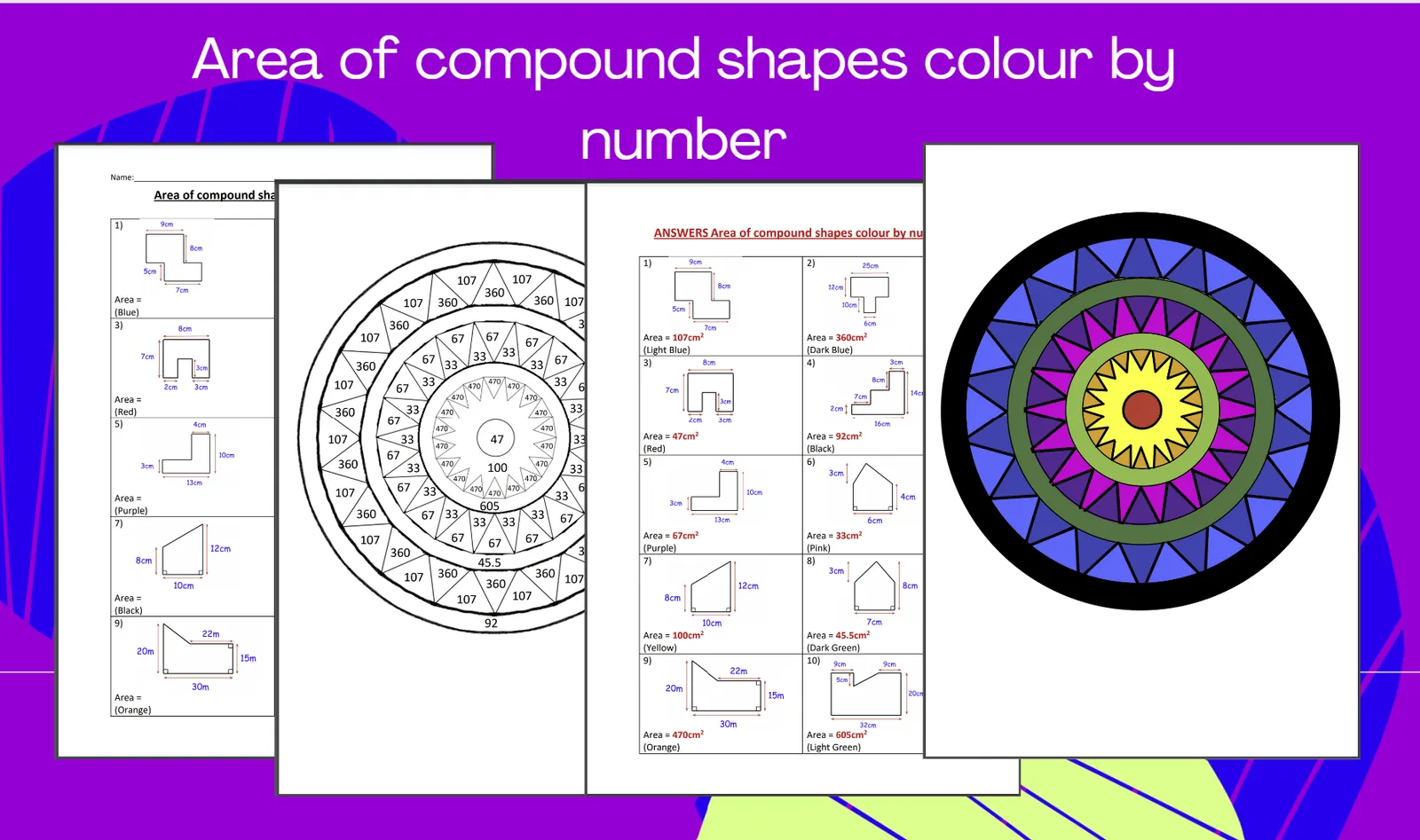
Compound Shapes Area – Color by Number Activity
- Grades
- Grades 7–8, Middle School
- File type
- Preparation
- Print ready


- Subject
- Math, Geometry
- Topic
- Middle School Math, Color by Number
- Resource types
- Worksheets & Printables, Worksheets
- Preparation
- Print ready
About this resource
What's inside this resource
Related resources
More resources teachers may find useful
24 related resources were found using this product's title, contributor, categories and tags.


In the classroom
Teaching tips & learning objectives

Learning objectives
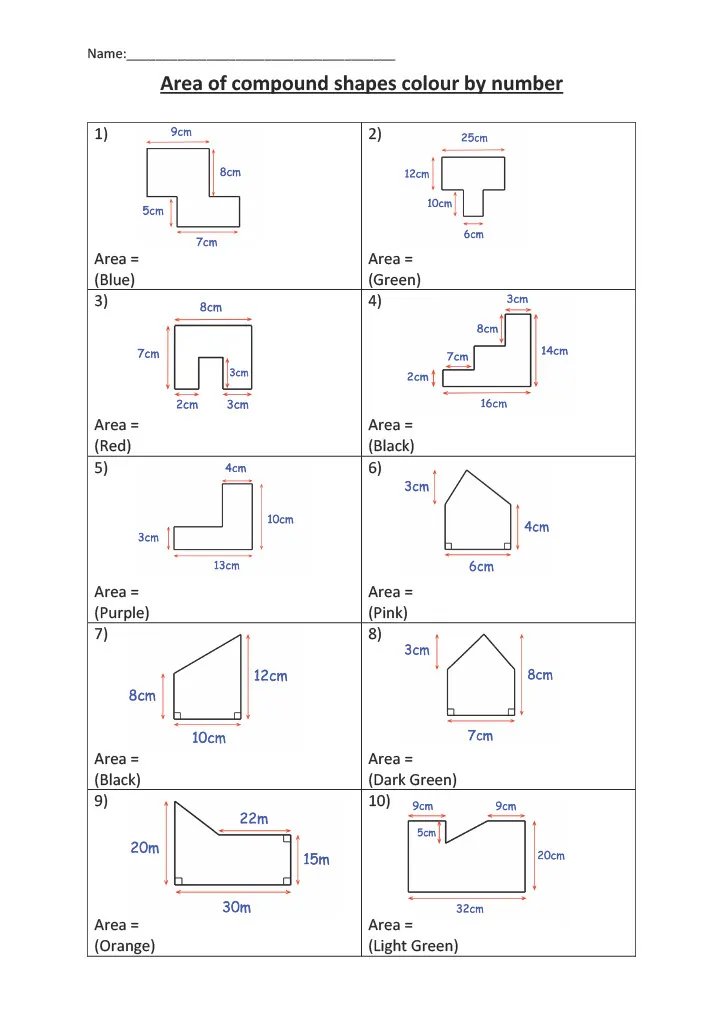
Students calculate the area of compound (composite) shapes by decomposing them into simpler figures.
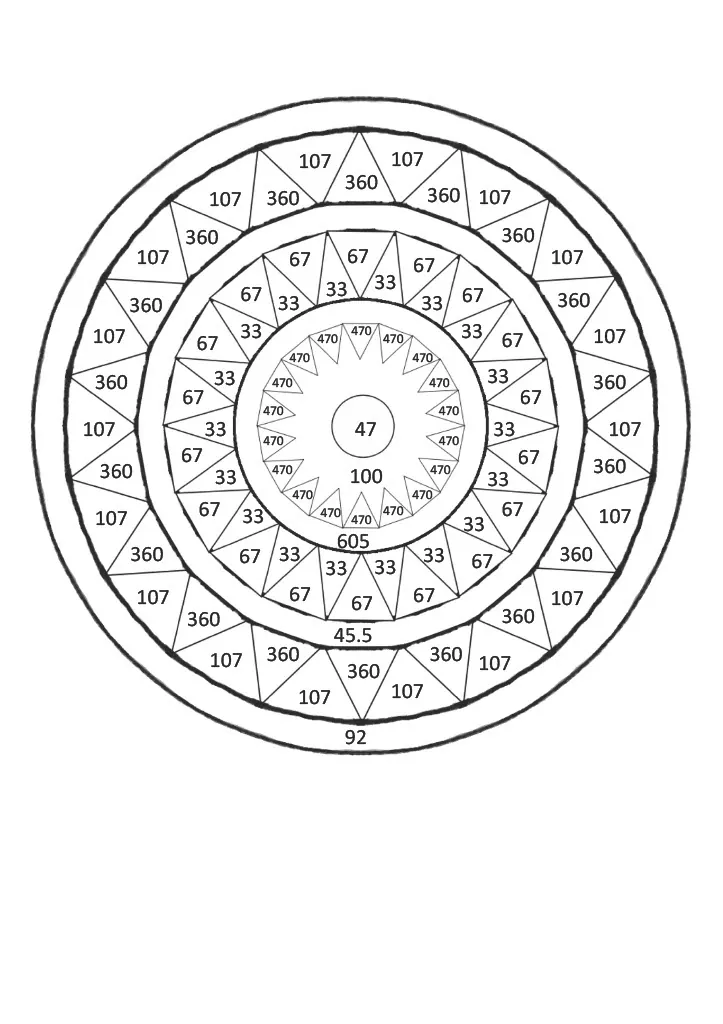
Students apply a computed numeric answer to a color-matching key rather than writing the number directly.
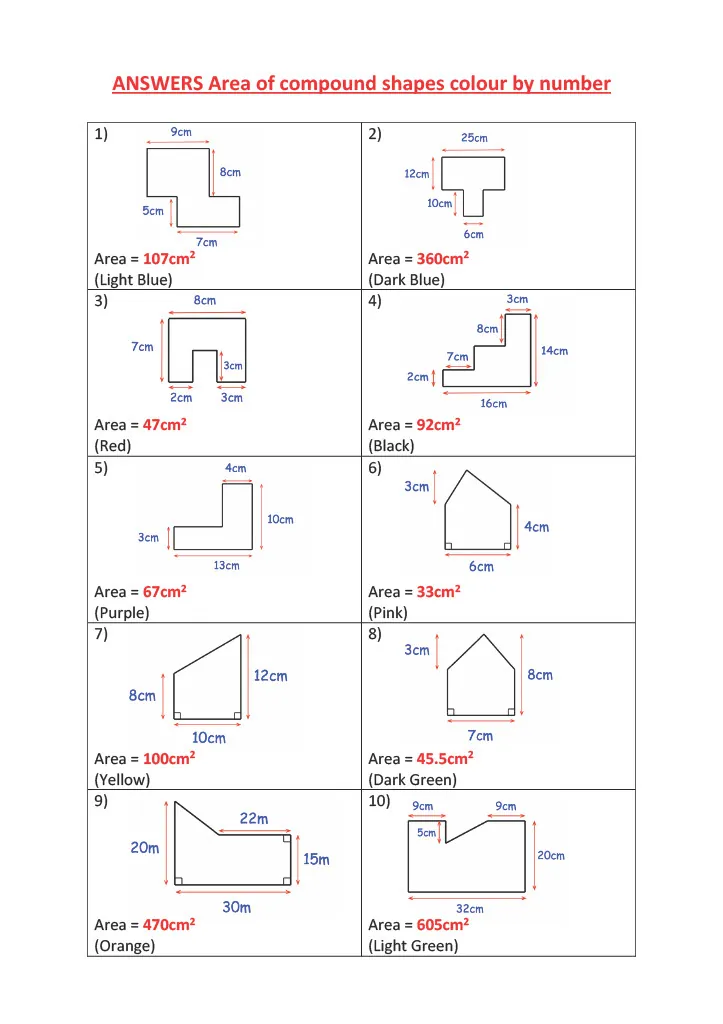
Students self-check their area calculations, since an error produces a visibly incorrect color-by-number result.

Teaching tips
Have students show their area-decomposition work for each of the 10 shapes on a separate sheet before transferring only the color to the grid, since the color-by-number format hides individual numeric answers.
Use the answer key to spot-check a student's coloring quickly against the expected area-to-color pairing rather than re-solving every shape.
Assign the activity as independent practice after direct instruction on decomposing compound shapes into rectangles and triangles, since the worksheet itself provides no worked example.

Skills covered
Compound-shape area calculation — students decompose 10 composite figures into simpler shapes to compute area.
Self-checking through color-by-number — students verify their arithmetic because an incorrect area produces a visibly wrong color in the revealed picture.
Precision and unit tracking — students track area values in square centimeters across ten distinct problems.
Good to know
Questions teachers ask about this resource
How does the color-by-number format connect to the area problems?
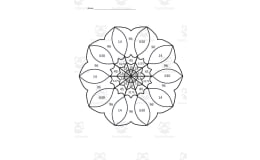
Each of the 10 area problems is labeled with a color instead of a blank answer line. After calculating a shape's area, students use the matching color to fill in the corresponding section of a number grid, so a wrong calculation shows up as an incorrect color in the revealed picture.

No reviews yet
Downloaded this resource? Tell other teachers how it went.
Curriculum
Standards, concepts & topics
Standards
 Standards
- 6.G.A.1 — Find the area of right triangles, other triangles, special quadrilaterals, and polygons by composing into rectangles or decomposing into triangles and other shapes; apply these techniques in the context of solving real-world and mathematical problems.
- 7.G.B.6 — Solve real-world and mathematical problems involving area, volume and surface area of two- and three-dimensional objects composed of triangles, quadrilaterals, polygons, cubes, and right prisms.
Core concepts
 Core concepts
area of compound shapes
decomposition into simpler figures
color-by-number self-checking
 Topics
Explore more
Categories this resource belongs to
Explore related searches
More to explore
You may also like