


Beaver Dot-to-Dot Printable: 612 Dots
Sitting upright with raised paws, big front teeth and a broad flat tail, a beaver appears from 612 dots. Pond and habitat lessons pair nicely with it.


- Grades
- Elementary
- Pages
- 2
- File type
- Answer key
- Included


- Subject
- Math
- Topic
- beaver, mammal
- Resource types
- Worksheets & Printables, Dot To Dots, Worksheets
- Answer key
- Included
About this resource
What's inside this resource
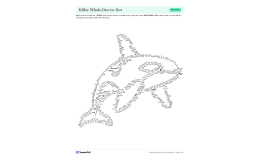
Sitting upright with its front paws held to its chest, this beaver shows off the two things everyone knows a beaver for: big front teeth and a wide, flat tail. Students draw it by joining 612 dots.
The shaggy outline is drawn as tufts, so the picture is made of 50 short strokes, each beginning at a star. The opening run of numbers traces the tail, a smooth stretch that helps students settle in before the fur begins. The eye and eyebrow, the whiskers, the lines of the teeth and a few small fur marks are printed on the page.
Page 2 is the finished beaver. Use it to check the puzzle, as a coloring page, or as a picture to label.
- 612 numbered dots, 1 START to 612 FINISH
- 50 stars for new strokes
- Finished beaver on page 2
- Color and black-and-white PDFs
Related resources
More resources teachers may find useful
24 related resources were found using this product's title, contributor, categories and tags.



In the classroom
Teaching tips & learning objectives

Learning objectives
- Follow a number sequence from 1 to 612
- Lift the pencil and restart at every star
- Use short lines to show a furry edge

Teaching tips
- Work the first star together so the whole class sees the pencil lift
- Fits a pond, river or wetland habitat unit; ask what the flat tail and strong teeth are for
- Students can cross out each star once it is used to keep track of all 50

Skills covered
- Number order to 612 — students count on through six hundreds
- Rule following — students use the star rule 50 times
- Fine motor control — students draw small fur tufts between close dots
Good to know
Questions teachers ask about this resource
How many dots are in the beaver puzzle?
612, labeled 1 START through 612 FINISH.
Why are there 50 stars?
The beaver's fur is drawn in short tufts. Each tuft or body part is its own stroke, and every stroke begins at a star.
What is printed on the puzzle page before students begin?
The eye and eyebrow, the whiskers, the lines of the front teeth and a few small fur marks.
Can the second page be colored?
Yes. Page 2 is the finished line drawing, so it doubles as an answer key and a coloring sheet.

No reviews yet
Downloaded this resource? Tell other teachers how it went.
Resource details
Concepts & topics
Core concepts
 Core concepts
- Counting and sequencing
- Pond and river animals
- Animal body features
- Working independently
 Topics
Explore more
Categories this resource belongs to
Explore related searches
More to explore
You may also like


