COMPARING PICTURES ENGLISH SPEAKING
- Grades
- Not Grade Specific
- Pages
- 13
- File type
- Preparation
- Print ready


- Subject
- ELA, ESL
- Topic
- Picture comparison, English speaking
- Resource types
- Activities
- Preparation
- Print ready
Product description
From the author
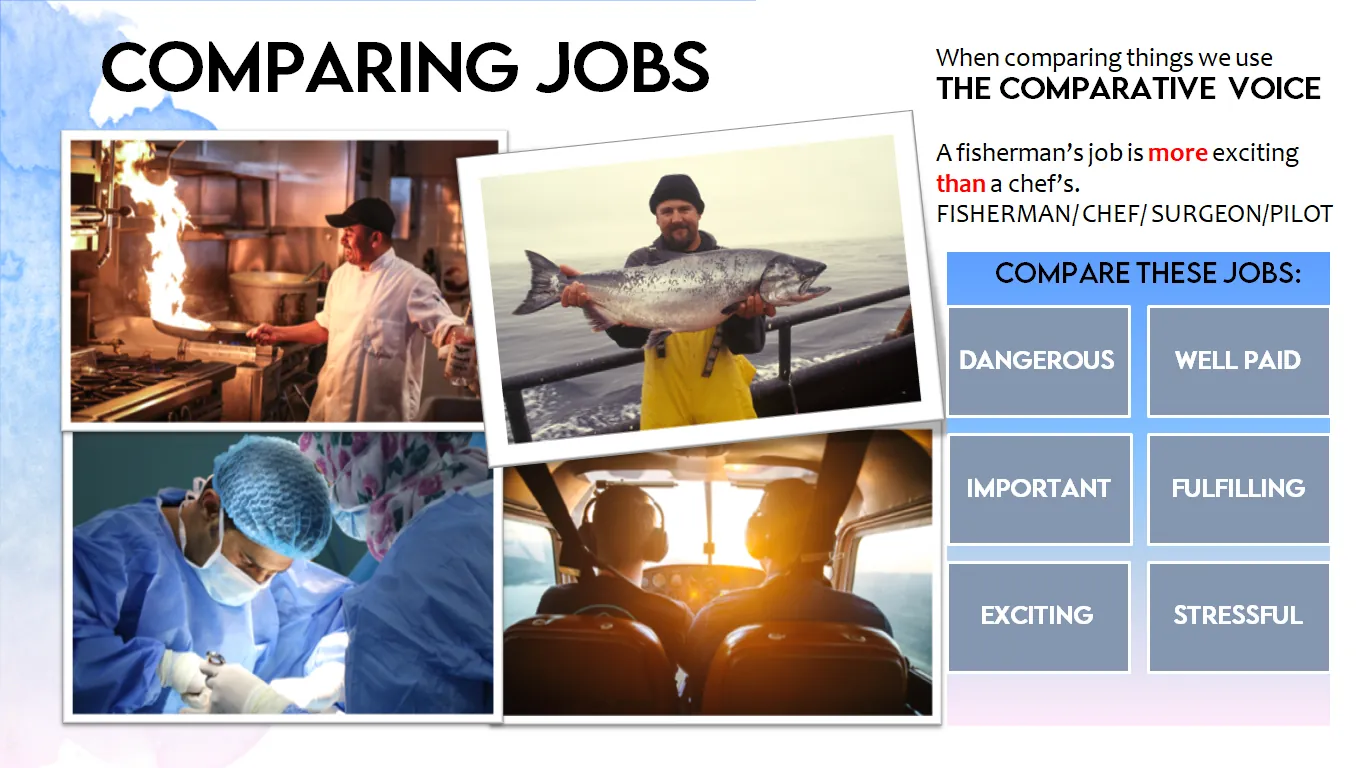
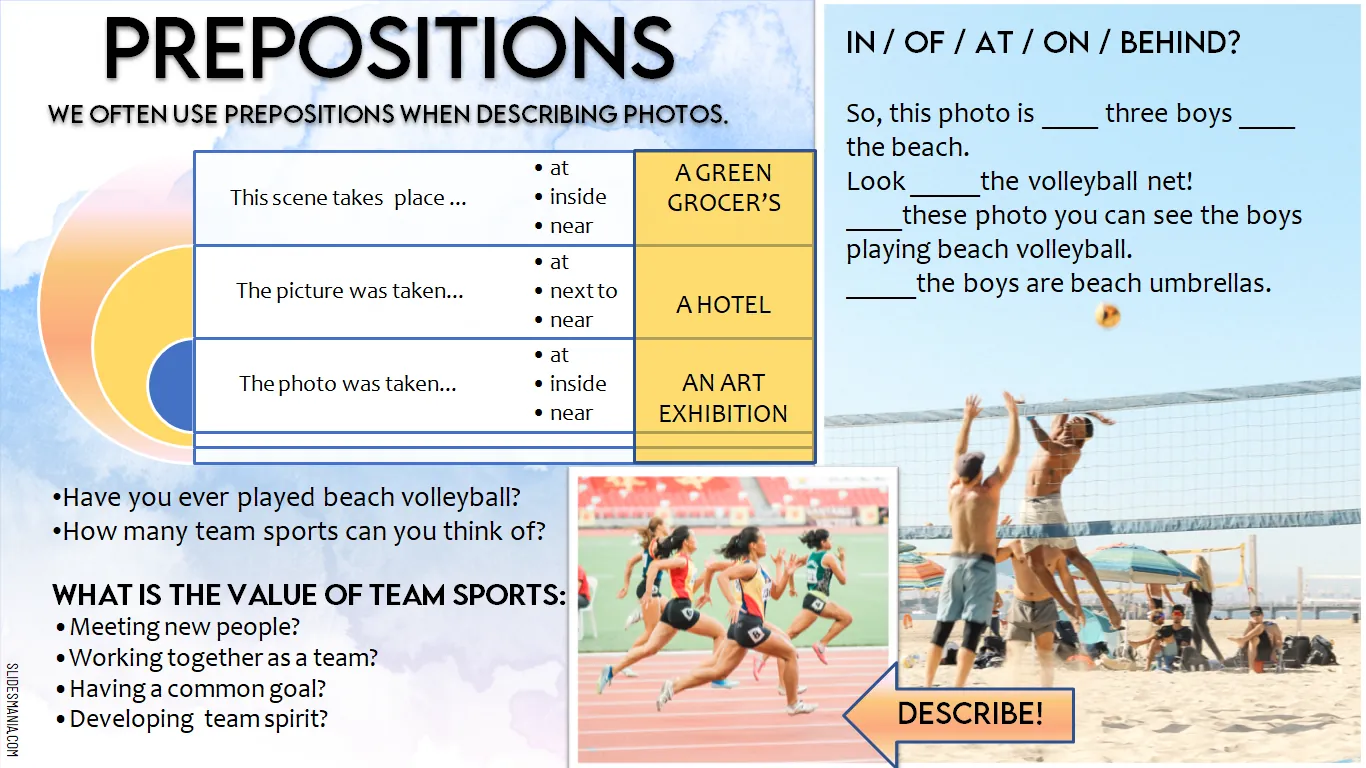
Use these picture-comparison prompts for ESL speaking practice. The 13-page PDF includes useful expressions, topic vocabulary, a model response and questions about jobs, holidays, landmarks, sports and animals.
Keep the pictures visible while learners compare similarities and differences and explain their opinions. Use the prompts in an online class, a group discussion or a one-to-one lesson, selecting topics and language support for your learners.
Related resources
More resources teachers may find useful
24 related resources were found using this product's title, contributor, categories and tags.



In the classroom
Teaching tips & learning objectives

Learning objectives
Use comparative sentence starters ("in comparison with," "on the one hand...on the other hand") to describe similarities and differences between two photographs.
Produce an extended spoken or written comparison following the structure modeled in the sample answer.
Use topic-specific vocabulary (e.g., team spirit, dedication; marble, monument, ancient) when discussing a given picture topic.

Teaching tips
Review the model response before students compare pictures independently.
Keep the relevant images visible while students speak.
Start with a familiar topic, then use the debate questions for a longer discussion.

Skills covered
Comparative speaking structures — students use sentence starters like "both...and" and "whereas" to compare two images aloud.
Extended spoken response — students produce a multi-sentence comparison following a modeled example.
Opinion and discussion — students answer open-ended follow-up questions tied to each photo topic.
Good to know
Questions teachers ask about this resource
Does this resource cover just one comparison topic, or several?
Several — the deck moves through comparing jobs, vacation styles, historic landmarks, team versus individual sports, extreme sports, and zoo/animal captivity, each with its own vocabulary and discussion questions.

No reviews yet
Downloaded this resource? Tell other teachers how it went.
Resource details
Concepts & topics
Core concepts
 Core concepts
Comparative language
Descriptive speaking
Picture-based discussion
 Topics
Explore related searches
More to explore
You may also like