


Counting Protons, Electrons, and Neutrons in Spanish
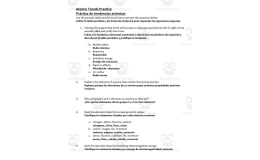
Bilingual English and Spanish labels support ESL students as they use the periodic table to find protons, neutrons and electrons for elements from hydrogen to lead, plus three ions.


- Grades
- Grades 8–12, Middle School, High School
- File type
- Microsoft Word


- Subject
- Science, Chemistry
- Topic
- counting PEN, counting protons
- Resource types
- Activities
About this resource
What's inside this resource
Determining Atoms' Composition in Spanish This chemistry teaching resource assists Spanish-speaking ESL students in grades 8-12 with counting protons, electrons, and neutrons using the periodic table. Students strengthen their understanding of atomic structure and the components that form atoms. The practice problems are provided in English, with a Spanish translation underneath each question to aid comprehension. Answers are included to support student learning. Teachers can implement this versatile resource in various settings – whole class, small groups, individual practice, or homework. It was thoughtfully translated by a native bilingual AP student. Please contact the creator with any issues regarding the Spanish translations.
Related resources
More resources teachers may find useful
24 related resources were found using this product's title, contributor, categories and tags.



In the classroom
Teaching tips & learning objectives

Learning objectives
- Use atomic number to find protons and electrons in a neutral atom
- Calculate neutrons from mass number and atomic number
- Adjust the electron count for an ion's charge

Skills covered
- Reading the periodic table — students look up atomic number and mass for each listed element
- Working with ions — students find electron counts for charged chlorine, magnesium and lithium ions

No reviews yet
Downloaded this resource? Tell other teachers how it went.
Resource details
Concepts & topics
Core concepts
 Core concepts
- Atomic structure
- Protons
- Neutrons
- Electrons
- Ions
 Topics
Explore more
Categories this resource belongs to
Explore related searches
More to explore
You may also like

Worksheets & Printables, Worksheets


Worksheets & Printables, Worksheets

Activities

Worksheets & Printables, Worksheets