Crash Course Psychology #2: Psychological Research
- Grades
- Grades 9–12
- Pages
- 3
- File type
- Multiple File Types
- Answer key
- Included


- Subject
- Social Studies, Psychology
- Topic
- Psychology, Research methods
- Resource types
- Worksheets
- Answer key
- Included
Product description
From the author
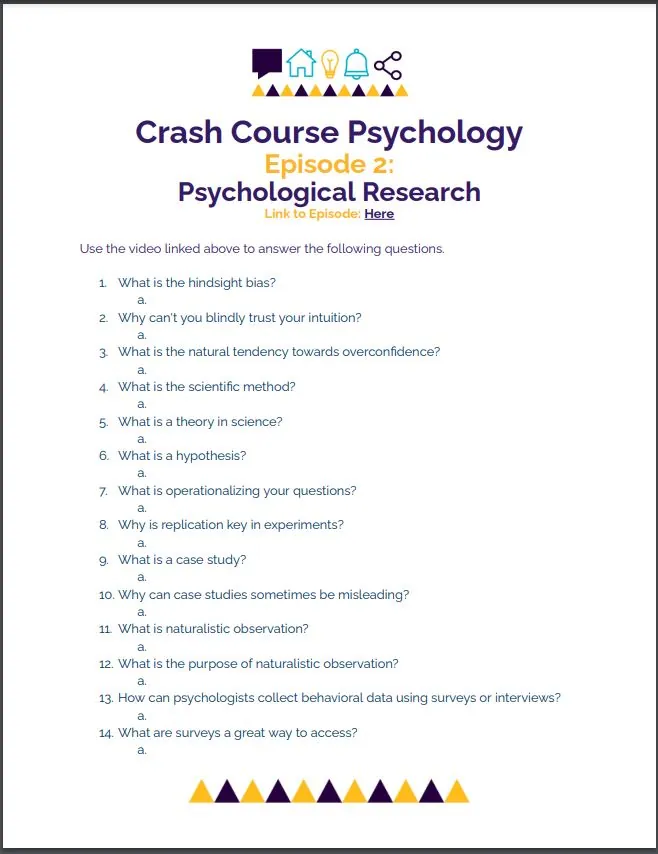
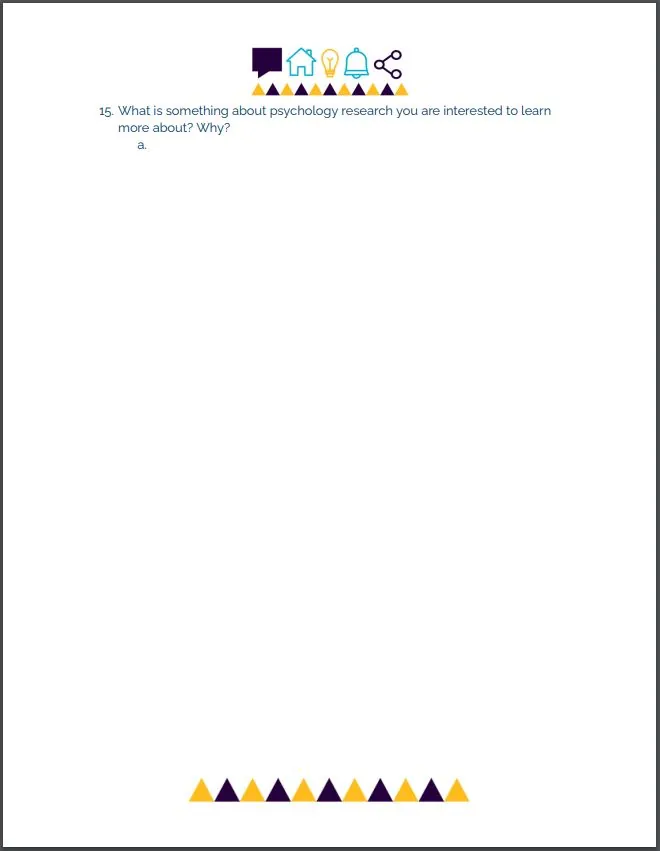
Pair this worksheet with Psychological Research: Crash Course Psychology #2. Fourteen questions address research concepts from the episode, including scientific reasoning, case studies, naturalistic observation and surveys. A final question asks students which research topic interests them and why.
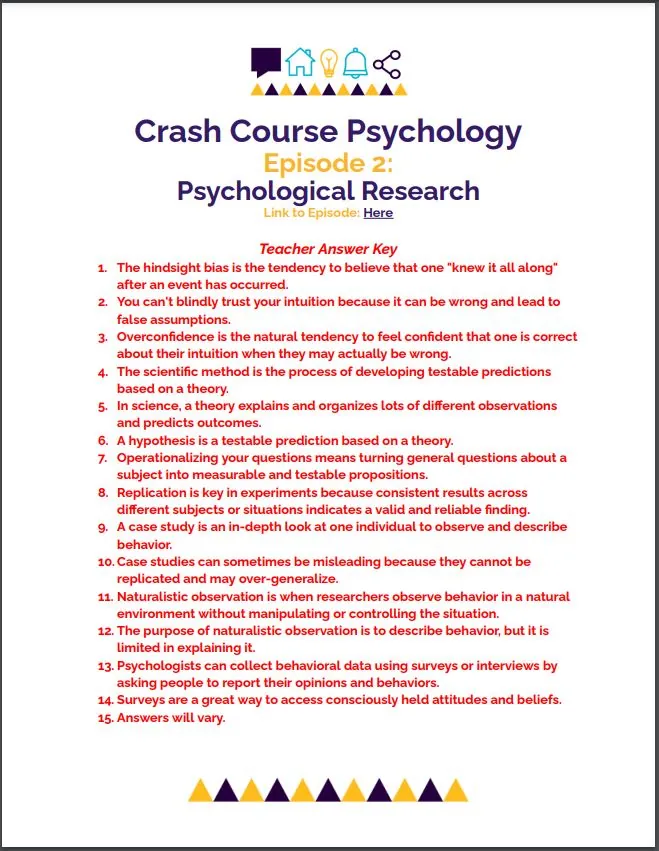
The download contains a two-page student worksheet and one-page teacher key in both editable Word and PDF formats. The final reflection is marked answers vary. Access the linked video separately and pause as needed for responses.
Related resources available separately
drawing
Related resources
More resources teachers may find useful
24 related resources were found using this product's title, contributor, categories and tags.


In the classroom
Teaching tips & learning objectives

Learning objectives
Define the hindsight bias and explain why intuition alone can be unreliable in psychological research.
Distinguish a scientific theory from a hypothesis and explain what it means to operationalize a research question.
Compare case studies, naturalistic observation, and surveys as methods for collecting behavioral data, including a limitation of each method.

Teaching tips
Play the linked Crash Course episode before or during the worksheet, pausing for the research-methods questions.
Use the teacher key for the episode-based responses and discuss the final research-interest reflection individually.

Skills covered
Research-methods vocabulary — students define hindsight bias, overconfidence, the scientific method, hypothesis, and operationalizing a question after watching the linked video.
Comparing research methods — students explain naturalistic observation, case studies, and surveys, including a stated limitation of each.

No reviews yet
Downloaded this resource? Tell other teachers how it went.
Resource details
Concepts & topics
Core concepts
 Core concepts
Hindsight bias
Scientific method
Case study method
Naturalistic observation
Survey research
 Topics
Explore more
Categories this resource belongs to
Explore related searches
More to explore
You may also like