Crash Course Psychology #28 – Psychological Disorders
- Grades
- Grades 7–12, Middle School, High School
- Pages
- 2
- File type
- Zip


- Subject
- Social Studies, History, Psychology
- Topic
- psychology, crash course
- Resource types
- Worksheets & Printables, Worksheets
About this resource
What's inside this resource
Related resources
More resources teachers may find useful
24 related resources were found using this product's title, contributor, categories and tags.



In the classroom
Teaching tips & learning objectives

Learning objectives
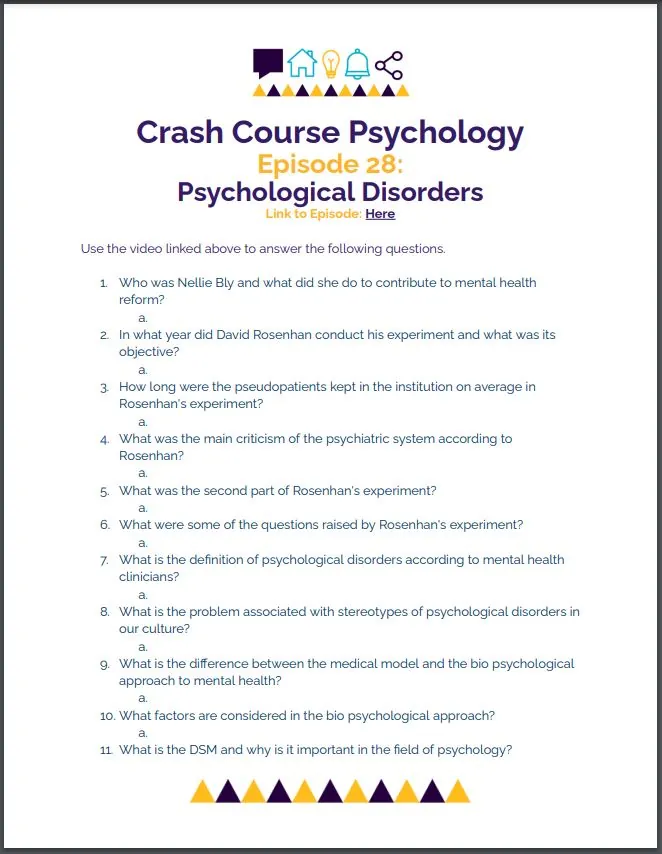
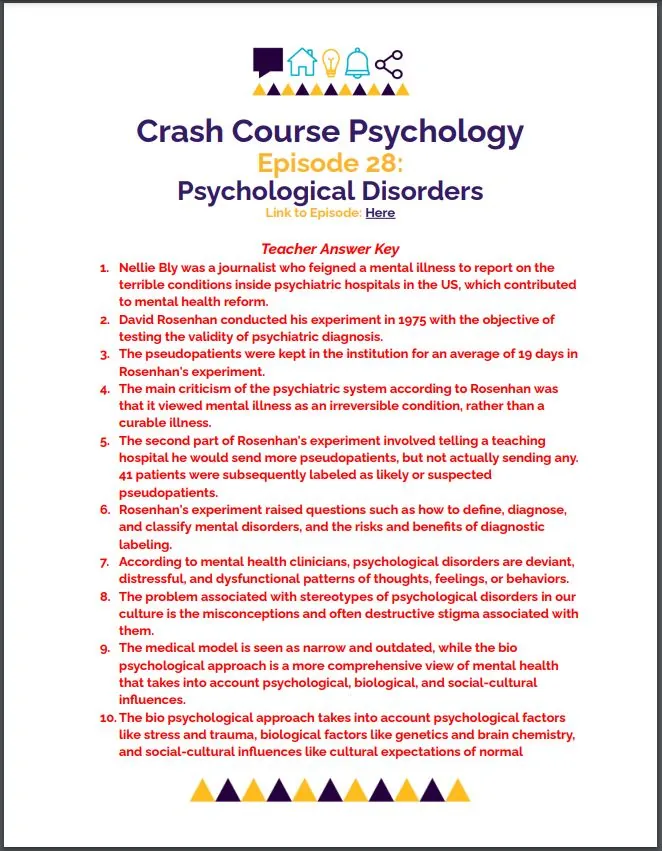
Explain how Rosenhan's pseudopatient experiment tested the validity of psychiatric diagnosis and what it revealed about diagnostic labeling.
Define psychological disorders using the deviant/distressful/dysfunctional framework and identify a stereotype-driven misconception about them.
Compare the medical model and the biopsychosocial approach to mental health, including which factors each considers.

Teaching tips
Play the linked episode alongside the worksheet, since every question is written to be answered directly from the video.
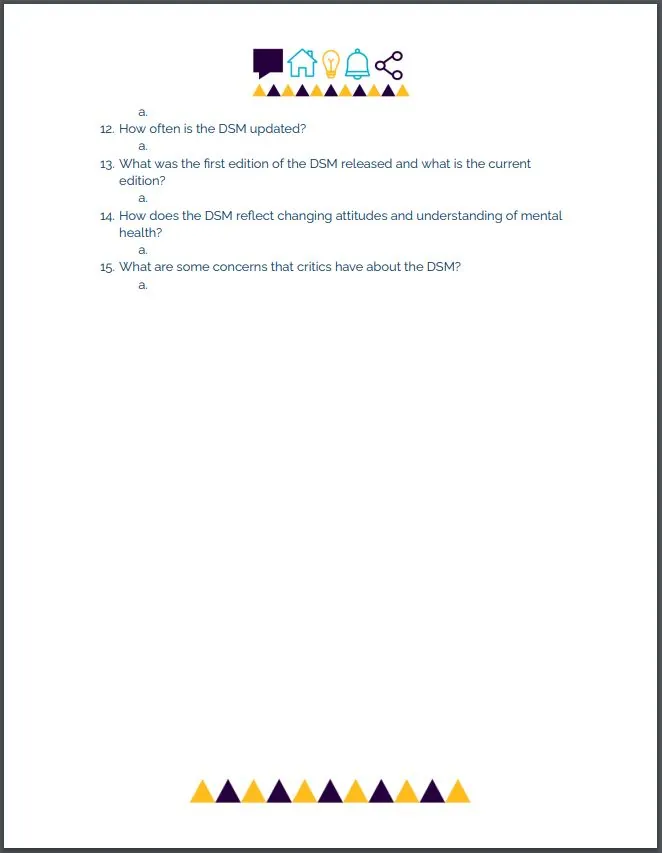
Use the teacher answer key to check the Rosenhan and DSM questions quickly, since the worksheet gives only a single lettered blank per item.

Skills covered
Research-methods and diagnosis vocabulary — students explain Rosenhan's pseudopatient experiment and how it questioned the validity of psychiatric diagnosis.
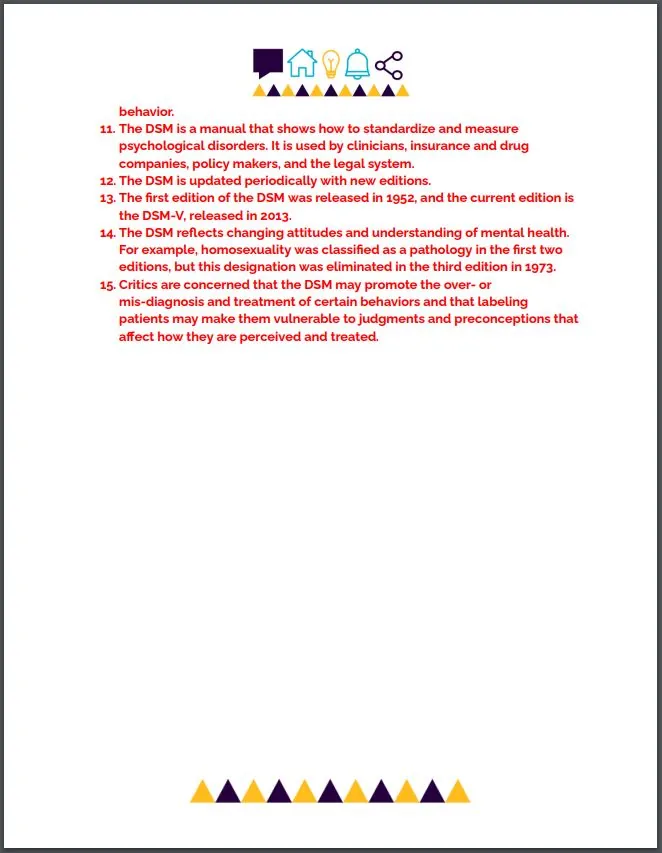
Comparing models of mental health — students distinguish the medical model from the biopsychosocial approach and describe the DSM's role and history.

No reviews yet
Downloaded this resource? Tell other teachers how it went.
Resource details
Concepts & topics
Core concepts
 Core concepts
Rosenhan experiment
Diagnostic labeling
Biopsychosocial model
DSM history
Topics
 Topics
Explore more
Categories this resource belongs to
Explore related searches
More to explore
You may also like