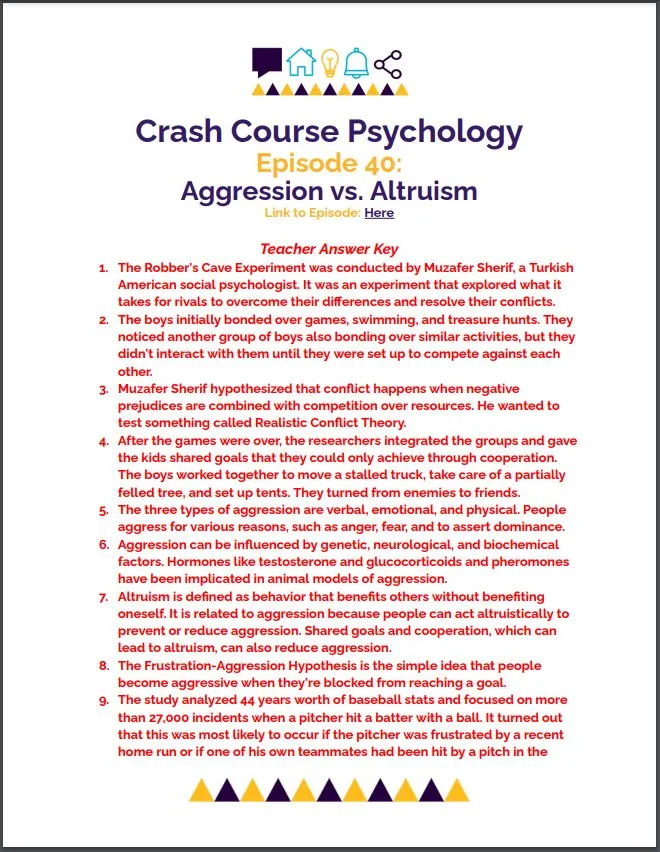
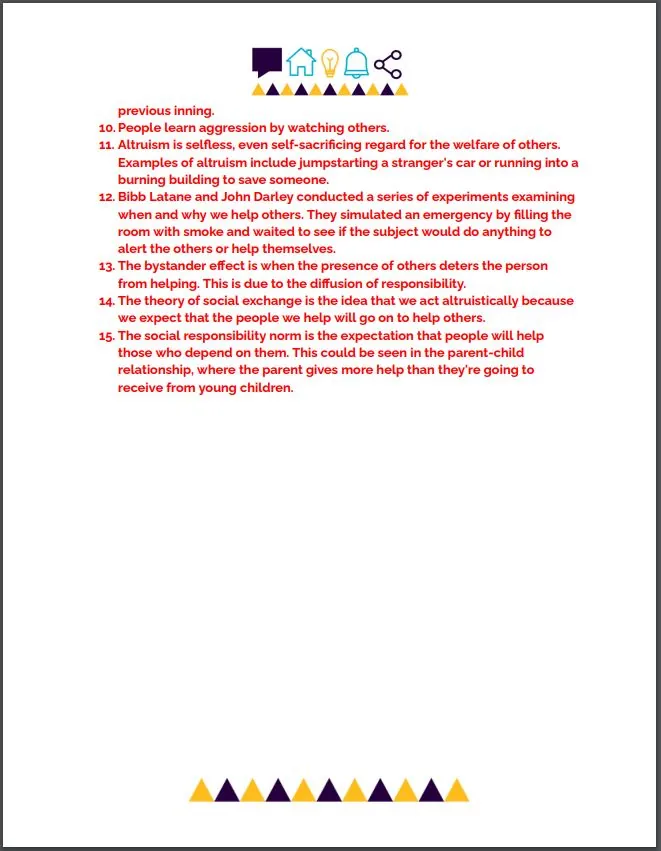
Crash Course Psychology #40: Aggression vs. Altruism
- Grades
- Grades 7–12
- Pages
- 4
- File type
- Zip
- Answer key
- Included


- Subject
- Science, Psychology
- Topic
- Crash course psychology, Human behavior
- Resource types
- Worksheets
- Answer key
- Included
Product description
From the author
Related resources
More resources teachers may find useful
24 related resources were found using this product's title, contributor, categories and tags.

In the classroom
Teaching tips & learning objectives

Learning objectives
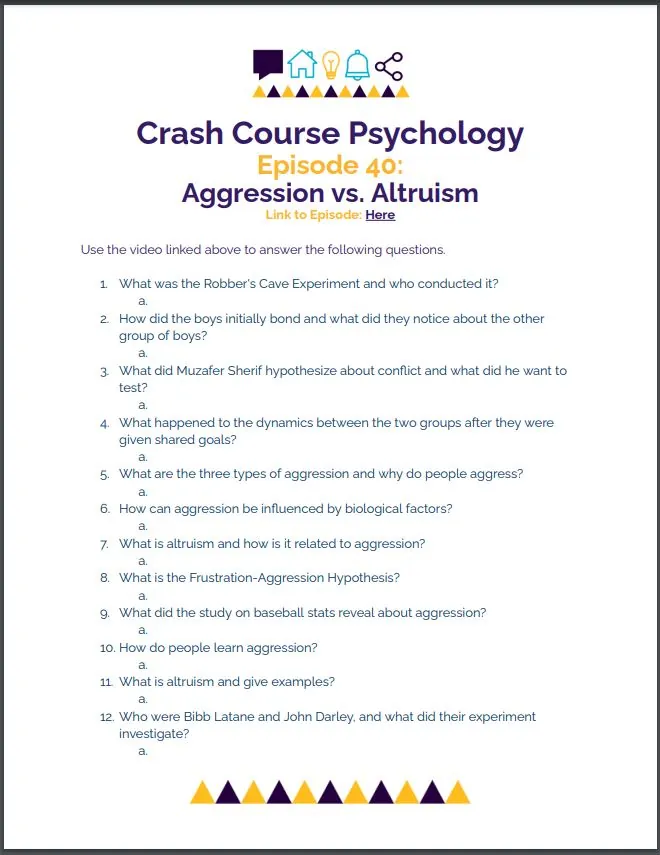
Explain how shared goals changed intergroup conflict in the Robbers Cave study
Distinguish biological, learned, and frustration-based accounts of aggression
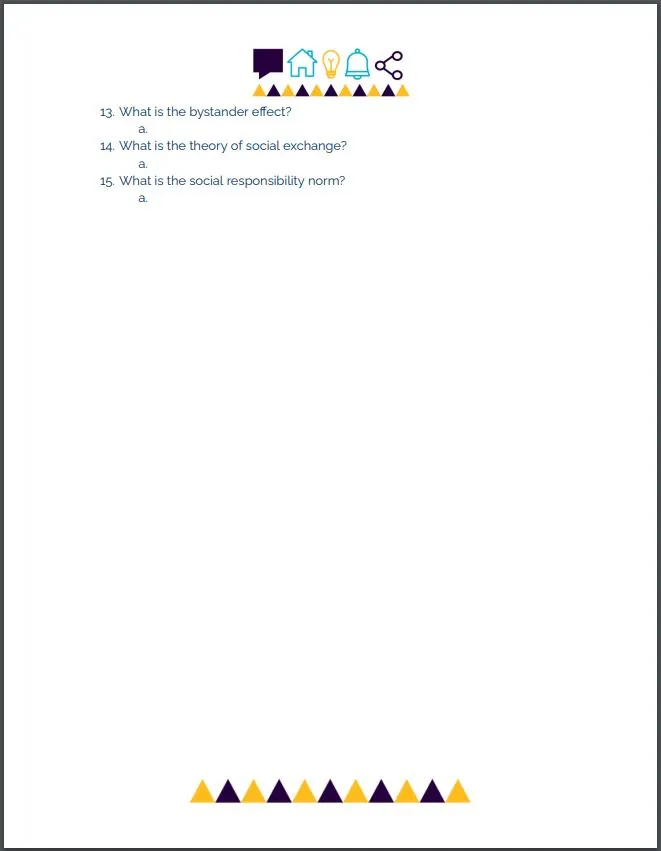
Relate the bystander effect to diffusion of responsibility

Teaching tips
Use the shared-goals prompt as the bridge between intergroup aggression and later helping behavior.
Compare social exchange with the social-responsibility norm after learners define the bystander effect.

Skills covered
Study interpretation — learners explain what conflict and emergency-helping experiments investigated.
Behavioral comparison — aggressive actions are contrasted with altruistic choices and social norms.
Causal reasoning — students connect group presence with diffusion of responsibility in the bystander effect.

No reviews yet
Downloaded this resource? Tell other teachers how it went.
Resource details
Concepts & topics
Core concepts
 Core concepts
Aggression
Altruism
Bystander effect
Social responsibility
 Topics
Explore more
Categories this resource belongs to
Explore related searches
More to explore
You may also like