Cut + Glue: Fruits

- Grades
- K–2
- Pages
- 8
- File type
- Answer key
- Included


- Subject
- ELA, Language Development
- Topic
- Fruit vocabulary, Cut and glue
- Resource types
- Worksheets
- Answer key
- Included
- Standards
- L.1.6
Product description
From the author
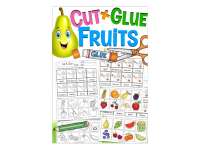
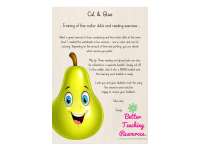
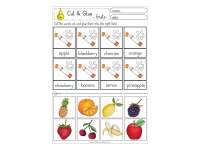
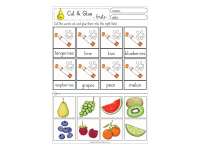
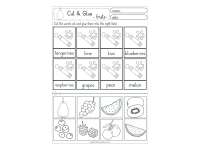
Cut + Glue: Fruits combines word reading with picture matching. Students cut out fruit pictures and paste them into fields labeled with sixteen fruit names.
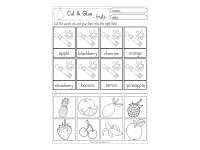
Two activity layouts are each supplied in color and black and white, with a labeled answer key. The eight-page PDF also includes a cover, teacher notes and a publisher page. Use the key as support, or assign a smaller selection of pictures for learners who need fewer choices.
Related resources
More resources teachers may find useful
24 related resources were found using this product's title, contributor, categories and tags.
In the classroom
Teaching tips & learning objectives

Learning objectives
Read sixteen printed fruit words and match each to the picture it names
Cut out a fruit picture and glue it into the matching labeled field
Name both everyday fruits and less common ones - kiwi, lime, tangerines, blueberries - in English

Teaching tips
- Choose the color sheets for matching alone or the outline sheets for coloring as well.
- Ask students to read the labels and place the pictures before gluing.
- Use the key as a checking sheet or a support for learners who need it.

Skills covered
Reading single words - children read sixteen printed fruit words and decide which picture each one names before any gluing happens.
Cutting and gluing - the pictures are cut from the sheet and fixed into the fields with their fruit names, which puts fine-motor work and reading in the same task.
Fruit vocabulary in English - the two sets move from everyday words like apple and banana to less common ones such as kiwi, lime, tangerines and raspberries.
Good to know
Questions teachers ask about this resource
How do the two versions of each sheet differ?
One prints the fruit pictures in colour and the other leaves them as outlines for children to colour in. The words and task are identical, so choose according to your printing preferences and the time available for colouring.
What does the booklet suggestion in the notes involve?
Cutting each finished sheet off to the middle and sticking it into a DIN A5 booklet, so the sheets build up into a running word book instead of being filed loose.

No reviews yet
Downloaded this resource? Tell other teachers how it went.
Curriculum
Standards, concepts & topics
Standards
 Standards
- L.1.6
Core concepts
 Core concepts
Fruit vocabulary
Word and picture matching
Cutting and gluing
Fine motor skills
 Topics
Explore more
Categories this resource belongs to
Explore related searches
More to explore
You may also like