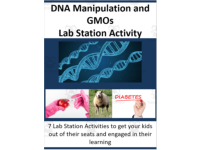
DNA Manipulation and GMOs - 7 Lab Station Activities


- Grades
- Grades 9–12, High School
- File type
- Multiple File Types


- Subject
- Science, Life Sciences, Biology
- Topic
- STEM, biology
- Resource types
- Activities
About this resource
What's inside this resource
Product description
From the author
This resource presents an innovative approach to learning, specifically developed for educators teaching science disciplines like Biology to grades 9 through 12. This engaging lab station activity offers multi-modal learning experiences with a focus on genetic engineering aspects such as Transgenic Organisms, Knockout Mice, Cloning, and topics related stem medicine like Pharmaceutical Uses of genetics.
Actively Engaging Learning Techniques
The easy-to-use DNA Manipulation and GMO lab station activities direct students around the multiple stations where they can demonstrate their knowledge in diverse ways. From delivering written opinions or answering questions based on videos/readings to drawing diagrams or models - the opportunities for creative student engagement are plentiful.
Exploring All Corners of GMO Universe
- Exploring bacteria plasmids
- Investigating biopharming methods
- Familiarizing with knockout mice and cloning techniques
- Understanding links between genetic development and diabetes
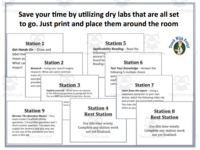
The resource includes detailed instruction cards at each station along with certain questions that students should answer during their exploration process. To keep track of their journey through each instructional module, students use a recording (passport) sheet.
Ease for Educators: Ready-to-use setup & Easy Grading Efforts
An answer key is provided whenever relevant which eases grading efforts. Moreover, bonus educational activities such as word scramble or word search are included to keep learners engaged during idle time.
'; 'Get Hands-On', 'Research', 'Explain Yourself'- structured learning segments offer novel approaches towards knowledge application while rest stations ensure students are not overwhelmed. In conclusion, DNA Manipulation and GMO - 7 Lab Station Activities effectively blend multiple avenues of learning and assessment techniques into an enjoyable educational endeavor. Suitable for both homeschooling or public school setting, in-depth individual study or interactive group work- this science resource explores complex topics interestingly while offering learners a break from traditional teaching methods.Related resources
More resources teachers may find useful
24 related resources were found using this product's title, contributor, categories and tags.

In the classroom
Teaching tips & learning objectives

Learning objectives
Explain how Bt crops and glyphosate-resistant crops are genetically engineered and evaluate their environmental trade-offs.
Research and discuss the legal and ethical considerations of genetic engineering, including at least two human disorders treatable with gene therapy.
Define key genetic-engineering terms such as transgenesis and transformation, and identify Dolly as the first cloned animal.

Teaching tips
Print each station's supporting document (Applicability Reading, Learn From The Expert, Test Your Knowledge) and place it with its matching station card before class, as the teacher instruction sheet specifies.
Organize students into 9 groups so two groups start at the rest stations, ensuring every group has a station to begin at immediately.
Have the rest-station groups use their downtime to review their passport and preview upcoming stations, as the instructions suggest.

Skills covered
Genetic-engineering vocabulary and reasoning — students learn terms like transgenesis, Bt crops, and glyphosate resistance and apply them in written and multiple-choice questions.
Independent research — students use a search engine to investigate legal and ethical issues in genetic engineering and disorders treatable with gene therapy.
Argumentative and reflective writing — students write a paragraph opinion on the future of genetic engineering and human cloning.
Good to know
Questions teachers ask about this resource
How many groups does the lab need, and what happens if the class is smaller?
The setup calls for 9 groups, one per station, with 2 groups starting at the rest stations; the teacher instruction sheet also offers guidance for running the lab with a smaller class.
What happens at Station 9, 'Become the Question Master'?
Each group writes 2 original multiple-choice questions, 2 true/false questions, and 1 short-answer question about DNA manipulation and GMOs, supplying their own answers and avoiding any question already used elsewhere in the lab.

No reviews yet
Downloaded this resource? Tell other teachers how it went.
Resource details
Concepts & topics
 Core concepts
 Topics
Explore more
Categories this resource belongs to
Explore related searches
More to explore
You may also like