Immigration and Industrialization Gallery Walk Activity



About This Product
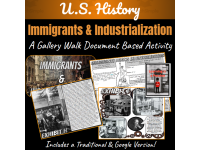
Dive into U.S. History with this engaging activity focused on Immigration & Industrialization during America's Industrial Era from 1850-1910. Students will utilize a visually rich graphic organizer to compile notes and participate in an interactive Document-Based Gallery Walk.
Topics highlighted:
- Differences between Old and New Immigration
- Factors prompting immigration: Push vs. Pull
- Living conditions in tenements
- Impactful figures and literature: Jacob Riis, Upton Sinclair’s "The Jungle"
- Ford's innovative Assembly Line
- Child Labor and its conditions
- Statistics highlighting Industrialization's impact
What's a Gallery Walk? Think of it as a mini-museum set up in your classroom. Students will explore various "exhibits" (provided) to complete their assignments, making learning active and immersive.
What to expect:
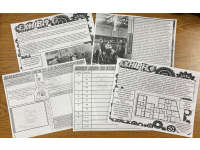
Begin with an online reading (or utilize the classroom textbook) to fill out the comprehensive graphic organizer. This will cover details such as immigrant profiles, their reasons for urban migration, and migration statistics during the Industrial Era.
Students will then team up in pairs or small groups for the Gallery Walk. Here, they'll delve into 9 curated "Exhibits" packed with photographs, firsthand accounts, stats, and more that provide insight into city life, especially for immigrants. At each station, they’ll tackle comprehension or critical thinking questions, jotting down their responses on an included answer chart.
To wrap up, students will showcase their grasp on the topic with a creative EXIT CARD activity.
Everything you need, from exhibits, worksheets, instructions for the teacher, and Exit Card materials, is bundled in! Bonus: Both GOOGLE and traditional versions are available for your convenience. And, a handy ANSWER KEY is provided.
About: Learning is a Passion Store - I have taught 6th-12th grade during my 20 year teaching career. I prefer to use lessons in my teaching practice that allow my students to become facilitators and active participants in their own learning rather than merely an audience of "my show". I love to create hands- on, interactive activities that really engage my students in the learning process.
Check out my other great U.S. and World History products!
Resource Tags
0 Reviews
Check out these other great products