Edwina the Emu Interactive Read-Aloud Activities



- Grades
- Grades 2–4, Elementary
- Pages
- 40
- File type
- Answer key
- Included


- Subject
- ELA, Reading, Reading Comprehension, Language Development, Vocabulary
- Topic
- fountas and pinnell, second grade
- Resource types
- Literacy Readers, Teacher Tools
- Answer key
- Included
About this resource
What's inside this resource
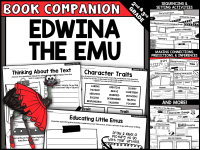
This picture book companion is a complete supplemental resource for the book Edwina the Emu by Sheena Knowles.
With 38 print-and-go reading activities to choose from, this resource is ideal for customizing learning to your student's specific needs and academic abilities. Students will investigate characters, identify story elements, determine the theme, sequence story events, compare & contrast, make predictions, inferences, & connections, answer questions that require them to think beyond the text, conduct research on emus, and much more!
Students will love the engaging and fun activities, and you will appreciate the time saved hunting for high-level resources to teach reading concepts that students frequently struggle with. The activities provided are designed to enable students to apply higher-level thinking skills, encourage them to provide text evidence to support their thinking, and challenge them to express their own thoughts and/or perspectives.
⭐️This Resource Includes:⭐️
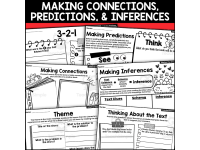
Making Predictions: Before reading the book, students will make predictions about the text.
Story Elements: Students fill in the boxes with words & pictures to represent the story elements.
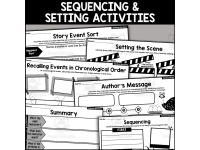
Sequencing: Students will retell & illustrate the important parts of the story.
Summary: Students complete the Somebody, Wanted, Because, But, So graphic organizer and write a summary of the story.
Recalling events in Chronological Order: Students describe and illustrate four major events in the story in chronological order.
Story Event Sort: Students will describe a scene or event from the story that fits into each of the categories & explain how the event made them feel & how it relates to the category.
Problem & Solution: Students will answer questions related to the problem & solution in the story.
Problem & Solution: Students will identify four minor problems and solutions in the story.
Making Inferences: Students use clues & schema to make inferences while reading the story.
Making Connections: Students make connections to an event from the story.
Character Inside & Out (Edwina): Students include details from the story to describe what the character says, thinks, does, and feels.
Character Inside & Out (Edward): Students include details from the story to describe what the character says, thinks, does, and feels.
Character Feelings: Students describe how the character's feelings change throughout the story & give examples of the events that cause them to feel the way they do.
Character Traits: Students choose 2 important character traits that describe the main character and provide evidence from the text to support their choices.
Character Change: Students will explain how the character changed from the beginning to the end of the story and describe the events that caused the change to happen.
Character Acrostic Poem: Students will write an acrostic poem to describe Edwina's character.
Sketch a Scene From the Story: Students will draw a scene from the story and explain why it's important to the plot.
Setting the Scene: Students identify three different settings in the story and explain how they know that the setting changed.
3-2-1: Students will describe the three jobs that Edwina tried, list 2 baby emu names and explain why they have those names, and choose one word that describes Edwina and Edward as parents.
Author's Message: Students describe four important events from the story and put them in chronological order. Then, answer the questions about the author's message.
Theme: Students answer the questions to determine which theme best fits the story and provide text evidence to support their choice.
Thinking About the Text: Students will answer the questions about the story & include examples from the text to support their answers.
Jobs for Edwina: Students will come up with other jobs that Edwina could have tried, following the pattern in the story. Then, draw pictures to illustrate their writing.
Educating Little Emus: Students respond to questions about being different.
Who's Who of the Baby Emus: Using the image from the story, students will identify and label the baby emus based on their special features.
Wait... There's More!: Students will write about what happens next in the story.
Book Review: Students will color in the stars to rate how much they enjoyed the book and draw a new cover & their favorite character from the story. Then, they will explain why other kids should or should not read it.
Crossword Puzzle: Students use the clues and the word bank to fill in the crossword puzzle (ANSWER KEY INCLUDED).
Compare & Contrast: Students will Compare and Contrast the books, Edward the Emu and Edwina the Emu.
Long Research Project on Emus: Students will research to learn more about emus and complete graphic organizers which include; answering questions, drawing and labeling an illustration, recording fun facts, defining and illustrating new vocabulary, and completing a summary report.
One Page Research Project on Emus: Students will research to learn more about emus and complete a one-page report with facts regarding the habitat, features, diet, movement, and interesting facts.
This resource is for extension read-aloud activities only. The book is not included.
Related resources
More resources teachers may find useful
24 related resources were found using this product's title, contributor, categories and tags.



In the classroom
Teaching tips & learning objectives

Learning objectives
Retell the story in order and summarise it using the Somebody, Wanted, Because, But, So frame
Describe a character from the inside and the outside - what Edwina says, thinks, does and feels - and do the same for Edward
Choose two character traits and back each with evidence taken from the text

Teaching tips
Treat the pack as a menu, not a sequence - the teacher tips page says outright that the activities are not meant to be done in one day and can spread over a week or more
Project the book under a document camera if you can; the tips page notes that the illustrations carry part of the story, which matters most for the Who's Who page where students label chicks by their features
Set the printer to "Printable area" before running copies, or part of each page is cut off

Skills covered
Summarising with a structured frame - the Somebody, Wanted, Because, But, So organiser is completed before students write the summary in their own words.
Character analysis with text evidence - Character Traits asks for two traits with supporting evidence, and Character Change asks which events caused Edwina to change.
Tracking a character's feelings across a story - one page asks how the character's feelings shift and which events cause each shift.
Good to know
Questions teachers ask about this resource
Is the picture book itself part of the download?
No - the pack is a set of response pages for a book you supply. The teacher tips page assumes the physical book is in the room and recommends projecting it under a document camera, noting that the illustrations are necessary to tell the story.
Which pages need the companion book Edward the Emu as well?
One. The Compare & Contrast page sets Edward the Emu against Edwina the Emu, so it needs both titles. The rest of the pack works from Edwina alone, including the two Character Inside & Out pages, one of which covers Edward as a character within Edwina's story.
How much of this is writing rather than filling in boxes?
A substantial share. Beyond the graphic organisers, students write a summary in their own words, an acrostic poem on Edwina's character, an explanation of why a scene matters to the plot, invented jobs for Edwina following the story's pattern, what happens next, a book review arguing whether other children should read it, and a full research report on emus.

No reviews yet
Downloaded this resource? Tell other teachers how it went.
Resource details
Concepts & topics
Core concepts
 Core concepts
Read-aloud companion
Story elements
Character analysis
Theme
Research report
 Topics
Explore related searches
More to explore
You may also like