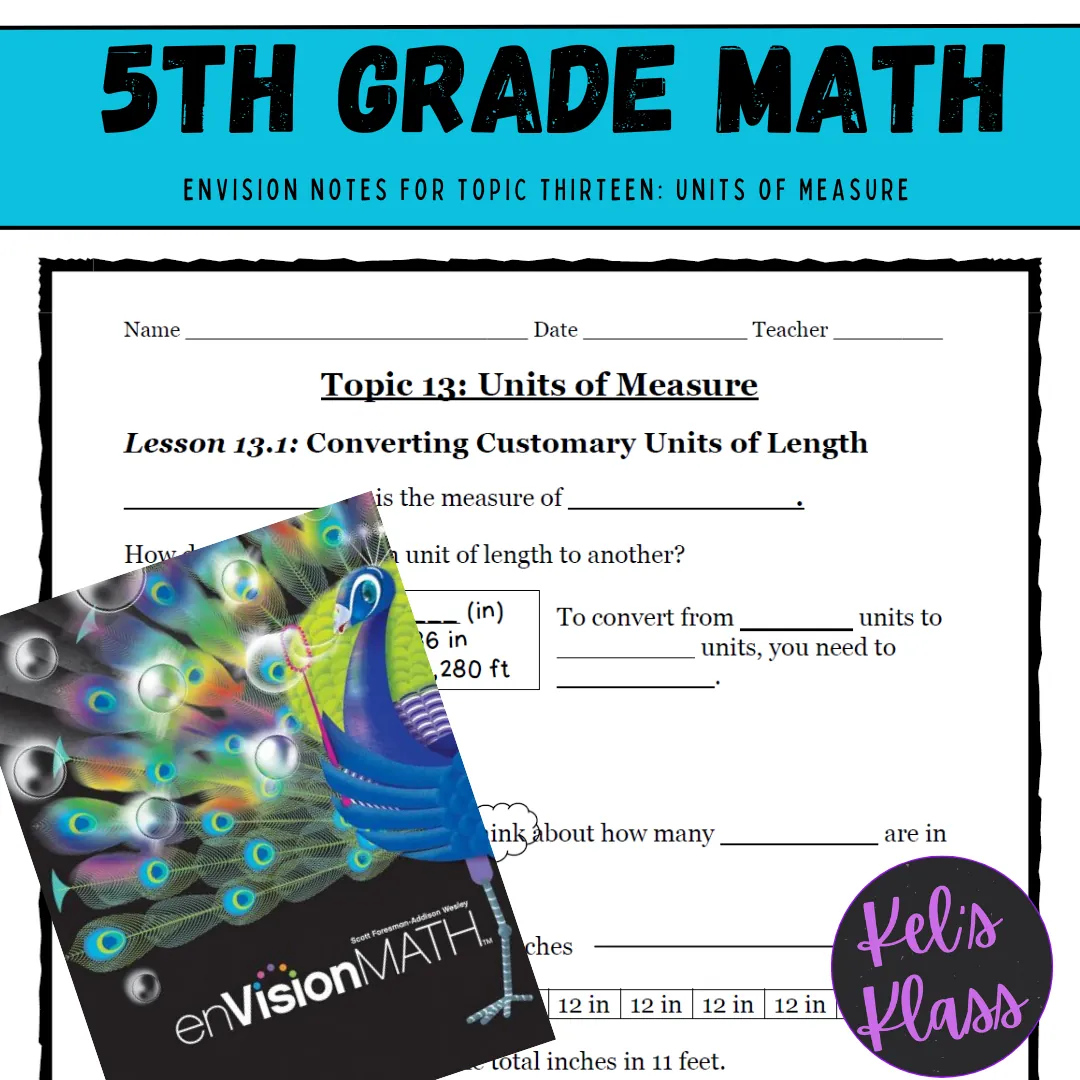
Envision Math Grade 5 Topic 13 Units of Measure
- Grades
- Grade 5, Elementary
- Pages
- 20
- File type
- Answer key
- Included


- Subject
- Math, Measurements
- Topic
- grade 5 math, measurement
- Resource types
- Worksheets & Printables, Worksheets, Workbooks, Word Problems
- Answer key
- Included
- Standards
- 5.MD.A.1
About this resource
What's inside this resource
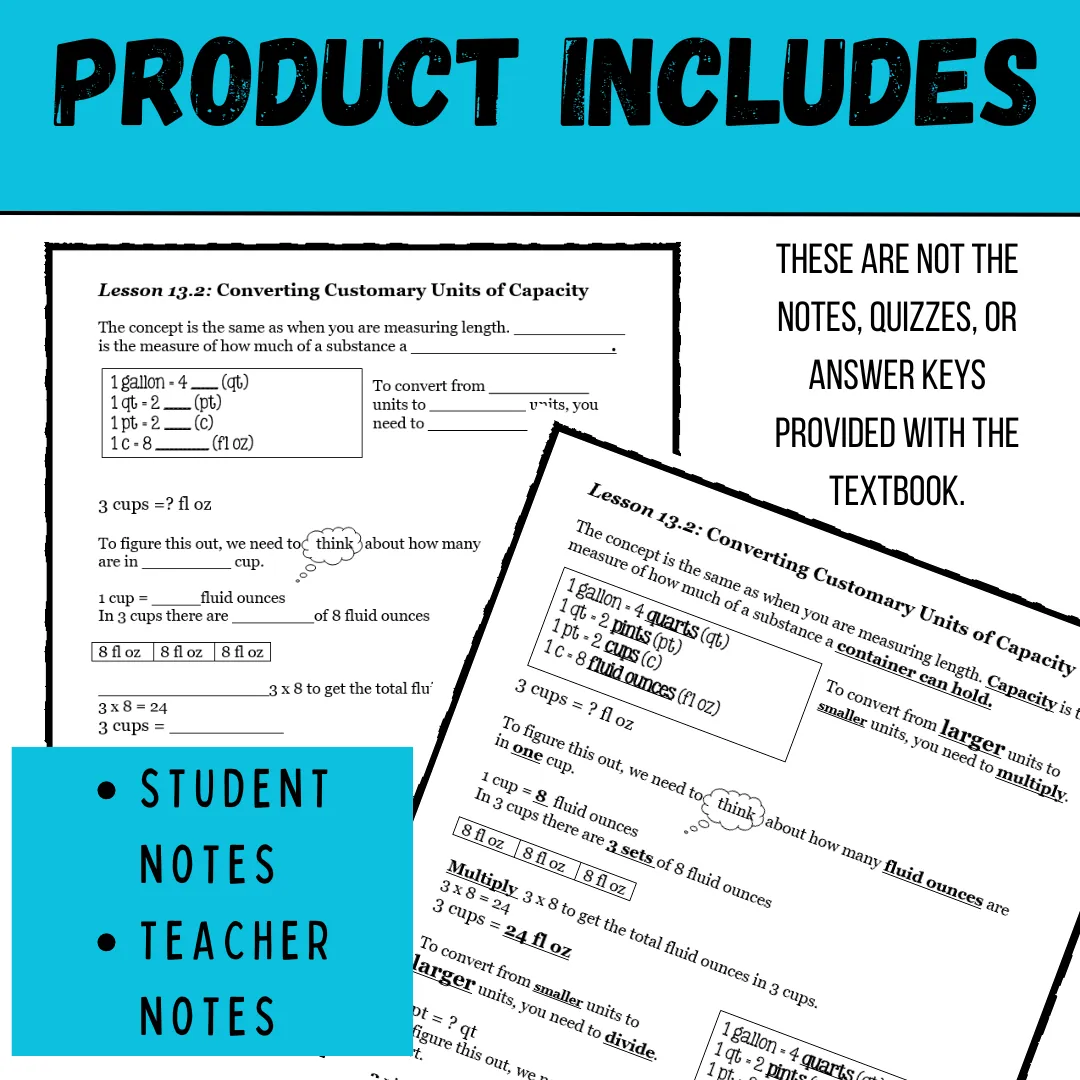
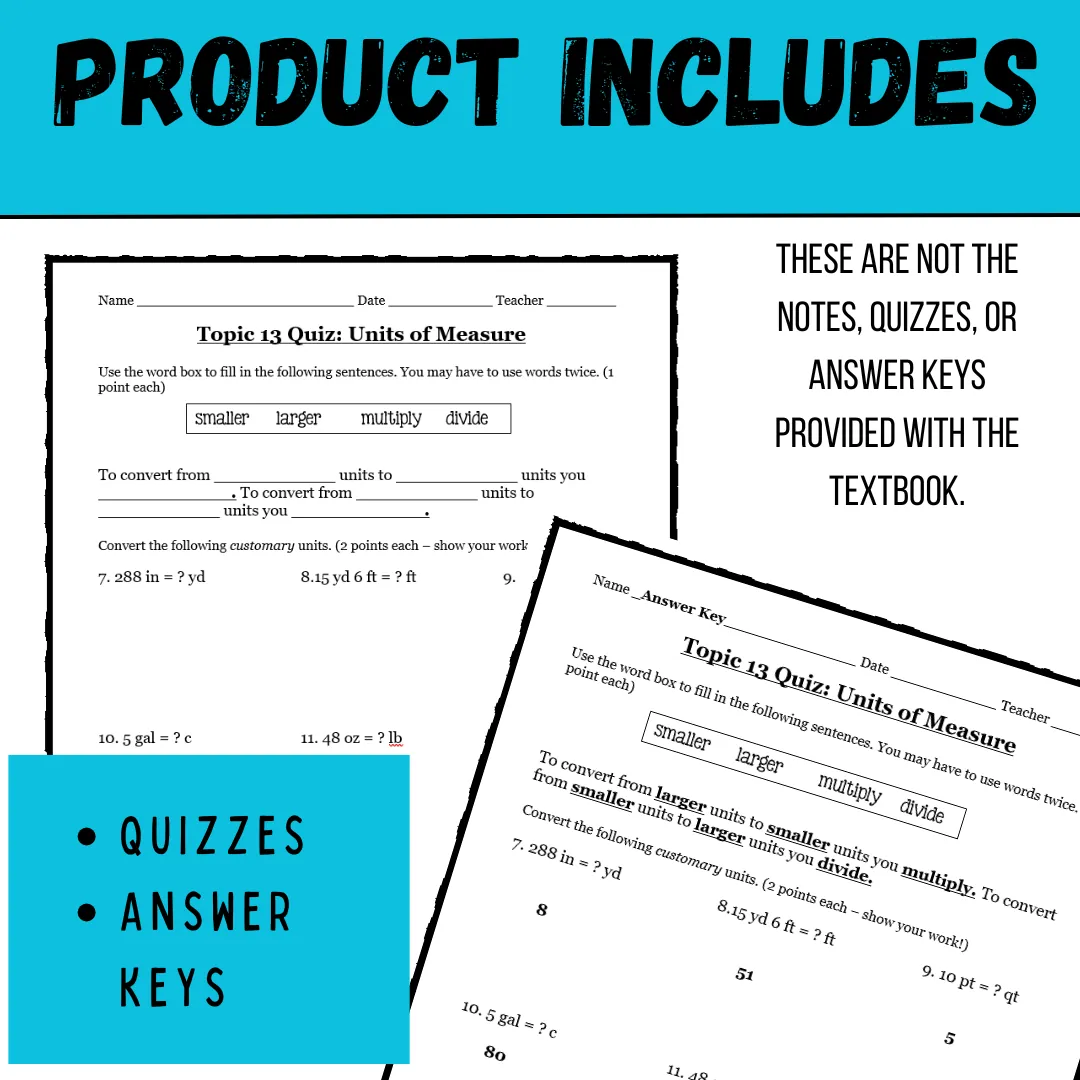
Envision Math Grade 5 – Topic 13: Units of Measure helps students master both customary and metric systems through guided lessons and practice. This packet includes student notes, teacher notes, a teacher-created quiz, and answer keys so you have everything needed for instruction, review, and assessment. While aligned with Envision Math, this resource is not taken directly from the textbook and works as a stand-alone unit for any 5th grade math classroom.
Topic 13 Lessons include:
Converting Customary Units of Length
Converting Customary Units of Capacity
Converting Customary Units of Weight
Comparing Metric System and Customary System
Converting Metric Units of Length
Converting Metric Units of Capacity
Converting Metric Units of Mass
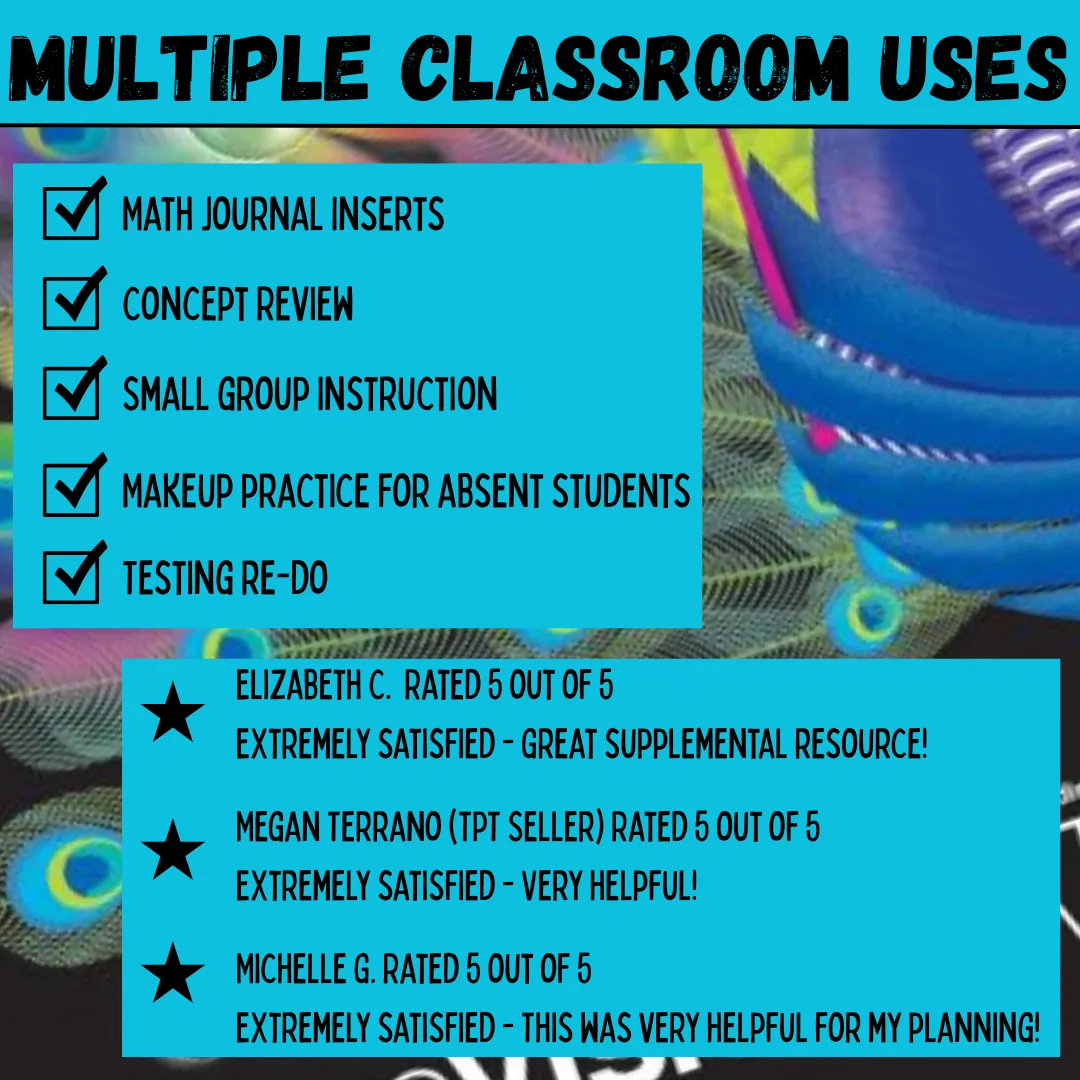
Ways to Use This Packet in Your Classroom:
Daily math notes to guide instruction and provide structure
Math journal inserts for interactive notebooks
Independent practice or small group review
Catch-up work for absent students
Testing re-dos and reteaching opportunities
Homework assignments for extra practice
As of 2025, this resource has been updated with improved formatting, removed page numbers (making it adaptable for different Envision editions), and enhanced readability for ADA compliance and screen readers. Please note: Problem-solving lessons are not included in this packet, as problem solving is taught separately in our curriculum.
This product is aligned to, but not affiliated with, Envision Math for Grade 5. It was originally created for my own students and refined to support teachers in delivering clear, organized, and flexible math instruction.
Tags / SEO Keywords:
5th grade math, Envision Math Topic 13, units of measure 5th grade, converting customary units, converting metric units, metric vs customary, math notes and quizzes, Envision aligned math resources, grade 5 measurement conversions, length, capacity, weight, mass, customary units, metric units
Related resources
More resources teachers may find useful
24 related resources were found using this product's title, contributor, categories and tags.

In the classroom
Teaching tips & learning objectives

Learning objectives
Convert among customary units of length, capacity, and weight using multiplication (larger to smaller units) and division (smaller to larger units).
Convert among metric units of length, capacity, and mass, recognizing that metric conversions are powers of ten.
Compare two measurements given in different units within the same system by first converting them to like units.

Teaching tips
Use the answer-key version of the notes to model each lesson at the board, then hand out the fill-in-the-blank version for students to complete along with you.
Point out the multiply-for-smaller / divide-for-larger rule stated at the top of nearly every lesson, since the quiz opens with a fill-in-the-blank question testing that rule directly.
Walk through the area word problem (question 16) as a two-step model first, since it requires converting millimeters to meters before multiplying to find area.

Skills covered
Customary unit conversion — students multiply or divide to convert between units of length, capacity, and weight (e.g., feet to inches, cups to fluid ounces, tons to pounds).
Metric unit conversion — students convert between units of length, capacity, and mass using powers of ten (e.g., kilometers to meters, liters to milliliters, grams to kilograms).
Measurement comparison — students convert to like units to compare or order two given measurements.

No reviews yet
Downloaded this resource? Tell other teachers how it went.
Curriculum
Standards, concepts & topics
Standards
 Standards
- 5.MD.A.1 — Convert among different-sized standard measurement units within a given measurement system (e.g., convert 5 cm to 0.05 m), and use these conversions in solving multi-step, real world problems.
Core concepts
 Core concepts
Customary measurement conversion
Metric measurement conversion
Comparing measurements
Area with unit conversion
Topics
 Topics
Explore more
Categories this resource belongs to
Explore related searches
More to explore
You may also like