Metric & Customary Measurement Conversions – Charts
- Grades
- Grades 4–8
- Pages
- 6
- File type
- Preparation
- Print ready


- Subject
- Math, Measurements
- Topic
- Metric conversions, Customary units
- Resource types
- Charts
- Preparation
- Print ready
- Standards
- 4.MD.A.1
Product description
From the author
Metric and Customary Measurement Conversions
This product reminds the student how to use metric and customary measurement conversions and how to convert between metric system and English system units.
Included:
6 Printable pdf color and black & white
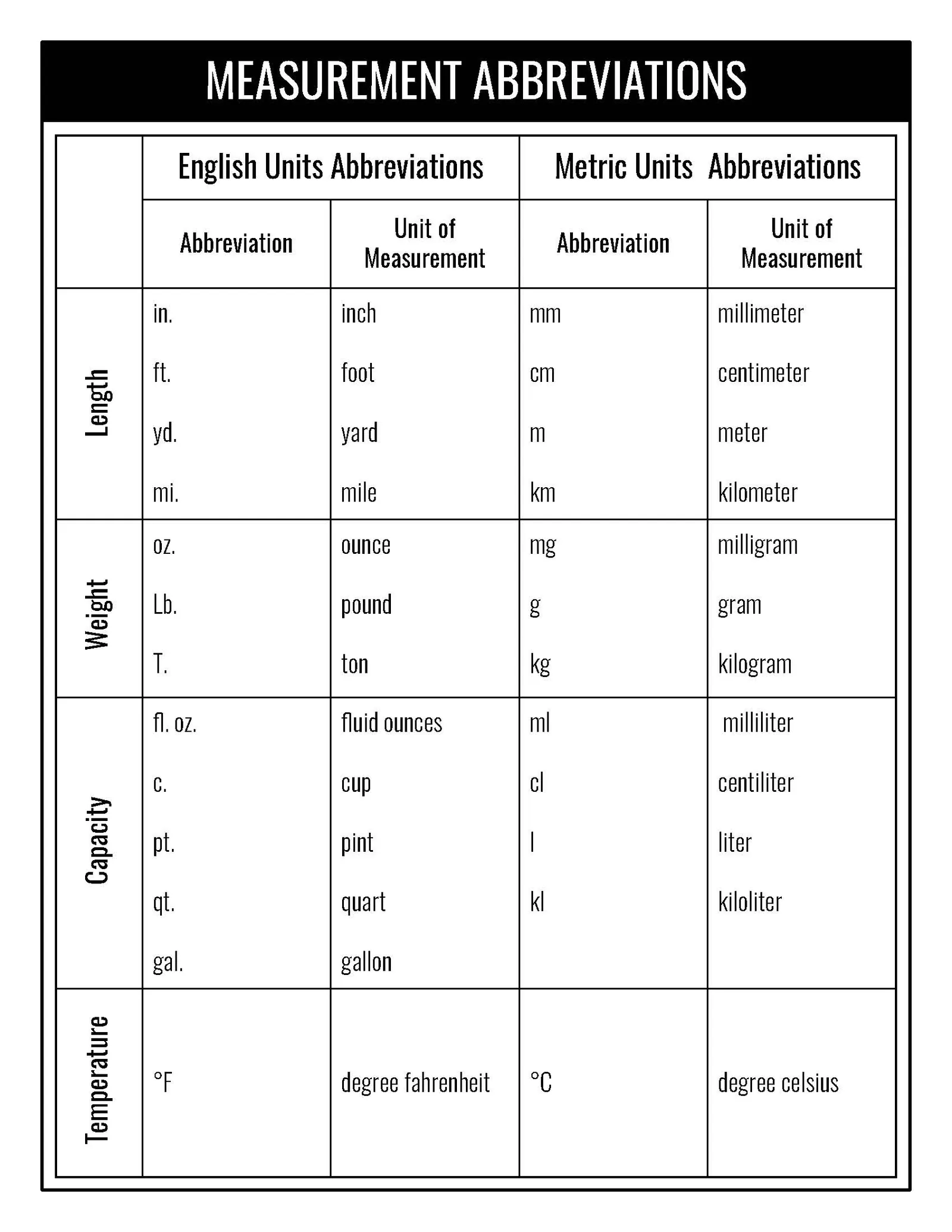
Measurement abbreviations table
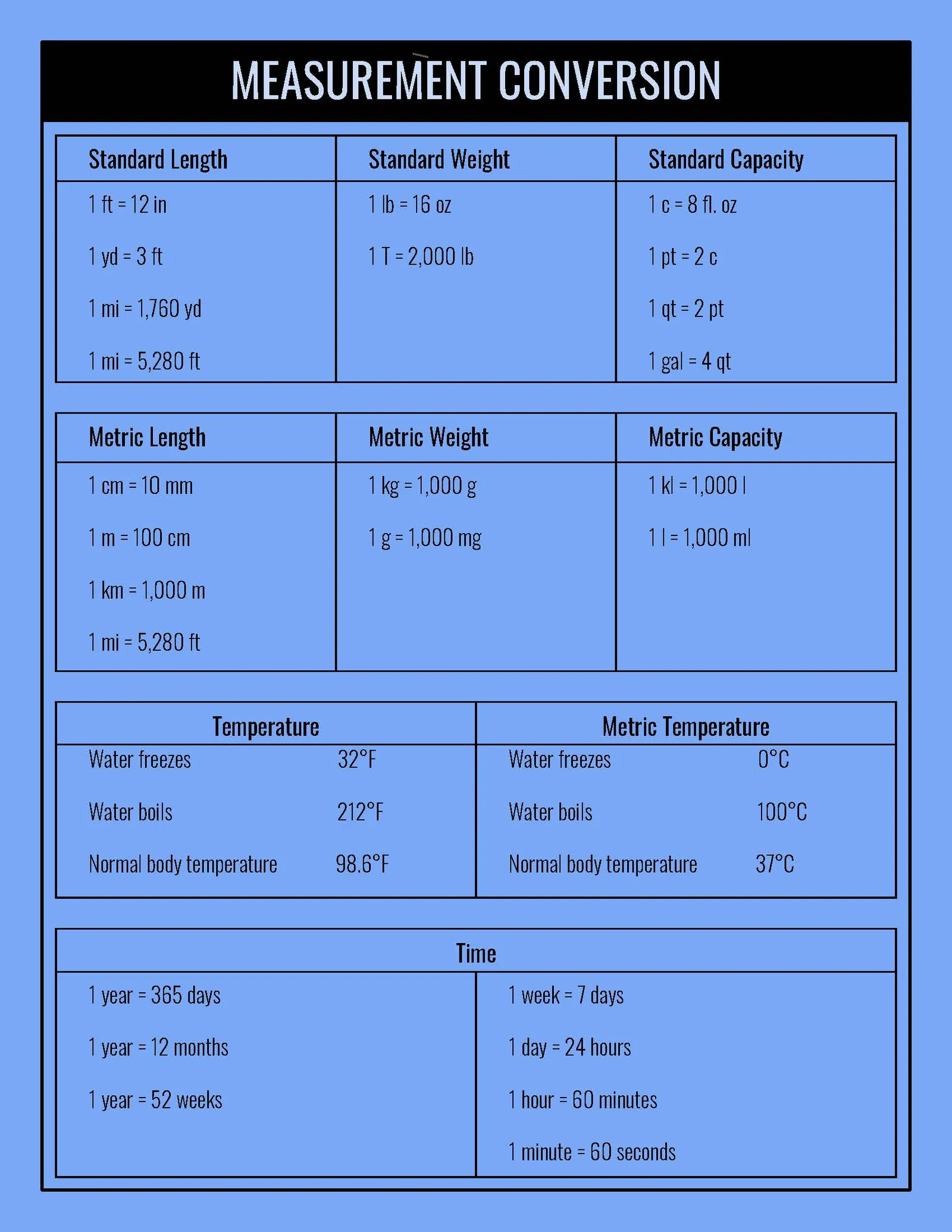
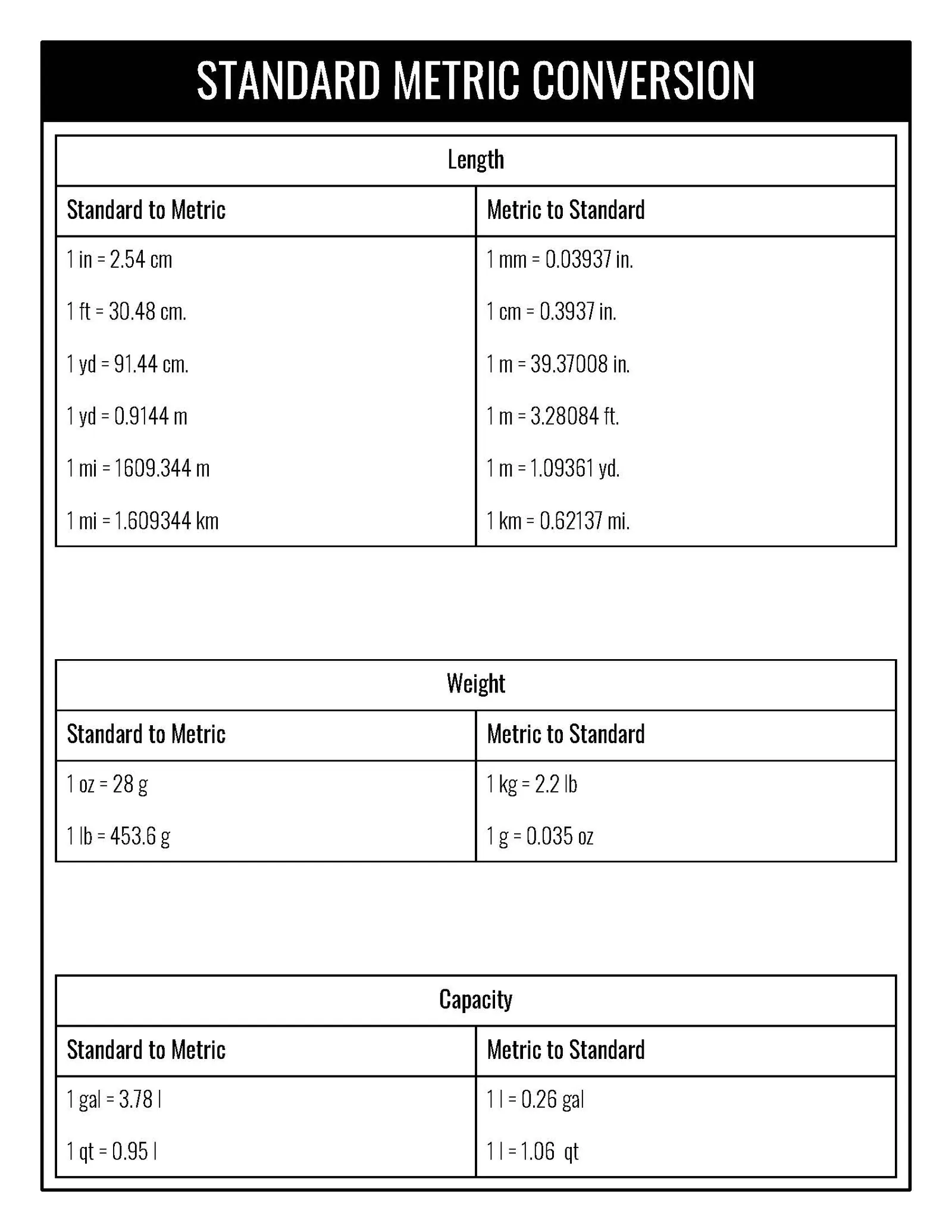
Conversion between standard & metric systems table
This product will enhance your understanding of metric and customary measurement conversions. By mastering these conversions, you will be able to navigate measurement systems with ease and accuracy.
The metric system is widely used worldwide and is based on units of ten, making it easy to convert between different units. On the other hand, the customary system is primarily used in the United States and relies on different units for length, weight, volume, temperature, and time.
With this resource, you will gain a solid foundation in metric and customary measurement conversions. These skills are essential not only in academic settings but also in everyday life.
It's important to note that while the metric system follows a consistent base-10 system, the English system does not. This difference can make conversions between units in the English system more complex compared to the metric system.
In scientific and international contexts, the metric system is the preferred system of measurement due to its simplicity and consistency. However, the English system is still widely used in the United States for everyday measurements in certain industries, such as construction, as well as for personal references.
Understanding both systems and their respective units of measurement is valuable as it allows individuals to navigate and communicate measurements effectively in various contexts.
Here's a breakdown of the commonly used units in each system:
Metric System Units:
Length:
Basic Unit: Meter (m)
Smaller Units: Centimeter (cm), Millimeter (mm)
Larger Units: Kilometer (km)
Mass:
Common unit: gram (g); the SI base unit of mass is the kilogram (kg)
Smaller Unit: Milligram (mg)
Larger Units: Kilogram (kg), Metric Ton (t)
Volume:
Basic Unit: Liter (L)
Smaller Units: Milliliter (mL)
Larger Units: Kiloliter (kL)
English System/Customary System Units:
Length:
Common small unit: Inch (in)
Feet (ft)
Yards (yd)
Miles (mi)
Weight/Mass:
Common small unit: Ounce (oz)
Pounds (lb)
Tons (US ton)
Volume:
Common small unit: Fluid Ounce (fl oz)
Cups (c)
Pints (pt)
Quarts (qt)
Gallons (gal)
Related resources
More resources teachers may find useful
24 related resources were found using this product's title, contributor, categories and tags.



In the classroom
Teaching tips & learning objectives

Learning objectives
Recall standard unit abbreviations (in., ft., yd., mi., oz., lb., T., fl. oz., c., pt., qt., gal.) and metric unit abbreviations (mm, cm, m, km, mg, g, kg, ml, cl, l, kl).
Convert between the standard/English and metric systems, such as inches to centimeters or pounds to grams.
Compare standard and metric temperature reference points, such as water's freezing and boiling points in both scales.

Teaching tips
Print the black-and-white version for student handouts or worksheets and reserve the color version for a posted classroom reference.
Use the abbreviations table as a quick warm-up matching activity before introducing the conversion tables.
Pair the cross-conversion table (page 3/6) with word problems, since it's the only page giving decimal standard-to-metric factors rather than whole-number within-system ratios.

Skills covered
Unit abbreviation recognition — students match full unit names to their standard abbreviations across both English and metric systems.
Within-system unit conversion — students apply ratios such as 1 yd = 3 ft or 1 kg = 1,000 g to convert between units in the same measurement system.
Standard-to-metric conversion — students use cross-system factors such as 1 mi = 1.609344 km to convert between English and metric units.
Good to know
Questions teachers ask about this resource
Are all the cross-system conversions exact?
No. Some values are rounded. Use the precision appropriate to your task and identify when a converted result is approximate.

No reviews yet
Downloaded this resource? Tell other teachers how it went.
Curriculum
Standards, concepts & topics
Standards
 Standards
- 4.MD.A.1
Core concepts
 Core concepts
Metric system
Customary (English) system
Unit conversion
Temperature scales
 Topics
Explore related searches
More to explore
You may also like