Fiction Close Reading Guide


- Grades
- Grades 9–12, High School
- File type
- Preparation
- Print ready


- Subject
- ELA, Reading, Reading Comprehension, Common Core
- Topic
- Fiction Texts, Close Reading
- Resource types
- Worksheets & Printables, Worksheets
- Preparation
- Print ready
About this resource
What's inside this resource
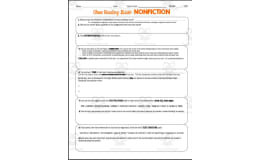
The Fiction Close Reading Guide is a fill-in-the-blank Google Slides worksheet, created to serve as an versatile teaching tool for educators. It is designed to assess learners' understanding of any fiction text - from short stories to complete novels or even selected chapters or sections.
Emphasizing on fostering high-level thinking, this resource touches on many Common Core State Standards skills in a single compact space. It encourages educators to model robust answers while teaching every skill, enabling students grasp key concepts deeply and organically.
This guide focuses on several key literary skills:
Identifying the Sub-Genre: This task aids students in classifying texts based on particular elements and properties.
Making Text Connections: Here, learners will draw connections from the text itself either back to their personal experiences (text-to-self), broader global contexts (text-to-world), or similar pieces of literature (text-to-text).
Characterization Methods and Examples: Students will identify examples that illustrate how an author presents characters and their development throughout the story.
Literary Devices Identification: This section directs students towards recognizing various techniques authors use for desired effects.
Mood Identification: Learners should detect what mood is established in the story and how it's developed using textual evidence.
The final focus area guides pupils towards understanding central themes within a narrative.
In terms of grade levels, this reading guide fits especially well into high school Language Arts curriculum for grades 9 through 12. To ensure optimal visibility with your Google Slides view window zoomed to 100% or higher — you'll find this resource most effectively fosters comprehension learning goals while encouraging close reading techniques essential when examining fictional literature works.
Related resources
More resources teachers may find useful
24 related resources were found using this product's title, contributor, categories and tags.

In the classroom
Teaching tips & learning objectives

Learning objectives
- Identify the subgenre, mood and theme of a fiction text
- Support claims about characterization and figurative language with cited examples

Skills covered
- Citing evidence — quoting examples of characterization, figurative language and mood
- Making connections — explaining a text-to-self, text-to-world or text-to-text link

No reviews yet
Downloaded this resource? Tell other teachers how it went.
Resource details
Concepts & topics
Core concepts
 Core concepts
- Subgenre
- Characterization
- Figurative language
- Mood
- Theme
 Topics
Explore more
Categories this resource belongs to
Explore related searches
More to explore
You may also like