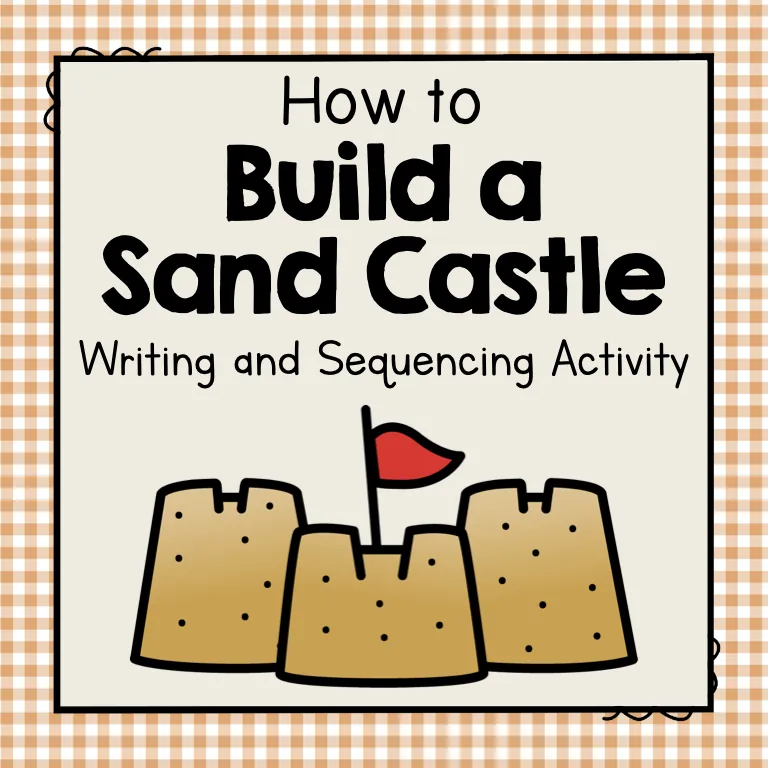
How to Build a Sandcastle | Writing and Sequencing Activity
- Grades
- Grades 1–3, Elementary
- Pages
- 113
- File type
- Preparation
- Print ready


- Subject
- ELA, Writing
- Topic
- informational writing, creative learning
- Resource types
- Activities, Worksheets & Printables
- Preparation
- Print ready
- Standards
- CCSS.W.1.2 CCSS.W.2.2 +1
About this resource
What's inside this resource
How to Build a Sandcastle | Writing and Sequencing Activity | Informational or Expository Writing Resource
The How to Build a Sandcastle teaching resource pack is an invaluable tool for educators aiming to enhance their student’s understanding of sequences and procedural tasks. With an engaging topic like building sandcastles, this pack propels learners' creativity while nourishing their sequential writing skills.
Inclusive Resource Materials:
Enticing Writing Prompts: These are uniquely tailored to trigger the imagination of the students. They’re perfect for group instruction, small teams learning or individual assignments.
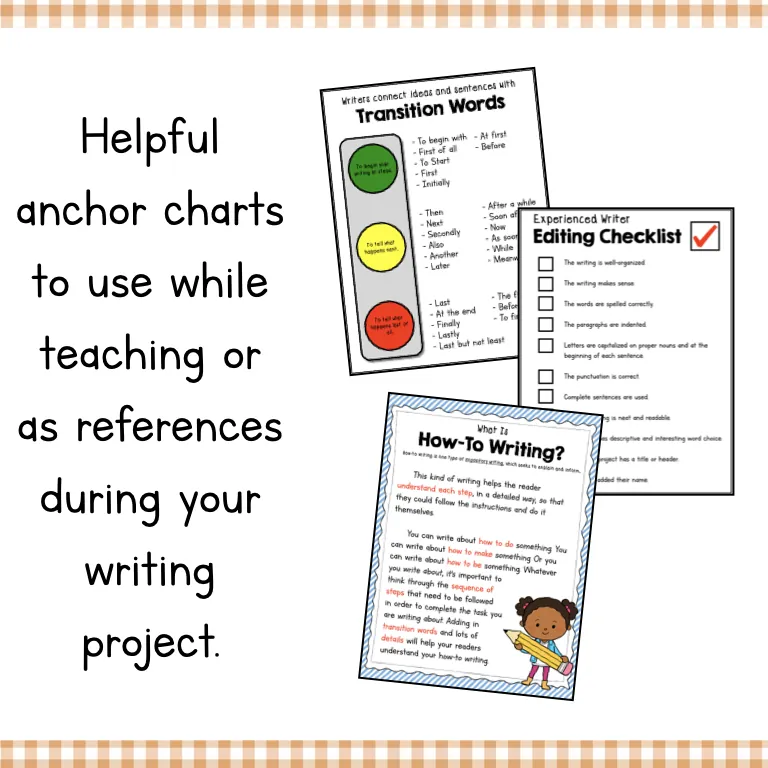
Tailored Editing Checklists: Featuring specific criteria for informational writing tasks, these offer guided expectations for enhancing student’s work.
Ideal Sample Writings: These examples showcase structurally complete 'How-to-Build-A-Sandcastle' assignments.
Creative Approach towards Learning:
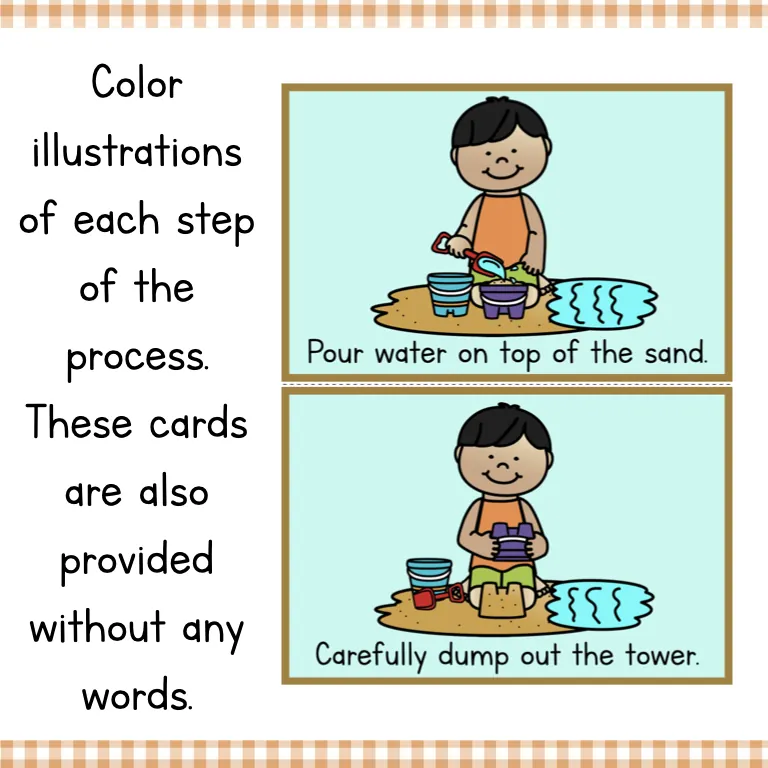
The resource uses captivating strategies such as 7 vibrant sequencing cards (available with/without words), interactive worksheets titled 'What do you need to build a sand castle?', plus full-page booklets that imbibe coloring exercises into explaining each step in the process of constructing a sand castle.
Versatile Options and Engaging Features:
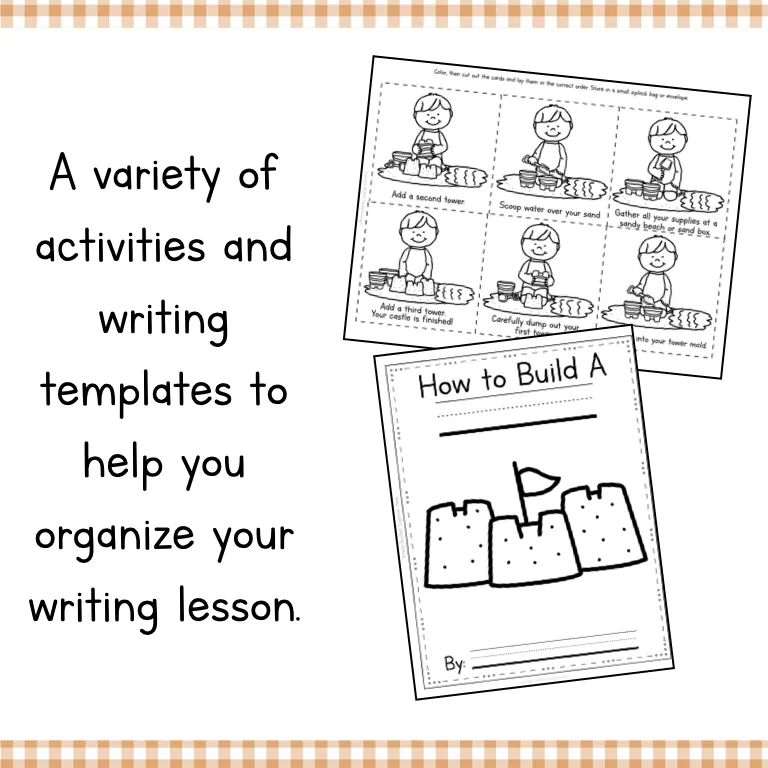
Different size alternatives- Both large full-page booklets and compact half-page booklet options are available along with variant types of writing prompts.
The package contains a specially designed template that motivates students toward creating color & cut out versions – helping morph them into standalone narratives about constructing sand castles!
This comprehensive digital PDF format resource carries 43 ready-to-print pages that allows educators to revisit this pack repeatedly saving time on producing similar activities and lesson plans independently.
Suitable for students from Grade 1 to Grade 3, this resource guarantee an invigorating learning journey that simultaneously urges creativity, improves their sequential writing skills, whilst keeping the entire process stimulating and engaging.
Related resources
More resources teachers may find useful
24 related resources were found using this product's title, contributor, categories and tags.


In the classroom
Teaching tips & learning objectives

Learning objectives
Sequence the steps of a procedure (building a sandcastle) in the correct order, using illustrated step cards as a rehearsal step before writing.
Use transition words (first, next, then, finally) to signal the order of steps in how-to/expository writing.
Write a complete how-to composition with a beginning, ordered middle steps, and an ending, using an editing checklist matched to the writer's skill level.

Teaching tips
Use the Early Writer checklist (page 9) for students who are still working on end marks and finger spaces, and the Experienced Writer checklist (page 8) for students ready to focus on paragraphing and descriptive word choice -- both are included so the same pack differentiates without extra prep.
Have students physically order the color-and-cut sequencing cards (pages 69-70) before they start writing, since this rehearses the step order they'll need to communicate in their own how-to composition.

Skills covered
Procedural/expository writing -- students compose a how-to text with sequenced steps, modeled on two sample 'Beach Castle' essays of different complexity (pages 5, 14-15).
Sequencing -- students physically order illustrated step cards before translating that order into written steps (pages 16-19, 24-30, 69-70).
Transition-word usage -- students select from a categorized bank of beginning/middle/ending transition words to signal step order in their writing (pages 6, 46-59).
Good to know
Questions teachers ask about this resource
Does this resource work for more than one writing skill level in the same classroom?
Yes -- it includes a separate Early Writer and Experienced Writer editing checklist, plus both full-page and half-page booklet formats, so the same sandcastle topic can be scaffolded differently for different writers.
Is there a way for students to practice the step order before writing?
Yes -- illustrated sequencing cards (with or without text) can be colored, cut apart, and physically arranged in order, giving students a hands-on rehearsal of the sequence before they write it out.

No reviews yet
Downloaded this resource? Tell other teachers how it went.
Curriculum
Standards, concepts & topics
Standards
 Standards
- CCSS.W.1.2 — Write informative/explanatory texts in which they name a topic, supply some facts about the topic, and provide some sense of closure.
- CCSS.W.2.2 — Write informative/explanatory texts in which they introduce a topic, use facts and definitions to develop points, and provide a concluding statement or section.
- CCSS.W.3.2 — Write informative/explanatory texts to examine a topic and convey ideas and information clearly. a. Introduce a topic and group related information together; include illustrations when useful to aiding comprehension. b. Develop the topic with facts, definitions, and details. c. Use linking words and phrases (e.g., also, another, and, more, but) to connect ideas within categories of information. d. Provide a concluding statement or section.
Core concepts
 Core concepts
How-to (procedural/expository) writing
Sequencing
Transition words
Sentence elaboration
Self-editing checklist
 Topics
Explore more
Categories this resource belongs to
Explore related searches
More to explore
You may also like